
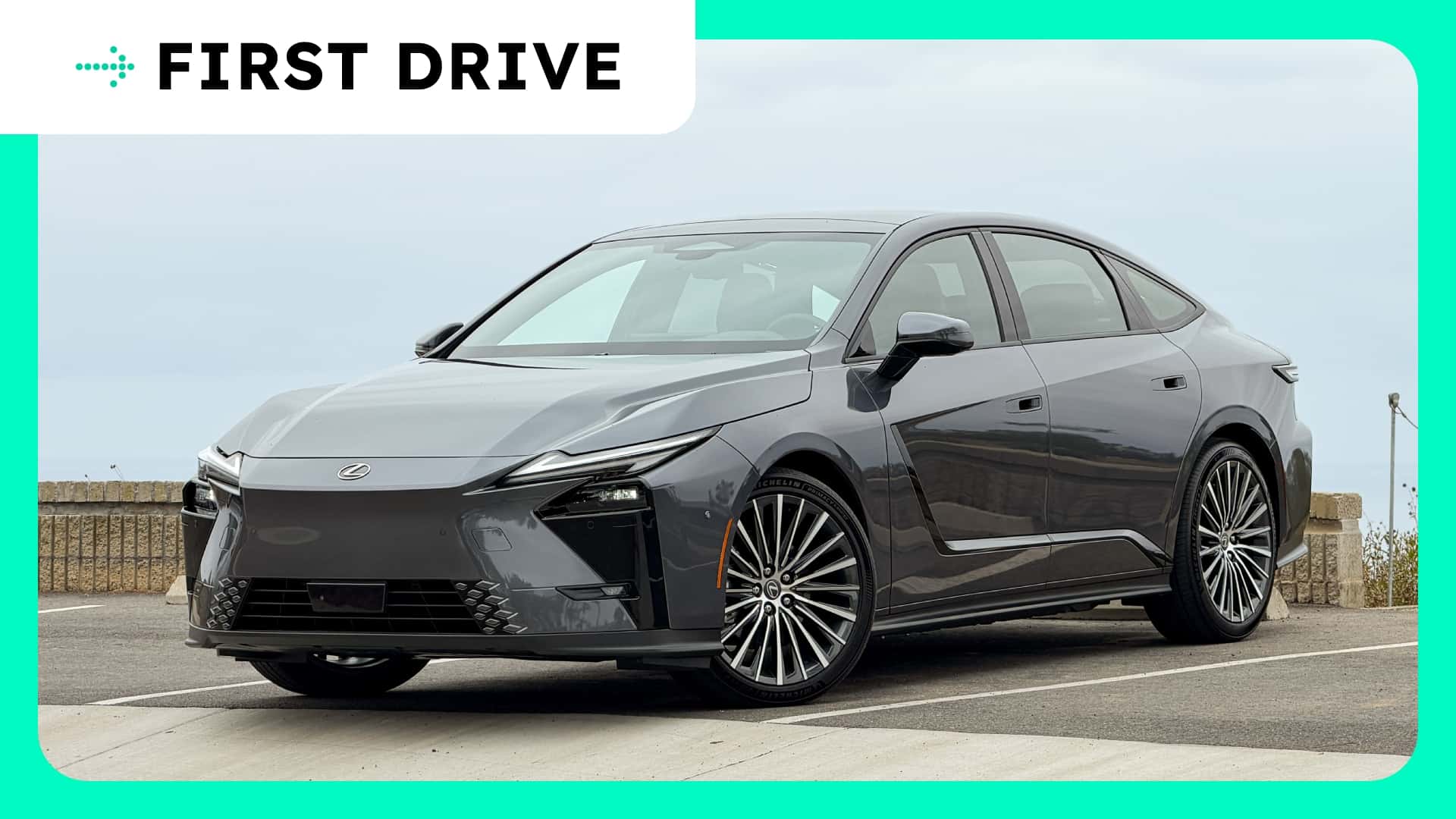
The Lexus ES has long stood as a cornerstone of the Lexus brand, a legacy spanning back to its inception in 1989. Even as market preferences shifted away from sedans, the ES continued to uphold its role as a beacon of traditional luxury, catering to a loyal clientele. With the impending discontinuation of the LS flagship after 37 years, the ES now assumes the mantle of the brand’s longest-running nameplate and de facto flagship sedan.
To align with this elevated status, the 2027 Lexus ES introduces a pivotal shift in its powertrain strategy: it will be exclusively available as either a hybrid or a fully electric vehicle (EV). This approach marks a significant departure for Lexus, representing its first EV to share a platform with its hybrid counterpart. Unlike models such as the Lexus RX, which has a distinct RZ electric equivalent, or the Lexus TX with its separate TZ electric variant, the ES embraces a more integrated ‘EZ’ strategy, where both electrified versions maintain a broadly similar identity.

This comprehensive analysis delves into the performance, technology, and economic factors differentiating the hybrid and the Lexus ES EV. Through a detailed examination, we aim to determine which variant offers the superior proposition. While both versions present compelling attributes, the ultimate decision for many discerning buyers will likely hinge on the financial implications.
Key Takeaways
- The 2027 Lexus ES is offered exclusively as a hybrid (ES350h) or a full electric vehicle (ES350e, ES500e), marking a significant shift for the luxury sedan.
- Surprisingly, the base Lexus ES EV (ES350e FWD) is priced lower than its hybrid equivalent (ES350h FWD), starting at $48,895 compared to $51,095.
- The electric variants offer a smoother, quieter driving experience, superior acceleration in the ES500e, and lower running costs due to electricity being cheaper than premium gasoline.
- EV models boast enhanced technology features, including sophisticated route planning, charge management, and exclusive luxury trims with advanced seating options.
- Despite the clear advantages of the Lexus ES EV, Lexus anticipates the hybrid model will account for approximately 80% of sales, indicating a slower consumer transition towards full electrification among traditional luxury sedan buyers.
WHY LEMONADE?
This story was published in partnership with Lemonade. Lemonade Insurance uses technology to keep things simple and offer lower prices for a wide array of EV drivers. They offer discounts for safe and low mileage driving, and further discounts for drivers of EVs and PHEVs. If you have a Tesla with FSD, you can even get discounts for the miles driven on FSD. Click here to get a quote for your EV today.

*Lemonade and the FSD discount are available in select states, learn more at the link above.
Powertrain and Performance Specifications
The 2027 Lexus ES lineup presents four distinct configurations: the ES350h FWD, ES350h AWD, ES350e FWD, and ES500e AWD. This nomenclature, while initially appearing complex, clearly delineates the powertrain options and drivetrain layouts available to consumers.
The ES350h denotes the hybrid models. Both front-wheel drive (FWD) and all-wheel drive (AWD) versions produce a consistent 244 horsepower. The AWD variant benefits from enhanced traction, achieving a 0-60 mph sprint in 7.1 seconds, marginally quicker than the FWD model’s 7.3 seconds. This slight performance edge for the AWD hybrid highlights the benefits of distributing power across all four wheels.
Transitioning to the electric offerings, the ES350e FWD serves as the direct electric counterpart to the hybrid. It delivers 221 horsepower, slightly less than the hybrid, but compensates with a higher torque output of 198 lb-ft compared to the hybrid’s 173 lb-ft. While its official 0-60 mph time stands at 7.4 seconds, the ES350e often feels more responsive in real-world driving conditions. This perception stems from the instantaneous torque delivery inherent to electric powertrains, which eliminates the lag associated with waiting for both the engine and electric motor to reach maximum output in the hybrid system, particularly during highway acceleration or quick overtakes.
For those prioritizing outright speed, the dual-motor ES500e AWD emerges as the clear leader. With a robust 338 horsepower, this variant significantly outperforms the 350-series models, rocketing from 0-60 mph in a mere 5.1 seconds. This level of acceleration positions the ES500e as a surprisingly swift luxury sedan, offering performance that would satisfy even seasoned EV enthusiasts, while potentially startling traditional Lexus ES owners.
However, this heightened performance in the Lexus ES EV comes with a trade-off in range. Both electric variants utilize a 74.7 kWh NCM li-ion battery. The ES350e FWD achieves an impressive estimated range of up to 307 miles, while the more powerful ES500e AWD offers up to 276 miles. Opting for the larger, optional 21-inch wheels over the standard 19-inch wheels will slightly diminish the range on both EV models. Lexus states that both electric models can charge from 10-80% in approximately 28 minutes when utilizing a factory NACS port, underscoring practical charging capabilities.
In terms of fuel efficiency, the hybrid models are exemplary within the gasoline luxury car segment. The FWD ES350h achieves EPA estimated figures of 48 mpg city, 44 mpg highway, and 46 mpg combined. The AWD variant, with its additional drivetrain components, registers slightly lower at 47 mpg city, 42 mpg highway, and 44 mpg combined.
Subtle Exterior and Interior Distinctions
Visually, the differences between the Lexus ES hybrid and the Lexus ES EV are minimal, reflecting the shared platform strategy. The hybrid variant is identifiable by a small slot in its front fascia, necessary for cooling its gasoline engine, and a conventional gas cap located at the rear. In contrast, the Lexus ES EV features a smooth, flush nose design and integrates its charge port conveniently on the front of the vehicle. Both models also offer unique bespoke wheel options to further differentiate their aesthetic. Beyond these distinctions, interior passenger and cargo space figures remain identical across all hybrid and electric ES models, ensuring consistent practicality.
Refined Driving Dynamics
The core mission of the Lexus ES has consistently been to deliver an exceptionally smooth, comfortable, and unobtrusive driving experience. It is designed to be the epitome of plushness and refinement in its class, prioritizing relaxed cruising and effortless highway journeys over aggressive performance. This characteristic ethos was evident during the vehicle’s launch event, which featured extensive urban and freeway driving routes punctuated by occasional winding sections.
Both the hybrid and Lexus ES EV variants faithfully uphold this design philosophy. The steering is precise, and handling remains predictable, confirming its suitability for daily commutes rather than spirited driving. The cabin environment is a highlight, featuring excellent seats and an impeccably high-quality finish, making it a truly pleasant space for occupants. While the optional 17-speaker Mark Levinson audio system provides good sound, it may not reach the pinnacle of audio experiences found in some other Lexus vehicles.
The emphasis on interior comfort over enthusiast driving metrics speaks volumes about the ES’s enduring appeal. It’s a vehicle engineered to make long journeys and mundane commutes enjoyable. Lexus has historically excelled at perfecting these subtle yet crucial details. From the immediate availability of ice-cold air conditioning on a hot summer day to the overall quietness, the ES continues to deliver a premium user experience.
The ride quality, while still commendably plush for a luxury sedan, has become noticeably firmer over successive generations. On the standard 19-inch wheels, the ride maintains an acceptable level of comfort. However, upgrading to the larger 21-inch wheels can compromise this plushness, leading to an occasionally jarring experience over more significant road imperfections.
Irrespective of the powertrain, the driving experience is characterized by its smoothness. Yet, for ultimate refinement, the Lexus ES EV unequivocally surpasses the hybrid. The electric models eliminate the need for the engine to cycle on and off, reducing vibrations and the often-uninspiring sound of the four-cylinder engine. This results in a consistently quieter and more composed cabin. While Lexus maintains its stance against true one-pedal driving, the EV’s variable regenerative braking settings allow for a degree of customization in the driving feel. Ultimately, both cars perform admirably for the typical ES owner, but the EV offers an unparalleled level of serene smoothness.
Advanced Technology and Equipment
A significant technological upgrade for the 2027 Lexus ES is the integration of Lexus’s latest software suite. This update brings a customizable home screen, more detailed navigation displays within the gauge cluster, and essential route planning capabilities for the Lexus ES EV variants, complemented by 5G integration for enhanced connectivity.
Lexus has positioned this software overhaul as a substantial leap forward, and indeed it is, bringing the ES’s technological offerings largely on par with segment competitors. The displays are responsive and polished, and the menus are intuitive, although perhaps less configurable than some rivals. Crucially, the software now feels purpose-built for the electric era, addressing previous shortcomings in EV-specific functionalities.
Lexus ES EV models specifically benefit from a comprehensive suite of EV-centric software features. These include advanced charge management, preconditioning for optimal battery performance, customizable charging schedules, charge rate limits, and vehicle-to-load (V2L) management, which allows the car to power external devices. There is even an option to disable battery cooling during charging, though its practical utility remains somewhat ambiguous even to the Lexus team.
While some functions have migrated to the touchscreen interface across both powertrains, the user experience remains largely uncompromised. Physical buttons for critical controls like temperature adjustment and defrost remain, designed to appear capacitive but offering tactile feedback. Key switches, such as those for heated/cooled seats, are persistently displayed on the screen for easy access. Lexus further enhances usability by allowing users to map frequently used settings and toggles to a Quick Control menu on the screen’s top right. Both ES variants also feature a built-in dashcam that automatically saves footage during emergency braking or collisions, and support digital keys through Apple, Google, or Samsung Wallet, enabling phone-as-key functionality.
While the technological advancements apply broadly, those seeking the ultimate array of gadgets and luxury features will find them exclusively within the electric lineup. The Luxury trim, for instance, is only available for the ES350e and ES500e. This trim level introduces premium amenities such as semi-aniline leather upholstery, passenger-side memory seats, an automatic parking assist feature controllable via a smartphone app, and sophisticated ambient lighting accentuating ‘forged bamboo’ trim elements.
Most notably, access to the Executive Package is contingent on selecting the Luxury trim, and thus is an EV-exclusive offering. This package elevates rear-seat comfort with reclining, massaging, heated, and cooled functionality, alongside a power ottoman for the passenger side. A dedicated rear touchscreen allows occupants to effortlessly adjust climate settings and seat controls, underscoring the Lexus ES EV’s potential as a truly executive-class sedan. While these high-end options may not appeal to all buyers, their availability undeniably gives the Lexus ES EV a significant advantage in terms of luxury appointments.
Cost Analysis: Purchase Price and Running Expenses
A common perception is that electric vehicles inherently carry a higher price tag than their hybrid or gasoline counterparts. However, the 2027 Lexus ES challenges this notion. The Lexus ES350e, the FWD electric variant, starts at an appealing $48,895, including destination charges. This positions it as a full $2,200 less expensive than the ES350h, the FWD hybrid model, which begins at $51,095. This initial price advantage for the Lexus ES EV is particularly compelling, considering its quieter operation, smoother performance, and in-practice quicker feel.
The financial benefits extend well beyond the purchase price. When evaluating annual running costs, the Lexus ES EV demonstrates significant savings. Based on today’s national average price for premium gasoline—the recommended fuel for the ES350h—at an estimated $5.35 per gallon, the hybrid model would incur an annual fuel cost of approximately $1,638.54 to cover the average American driving distance of 13,476 miles.
In stark contrast, operating the Lexus ES EV, using last year’s national average home electricity rate, would cost approximately $666 for the same distance. This represents an annual saving of nearly $1,000. Even if gasoline prices were to fall, or if a portion of charging occurred at more expensive public stations, or if lower-grade gasoline were used in the hybrid (which is not recommended), the electric variant would still maintain a considerable cost advantage.
Furthermore, the value proposition of the Lexus ES EV extends to its more powerful all-wheel drive variant. The ES500e AWD, priced at $51,895, is notably quicker and offers superior traction. While slightly more expensive than the base FWD hybrid, its higher performance and AWD capabilities come at a lower cost than the AWD hybrid, which stickers at $52,495. This means that even upgrading to the faster, all-wheel drive Lexus ES EV can result in overall savings within a year, while providing enhanced driving dynamics.
Concluding Assessment
Given the comprehensive comparison, the Lexus ES EV emerges as the objectively superior choice in many crucial aspects. It is more affordable to purchase at its base level, offers a significantly quieter and smoother driving experience, typically feels quicker, and promises lower maintenance requirements due to fewer moving parts. Furthermore, the Lexus ES EV comes with an 8-year warranty on its battery, drastically reduces annual fuel costs by more than half, and provides access to exclusive luxury equipment. An added practical benefit is the ability to pre-heat the cabin on cold winter mornings without concerns about toxic fumes, eliminating the need to open garage doors.
Despite these clear advantages, market forecasts indicate that the hybrid variant is expected to account for approximately 80% of ES sales. This projection highlights a lingering hesitancy among some traditional luxury car buyers, particularly older and affluent demographics, who may be less inclined to navigate the learning curve associated with public fast chargers and EV-specific preconditioning routines. This phenomenon underscores why transitions in automotive technology often require time to fully materialize.
Nonetheless, the inherent superiority of the Lexus ES EV is likely to prevail in the long run. As consumers become more familiar and comfortable with electric vehicle technology, the undeniable benefits—smoother operation, reduced noise, superior acceleration, lower running costs, minimal maintenance, and enhanced reliability—will increasingly resonate. For early adopters, the Lexus ES EV represents a compelling and luxurious all-electric sedan. For those still on the fence, the ES hybrid offers a commendable interim solution to reduce carbon emissions and decrease fuel expenditures while embracing partial electrification.
Frequently Asked Questions (FAQ)
What are the primary powertrain options for the 2027 Lexus ES?
The 2027 Lexus ES is exclusively available with electrified powertrains: a hybrid variant (ES350h) and two full electric vehicle (EV) variants, the ES350e and the more powerful ES500e. Both FWD and AWD configurations are offered across the lineup, providing diverse choices for performance and efficiency.
Is the Lexus ES EV more expensive than the hybrid model?
Surprisingly, the base Lexus ES350e FWD electric model starts at $48,895, making it $2,200 cheaper than the ES350h FWD hybrid, which starts at $51,095. This initial cost advantage, combined with lower running costs, positions the Lexus ES EV as a more economical choice.
How do the driving experiences of the hybrid and Lexus ES EV compare?
Both models prioritize comfort and smoothness. However, the Lexus ES EV offers a superior driving experience due to its instantaneous torque delivery, absence of engine noise and vibrations, and overall quieter cabin. The EV feels more urgent and refined, particularly in daily driving scenarios, even if official 0-60 times are similar for base models.
What exclusive features does the Lexus ES EV offer?
The Lexus ES EV models feature advanced EV-specific software for route planning, charge management, and vehicle-to-load (V2L) functionality. Additionally, higher luxury trims, including the Executive Package with reclining, massaging rear seats and a power ottoman, are exclusively available for the Lexus ES EV, enhancing its premium appeal.
What is the estimated range and charging time for the Lexus ES EV?
The ES350e FWD offers up to 307 miles of range, while the ES500e AWD provides up to 276 miles. Both Lexus ES EV variants, equipped with a 74.7 kWh battery, can charge from 10-80% in approximately 28 minutes using a factory NACS port, offering convenient and relatively fast recharging capabilities.
Why is Lexus predicting higher sales for the hybrid over the EV?
Lexus anticipates the hybrid will account for about 80% of sales despite the EV’s advantages. This is primarily attributed to the preferences of older, affluent buyers who form a core demographic for the ES, and may be less inclined to adopt new charging habits or learn about public fast-charging infrastructure.