
Key Takeaways
- Rivian’s Adventure Network (RAN) has surpassed 1,000 DC fast charging ports across 148 U.S. locations, marking a significant expansion milestone.
- The network has grown by approximately 40% in the past year, reflecting an accelerated development pace after initial slower progress.
- Rivian’s proprietary charging stalls are powered exclusively by renewable energy, emphasizing sustainability.
- A majority of RAN stations (97%) are now open to all electric vehicles, moving beyond Rivian-exclusive charging.
- The network is actively integrating NACS connectors alongside existing CCS1 ports, with a notable portion of stalls already featuring the Tesla-style connector.
- Rivian claims an impressive 98% uptime for its network in the last year, attributed to its integrated control over hardware, software, and maintenance.
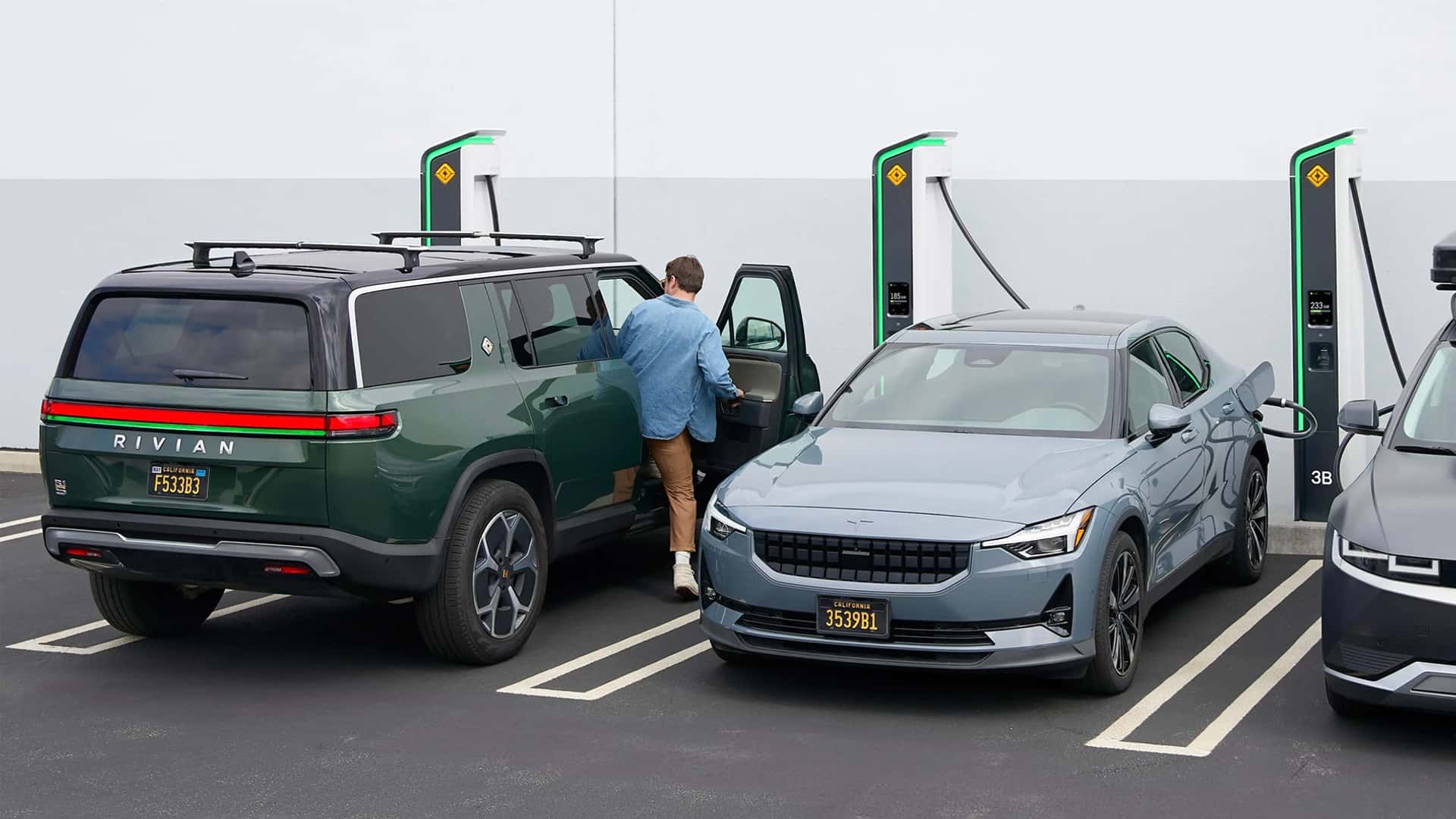
In a significant development for the electric vehicle (EV) infrastructure landscape, Rivian’s EV charging network, known as the Rivian Adventure Network (RAN), has officially crossed a major milestone. The California-based electric vehicle manufacturer now boasts over 1,000 DC fast charging ports strategically distributed across 148 locations throughout the United States. This expansion underscores Rivian’s accelerating commitment to building a robust and accessible charging ecosystem.
The latest data, compiled by the Department of Energy’s Alternative Fuels Data Center (AFDC), highlights a rapid growth trajectory for Rivian’s EV charging network. In just the past 30 days, four new sites, encompassing an additional 44 charging stalls, have been brought online, signaling a determined push in infrastructure deployment.
Accelerated Growth and Strategic Expansion
The current scale of Rivian’s EV charging network represents a substantial year-over-year increase. According to analysis by EV Charging Stations, the network has expanded by roughly 40% compared to the previous year, when it comprised just over 700 stalls. This accelerated development marks a pivotal shift for the company, which had seen slower progress in its charging infrastructure build-out during its initial years.
This rapid expansion is critical for bolstering confidence among current and prospective Rivian owners, as well as the broader EV community. A dependable and widespread charging infrastructure is often cited as a key factor in accelerating electric vehicle adoption, and Rivian’s efforts directly address this growing need.
Sustainable Power and Broad Accessibility
A core tenet of Rivian’s approach to its charging network is sustainability. The company proudly states that its proprietary DC fast charging stalls are powered entirely by renewable energy. This commitment aligns with Rivian’s brand identity as an environmentally conscious automaker, extending its green philosophy beyond its vehicles to the very infrastructure that supports them.
Crucially, Rivian’s EV charging network is increasingly welcoming to a wider array of electric vehicles. While initially serving Rivian-exclusive charging needs, the vast majority of stations – approximately 97% – are now accessible to non-Rivian electric cars. This strategic move enhances the utility of Rivian’s infrastructure, contributing to the overall public charging capacity across the U.S. and making electric travel more feasible for a diverse range of EV drivers.
Navigating the Evolving Charging Standards: NACS Integration
In a landscape increasingly influenced by evolving charging standards, Rivian’s EV charging network is proactively integrating the Tesla-style North American Charging Standard (NACS) ports. This integration runs parallel to the continued deployment of existing CCS1 connectors, aiming to provide versatility for a diverse fleet of electric vehicles.
Currently, 166 stalls within Rivian’s Adventure Network, representing roughly 16% of the total, are equipped with NACS connectors. These are spread across approximately 50 distinct locations. While significant work remains to fully integrate NACS across the entire network, Rivian has also taken a notable step by establishing six Rivian Adventure Network stations that exclusively feature NACS chargers. This approach diverges somewhat from common industry practice, where most non-Tesla charging operators typically offer both NACS and CCS1 connectors at their stations to maximize compatibility.
Strategic Alignment with Future Models
Rivian’s strategic embrace of NACS is deeply rooted in its product roadmap. The latest iteration of its flagship R1S and R1T electric vehicles, alongside the recently unveiled R2 mid-size SUV, are designed with native NACS ports. This eliminates the necessity for a charging adapter when utilizing NACS-equipped stations, simplifying the charging experience for Rivian owners.
Furthermore, all Rivian electric vehicles are granted access to the extensive Tesla Supercharger network, which predominantly features NACS connectors. This dual strategy – building out its own NACS-integrated network while leveraging Tesla’s infrastructure – provides Rivian drivers with broad access to reliable fast charging options across the continent, significantly reducing range anxiety.
Reliability and Operational Excellence
One of the most critical factors for any charging network is its reliability. Rivian has reported an impressive 98% uptime for its Adventure Network last year. This high level of operational efficiency is attributed to the company’s integrated approach, where it maintains direct control over the hardware, software, and maintenance services for its charging infrastructure.
By owning and managing the entire stack, Rivian can swiftly address any technical issues, perform proactive maintenance, and optimize performance, thereby ensuring a consistent and dependable charging experience for users. This direct oversight capability is a significant differentiator in an industry where third-party maintenance and fragmented systems can sometimes lead to lower uptime figures.
Evolution of Commercial Strategy
The Rivian Adventure Network, first announced in 2021, underwent a significant strategic shift in 2024. Initially, the stalls offered free charging exclusively to Rivian EVs, serving as a perk for early adopters and a means to encourage vehicle sales. However, reflecting a maturation of its business model and an expansion of its service offering, Rivian began opening its DC fast chargers to other EV brands this year.
Simultaneously, the company transitioned to a commercial model, initiating charges for its top-ups. The current average price for charging at Rivian Adventure Network stations stands at $0.55 per kilowatt-hour, as reported by the DCFC Tracker website. This move positions Rivian’s EV charging network as a competitive player in the broader commercial charging market, generating revenue while continuing to expand its vital infrastructure.
Complementary Level 2 Charging: Rivian Waypoints
Beyond its high-speed DC fast charging capabilities, Rivian also operates a complementary Level 2 charging network known as Rivian Waypoints. This network is designed to cater to overnight charging needs, destination charging, and situations where longer charging durations are acceptable. The Rivian Waypoints network currently comprises 540 ports distributed across 208 locations throughout the U.S.
Together, the Rivian Adventure Network and Rivian Waypoints form a comprehensive charging ecosystem designed to support Rivian owners and other EV drivers across various scenarios, from rapid long-distance travel to convenient daily charging. This dual-pronged strategy underscores Rivian’s holistic approach to facilitating widespread electric vehicle adoption.
Outlook for Rivian’s EV Charging Network
The milestone of over 1,000 DC fast charging ports positions Rivian as a significant and growing force in the EV charging infrastructure domain. With a clear strategy for NACS integration, a focus on renewable energy, and a proven track record of high reliability, Rivian is not only supporting its own fleet but also contributing substantially to the overall maturation and robustness of the electric vehicle ecosystem in the United States. Continued expansion and technological evolution will be key as the company further solidifies its role in the future of sustainable transportation.
FAQ Section
What is the Rivian Adventure Network (RAN)?
The Rivian Adventure Network is Rivian’s proprietary DC fast-charging infrastructure for electric vehicles. It provides high-speed charging capabilities across the United States, primarily along popular routes and in key destinations. The network emphasizes sustainability, with its stalls powered entirely by renewable energy sources.
How many charging ports does Rivian’s EV charging network currently have?
As of recent data, Rivian’s EV charging network, the Rivian Adventure Network, has surpassed 1,000 DC fast charging ports. These ports are spread across 148 distinct locations throughout the United States, demonstrating significant growth in the company’s charging infrastructure.
Is Rivian’s charging network accessible to non-Rivian EVs?
Yes, the vast majority of Rivian Adventure Network stations, approximately 97%, are now open and accessible to electric vehicles from other manufacturers. This marks a strategic shift from its initial phase when charging was exclusively offered to Rivian vehicle owners, enhancing public charging options.
What types of charging connectors are available at Rivian Adventure Network stations?
Rivian Adventure Network stations primarily feature CCS1 connectors. However, Rivian is actively integrating NACS (North American Charging Standard) connectors. Approximately 16% of the total stalls, located at around 50 sites, now offer NACS, with some stations exclusively providing NACS ports.
What is the uptime reliability of Rivian’s EV charging network?
Rivian reported an impressive 98% uptime for its Adventure Network during the last year. This high reliability is largely attributed to Rivian’s integrated approach, where it manages the hardware, software, and maintenance services directly, ensuring prompt issue resolution and optimal performance.
How much does it cost to charge an EV at a Rivian Adventure Network station?
Following a shift from free charging, the average price for using Rivian Adventure Network DC fast chargers is currently $0.55 per kilowatt-hour. This pricing became effective in 2024 as Rivian opened its network to all EV brands and commercialized its charging services.
What are Rivian Waypoints?
Rivian Waypoints represent Rivian’s Level 2 (AC) charging network, complementing the faster DC Adventure Network. These stations offer slower charging, ideal for overnight stays or destination charging. The Waypoints network includes 540 ports at 208 locations across the U.S., providing convenient charging options for various scenarios.