
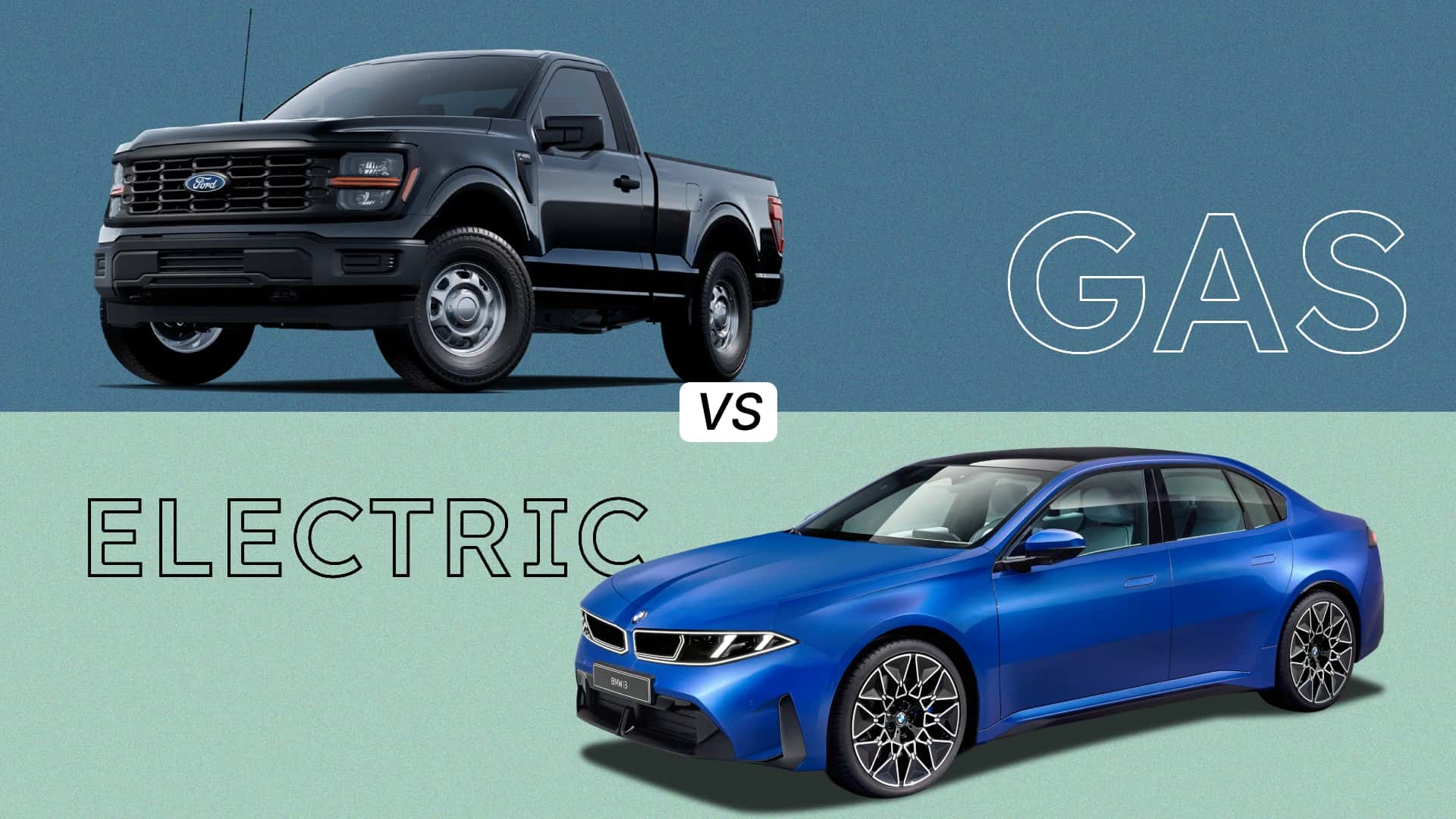
In a significant shift observed within the global automotive landscape, electric vehicles (EVs) have demonstrated more transformative progress in the past two years than gasoline-powered cars have in an entire decade. This rapid evolution, encompassing advancements in range, charging speeds, affordability, and overall product diversity, signals a potential turning point for the future of automotive powertrains, challenging the long-standing dominance of internal combustion engines (ICE).
For years, the automotive industry saw incremental, often complex, changes in gasoline engine design. However, a recent analysis highlights a period of unprecedented innovation in electric vehicle technology, contrasting sharply with the relative stagnation of traditional powertrains.

Key Takeaways (TL;DR)
- Electric vehicle advancements have surpassed a decade of internal combustion engine (ICE) development in just two years.
- Gasoline car technology, despite efforts for efficiency, shows stagnation and increased complexity often leading to reliability issues.
- Hybrid vehicles offer a transitional solution, significantly boosting efficiency and longevity where pure ICE falters.
- Pure EVs are rapidly improving in critical areas like charging speed (18-19 minutes down to 11 minutes for 10-80%), range (more models exceeding 300 and 400 miles), and affordability (e.g., Chevy Equinox EV at $35,000).
- Charging infrastructure is expanding, and networks are becoming more accessible, alleviating range anxiety.
- The market is seeing a dramatic increase in compelling EV options across various segments and price points, driven by falling battery costs and software-defined architectures.
- Future battery and software breakthroughs promise continued rapid evolution for EVs, while gasoline technology is approaching its inherent limits.
A Decade of Stagnation for Internal Combustion Engines
Automotive industry observers note that since 2017, the development trajectory for gasoline engines has largely been one of refinement rather than revolution. While manufacturers have introduced new models, the core powertrain technologies often remain remarkably similar to their predecessors.
Incremental Improvements Masking Core Stagnation
Consider the trajectory of vehicles like the Volvo S90. When it debuted in 2017, it represented a new chapter for the Swedish marque, powered by a 2.0-liter inline-four engine, available with either a turbocharger or a combination of turbocharger and supercharger. Fast forward to today, the S90 has exited the US market, but its SUV counterpart, the XC90, persists.
While the modern XC90 boasts enhanced cabin technology and improved tuning, its engine and transmission combination largely mirrors that of its 2017 forebear. The slight improvement in fuel economy, an increase of just 1 mpg, is not attributable to fundamental advances in gasoline engine design. Instead, it stems from the integration of a mild 48-volt hybrid system, a testament to the inherent efficiency challenges of traditional internal combustion.

Similarly, America’s best-selling vehicle in 2017, the Ford F-150, featured 2.7-liter and 3.5-liter turbocharged V-6 engines alongside a traditional 5.0-liter V-8. A decade later, the standard F-150 lineup largely retains these same engines, augmented by the addition of a hybrid option. The widespread adoption of the 10-speed automatic transmission across the range, initially exclusive to the 3.5-liter EcoBoost, was also accompanied by a prolonged period of reliability issues.
The Pitfalls of Seeking Marginal Efficiency Gains
The pursuit of marginal efficiency improvements in gasoline engines has often led to increased complexity and, paradoxically, diminished reliability. General Motors’ trucks, including those from Chevrolet, have faced transmission problems across both 8-speed and 10-speed variants. Moreover, the long-standing 5.3-liter V-8 engine, a staple for over two decades until its impending phase-out for 2027 models, suffered a setback with cylinder-deactivation technology.
Introduced in 2007, this technology enabled the V-8s to operate on four cylinders under light load, yielding a minor gain of one or two miles per gallon on the highway. However, this complexity compromised the previously unassailable reliability reputation of the 5.3-liter engine. This illustrates a recurring theme: attempts to squeeze extra efficiency from established engine designs often result in an over-engineered solution with significant reliability tradeoffs.
Toyota, renowned for its steadfast reliability, encountered similar difficulties with the Tundra pickup. The previous generation of the Tundra was lauded for its exceptional durability, with numerous examples achieving over 1,000,000 miles on their original engines. Yet, consumer demand for improved fuel economy, given its 13 mpg city rating, prompted Toyota to develop an entirely new V-6 engine. This modern unit incorporated advanced turbocharging and direct injection technology.
The outcome, however, proved challenging, leading to over 100,000 recalled trucks and a multitude of reported engine failures. This episode underscores the formidable engineering hurdles involved in designing clean-sheet internal combustion engines that are both efficient and reliable in the current era.
Consumer Demands vs. ICE Limitations
The challenges faced by these automotive giants reveal a fundamental dilemma: modern gasoline engines are being pushed to their design limits. While traditional enthusiasts often express skepticism towards turbochargers and cylinder deactivation due to reliability concerns, the alternative of accepting poor fuel economy, such as 13 mpg in city driving, is increasingly unappealing to consumers.
Today’s consumers seek reduced fuel expenses, minimal complexity, fewer repair bills, and no compromises on power or capability. This confluence of demands points to an increasingly clear solution: electrification. After years of incremental and often problematic progress in pure gasoline designs, electrification stands out as the singular force dramatically enhancing automotive powertrain technology.
The Dawn of a New Era: Rapid EV Advancements
The trajectory of automotive innovation has demonstrably shifted, with electric vehicle advancements driving the industry forward at an unprecedented pace. This momentum is evident not only in fully electric models but also in the transformative impact of hybridization on traditional segments.
Hybridization: Bridging the Gap
The shift in consumer preference is clearly illustrated by market dynamics. The Ford F-150, once America’s undisputed best-selling vehicle, was unseated last year by the Toyota RAV4. This change is largely attributed to the RAV4’s highly successful hybrid-only redesign. The integration of hybrid technology frequently enhances both longevity and significantly boosts efficiency, thanks to the inherent efficiency of electric propulsion and the robust nature of contemporary batteries and motors.
Toyota’s expanded hybrid offerings, including options for its trucks and Lexus SUVs, have seen substantial improvements. Similarly, Ford’s decision to extend its hybrid powertrain to the all-wheel-drive Maverick has solidified its competitive edge over purely gasoline rivals like the Hyundai Santa Cruz. From extended-range Volvo plug-in hybrids (PHEVs) to high-performance Ferrari hybrids, the most innovative new automotive products increasingly feature some form of electric assistance, highlighting a clear industry trend.
Unprecedented Progress in Pure Electric Vehicles
The pace of electric vehicle advancements in the pure EV segment is even more striking. Just two years ago, the fastest-charging EVs available in America typically required 18 to 19 minutes to charge from 10% to 80%. Today, Mercedes has launched a vehicle capable of achieving the same charge in an astonishing 11 minutes, marking a significant leap in charging technology and convenience.
Affordability and accessibility have also seen dramatic improvements. In early 2024, the most affordable electric SUV from Chevrolet was the Blazer EV, starting at $58,590. Now, the Blazer EV’s starting price has dropped to approximately $45,000, and the Equinox EV, offering over 300 miles of range, is available from just $35,000. This downward trend in pricing, coupled with enhanced capabilities, makes EVs a more viable option for a broader consumer base.
While the Lucid Air Grand Touring still holds the record for the longest-range EV with 516 miles, its starting price has decreased by over $10,000. Furthermore, the number of vehicles rivaling or exceeding 400 miles of EPA range has surged dramatically. New models from Chevrolet, Cadillac, BMW, Volvo, and Lucid itself have all joined this elite group within the last two years, diversifying high-range options for consumers.
The sweet spot for most consumers is often considered to be above 300 miles of range, a segment that has seen explosive growth. At the close of 2023, only 21 EV variants offered more than 300 miles of EPA range. Projections indicate that by the end of this year, this figure will swell to approximately 60 models, as detailed by Tim Levin in his report on EV range. This expansion significantly reduces range anxiety for prospective buyers.
Concurrently, America’s fast-charging network has expanded into a gigantic infrastructure, continuing its rapid growth. In the last two years, numerous new fast-charging ports have become operational, further enhancing convenience. The landmark decision by Tesla to open its expansive Supercharger network to other EVs starting in 2023 has been a total game-changer, providing unparalleled charging accessibility across the nation.
Compelling data also increasingly demonstrates that modern EV batteries exhibit slow degradation and rarely fail, contributing to improving overall reliability. Automakers are also refining vehicle ergonomics, moving away from overly screen-centric control schemes towards more intuitive interfaces.
Software reliability, a critical aspect of modern vehicles, is advancing at a rapid pace. While early Ultium cars from GM, such as the Chevy Blazer EV and Cadillac Lyriq, faced initial software challenges in early 2024, subsequent updates have largely resolved these issues. An example of this progress is the over-the-air integration of Google’s Gemini AI assistant, showcasing the potential for continuous improvement and new feature deployment.
Perhaps the most significant of the electric vehicle advancements is the dramatic increase in consumer choice. In 2024, the electric vehicle market offered limited options, many of which lacked broad appeal. Today, however, a polished electric alternative is available from nearly every major automaker, catering to diverse preferences and needs.
Toyota is expanding its EV portfolio through strategic partnerships with manufacturers like Subaru, paving the way for models such as the electric Outback. General Motors offers a broad spectrum of EVs across various categories, including an exceptional long-range SUV priced at $35,000. Rivian has successfully introduced a mass-market option, while luxury brands like BMW, Mercedes, and Volvo are launching sophisticated, software-defined 800-volt EVs with extensive ranges, positioning them as superior investments compared to their gasoline counterparts.
The arrival of compelling and affordable electric options is also accelerating. A $25,000 EV pickup is on the horizon, with a Ford alternative expected to retail for under $30,000. Existing models are also seeing significant enhancements. The 2027 Chevy Bolt, for instance, charges from 10% to 80% in roughly half the time of its predecessor while maintaining the same price point. The base version of the Nissan Leaf now offers double the range of its 2024 counterpart, coupled with improved charging specifications and a refreshed design.
The Future Landscape: EVs Lead the Way
The trajectory for electric vehicle advancements is poised for continued acceleration, driven by foundational shifts in manufacturing, technology, and design philosophy. The outlook for gasoline engines, however, appears to be nearing its technological plateau.
Breakthroughs in Battery Technology and Software
As the North American battery supply chain matures and scales, prices are experiencing a rapid decline. Automakers are continuously iterating on designs and technologies. Upcoming battery breakthroughs, including high-silicon anodes, lithium-manganese rich chemistries, and solid-state technology, promise to further reduce costs while simultaneously boosting range and extending longevity. These innovations are critical for broader EV adoption and performance.
Concurrently, EVs are becoming inherently simpler through the widespread adoption of software-defined vehicle architectures. This approach not only streamlines manufacturing, making vehicles cheaper to build, but also simplifies servicing and enables seamless, continuous updates via over-the-air (OTA) technology. This capability ensures that EVs can improve over their lifespan, a stark contrast to traditional vehicles.
The Inherent Limits of Gasoline Technology
In contrast to the dynamic landscape of electric vehicle advancements, there are no equivalent fundamental breakthroughs anticipated for gasoline engines. After more than 150 years of intensive iteration and development, the easily achievable gains in efficiency and performance have largely been realized. Doubling miles per gallon without incorporating some form of electric battery assistance is no longer feasible.
Similarly, driving down the manufacturing costs of gasoline powertrains significantly below current figures would necessitate major sacrifices in performance, reliability, or emissions compliance. The technology, having been optimized over many decades, is demonstrably nearing the end of its line in terms of revolutionary improvement.
Ultimately, while internal combustion engine development has stagnated, electric vehicle technology is just beginning its journey of rapid innovation and evolution. This divergence points to a future where electric propulsion will increasingly define the automotive experience.
Contact the author: Mack.Hogan@insideevs.com
Frequently Asked Questions About EV Advancements
How have EV charging speeds improved recently?
EV charging speeds have seen significant improvements. Just two years ago, typical fast charging from 10% to 80% took 18-19 minutes. Today, some new models, like those from Mercedes, can achieve this in as little as 11 minutes, demonstrating a near-halving of charging times for rapid top-ups on the go.
What is the status of EV range and affordability?
EV range has greatly expanded, with more models offering over 300 and even 400 miles of EPA-estimated range. Affordability is also improving rapidly; for example, a Chevrolet Equinox EV with over 300 miles of range is now available starting at approximately $35,000, making long-range EVs more accessible to a broader market.
Is the charging infrastructure for EVs adequate?
The charging infrastructure for electric vehicles is expanding rapidly across America. Beyond the growth of new charging stations, a major development has been Tesla opening its extensive Supercharger network to other EVs since 2023, significantly enhancing charging access and alleviating previous concerns about infrastructure availability.
How does EV reliability compare to gasoline cars?
Modern EV batteries are increasingly shown to degrade slowly and rarely fail, contributing to improving reliability. While early software issues were noted in some new EV models, significant over-the-air updates have largely resolved these, and software-defined architectures promise ongoing improvements and enhanced serviceability over time.
What advancements are expected in future EV battery technology?
Future EV battery technology is poised for further breakthroughs. Research and development are focusing on innovations like high-silicon anodes, lithium-manganese rich chemistries, and solid-state technology. These advancements are expected to further drive down costs, increase energy density for better range, and extend the overall lifespan of EV batteries.
How has the market choice for EVs evolved?
Market choice for EVs has dramatically improved. Two years ago, options were limited, but now nearly every major automaker offers compelling electric vehicles across various segments, from affordable SUVs and pickups to luxury sedans. This expansion caters to a wider range of consumer needs and preferences, accelerating adoption.