
Key Takeaways
- Over two years, Electric Vehicles (EVs) have demonstrated more significant advancements than gasoline cars have in a decade.
- Improvements span charging speed, range, affordability, software reliability, and expanding consumer choice.
- Gasoline engine development has largely stagnated, with attempts at minor efficiency gains often leading to increased complexity and reliability issues.
- Hybrid technology is bridging the gap, showcasing the inherent benefits of electric propulsion for efficiency and longevity.
- Future electric vehicle innovation, including battery breakthroughs and software-defined architectures, promises further cost reduction and performance enhancements, solidifying the shift towards electrification.
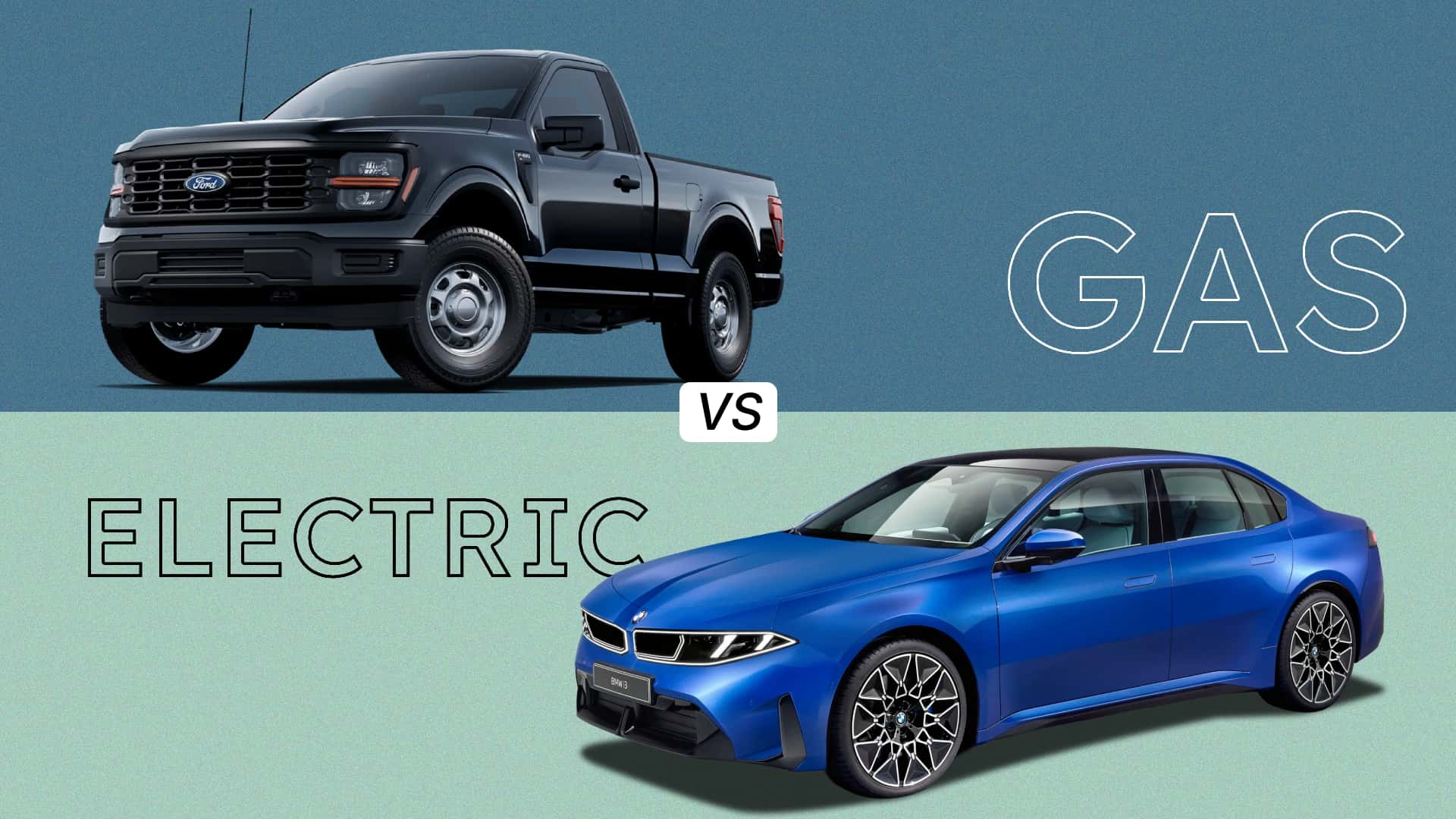
The automotive landscape is undergoing a profound transformation, with electric vehicles (EVs) demonstrating a pace of advancement that far outstrips the incremental changes seen in traditional internal combustion engine (ICE) vehicles over the past decade. A veteran automotive journalist, reflecting on a career shift from conventional vehicles to electric mobility, highlights a stark contrast in development cycles, observing more thrilling progress in the EV sector within two years than in ten years of gasoline engine evolution.
This rapid electric vehicle innovation is reshaping industry perspectives, challenging long-held beliefs, and setting a new trajectory for the future of transportation. As manufacturers continue to push boundaries, the inherent limitations of gasoline technology are becoming increasingly evident, making the case for electrification more compelling than ever before.

The Stagnation of Gasoline Engine Development
For decades, gasoline engines underwent continuous refinement, but the industry is now witnessing a significant plateau. Since 2017, the foundational engineering of many best-selling gasoline vehicles has remained largely unchanged, with minor tweaks offering marginal improvements at the cost of increased complexity and potential reliability concerns.
For instance, the Volvo S90, first reviewed professionally in 2017, featured a 2.0-liter inline-four engine with turbocharging or a combination of turbocharging and supercharging. Today, while the S90 has exited the US market, its SUV counterpart, the XC90, utilizes a similar engine/transmission pairing. Despite advancements in cabin technology and tuning, its fuel efficiency has improved by only 1 MPG, primarily due to the integration of a mild 48-volt hybrid system rather than fundamental gasoline engine design enhancements.
Reliability Challenges Amidst Efficiency Pursuits
The pursuit of marginal efficiency gains in gasoline engines has often introduced significant reliability challenges. The Ford F-150, America’s long-standing best-selling vehicle, has retained its core 2.7-liter, 3.5-liter turbocharged V-6s, and 5.0-liter V-8 engines since 2017. While the 10-speed automatic transmission has become more widespread, its initial rollout was marred by reliability issues. The most notable improvement has been the addition of a hybrid option, underscoring the benefits of electric assistance even for established gasoline products.

Similarly, Chevrolet trucks have faced transmission problems with both 8- and 10-speed models. The inclusion of cylinder-deactivation technology in the long-serving 5.3-liter V-8 engine, designed to improve highway fuel economy, inadvertently compromised its legendary reliability. This demonstrates a recurring theme: enhancing gasoline engine efficiency often necessitates added complexity, which can undermine durability.
Toyota, renowned for its bulletproof reliability, also encountered significant hurdles when redesigning the Tundra pickup. The previous generation’s 5.7-liter V-8 was celebrated for its longevity, with multiple units surpassing 1,000,000 miles. However, consumer demand for better fuel economy led to an all-new twin-turbo V-6 engine, which, despite its modern features like direct injection, resulted in over 100,000 recalled trucks and numerous engine failures. This highlights the inherent difficulties in fundamentally improving traditional internal combustion engines without introducing new vulnerabilities.
These instances collectively suggest that modern gasoline engines are being pushed to their design limits. Consumers seek reduced fuel costs without sacrificing power or capability, and without incurring higher repair bills. Electrification, whether through hybrids or pure EVs, emerges as the most viable path for substantial advancements in automotive powertrain technology.
The Acceleration of Electric Vehicle Innovation
In stark contrast to the stagnation of gasoline engines, the electric vehicle market is characterized by relentless innovation across all critical metrics. The rapid pace of electric vehicle innovation is not just about environmental benefits but also about tangible performance, convenience, and economic advantages for consumers.
Dramatic Gains in Charging Speed and Range
Two years ago, the quickest-charging EVs available in America typically required 18 to 19 minutes to charge from 10% to 80%. Today, advancements in battery and charging technology have dramatically cut this time, with some new models, like those from Mercedes, achieving an 11-minute charge for the same range. This significant reduction in charging time addresses one of the primary concerns for potential EV buyers.
EV range has also seen substantial improvements. While the Lucid Air Grand Touring still holds the record with 516 miles of range (a figure that, for many, is already beyond practical need), its starting price has decreased by over $10,000. Furthermore, a growing number of new models from manufacturers like Chevy, Cadillac, BMW, Volvo, and Lucid itself now offer over 400 miles of EPA-rated range.
The sweet spot for most consumers is considered to be above 300 miles of range. At the end of 2023, only 21 EV variants met this criterion. By the end of the current year, this number is projected to skyrocket to approximately 60 models, providing consumers with an unprecedented array of choices that mitigate range anxiety.
Expanding Infrastructure and Enhanced Reliability
Complementing the improvements in EV range and charging speed is the rapid expansion of charging infrastructure. Within the last two years, numerous fast-charging ports have come online, increasing accessibility for EV owners. A major milestone was achieved in 2023 when Tesla opened its extensive Supercharger network to other EV brands, significantly boosting the availability of reliable fast-charging options across North America. This interoperability further alleviates range concerns, making long-distance EV travel more feasible.
Beyond performance, electric vehicle innovation extends to reliability. Accumulating data consistently indicates that modern EV batteries exhibit slow degradation and rarely fail, debunking early concerns about battery longevity. Automakers are also refining software systems, moving away from problematic screen-only control schemes towards more intuitive interfaces. General Motors’ Ultium platform, for example, initially faced software bugs in models like the Chevy Blazer EV and Cadillac Lyriq, but significant over-the-air updates have largely resolved these issues, enhancing user experience and demonstrating the potential for continuous improvement through software.
Increased Affordability and Consumer Choice
Perhaps one of the most compelling aspects of current electric vehicle innovation is the increasing affordability and diversity of options. In 2024, the choice of compelling EV models was limited. Now, almost every major automaker offers polished electric alternatives across various segments.
The Chevy Blazer EV, which started at $58,590, is now available for around $45,000. The Equinox EV, boasting over 300 miles of range, starts at an even more accessible $35,000. Furthermore, new entries are poised to disrupt the market, with a $25,000 EV pickup from Slate and a sub-$30,000 Ford alternative on the horizon. Existing affordable models are also seeing substantial upgrades; the upcoming 2027 Chevy Bolt will charge in half the time of its predecessor at a similar price point, and the base Nissan Leaf now offers double the range of its 2024 counterpart, coupled with improved charging specifications and a refreshed design.
Automakers like BMW, Mercedes, and Volvo are launching sophisticated 800-volt EVs with extensive ranges and advanced software-defined architectures, often presenting a more attractive proposition than their gasoline equivalents. This expanding portfolio, including entries from GM, Rivian, and Toyota through its Subaru partnership, ensures that consumers can find an electric vehicle tailored to their needs and budget, marking a clear turning point in mass-market adoption.
The Future is Electric: Unlocking Further Potential
The trajectory of electric vehicle innovation indicates a future where EVs are not just alternatives but the dominant form of personal transportation. The North American battery supply chain is rapidly maturing, leading to falling production costs. Continuous iteration by automakers, combined with groundbreaking research in battery technology, promises even greater advancements.
Forthcoming battery breakthroughs, such as high-silicon anodes, lithium-manganese rich chemistries, and solid-state technology, are set to further reduce costs while simultaneously boosting range and extending longevity. Concurrently, the proliferation of software-defined vehicle architectures is simplifying EV design and manufacturing, making them cheaper to build, easier to service, and capable of receiving continuous updates and new features over the air.
In stark contrast, the internal combustion engine, after more than 150 years of development, has largely exhausted its potential for dramatic improvements. Significant gains in fuel efficiency for gasoline vehicles are now almost entirely dependent on the integration of electric components. The technology has reached a point of diminishing returns, where substantial progress without major sacrifices in cost, complexity, or reliability appears increasingly improbable.
As gasoline engine technology nears its evolutionary peak, electric vehicle innovation is just beginning its ascent, poised to redefine automotive performance, efficiency, and sustainability for decades to come.
FAQ Section
What are the key areas of electric vehicle improvement?
Electric vehicles have seen significant progress in charging speed, range capabilities, software reliability, and overall affordability. Consumer choice has also expanded dramatically, with more compelling models available across various price points and segments.
Why are gasoline engines considered to be stagnating?
Gasoline engine development has plateaued, with major models using similar core engine designs for years. Attempts to gain minor fuel efficiency improvements often lead to increased mechanical complexity, compromising reliability and failing to offer substantial performance or economic benefits comparable to EVs.
How has EV range changed over the past two years?
EV range has significantly increased, with more models offering over 400 miles of EPA-rated range. The number of variants exceeding 300 miles of range is projected to nearly triple within a year, offering greater practicality and reducing range anxiety for daily use and longer journeys.
What about electric vehicle charging infrastructure?
The fast-charging network in America has expanded rapidly, with numerous new ports coming online. A pivotal development was Tesla opening its Supercharger network to other EVs in 2023, dramatically improving accessibility and reducing concerns about finding compatible charging stations.
Are electric vehicles becoming more affordable?
Yes, EV prices are falling rapidly. Models like the Chevy Blazer EV have seen significant price reductions, and new options like the Equinox EV offer over 300 miles of range at a starting price of $35,000. Sub-$30,000 EVs are also expected to enter the market soon.
What does the future hold for electric vehicle technology?
The future of EVs looks promising, with ongoing electric vehicle innovation in battery technology such as high-silicon anodes and solid-state chemistries promising further range and longevity improvements. Software-defined vehicle architectures will also make EVs cheaper to build, easier to service, and enable continuous over-the-air updates.