
Key Takeaways:
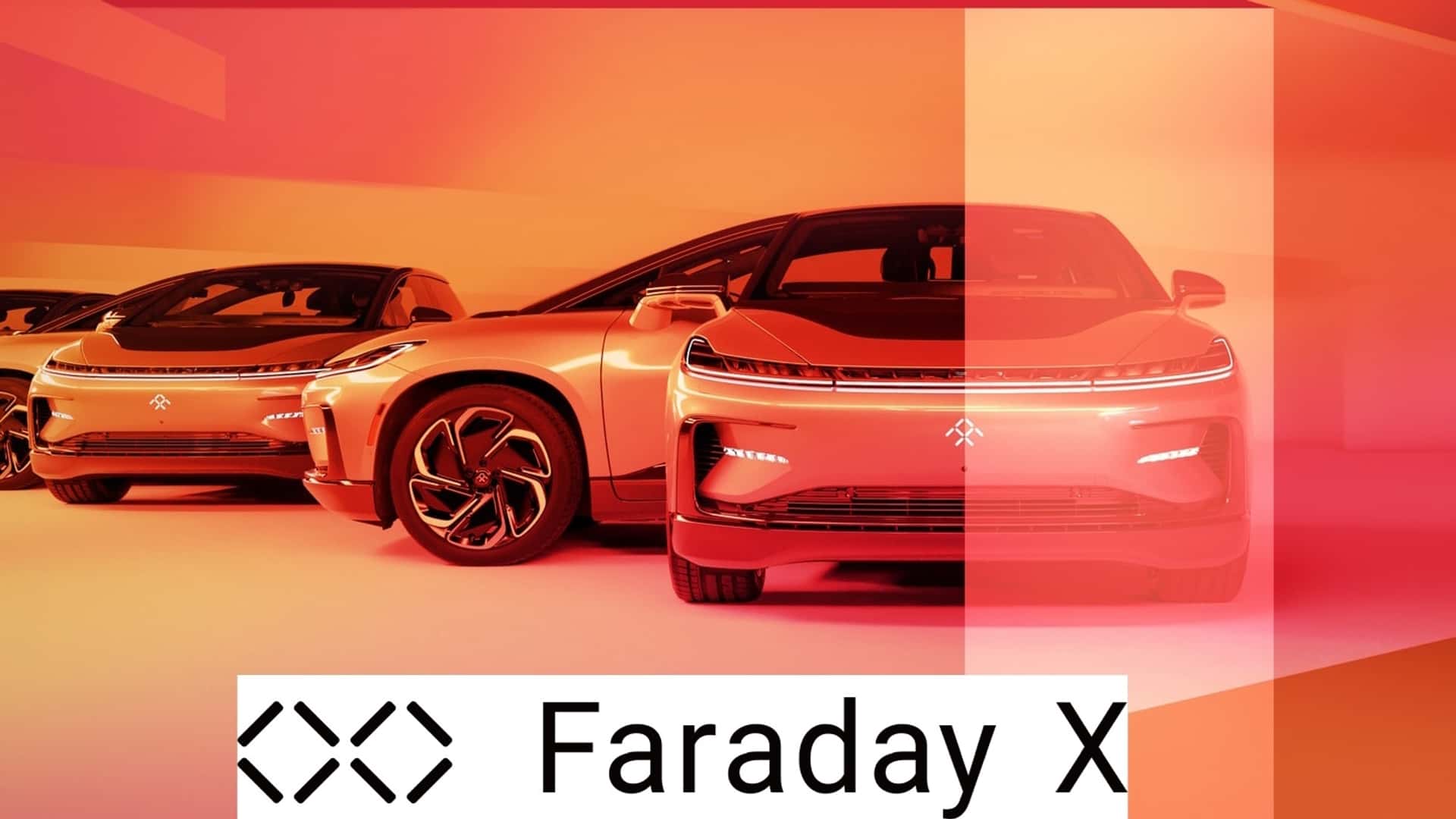
- Faraday Future unveiled a new sub-brand, Faraday X, at CES 2025, aiming for the affordable electric vehicle (EV) and plug-in hybrid market with models priced between $20,000 and $50,000.
- The company’s past is marked by a decade of financial turmoil, geopolitical complexities, and unfulfilled production promises, particularly concerning its flagship FF 91 model, which saw only 16 units produced since its 2017 debut.
- Faraday X plans to introduce a “Super One” luxury AI MPV, targeting production by the end of 2025, aiming to fill a perceived gap in the luxury minivan segment, despite initial prototype observations raising questions about unique features.
- The integration of Artificial Intelligence (AI) is central to Faraday Future’s new branding, with vehicles like the FF 91 dubbed “AI-EVs” and the Super One as a “Luxury AI MPV,” though current AI functionalities observed in prototypes show limitations.
- The founder, Yueting “YT” Jia, remains a controversial figure due to massive personal debts and ongoing legal issues in China, casting a persistent shadow over the company’s credibility, despite assurances from current leadership.
Faraday Future Unveils New Vision Amid Lingering Skepticism at CES 2025
Las Vegas, Nevada — Faraday Future, an electric vehicle (EV) manufacturer with a tumultuous history, recently presented an ambitious new roadmap at CES 2025. Max Ma, CEO of the company’s new sub-brand, Faraday X, articulated a vision of resilience, overcoming a decade of formidable obstacles to achieve series production of its initial product, the FF 91.

This renewed optimism is anchored in plans for higher-volume market segments, promising a range of affordable electric vehicles and plug-in hybrids. The proposed pricing strategy targets a sweet spot between $20,000 and $50,000, accompanied by a deeply integrated artificial intelligence (AI) experience. While compelling, this forward-looking narrative requires a leap of faith, given Faraday Future’s complex and often controversial past.
A Decade of Ambition and Obstacles
The name Faraday Future evokes a complex tapestry of corporate maneuverings, geopolitical intricacies, and a long trail of undelivered promises. These pledges primarily originated from the company’s founder, Yueting “YT” Jia. Once hailed as a prominent internet entrepreneur in China, Jia’s reputation has since been marred by substantial unresolved debts in his home country.
The company’s defining product, the FF 91, stands as a testament to its initial, grand ambitions. Unveiled at CES in 2017, the Faraday Future FF 91 was positioned as a groundbreaking EV, boasting over 1,000 horsepower, an impressive 378 miles of electric range, and Level 4 autonomous driving capabilities.

The Promise of the FF 91
These specifications were cutting-edge for 2017, aligning with the advanced technological expectations typically associated with China’s leading EV manufacturers today. Faraday Future had initially announced plans for the FF 91 to commence production in 2018. This was to occur at a purpose-built Nevada factory, a facility distinct from the retrofitted plants utilized by early EV pioneers like Tesla and Rivian.
However, the promised manufacturing facility never fully materialized. Work on the Nevada factory ceased even before the FF 91’s official unveiling, a development that prompted the then-treasurer of Nevada to label the venture a “Ponzi scheme,” as reported by Fortune.
Unfulfilled Production and Financial Turmoil
More than eight years after the halt in factory construction, seven years post-introduction, and six years beyond its projected production start date, Faraday Future has managed to produce only 16 units of the FF 91. Virtually all these vehicles have been distributed among employees, paid spokespeople, and other advocates.
Notably, perpetually troubled American singer Chris Brown was listed among these spokespeople, raising questions about the company’s judgment in its associations. This history of financial struggles and unfulfilled commitments underscores the challenge Faraday Future faces in establishing credibility within the competitive global EV market.
Introducing Faraday X: A New Direction
At CES 2025, Faraday Future introduced Faraday X, its new sub-brand, signaling a strategic pivot. While the existing FF 91 commands a price tag exceeding $300,000, CEO Max Ma stated that Faraday X would target a more accessible market segment, specifically the $20,000 to $50,000 range.
This initiative includes new models such as the FX 5, envisioned to be priced between $20,000 and $30,000, and the FX 6, targeting the $30,000 to $50,000 bracket. Additionally, the sub-brand previewed a “Super One” minivan, with its price yet to be disclosed.
Shifting Focus to Affordable Segments
Details regarding the FX 5 and FX 6 remain sparse. However, Faraday X presented a Super One prototype, confirming that this vehicle is slated for production by the end of this year at its California manufacturing facility. The Super One aims to introduce American consumers to the “luxury MPV” segment, a category that has gained considerable popularity in Asian markets, particularly in China.
Max Ma likened this strategic shift to a “Nokia and iPhone moment” for the brand, asserting that “you have the right product and open people’s hearts.” He believes there is substantial merit in a luxury minivan offering a fusion of Cadillac Escalade-level opulence within a Toyota Sienna-like package, featuring plush recliners and advanced technology.
The “Super One” Luxury AI MPV
Ma, an engineer with a decade at Faraday Future and prior experience at Altran (a Porsche supplier) and Bosch (working on Volkswagen Group’s V-8, W-12, and W-16 engines), brings significant automotive bona fides. He also possesses personal experience with minivans, driving a Kia Carnival. He identifies a crucial market gap between high-end minivans and super-luxury SUVs, a void he believes the Super One is poised to fill.
He envisions the Super One transforming the market in the same way luxury MPVs have reshaped high-end segments across Asia. “The same thing is going to happen here,” Ma told InsideEVs. “Today, the celebrities are using Escalades. [It’s] big, but there’s no real luxury, top luxury, or, you know, space and comfort. There’s no AI. And then if you want to drive yourself, it’s very hard to drive. It’s a big car, right? At the same time, celebrities are starting to modify their Mercedes Sprinter vans because they do want to have [this experience].”
The Allure and Reality of “AI-EVs”
Faraday Future’s emphasis on Artificial Intelligence is pronounced. The company was an early adopter of AI buzzwords in the automotive sector, a trend that gained significant traction at CES 2025. However, Faraday Future has arguably taken this integration further than most competitors.
The FF 91 is not merely an EV; it is branded an “AI-EV.” Similarly, the Super One is not just an MPV, but a “Luxury AI MPV.” With its anticipated plug-in hybrid capabilities and yet-to-be-announced specifications, it is further designated as a Range Extended Artificial Intelligence Electric Vehicle, or “RE-AIEV” for brevity.
Integrating Artificial Intelligence
During a lengthy introduction, both Faraday X CEO Max Ma and Faraday Future CEO Matthias Aydt underscored AI as a foundational element of their mission. (It is important to note that founder YT Jia was removed as CEO in 2022 following an internal investigation but remains with the company.) Positioning AI at the core of their offerings is a rational strategy for any technology company pitching products today.
However, an inspection of the product itself revealed certain discrepancies between the ambitious AI promises and the current state of implementation. A product representative offered a tour of the Super One prototype to journalists, but the term “prototype” proved to be somewhat generous.
Prototype Observations and Practicality
Faraday X transparently acknowledges that the Super One is being developed with the assistance of a Chinese partner, utilizing an established design. Essentially, the Super One appears to be a rebadged Chinese plug-in hybrid MPV, integrated with Faraday Future’s proprietary technology. The prototype displayed was, by observation, largely an existing Chinese MPV, potentially a Dongfeng Voyah Dream, though photography was not permitted.
The prototype demonstrated limited FX-specific equipment. The entire tech stack was visibly unfinished, with the dashboard covered in black cloth, a common practice for prototypes. The focus during the tour was on the rear recliners, which proved comfortable and featured power recline and massage functions, extending similar luxury to the third row. This experience indeed surpassed what one might find in top-tier Toyota Sienna or Kia Carnival models.
However, specific AI features were notably absent. When questioned about the AI capabilities, the product representative responded, “Well, it’s a general term.” He elaborated that it would support voice controls and include semi-autonomous driving features. This explanation contrasted sharply with Max Ma’s earlier claim that no other MPV product on the market incorporated AI, given that these two features are standard across virtually all modern minivans.
To provide a better demonstration of Faraday Future’s AI prowess, an FF 91 was showcased. It exhibited impressive voice command capabilities, accurately responding to requests such as “Find me an Italian restaurant with outdoor seating and at least four stars, exclude pizzerias.” The vehicle then understood the context when instructed to “Navigate to the third one.”
Yet, the “large language model” AI companion on the rear screen of the FF 91 was considerably less impressive. A spokesperson claimed it would automatically display relevant stock tickers corresponding to videos being watched. After several attempts, a CNBC YouTube video was successfully played, and the AI companion indeed pulled up a stock ticker. However, this information was either outdated by at least three months or entirely fabricated, bearing no resemblance to current stock prices. This incident served as a stark metaphor for the current challenges of shoehorned AI integration, particularly when it presents incorrect information without explicit prompting, even in a production-ready vehicle like the FF 91.
The Shadow of Founder Yueting Jia
At the core of Faraday Future’s complex narrative is its founder and chief product officer, Yueting “YT” Jia. Despite his significant role, Jia was conspicuously absent from the CES 2025 meeting. Max Ma confirmed that Jia remains entangled in legal issues in China.
A Troubled Legacy
Jia’s entrepreneurial journey included founding companies such as Leshi, a streaming service akin to Netflix; LeEco, a conglomerate involved in diverse sectors from televisions to smartphones, all underpinned by a common software ecosystem; and a distinct Le-branded car venture. The distinction between his numerous enterprises was frequently blurred, yet at one point, he was estimated to be a billionaire. During China’s economic ascent in the 2010s, Jia was often considered a potential counterpart to figures like Elon Musk.
However, Jia accumulated substantial personal debt, which he secured using Faraday Future stock. His inability to repay creditors led to personal bankruptcy proceedings in the U.S., though his affairs in mainland China were never fully settled. Max Ma indicated that certain issues concerning Jia’s status in China persist to this day.
Ongoing Financial and Legal Challenges
“Under U.S. law, YT has been through a successful personal restructuring,” Ma stated. However, this does not imply he is entirely absolved of his legal and financial obligations in China. “And within [Chinese] law, there have been certain small amounts of funding that need to be further cleared. So that’s the reason why he’s still working very hard to, kind of through different means, to try to earn money and pay the debt back to the debt creditors,” Ma explained.
This situation places Jia in a precarious position, facing significant domestic challenges while affiliated with an American company, Faraday Future, which has itself experienced bankruptcy and required a rescue by Evergrande—a Chinese property giant that later faced its own monumental collapse, nearly destabilizing China’s economy. Jia’s ongoing personal issues inevitably contribute to the prevailing uncertainty surrounding Faraday Future, even as its leadership continues to emphasize his importance.
Leadership’s Stance on Jia’s Role
Matthias Aydt, Faraday Future’s global CEO, downplayed concerns about Jia’s personal issues, categorizing them as solely individual matters. Aydt asserted that Faraday Future has no further financial or operational exposure to any issues in Jia’s personal life. Both Aydt and Ma also expressed their belief in Jia’s character and their continued trust in him.
“His role is pretty important. He’s the founder of the company,” Aydt told InsideEVs. “He has given his ideas to the products. So from that perspective, he’s an essential and crucial element for our leadership team. He’s reporting in parallel to me, directly to the board, so his role is focusing very much on product and the user ecosystem.” The fundamental question remains whether shareholders, prospective customers, and industry critics should mirror this trust, given the company’s tumultuous journey and the founder’s complex financial background.
Rebuilding Trust in a Skeptical Market
Max Ma made a direct appeal for a more positive perception of the Faraday Future brand during the CES 2025 presentation, an unusual request from a CEO addressing the media. He framed the company’s journey as a narrative of resilience, a story of pushing forward despite widespread doubt. Ma’s tenure with the company dates back to its inception, encompassing an attempted corporate takeover, the failure of the Nevada manufacturing plant, and the eventual launch of the FF 91. He remains actively engaged, committed to making the venture succeed.
A Call for Positive Reception
Recognizing the skepticism, it was noted that lending credibility to Faraday Future presented a challenge. The company’s historical performance has provided the public with limited reasons for trust. Ma acknowledged this perspective, stating, “We have been trained, with big hearts, with resilience, with hard [work.] We also want to have this big opportunity to prove that we can do it again, right?” he told InsideEVs.
Confronting Credibility Concerns
Ma further asserted that Faraday Future is actively addressing its past. “There’s also activities about a reputational issue. But today we have cleared up all those issues. It’s all behind us. We want to have a fresh start.” The company’s ability to secure this “fresh start” will heavily depend on its capacity to deliver on its new promises, move past its legacy of challenges, and convince a wary market that its ambitious plans are genuinely attainable.
Frequently Asked Questions (FAQ)
What new sub-brand did Faraday Future launch at CES 2025?
Faraday Future launched Faraday X at CES 2025. This new sub-brand is designed to target higher-volume market segments, focusing on more affordable electric vehicles and plug-in hybrids. It represents a strategic shift from the company’s previous ultra-luxury offerings.
What is the price range target for Faraday X vehicles?
Faraday X aims to introduce vehicles in the $20,000 to $50,000 price range. This includes models like the FX 5, targeting $20,000-$30,000, and the FX 6, priced between $30,000-$50,000, significantly more accessible than the current FF 91 model.
How many FF 91 vehicles has Faraday Future produced to date?
Since its unveiling at CES in 2017 and a proposed production start in 2018, Faraday Future has produced only 16 units of the FF 91. Most, if not all, of these vehicles were distributed to employees, paid spokespeople, and advocates rather than general consumers.
What is the “Super One” Luxury AI MPV?
The “Super One” is a luxury AI MPV prototype unveiled by Faraday X at CES 2025. It aims to introduce American consumers to high-end minivans, popular in Asian markets, featuring advanced technology and luxury amenities. Production is targeted for late 2025 at its California facility.
What is the role of Artificial Intelligence (AI) in Faraday Future’s new products?
AI is a core component of Faraday Future’s new branding, with vehicles like the FF 91 termed “AI-EVs” and the Super One as a “Luxury AI MPV.” The company emphasizes AI for voice controls and semi-autonomous driving features, aiming for a deeply integrated user experience, though current implementations show mixed results.
What is the current status of Faraday Future’s founder, Yueting Jia?
Yueting “YT” Jia remains the founder and chief product officer but is not CEO. He has undergone personal debt restructuring in the U.S. but faces ongoing financial and legal issues in China related to outstanding debts. His status continues to be a point of scrutiny for the company’s credibility.
How is Faraday Future addressing past credibility issues?
Faraday Future’s leadership acknowledges past challenges and reputational issues, stating that these are now “all behind us.” They are appealing for a “fresh start” and emphasize the company’s resilience and commitment to proving its capabilities in the competitive EV market through new product launches and a revised strategy.