
Key Takeaways / TL;DR
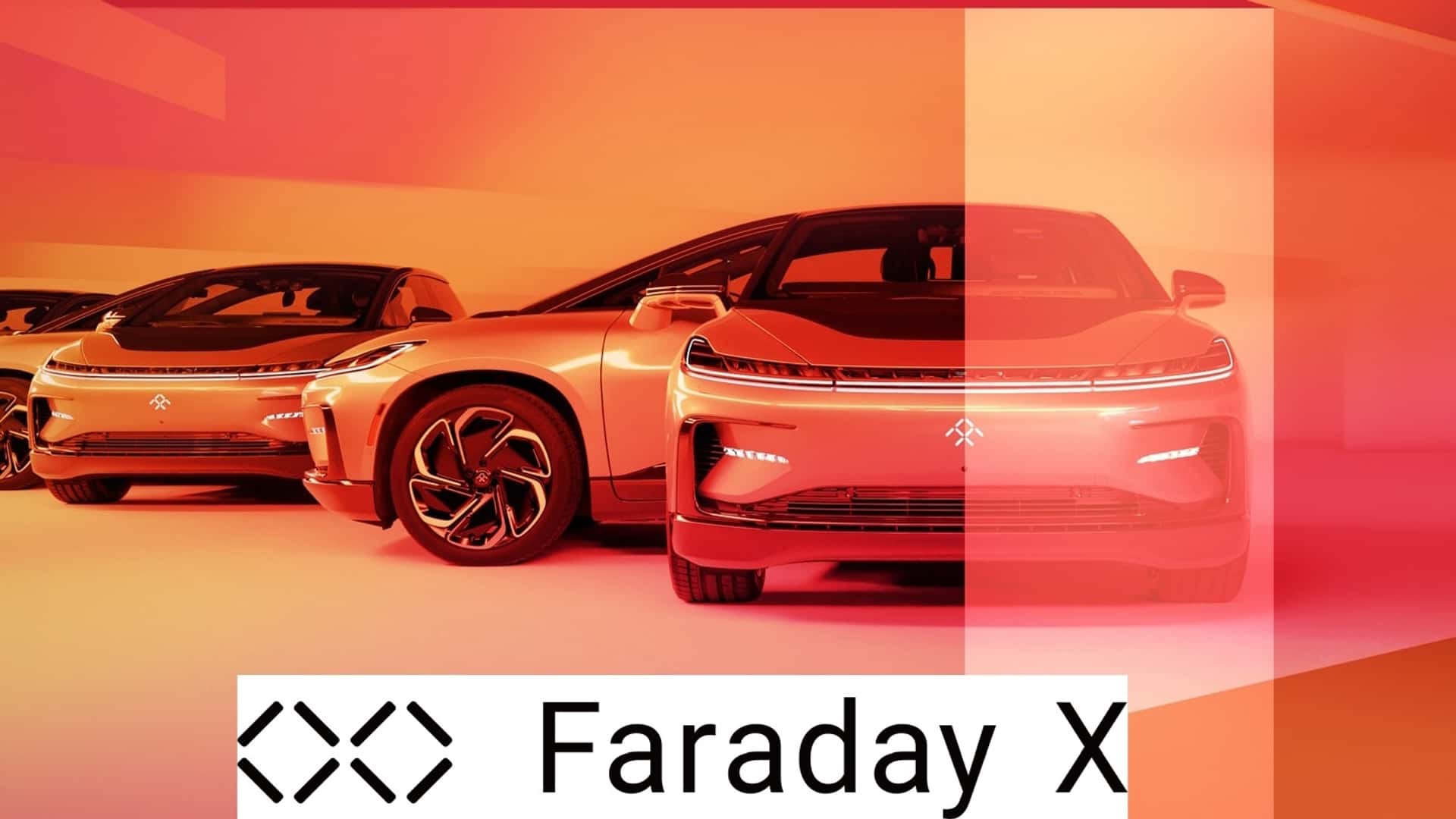
Faraday Future (FF) unveiled its new sub-brand, Faraday X (FX), at CES 2025, promising a line of affordable electric vehicles (EVs) and plug-in hybrids priced between $20,000 and $50,000, alongside a luxury AI MPV called the Super One. Despite the compelling vision presented by Faraday X CEO Max Ma, the company continues to grapple with a decade-long history of financial instability, unfulfilled production promises for its flagship FF 91, and the enduring controversy surrounding its founder, Yueting ‘YT’ Jia. While FF leadership asserts a fresh start and a strong focus on AI integration, hands-on experiences with prototypes revealed inconsistencies in the promised technology and a clear reliance on existing Chinese designs, casting a familiar shadow of skepticism over its ambitious new direction in the competitive electric vehicle market.
Faraday Future’s Dual Narrative Unfolds at CES 2025
Las Vegas – In a landscape brimming with innovation at CES 2025, Faraday Future (FF), a name long associated with both pioneering electric vehicle (EV) aspirations and a turbulent financial history, presented a renewed vision for its future. The company introduced its new sub-brand, Faraday X (FX), outlining ambitious plans that include a range of affordable electric vehicles and a deeply integrated AI experience, aiming to carve out a significant niche in the evolving electric vehicle market.
Max Ma, the CEO of Faraday X, articulated a compelling narrative of resilience and forward momentum. He described a company that, despite a decade of formidable obstacles, has finally achieved production of its initial product, the FF 91, and is now poised to enter higher-volume market segments. Ma’s vision encompassed promises of EVs and plug-in hybrids spanning the $20,000 to $50,000 price bracket, coupled with an advanced artificial intelligence (AI) experience.
This optimistic outlook, however, remains inextricably linked to Faraday Future’s convoluted past. To fully embrace the new promises, industry observers and potential consumers alike must reconcile them with a history marked by corporate intrigue, geopolitical complexities, and a trail of undelivered commitments that have long challenged the company’s credibility in the electric vehicle market.
A Decade of Unfulfilled Promises: The Faraday Future Legacy
The name Faraday Future often evokes a sense of familiarity, yet the intricate details of its decade-long journey remain largely obscure to many. This extensive history is woven with threads of corporate takeovers, significant geopolitical events, and a series of pledges that, for years, remained unfulfilled. Many of these initial promises emanated from Faraday Future’s founder, Yueting “YT” Jia.
The Specter of the FF 91
Jia, once celebrated as a prominent internet entrepreneur in China, now faces considerable scrutiny and is notably unwelcome in his home country due to substantial outstanding debts. It is through his vision that the company’s flagship model, the FF 91, first came into the public eye.
Unveiled with considerable fanfare at CES in 2017, the FF 91 was touted as a groundbreaking electric vehicle. It boasted specifications that, even by today’s standards, would be considered aggressive: over 1,000 horsepower, an impressive 378 miles of electric range, and Level 4 autonomous driving capabilities. These were the kinds of advanced technologies one would anticipate from leading Chinese EV makers today, positioning Faraday Future at the forefront of innovation at the time.
Crucially, Faraday Future announced that production of the FF 91 was slated to commence sometime in 2018. This production was to take place at a purpose-built factory in Nevada—a new facility constructed from the ground up, contrasting with the retrofitted plants utilized by early pioneers like Tesla and Rivian. This promise of bespoke infrastructure underscored the company’s ambitious scale.
Production Hurdles and Allegations
Despite the grand pronouncements and significant initial investments, alongside incentives from the state of Nevada, the envisioned factory never fully materialized. Work on the facility was halted even before the FF 91 was officially revealed, leading to serious questions about the company’s operational integrity. This abrupt cessation prompted the then-treasurer of Nevada to publicly label the enterprise a “Ponzi scheme,” a stark accusation reported by Fortune.
Over eight years since the factory work stalled, seven years after the FF 91’s dramatic introduction, and six years past its initial proposed production start date, Faraday Future has managed to produce a mere 16 units of the FF 91. A significant, if not entire, portion of these vehicles has been distributed to employees, paid spokespeople, and other company advocates.
Notably, perpetually troubled American singer Chris Brown is among those spokespeople, a detail that has done little to assuage concerns about the company’s judgment or the strategic efficacy of its endorsements. Now, once again, Faraday Future returns to CES, presenting a new array of compelling promises. This time, however, the company emphatically states that circumstances are different, signalling a determined effort to redefine its presence in the global electric vehicle market.
Faraday X Emerges: A New Chapter at CES 2025
The introduction of Faraday X marks a pivotal strategic shift for Faraday Future. While the company’s inaugural and sole product, the FF 91, carries a premium price tag exceeding $300,000, the new sub-brand, under the leadership of Max Ma, is set to target a far more accessible segment of the electric vehicle market. FX aims for a price range of $20,000 to $50,000, signaling a move towards broader consumer appeal.
Targeting the Affordable Electric Vehicle Segment
The Faraday X lineup will include the FX 5, projected to be priced between $20,000 and $30,000, and the FX 6, with an estimated cost ranging from $30,000 to $50,000. Further details regarding these two models remain scarce. However, a third vehicle, the “Super One” minivan, presented at an undisclosed price, was showcased as a prototype, providing a tangible glimpse into the sub-brand’s immediate future.
FX executives indicated that the Super One, slated for assembly at Faraday Future’s existing manufacturing facility in California, is on track for production by the close of this year. This luxury MPV aims to introduce American consumers to a vehicle segment that has gained considerable popularity in China and other Asian markets, characterized by an opulent experience comparable to a Cadillac Escalade but within the practical form factor of a Toyota Sienna. The design emphasizes lavish amenities, including plush reclining seats and state-of-the-art technology, redefining luxury in the minivan space.
Max Ma characterized this moment as a “Nokia and iPhone moment” for the brand, expressing confidence that “you have the right product and open people’s hearts.” His conviction stems from a deep engineering background and a nuanced understanding of the automotive industry.
The Luxury AI MPV: Super One’s Vision
Ma, an engineer by training, brings a wealth of experience, having spent over a decade at Faraday Future. Prior to his tenure at FF, he contributed to engineering work for Altran, a supplier to Porsche, and Bosch, where he focused on the V-8, W-12, and W-16 Volkswagen Group engine architectures. His personal choice of a Kia Carnival underscores his practical insight into the minivan segment.
Ma identifies a significant gap in the market between high-end minivans and ultra-luxury SUVs, a void he believes the Super One is perfectly positioned to fill. He envisions the Super One transforming the American market, much as luxury MPVs have reshaped high-end segments across Asia.
“The same thing is going to happen here,” Ma confidently stated. He elaborated on the current market dynamics: “Today, the celebrities are using Escalades. [It’s] big, but there’s no real luxury, top luxury, or, you know, space and comfort. There’s no AI. And then if you want to drive yourself, it’s very hard to drive. It’s a big car, right? At the same time, celebrities are starting to modify their Mercedes Sprinter vans because they do want to have [this experience].” This analysis underpins Faraday X’s strategic entry into the luxury MPV space within the broader electric vehicle market.
The AI-EV Mandate: Innovation or Buzzword?
Faraday Future’s strategic focus is undeniably fixed on artificial intelligence. The company stands out as one of the earliest automotive brands to extensively integrate AI buzzwords into its product narratives. While AI terminology was pervasive across CES 2025, Faraday Future has arguably pushed this integration further than many of its contemporaries in the electric vehicle market.
From EV to AI-EV: A Branding Evolution
For Faraday Future, the FF 91 is no longer merely an EV; it is branded an “AI-EV.” Similarly, the new Super One is not simply an MPV, but a “Luxury AI MPV.” With plans to offer it as a plug-in hybrid with yet-to-be-announced specifications, the Super One will be marketed as a “Range Extended Artificial Intelligence Electric Vehicle,” or “RE-AIEV,” emphasizing its comprehensive AI integration.
During an extensive introductory session, both FX CEO Max Ma and Faraday Future Global CEO Matthias Aydt underscored the centrality of AI to their overarching mission. It is notable that founder Yueting Jia, who was removed as CEO in 2022 following an internal investigation but remains with the company, continues to be a key proponent of this AI-centric strategy. This emphasis on AI represents a reasonable and timely position for a company aiming to pitch itself as a tech innovator in today’s market. However, a closer inspection of the actual product implementations revealed certain discrepancies.
Unpacking the AI Claims
As soon as the discussion shifted from conceptual promises to the tangible product offerings, initial cracks began to emerge in the otherwise polished presentation. The bold claims of revolutionary AI integration, while compelling in theory, faced practical scrutiny, prompting questions about the depth and functionality of these advanced systems within Faraday Future’s vehicles as it navigates the complex electric vehicle market.
Scrutiny on the Ground: Super One Prototype and AI Implementation
A tour of the Super One prototype was offered to a select group of journalists, including this reporter. However, describing it as a full prototype would be generous. Faraday X maintained transparency about its collaboration with a Chinese partner, leveraging a mature design for the vehicle. Essentially, the Super One is envisioned as a rebadged Chinese plug-in hybrid MPV, integrated with Faraday Future’s proprietary technology.
The Prototype: A Glimpse into the Future?
The prototype showcased was, to a large extent, a readily available Chinese MPV. Based on internal observations, it bore a strong resemblance to a Dongfeng Voyah Dream, though exact confirmation was not possible as photography was prohibited. Regardless of its specific origin, the prototype displayed minimal FX-specific equipment, suggesting an early stage of integration for Faraday Future’s bespoke features.
The vehicle’s tech stack was evidently unfinished, with the dashboard entirely concealed by black cloth, a common practice for prototypes. Instead, the focus during the tour was directed to the rear cabin, highlighting the expansive recliners. These seats were indeed comfortable, offering power recline and massage functions, with similar premium seating provided for the third row. The experience certainly elevated beyond what one might find in top-tier models like the Toyota Sienna or Kia Carnival, offering a distinct sense of luxury.
AI’s Practical Application: Hits and Misses
Despite the emphasis on AI, no discernible AI features were apparent in the Super One prototype. When queried about the specific AI functionalities, a product representative offered a rather broad explanation: “Well, it’s a general term.” He further elaborated that the vehicle would support voice controls and incorporate semi-autonomous driving features. However, given Max Ma’s assertion that no other MPV product on the market currently features AI, one would expect a more distinct and advanced suite of capabilities beyond what are now standard offerings in most minivans.
To provide a clearer demonstration of Faraday’s AI capabilities, an FF 91 production vehicle was showcased. Its voice command system proved impressive, capably responding to complex requests such as, “Find me an Italian restaurant with outdoor seating and at least four stars, exclude pizzerias.” The system complied, and when instructed to “Navigate to the third one,” it accurately understood the contextual command, demonstrating effective natural language processing.
Conversely, the “large language model” AI companion integrated into the FF 91’s rear screen was considerably less compelling. A spokesperson attempted to demonstrate its ability to automatically display relevant stock tickers alongside videos. After several unsuccessful attempts, a CNBC YouTube video was finally played. As promised, the AI companion did retrieve a stock ticker; however, the information presented was either severely outdated by at least three months or entirely fabricated, bearing no resemblance to current stock prices. This inconsistency, observed in a production model, serves as a poignant metaphor for the challenges of integrating advanced AI, underscoring the gap between ambitious claims and current functional reality within the electric vehicle market.
The Lingering Shadow of Yueting Jia
At the very core of Faraday Future’s ongoing narrative lies the enigmatic figure of Yueting “YT” Jia. The social media sensation, Chinese entrepreneur, and founder and Chief Product Officer of Faraday Future was conspicuously absent from the recent CES meeting. According to Max Ma, Jia continues to face unresolved legal challenges in China, a significant element of his complex past.
Founder’s Legacy and Financial Entanglements
Jia’s entrepreneurial journey included founding diverse companies such as Leshi, a streaming service akin to Netflix, and LeEco, a conglomerate that ventured into various sectors from televisions to smartphones, all underpinned by a unified software ecosystem. He also spearheaded a distinct Le-branded automotive enterprise, separate from Faraday Future. The operational boundaries among his numerous ventures were often indistinct, yet at one point, he was recognized as a billionaire.
During China’s economic ascent in the 2010s, Jia was frequently hailed as a potential Chinese equivalent to Elon Musk. However, his financial empire began to unravel as he accrued massive personal debts, secured notably against Faraday Future stock. His failure to repay creditors led to a personal bankruptcy filing in the U.S., though his affairs in mainland China remained unsettled. Ma confirmed that certain issues concerning Jia’s status in China persist to this day.
“Under U.S. law, YT has been through a successful personal restructuring,” Ma stated, clarifying the situation from an American legal perspective. However, he added: “And within [Chinese] law, there have been certain small amounts of funding that need to be further cleared. So that’s the reason why he’s still working very hard to, kind of through different means, to try to earn money and pay the debt back to the debt creditors.”
Leadership’s Stance on Corporate Governance
This ongoing financial and legal vulnerability leaves Jia in a precarious position. Facing significant challenges in his home country, and associated with an American company, FF, which has previously encountered severe financial distress—even requiring a rescue by Evergrande, a Chinese property giant that itself subsequently faced collapse—Jia’s personal issues continue to fuel uncertainty around Faraday Future. This persists even as the company’s current leadership emphasizes his crucial role.
Matthias Aydt, Faraday Future’s Global CEO, reiterated Jia’s importance: “His role is pretty important. He’s the founder of the company. He has given his ideas to the products. So from that perspective, he’s an essential and crucial element for our leadership team. He’s reporting in parallel to me, directly to the board, so his role is focusing very much on product and the user ecosystem.”
Aydt dismissed concerns regarding Jia’s personal issues, characterizing them as purely private matters. He asserted that Faraday Future has no further exposure to any of Jia’s personal financial or legal difficulties. Both Aydt and Ma expressed their personal trust in Jia’s character and integrity. This collective stance from Faraday Future’s leadership raises a critical question: should shareholders, customers, and industry critics extend the same level of trust and confidence, especially given the company’s past struggles and its founder’s complex financial history within the dynamic electric vehicle market?
Charting a Path Forward: Rebuilding Trust
In a candid exchange with the media, Max Ma made a direct appeal for a more positive reception towards Faraday Future. He articulated a narrative of profound resilience, recounting the company’s journey through periods of intense doubt and adversity. Ma, who has been with Faraday Future since its inception, has personally navigated the challenges of an attempted corporate takeover, the failure of the Nevada manufacturing plant, and ultimately, the eventual launch of the FF 91. His persistence, he suggested, epitomizes the company’s ongoing struggle and its determination to succeed.
An Appeal for Credibility
When confronted with the inherent difficulty of extending credibility to a company with Faraday Future’s checkered past, Ma acknowledged the public’s skepticism. He understood that, from a journalistic perspective, misleading an audience was unacceptable, especially when the company itself has provided scant reasons for public trust.
“We have been trained, with big hearts, with resilience, with hard [work.] We also want to have this big opportunity to prove that we can do it again, right?” Ma told InsideEVs, emphasizing the deep-seated determination within the organization. He added: “There’s also activities about a reputational issue. But today we have cleared up all those issues. It’s all behind us. We want to have a fresh start.”
This declaration marks a significant inflection point for Faraday Future as it endeavors to shed the weight of its past and establish a new trajectory in the highly competitive electric vehicle market. The coming months will be crucial in determining whether this “fresh start” can genuinely translate into consistent production, transparent operations, and, ultimately, renewed trust from both the market and its consumers.
Frequently Asked Questions (FAQ)
What new sub-brand did Faraday Future launch at CES 2025?
Faraday Future launched its new sub-brand, Faraday X (FX), at CES 2025. This new brand is focused on developing and delivering more accessible electric vehicles and plug-in hybrids, aiming to broaden Faraday Future’s market reach beyond its initial ultra-luxury segment.
What is the target price range for Faraday X vehicles?
Faraday X aims to introduce vehicles in the $20,000 to $50,000 price range. This includes models like the FX 5, projected between $20,000-$30,000, and the FX 6, targeting $30,000-$50,000, signifying a strategic shift towards more affordable electric vehicle options.
What is the “Super One” and when is it expected to be produced?
The “Super One” is a luxury AI MPV (minivan) from Faraday X, intended to introduce a high-end minivan experience popular in Asian markets to American consumers. It is expected to enter production at Faraday Future’s California facility by the end of 2025.
How many FF 91 vehicles has Faraday Future produced to date?
Despite being unveiled at CES in 2017 with a proposed production start date of 2018, Faraday Future has produced only 16 units of the FF 91. Most, if not all, of these vehicles have been allocated to employees, paid spokespeople, and advocates.
What role does AI play in Faraday Future’s new vision?
Faraday Future positions AI as core to its mission, branding its vehicles as “AI-EVs” or “RE-AIEVs.” The company promises deeply integrated AI experiences, including advanced voice controls and semi-autonomous driving features, aiming to differentiate its offerings in the electric vehicle market.
What are the ongoing concerns regarding Faraday Future’s founder, Yueting Jia?
Yueting “YT” Jia, Faraday Future’s founder, faces ongoing legal and financial issues in China stemming from significant personal debts. While he underwent a successful personal restructuring under U.S. law, some funding issues in China remain, contributing to a cloud of uncertainty over the company’s financial stability and reputation.
Where will the Faraday X Super One be manufactured?
The Faraday X Super One luxury AI MPV is slated to be assembled at Faraday Future’s manufacturing facility located in California. This utilizes existing infrastructure as the company expands its product portfolio.