
Key Takeaways:
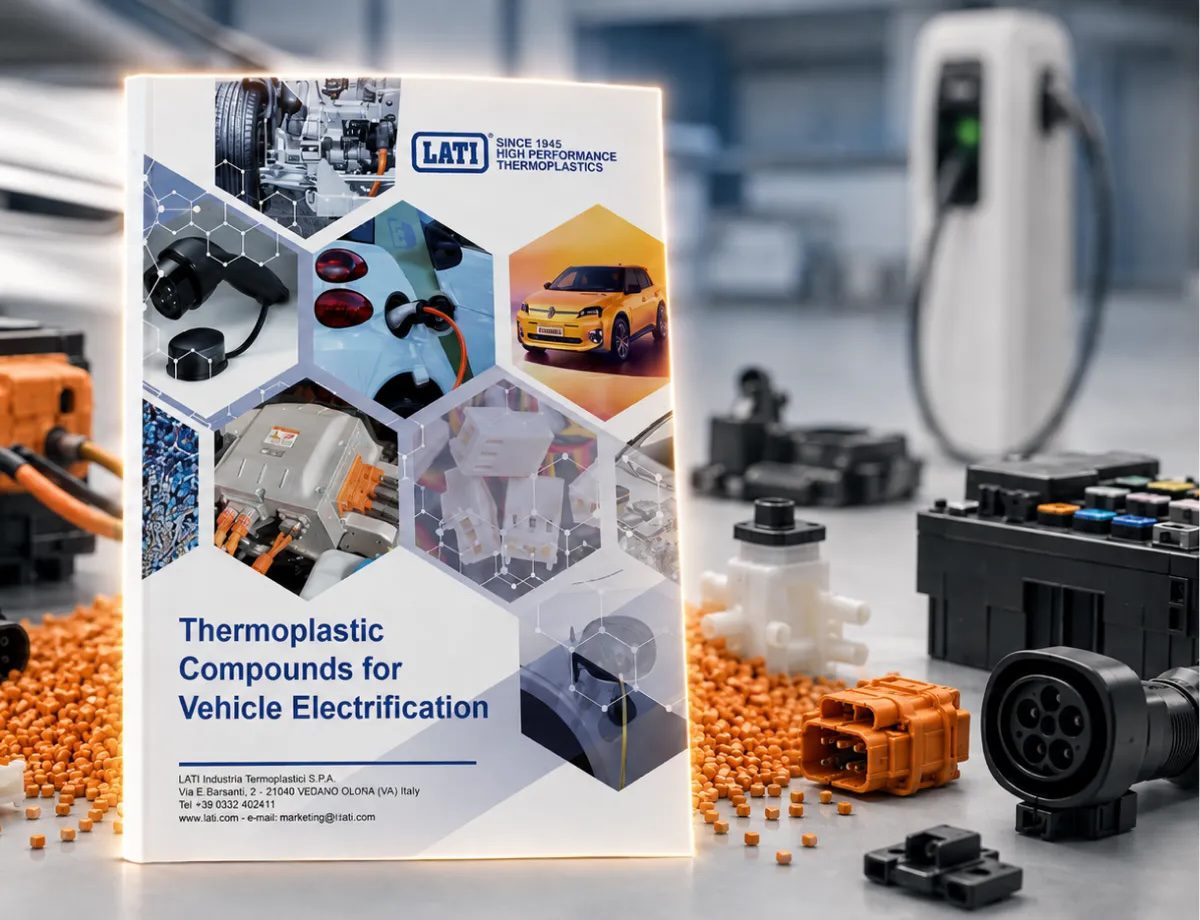
- Italian compounder LATI has consolidated a comprehensive range of engineering thermoplastics specifically designed for electrified vehicles into a new technical brochure.
- The offerings include halogen-free flame-retardant, high-temperature, thermally conductive, EMI-shielding, low-friction, and recycled-content grades.
- These innovative materials address critical challenges in EV engineering, such as electrical safety, precise thermal management, electromagnetic compatibility, and long-term durability.
- LATI’s solutions, like LATICONTHER for thermal conductivity and LATISHIELD for EMI protection, aim to enhance vehicle performance, safety, and sustainability.
- The company emphasizes the expanding role of plastics beyond lightweighting, focusing on functional integration crucial for modern electric vehicle architectures.
The burgeoning electric vehicle (EV) sector is driving an unprecedented demand for highly specialized materials capable of meeting stringent performance, safety, and sustainability requirements. In response to these evolving needs, LATI, a prominent Italian compounder, has introduced a consolidated portfolio of engineering thermoplastics tailored specifically for electrified vehicles.

This comprehensive collection, detailed in a new technical brochure, encompasses a diverse array of advanced compounds. These include flame-retardant, high-temperature resistant, thermally conductive, EMI-shielding, low-friction, and recycled-content grades, all critical for the next generation of EV components.
Addressing the Complex Demands of Electrified Vehicles
The transition to electric powertrains fundamentally reshapes material science requirements within the automotive industry. Components in an EV must withstand unique stresses, including high electrical loads, extreme thermal cycles, and intense electromagnetic interference.
LATI’s strategic consolidation of its specialized compounds underscores a holistic approach to material development, recognizing the multifaceted challenges faced by EV engineers and designers.

Enhancing Safety with Advanced Flame-Retardant Solutions
Safety remains paramount in electric vehicle design, particularly concerning high-voltage systems and battery components. LATI’s halogen-free flame-retardant (HFFR) compounds are engineered to mitigate fire risks effectively.
These advanced materials are built upon robust polymer matrices such as polyamide, polybutylene terephthalate (PBT), polyphthalamide (PPA), and polyphenylene sulfide (PPS). They are specifically rated for superior electrical insulation, intrinsic flame resistance, and exceptional long-term stability.
This stability is crucial for ensuring that components maintain their protective properties throughout the vehicle’s operational life, even under the most demanding environmental and mechanical conditions.
Ensuring Visual Integrity in High-Voltage Systems
In high-voltage (HV) circuits, standardized color coding is a critical safety measure, with orange serving as the universally recognized identifier. Maintaining this visual clarity over time is vital for technicians and emergency responders, preventing accidental contact with energized components.
Recognizing this, LATI has meticulously developed specialized HV formulations. These compounds are engineered to resist color shift and degradation during thermal aging, a common issue in components exposed to the inherent heat of an EV powertrain. Crucially, these grades also maintain their vibrant orange hue even in hot and humid environments, guaranteeing that a high-voltage component remains unmistakably identifiable across the vehicle’s entire service life.
Mastering Extreme Temperatures with High-Performance Polymers
Electric vehicles operate under increasingly high temperatures in various critical areas, from battery modules and power electronics to electric motors and inverters. Traditional engineering polyamides often struggle to meet the thermal demands of these advanced systems.
<n
LATI addresses this challenge with a suite of high-performance polymer compounds, including PPA, PPS, polysulfone (PSU), polyethersulfone (PESU), polyphenylsulfone (PPSU), and polyetheretherketone (PEEK). These materials offer significantly elevated glass transition temperatures and continuous use temperatures, ensuring structural integrity and functional reliability where conventional plastics would fail, thus enabling robust designs for extreme thermal conditions.
Optimizing EV Thermal Management Through Conductive Plastics
Effective EV thermal management is indispensable for maximizing battery longevity, ensuring optimal powertrain performance, and preventing thermal runaway incidents. LATI’s LATICONTHER range represents a significant advancement in this domain, offering thermally conductive compounds designed to dissipate heat efficiently.
These specialized materials achieve thermal conductivity values of up to 28 W/mK by uniformly dispersing graphite and advanced ceramic fillers throughout the polymer matrix. To put this in perspective, an unfilled polyamide typically conducts heat at well under 1 W/mK.
While high filler loading is essential for achieving such figures, it can influence flow characteristics and mechanical performance. Nevertheless, LATICONTHER compounds empower designers to effectively transfer heat through plastic components, offering compelling alternatives to metal parts in selected applications where weight reduction, design flexibility, and corrosion resistance are key advantages.
Safeguarding Electronics with Robust EMI Shielding
The proliferation of high-power electronics, electric motors, and extensive wiring harnesses within an EV creates a complex electromagnetic environment. Electromagnetic Interference (EMI) can disrupt sensitive sensors, control units, and communication systems, compromising vehicle safety and performance.
LATI’s LATISHIELD compounds provide crucial protection by building an electrically conductive structure directly within the polymer matrix. Utilizing advanced fillers such as stainless steel fibers, carbon fibers, and nanotubes, these compounds deliver impressive shielding effectiveness, ranging from 30 to 90 dB.
This translates to a substantial reduction in field strength, from approximately 30-fold to an astounding 30,000-fold, ensuring the integrity of electronic signals and adherence to stringent electromagnetic compatibility (EMC) regulations.
Innovating for Reduced Friction and Wear
Beyond the core electrical and thermal demands, mechanical efficiency and durability remain crucial. LATI’s LATILUB formulations target applications requiring reduced friction and enhanced wear resistance. These compounds are engineered to minimize or, in many cases, entirely eliminate the need for external lubrication, offering significant advantages in terms of maintenance, system weight, and operational cleanliness.
Furthermore, the LATILUB range includes grades specifically formulated without per- and polyfluoroalkyl substances (PFAS). This commitment reflects a growing industry trend towards environmentally conscious material choices, addressing concerns over persistent chemicals while maintaining high performance in moving parts such as gears, bearings, and actuating mechanisms.
Driving Sustainability with Recycled Content Compounds
As the automotive industry increasingly embraces circular economy principles, the integration of sustainable materials becomes paramount. LATI’s LATIECO compounds underscore this commitment by incorporating raw materials derived from both mechanical and chemical recycling processes.
These sustainable grades are not limited to basic applications; they also include high-performance flame-retardant and thermally conductive options. The ability to combine recycled raw material with critical functionalities like thermal conductivity in a single compound represents a significant step forward, demonstrating that environmental responsibility can be seamlessly integrated with stringent performance requirements in the evolving EV landscape.
The Broader Impact: A Holistic Approach to EV Material Science
LATI’s initiative to consolidate these specialized thermoplastic compounds into a single technical resource highlights the growing complexity and integrated nature of modern EV engineering. The demands on plastic materials extend far beyond traditional lightweighting and metal replacement strategies.
Luca Posca, LATI’s Group Technical Assistance & Marketing Director, encapsulates this evolving paradigm, stating, “Electrification is significantly expanding the number of functions that plastic materials must perform inside the vehicle. It is no longer only a matter of lightweighting or metal replacement, but also of electrical safety, thermal management, electromagnetic shielding, high-temperature resistance and reduced environmental impact.” This perspective underscores the imperative for material innovation that addresses the full spectrum of challenges in electrified transport.
Frequently Asked Questions (FAQ)
What is the primary purpose of LATI’s new technical brochure for EVs?
The brochure consolidates LATI’s specialized engineering thermoplastics for electric vehicles into a single resource. It showcases advanced materials designed to address critical EV challenges like electrical safety, thermal management, EMI shielding, and sustainability, making it easier for designers to select appropriate solutions.
How do LATI’s halogen-free flame-retardant (HFFR) compounds contribute to EV safety?
LATI’s HFFR compounds, based on polymers like polyamide and PPS, offer superior electrical insulation and inherent flame resistance. They enhance safety in high-voltage components and battery systems by minimizing fire risks and ensuring long-term stability under operational conditions, crucial for preventing hazardous incidents.
Why is color stability important for high-voltage (HV) formulations in EVs?
Standardized orange coloring identifies high-voltage circuits, essential for safety during maintenance and emergencies. LATI’s HV formulations are stabilized against color shift from thermal aging and humidity, ensuring these critical warnings remain visibly clear throughout the vehicle’s service life, preventing misidentification.
How does the LATICONTHER range improve EV thermal management?
LATICONTHER compounds integrate graphite and special ceramics to achieve high thermal conductivity, up to 28 W/mK. This allows for efficient heat transfer through plastic components, crucial for battery longevity and powertrain performance, and offers lightweight alternatives to traditional metal heat sinks in specific applications.
What role do LATISHIELD compounds play in electric vehicles?
LATISHIELD compounds provide robust electromagnetic interference (EMI) shielding, critical for protecting sensitive EV electronics from disruption. By incorporating conductive fibers and nanotubes, they significantly reduce electromagnetic field strength, ensuring the reliability of sensors, control units, and communication systems in the electromagnetically noisy EV environment.
What are the benefits of LATILUB formulations in EV applications?
LATILUB formulations reduce friction and wear in moving parts, often eliminating the need for external lubrication. This leads to lower maintenance, reduced system weight, and improved component longevity. Importantly, the range includes PFAS-free grades, addressing environmental concerns associated with traditional fluorinated lubricants.
How do LATIECO compounds contribute to EV sustainability?
LATIECO compounds utilize raw materials from mechanical and chemical recycling, promoting a circular economy within the automotive industry. They offer sustainable alternatives without compromising performance, including flame-retardant and thermally conductive options, demonstrating that eco-conscious choices can meet high-performance demands in EV engineering.
What is the broader significance of LATI’s approach to EV materials?
LATI’s comprehensive material portfolio reflects the expanding functional demands on plastics in EVs beyond just lightweighting. The company emphasizes electrical safety, thermal management, EMI shielding, high-temperature resistance, and environmental impact as integrated considerations, driving a holistic approach to material innovation for future electrified transport.