
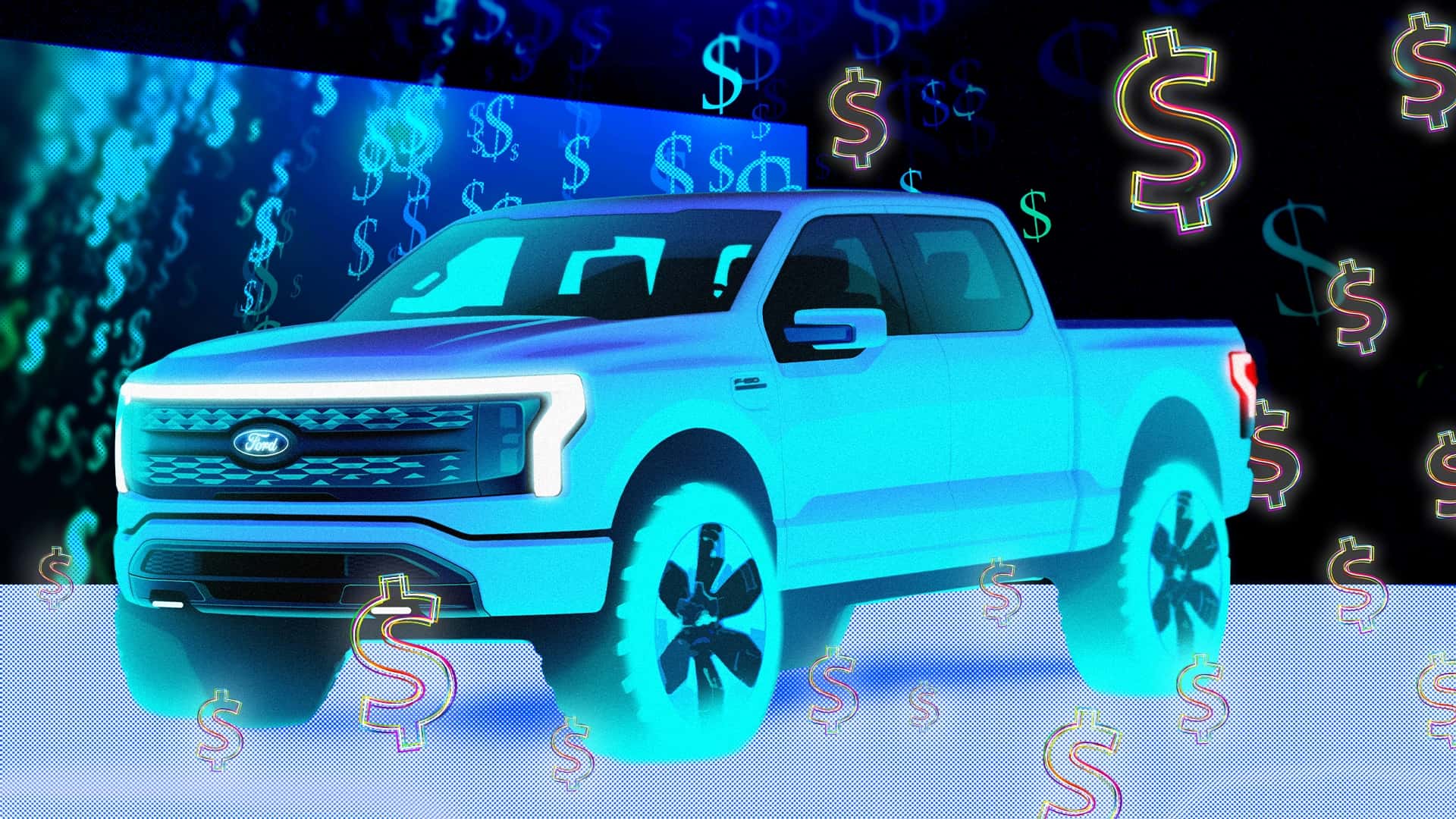
Despite significant shopper interest, the Ford F-150 Lightning is facing considerable hurdles in translating that attention into sales, providing a critical lesson for the broader electric vehicle (EV) market.
EV Market Struggles Beyond Ford
“First and foremost, this is not a Ford exclusive thing,” Brent Gruber, who leads the EV practice at J.D. Power, stated. “I think most manufacturers who made EV products felt that the product underperformed.”

Gruber elaborated that while many EVs have underperformed relative to expectations, Ford’s F-150 Lightning stood out due to its exceptionally high level of consumer interest, presenting a unique opportunity for the automaker.
Unmet Demand and Production Cuts
Despite this strong interest, Ford has repeatedly slashed its production targets for the F-150 Lightning. Most recently, the company prioritized production of more profitable gasoline-powered trucks following aluminum shortages caused by a fire at supplier Novelis, a move that underscores the current sales challenges.
However, data from J.D. Power consistently shows the F-150 Lightning as one of the most considered electric vehicles, ranking second or third among shoppers. Only the Toyota bZ4X and Honda Prologue have occasionally surpassed it in consideration. This strong awareness, coupled with the broad audience of truck buyers potentially interested in EVs, has not translated into sales volume.

Ford initially projected annual sales of 40,000 units, later increasing the target to 80,000, and eventually aiming for nearly 150,000 units. In reality, the company sold just 33,510 Lightnings last year, even with substantial incentives, though it remained the best-selling electric truck.
Competition and Pricing Realities
Elon Musk once suggested Tesla could sell up to 250,000 units of its Cybertruck annually. However, actual sales were around 39,000 in its first year, with a subsequent decline. Like the Lightning, the Cybertruck’s initial pricing was significantly higher than originally anticipated.
A Ford EV spokesperson, Emma Bergg, commented, “What I can say is that F-150 Lightning is the best-selling electric pickup truck in the U.S.—despite new competition from CyberTruck, Chevy, GMC, Hummer and Rivian—and delivered record sales in Q3. Right now, we’re focused on producing F-150 ICE and Hybrid as we recover from the fire at Novelis. We have good inventories of the F-150 Lightning and will bring Rouge Electric Vehicle Center (REVC) back up at the right time, but don’t have an exact date at this time.”
Even as the best-selling electric truck, its sales pale in comparison to traditional pickup trucks, which sold hundreds of thousands of units annually. This disparity is largely attributed to cost.
Despite advertised starting prices around $40,000, the actual entry cost for electric trucks like the Lightning and Cybertruck often nears $60,000. With options and extended-range batteries, prices can approach $80,000, placing them out of reach for many potential buyers.
Gruber noted that approximately 70% of F-150 Lightning considerers have a household income of $100,000 or less. “So it’s a high percentage of people who are interested in that product but aren’t necessarily following through to the purchase process, likely in part, due to the cost of that product. That’s interesting,” he said. “It’s a product that, again, really resonated with consumers, but probably fell short from a cost perspective.”
Cost as a Major Barrier
The high cost of electric trucks is a recurring theme. Many F-150 Lightning shoppers are existing truck owners or F-150 customers evaluating the financial viability of an electric switch. For many, the total cost of ownership, even with lower fuel expenses, may not offset the higher initial MSRP compared to gasoline counterparts. The presence of less expensive, conventionally powered trucks on the same dealership floors further complicates sales.
A Lesson for the EV Industry
The F-150 Lightning’s situation serves as a crucial lesson: generating interest in EVs is insufficient if underlying barriers are not addressed. For truck manufacturers, the high cost of large batteries needed for expected range and endurance presents a significant challenge.
While hybrid vehicles offer a temporary solution, and Extended-Range Electric Vehicles (EREVs) are being explored, the long-term goal remains producing capable electric trucks at price points accessible to consumers and profitable for automakers. Ford is reportedly developing an affordable truck, and other startups are pursuing similar strategies.
Bergg mentioned, “We’re also looking forward to our Universal EV Platform and the mid-size electric truck coming in 2027 and starting around $30,000.”
The future of electric trucks may lie in more affordable designs, but the path for first-generation, expensive models like the Lightning remains uncertain, especially with evolving incentives and regulations.
Gruber suggested potential strategies for addressing the Lightning’s cost issues: “It’s a price sensitive consumer for the F-150 Lightning. So how do they go forward with that product and sell that product? They’re going to have to make sure that they’re hitting the right price point. I look at what Tesla did with the Model Y and the Model 3, and de-contented their products and offered it at a lower cost. Is that something that Ford should consider doing? That’s a decision for them to make.”