
Key Takeaways (TL;DR)
- The Geely EX2, also known as Xingyuan, emerged as China’s best-selling car in 2023, surpassing established electric vehicle (EV) giants like the Tesla Model Y and BYD Seagull.
- Its remarkable success is primarily attributed to its exceptional value proposition, offering a superior balance of space, comfort, and advanced features tailored for budget-conscious Chinese consumers.
- Compared to rivals, the EX2 provides a more spacious five-seater cabin, coupled with sophisticated engineering including rear-wheel drive, fully independent rear suspension, and a practical frunk.
- Priced around $11,000 (as tested), this compact EV delivers an unexpectedly refined driving experience and a high-tech infotainment system, challenging perceptions of affordable electric mobility.
- The rise of the Geely EX2 highlights a significant market shift, indicating a strong consumer preference for practical, well-engineered, and feature-rich affordable EVs over rudimentary options or even advanced driver-assistance systems (ADAS) in China’s dynamic automotive landscape.
In a significant shift within the global electric vehicle (EV) landscape, a compact powerhouse from Geely has quietly asserted its dominance in China. The Geely EX2, known locally as Xingyuan or Star Wish, has not only captured the imagination of millions but has also seized the title of China’s best-selling car. This pint-sized electric runabout has decisively outsold major players, including Tesla’s formidable Model Y and BYD’s popular Seagull, signalling a new paradigm in consumer preferences within the world’s largest automotive market.

Data from the previous year, 2023, reveals Geely moved an impressive 465,775 units of the EX2 in China alone. This figure comfortably surpassed the Tesla Model Y, which recorded approximately 425,000 units, and the BYD Seagull, which managed sales of around 310,000 units. Furthermore, current sales trends indicate that Geely’s compact EV offering continues to outsell the BYD Seagull at an approximate 2-to-1 ratio, underscoring its sustained market leadership and deep resonance with Chinese buyers.
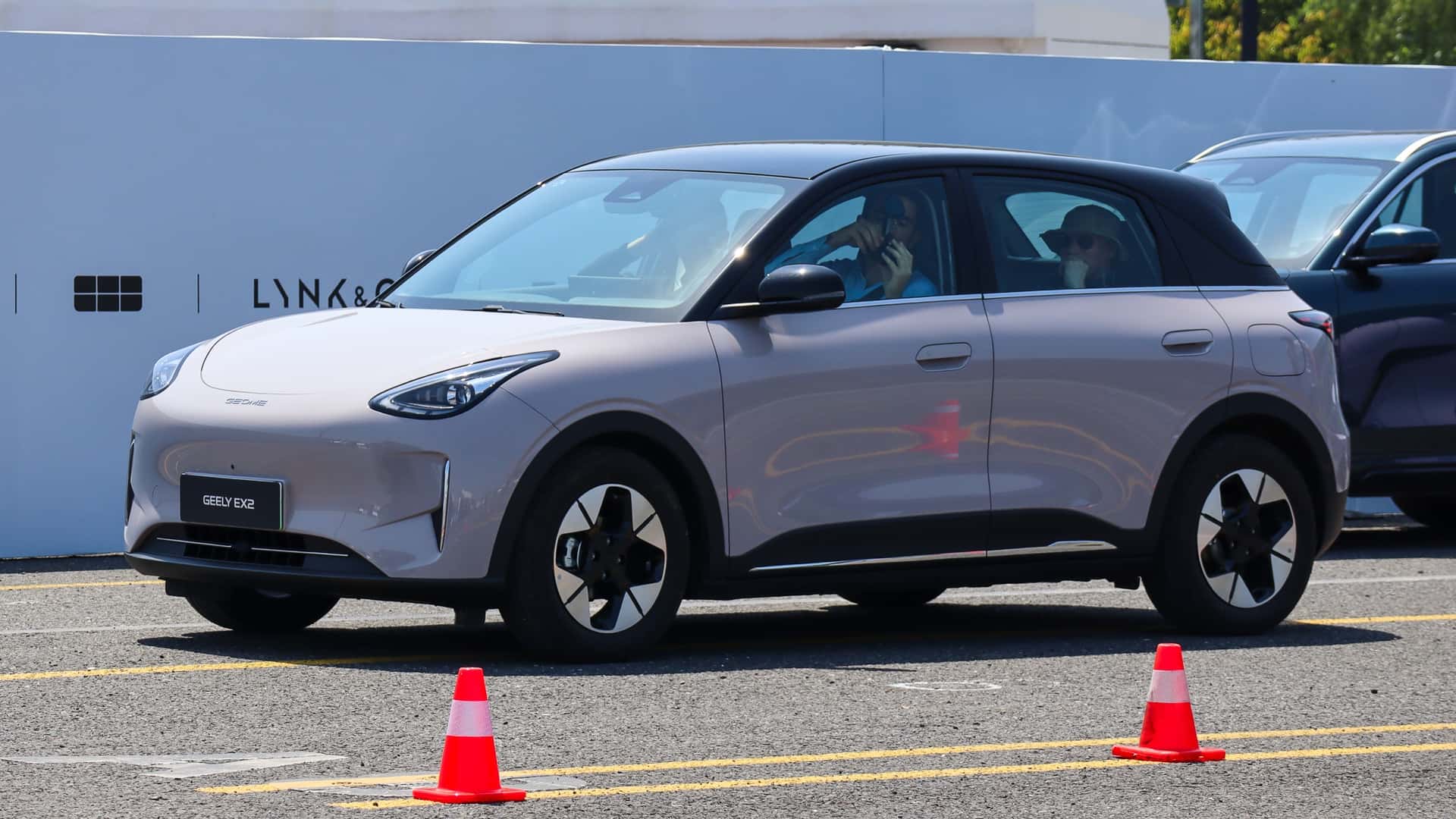
During a recent visit to China, following the Beijing Auto Show, an opportunity arose to experience the Geely EX2 firsthand. This brief but insightful drive, part of a showcase of Geely’s significant plug-in vehicles slated for global markets (with the notable exception of the United States for now), offered immediate clarity. Within minutes, the underlying reasons for the EX2’s overwhelming popularity became evident, particularly how it outpaces the BYD Seagull in recent sales.
The core of its success lies in its compelling value proposition. The Geely EX2 appears meticulously designed to meet the nuanced demands of Chinese budget buyers, building upon the strengths of competitors like the BYD Seagull but enhancing the overall ease of ownership and daily utility. Its strategic positioning reinforces the notion that superior practicality and thoughtful engineering can drive market leadership in the fiercely competitive electric vehicle segment.

And, like many Chinese cars, it’s a damn shame we can’t get it.
(Full Disclosure: Xiaomi and Geely covered my travel to Beijing for the Auto Show and provided lodging and test cars)
The Evolution of China’s Affordable EV Segment
China’s automotive market has long been a hotbed for affordable electric vehicles. For over half a decade, global observers have watched in fascination as cars like the Wuling Hongguang Mini EV emerged, offering two-door electric transport at prices comparable to a mid-tier laptop. These early models, while revolutionary in their affordability, were often rudimentary.
Concerns surrounding safety and performance frequently plagued these hyper-compact urban commuters. With motors often generating as little as 20 horsepower, vehicles like the Wuling Hongguang Mini EV struggled on China’s expansive freeways, making them uncomfortable for anything beyond strictly urban use. Critically, many lacked basic safety features such as airbags or substantial crash protection, leading to significant occupant risks even in low-speed collisions.
However, the Chinese car market has undergone a rapid maturation. The era of super-boxy, basic electric vehicles has gradually given way to a new generation of modern and sophisticated EV designs. These contemporary offerings boast increased power, a richer array of features, improved crashworthiness through rigorous testing, and yet manage to maintain highly competitive pricing. The culmination of these advancements is a vehicle that feels inherently safer, more dignified, and provides lower-income drivers access to well-resolved electric mobility without a prohibitive cost.
Many industry experts consider the BYD Seagull a pioneer in mastering this new formula. BYD successfully engineered a small EV that genuinely felt like a ‘real car.’ It offered 75 horsepower, four airbags, and a modern aesthetic with a capable chassis, all at prices that were only slightly higher than the glorified neighborhood electric vehicles that once populated the entry-level segment of China’s market. The Geely EX2, in its current iteration, directly challenges this established benchmark set by the BYD Seagull.
Geely EX2 vs. BYD Seagull: A Detailed Comparison
While the Geely EX2 and BYD Seagull appear to be direct competitors, a closer examination reveals distinct differences in their design philosophy and engineering. The China-specification BYD Seagull, for instance, aligns closely with the dimensions of an A-segment vehicle, akin to the Chevrolet Spark EV in size. In contrast, the Geely EX2 boasts an additional 14 inches in length and nearly 4 inches in width, positioning it more in line with true subcompacts like the Chevrolet Sonic.
This dimensional advantage translates directly into a more spacious interior for the EX2. While the Seagull is commendably designed for its petite footprint, the Geely EX2’s expanded length and width provide a discernible interior advantage. The Seagull is restricted to accommodating four passengers, whereas the EX2 offers comfortable seating for five, making it a more versatile choice for families or those requiring extra passenger capacity.
Beyond passenger space, the EX2 also excels in cargo utility. With the rear seats folded down, the Geely offers a generous 46.6 cubic feet of interior cargo room, significantly surpassing the BYD Seagull’s 32 cubic feet of storage. This increased capacity further underscores the EX2’s practical appeal to a broad segment of budget-conscious consumers.
Underneath its skin, the Geely Xingyuan demonstrates a level of sophistication uncommon for its price segment. The Seagull employs a front-motor, front-wheel-drive configuration with a semi-independent rear torsion beam axle, a setup common in small hatchbacks for decades. The EX2, however, features a rear-wheel-drive layout combined with a fully independent rear suspension. This engineering choice not only enhances driving dynamics but also creates packaging advantages, allowing the EX2 to incorporate a 2.5 cubic foot ‘frunk’ (front trunk), a feature absent in the Seagull where the nose houses the motor and electronics.
On the Road: Driving Impressions and Refinement
My opportunity to drive the Geely EX2 was confined to a series of short, Gymkhana-style laps within a parking lot adjacent to Geely’s world headquarters in Hangzhou, China. All test vehicles were equipped with the same 114-horsepower motor, powered by a 40 kWh battery. The particular model tested was priced at approximately $11,000, a figure that is remarkably competitive within China’s intensely fought small EV subcompact hatchback and crossover categories, and exceptionally affordable by Western standards.
Dynamically, the EX2 performs adequately, with its tuning clearly optimized for the Chinese market’s preference for comfort over outright sporty performance. The steering system, while light and somewhat lacking in tactile feedback, proved accurate enough for urban manoeuvres. The suspension setup is notably soft, resulting in a relatively high degree of body lean when pushed aggressively. While it will understeer at its limits, this characteristic is likely an intentional calibration designed for predictability and safety, particularly for everyday drivers.
Comparatively, in a direct China-spec to China-spec assessment, I might lean slightly towards the driving feel of the BYD Seagull. However, the Geely EX2 is by no means a poor performer; it simply prioritizes a different aspect of the driving experience. Geely claims an 0-62 mph (0-100 km/h) acceleration time of approximately 11.5 seconds for the EX2. This figure feels accurate and is entirely sufficient for the vast majority of drivers, especially considering typical driving conditions in China’s bustling cities.
As observed with the BYD Seagull a year prior, the level of refinement and technological integration in the EX2 is striking, especially given its low price point. Having experienced numerous budget cars designed for developing markets, it is often evident through ride quality, handling characteristics, or NVH (Noise, Vibration, and Harshness) issues where compromises have been made. Yet, the Geely EX2 delivers a smooth ride, a quiet cabin, and an overall refined feel that belies its cost, positioning it as an exceptional value proposition. Its Flyme Auto infotainment system is responsive, intuitive, and boasts a build quality comparable to that found in Geely vehicles costing five times as much, further enhancing the user experience.
Strategic Implications and Market Trends
The true significance of the Geely EX2 lies in its profound suitability for the ‘average Joe’ driver, demonstrating Geely’s acute understanding of consumer desires in the Chinese market. This vehicle hits all the right notes, providing attributes that its closest competitor, the BYD Seagull, does not universally offer. While the BYD Seagull remains a strong contender, often available at a slightly lower price point, it also features BYD’s ‘God’s Eye’ ADAS software, which includes navigation-on-autopilot city driving and lane-keep assist—features uncommonly found in vehicles within this budget segment, even in China.
However, the EX2’s sales dominance suggests that sophisticated ADAS features may not be the primary driver of purchase decisions for this demographic. The Geely EX2’s ADAS suite is more basic, offering traditional cruise control without the advanced semi-autonomous capabilities. It can be inferred from the sales figures that budget-conscious buyers likely prioritize tangible benefits such as a larger interior, capable of accommodating more passengers, and enhanced power, over advanced pseudo-self-driving technology. For many, a car that offers greater utility and passenger capacity holds more appeal than one with limited self-steering capabilities in specific scenarios.
This preference for larger, practical, and affordable models is increasingly evident across China’s dynamic automotive market. The Geely EX2 may have spearheaded this trend, but other manufacturers are quickly adopting similar strategies. Chery, for instance, has revived its well-known QQ nameplate for a comparably sized and priced EV hatchback. Similarly, Leapmotor’s new A10 (marketed as B03X outside China) competes directly with the EX2 in a similar price bracket. A new wave of small hatchback and crossover EVs is emerging in China, typically starting around $9,000, offering five seats, and a comprehensive suite of infotainment features, but generally foregoing cutting-edge ADAS. Where advanced ADAS features are available, they are often offered as optional extras, reinforcing the idea of core practicality as a primary sales driver. These vehicles, on their face, appear inherently more practical than the four-seat BYD Seagull for the masses.
Global Outlook: A Disruptive Force on the Horizon?
For markets beyond China, particularly in North America and other regions grappling with the accessibility of electric vehicles, these cars represent a compelling solution. There is a palpable demand for affordable, practical EVs that can comfortably transport passengers and offer a reassuring driving experience. In its current form, the Geely EX2 appears to require minimal modifications to be palatable for international markets.
The emergence of the Geely EX2 and similar vehicles signals a potential global shift in the automotive industry. As the world increasingly seeks cost-effective and environmentally friendly transportation solutions, these well-engineered, value-driven Chinese EVs could play a transformative role. When the Geely EX2 and its counterparts eventually make their way out of China, global consumers are likely to embrace them enthusiastically, potentially disrupting established market dynamics and accelerating the worldwide adoption of electric mobility.
FAQ Section
What is the Geely EX2 (Xingyuan)?
The Geely EX2, also known as Xingyuan or Star Wish, is a highly popular compact electric vehicle manufactured by Geely in China. It has gained significant recognition for its affordability, practicality, and advanced features, making it the best-selling car in China in 2023.
Why is the Geely EX2 so popular in China?
The Geely EX2’s popularity stems from its exceptional value proposition, offering a spacious five-seater interior, sophisticated engineering (rear-wheel drive, independent suspension, frunk), and a refined driving experience at a competitive price point, tailored for budget-conscious Chinese buyers.
How does the Geely EX2 compare to the BYD Seagull?
The Geely EX2 is larger, offering more interior space and a five-passenger capacity compared to the BYD Seagull’s four. It also features a rear-wheel-drive setup with independent rear suspension and a front trunk, distinguishing it from the Seagull’s front-wheel-drive, semi-independent suspension design.
What are the key features of the Geely EX2’s design and engineering?
Key features include a 114-horsepower electric motor, a 40 kWh battery, rear-wheel drive, fully independent rear suspension, a 2.5 cubic foot frunk, and a modern, speedy Flyme Auto infotainment system, all designed for comfort and practicality.
What is the price point of the Geely EX2?
As tested, the Geely EX2 is priced around $11,000 in China, positioning it as an incredibly competitive and affordable option within the country’s small EV segment. This pricing strategy makes it accessible to a wide range of consumers seeking electric mobility.
What is the driving experience like in the Geely EX2?
The Geely EX2 offers a comfortable and refined driving experience, tuned for urban environments. It features light and accurate steering, a soft suspension that absorbs road imperfections well, and adequate acceleration for daily commutes, making it suitable for practical-minded drivers.
Could the Geely EX2 be sold outside of China?
Yes, the Geely EX2, in its current state, appears to be well-suited for international markets, particularly those seeking affordable and practical electric vehicles. Its combination of value, space, and refinement suggests strong potential for global expansion, though immediate plans for the U.S. market are not confirmed.