
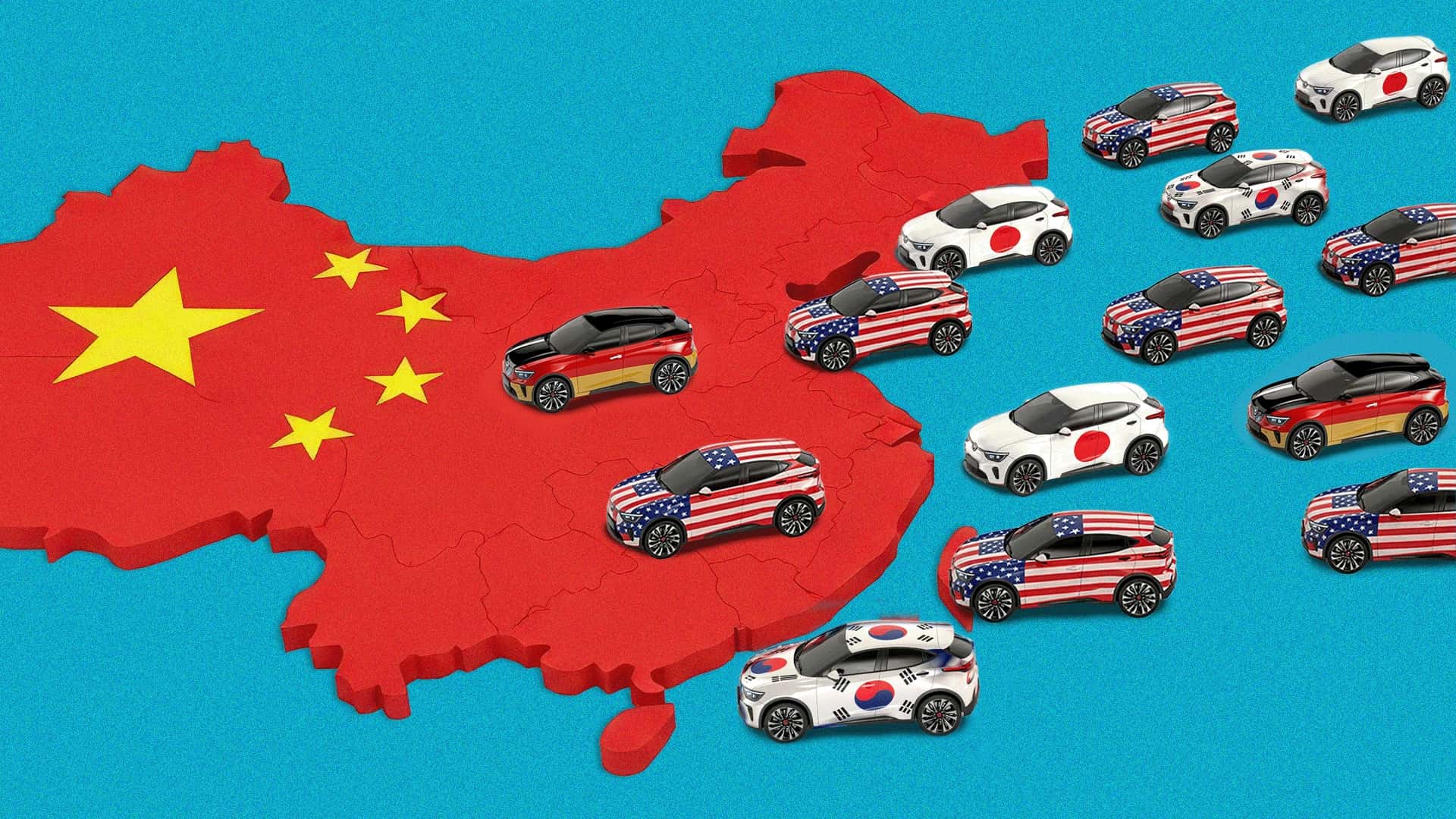
Key Takeaways: Legacy automakers in China are aggressively recalibrating their strategies, moving beyond past complacency to embrace deep local partnerships and develop products specifically tailored for the highly competitive market. This shift, observed vividly at the 2026 Beijing Auto Show, emphasizes ‘China Speed’ and ‘By China, For China’ principles, integrating cutting-edge Chinese technology and design preferences. While challenges such as a slowing economy and intense competition persist, early successes from brands like Kia and Toyota suggest that this collaborative approach offers a viable path to reclaim market share and drive future growth in the world’s largest automotive arena.
Beijing, China – A notable shift is underway in China’s formidable automotive landscape, signaling a determined fightback from international manufacturers. Once perceived as lagging, a new wave of products from legacy automakers in China, developed through strategic partnerships with local brands, is now making a significant impact. This resurgence was particularly evident at this year’s Beijing Auto Show, where innovation and localized design took center stage.
Amidst a vibrant display of technologically advanced vehicles, one car garnered particular attention: a striking, wedge-shaped model with a distinct brown matte finish. Its sophisticated styling and modern aesthetic immediately set it apart, promising a fresh perspective in a market increasingly dominated by domestic innovation. This was not a futuristic concept car, but a production-ready vehicle with clear plans for market entry.
Upon closer inspection, the vehicle revealed a subtle grey ‘H’ emblem—it was the new Hyundai Ioniq V. This unveiling marked a turning point, instilling a sense of optimism regarding the future of non-Chinese automakers in China. The design, features, and apparent understanding of the local market suggested a profound learning curve had been traversed.
Two Years Ago: A Market Miscalculation
The sentiment at the 2026 Beijing Auto Show presented a stark contrast to two years prior. In 2024, following the relaxation of China’s stringent COVID-19 contact tracing and quarantine protocols, the automotive exhibition revealed a different picture for legacy automakers in China. At that time, many international brands appeared unprepared for the rapid evolution of China’s New Energy Vehicle (NEV) market.
Western media narratives often suggested that China’s domestic industry thrived solely due to government incentives and unfairly low pricing, with some critics even citing intellectual property theft as a reason for declining sales and profitability among foreign players. These perspectives painted a picture of a market heavily skewed against international competition.
However, on-the-ground observations in 2024 quickly debunked these simplified explanations. It became clear that many so-called “Western” cars were simply not competitive. They featured outdated designs, underwhelming interiors, rudimentary infotainment systems, and lacked the high-tech features that Chinese consumers had come to expect from homegrown brands.
China’s domestic manufacturers had rapidly innovated, developing vehicles specifically tailored to local preferences and technological demands. In comparison, non-Chinese offerings often felt inferior in quality, basic in functionality, and disproportionately expensive. The market was not rigged; it had simply moved on, and many legacy automakers in China had failed to keep pace.
The 2026 Comeback: Learning from Past Mistakes
Fast forward to the 2026 Beijing Auto Show, and the narrative has shifted dramatically. Legacy automotive brands appeared to have absorbed crucial lessons, demonstrating a renewed commitment and a far more strategic approach. The Hyundai Ioniq V stands as a prime example of this renaissance among legacy automakers in China.
Its fresh design is coupled with a meticulous understanding of the Chinese consumer. Critically, its Advanced Driver-Assistance Systems (ADAS) are sourced from Momenta, a leading Chinese autonomous-driving pioneer. This integration signals a departure from a one-size-fits-all global product strategy, aiming for parity with — or even exceeding — the sophisticated systems offered by Chinese leaders like Xpeng.
Hyundai was not alone in this revitalized effort. Volkswagen showcased an array of near-production models and concepts, including the ID Aura, T6, ID. ERA 9X, and ID UNYX 08, reflecting a concerted effort to adapt. Buick launched updated versions of its GL8 Encasa and Electra E7, available in both extended-range EV (EREV) and full EV configurations, signaling a multi-pronged approach to the NEV segment.
Mazda introduced its EZ-60 crossover, featuring a full EV variant alongside its EREV offering. Even brands like Peugeot and Citroën, which previously struggled with dated offerings, presented refreshing and eye-catching concepts, reaffirming their commitment to the market with significantly improved design and technological ambition.
“By China, For China”: Embracing Local Speed and Collaboration
China has solidified its position as an indispensable force in the global automotive industry. It represents the world’s largest market for both overall car sales and Electric Vehicle (EV) adoption, setting trends that inevitably resonate worldwide. While some Western brands contemplate a retreat, experts argue that disengagement from China is not a viable long-term solution.
The innovation and speed of the Chinese market are forces the rest of the world must contend with. This reality necessitates closer collaboration with China’s homegrown automakers and technology companies. Tu Le, of Sino Auto Insights, articulated this imperative: “The only path forward for legacy auto in China is to partner with Chinese tech companies.”
He added, “Even still, the companies that currently seem to be in retreat feel deep down in their hearts that eventually, by continuing to refine and pump future products designed and developed locally full of ‘local’ features, they can eventually launch products that can compete in the Chinese domestic market. And then they’ll recapture some past glory.”
This philosophy permeated the recent auto show, with phrases like “China Speed” and “By China, For China” becoming common refrains among international manufacturers. Hyundai, for instance, developed its Ioniq V in partnership with BAIC (Beijing Automotive Group), leveraging local Chinese suppliers and tech firms for its infotainment and ADAS software. This collaboration aims to boost Hyundai’s annual sales in China to 500,000 units by 2030.
Similarly, Volkswagen has underscored its commitment to accelerating local development and deepening its partnerships. Its ID. Era, ID. Aura, and ID. Unyx models, along with Audi’s new offerings, are being developed in conjunction with Xpeng and SAIC, and manufactured through local joint ventures. These strategic alliances are designed to rekindle sales momentum for legacy automakers in China.
Assessing the Path Forward: Challenges and Early Successes
Despite these renewed efforts, success is not guaranteed. “Even with these local partnerships, there’s no guarantee for future growth and success. It just helps them survive the moment,” cautioned Tu Le. Mark Andrews, author of Driving The Dragon and a respected expert on the Chinese car market, echoed this sentiment, acknowledging the efforts of legacy automakers in China to align with local players but remaining cautious about their prospects.
Andrews pointed to the prediction made by Wang Chuanfu, BYD’s CEO, in 2024, who stated that joint ventures’ share of the market would plummet to just 10% within three to five years. He also highlighted new economic headwinds, including a general slowdown in China’s economy and a decreasing consumer willingness to purchase new cars. Furthermore, the overall car market’s growth is stagnating, with much of the expansion for Chinese automakers now stemming from overseas markets, posing additional challenges for foreign brands attempting to revitalize domestic sales.
Nevertheless, there are promising indicators from brands that have fully embraced cooperation with China’s domestic EV makers. The Kia EV5, built on Hyundai’s E-GMP platform but specifically developed for the Chinese market, contributed to a nearly 50% increase in Kia’s sales between 2023 and 2024. Nissan’s Dongfeng-based N7 and NX8 sedan and crossover EVs have reported healthy pre-orders and sales figures.
Buick’s GL8 Encasa and Electra models, developed on its Xiao Yao platform in collaboration with SAIC, have garnered positive critical reception within China. Toyota’s GAC-based bZ3x stands out as the best-selling SUV from a joint venture in China, achieving sales of 80,000 units in its inaugural year.
These early successes demonstrate that a proactive, collaborative approach can indeed yield positive results for legacy automakers in China. The underlying issue for their past struggles often resided in the quality and execution of the vehicles themselves. Ultimately, intensified competition and innovation in China’s automotive sector are beneficial for consumers globally, even if the direct impact on Western markets isn’t immediately apparent.
Frequently Asked Questions (FAQ)
What caused the decline of legacy automakers in China initially?
Initially, legacy automakers in China struggled due to outdated product designs, inferior infotainment systems, and a lack of the advanced technology and features that Chinese consumers increasingly expected from local brands. They also often failed to localize their offerings, resulting in vehicles that were not competitively priced or tailored to market demands.
What is the “By China, For China” strategy?
The “By China, For China” strategy signifies a fundamental shift by international automakers to develop products specifically for the Chinese market, often in deep collaboration with local Chinese technology companies and manufacturers. This involves integrating local ADAS systems, infotainment software, and design preferences to meet domestic consumer expectations and ‘China Speed’ development cycles.
Which international brands are showing early signs of success with this new strategy?
Several brands are demonstrating positive momentum. Kia, with its EV5 developed for China, saw nearly a 50% sales increase. Nissan’s Dongfeng-based N7 and NX8 have received strong pre-orders. Buick’s GL8 Encasa and Electra, developed with SAIC, are well-received. Toyota’s GAC-based bZ3x became the best-selling SUV from a joint venture in China.
What role do partnerships with Chinese tech companies play in this strategy?
Partnerships with Chinese tech companies are crucial for integrating advanced local technologies, such as ADAS from Momenta or infotainment solutions, into new vehicles. This collaboration helps international brands overcome technological gaps, accelerate product development, and ensure their offerings are competitive with the rapid innovation seen from homegrown Chinese automakers.
What are the main challenges still facing legacy automakers in China?
Despite renewed efforts, significant challenges remain. These include intense competition from rapidly innovating domestic brands, a slowing Chinese economy that impacts consumer spending on new cars, and a general stagnation in market growth, with much of the industry’s expansion now coming from overseas markets for Chinese brands.
How significant is the Chinese market for global automotive trends?
The Chinese market is globally significant, not only as the largest market for overall car and EV sales but also as a major trendsetter. Innovations and consumer preferences originating in China often influence automotive development and strategies worldwide, making it crucial for international brands to maintain a strong presence and understanding of its dynamics.