
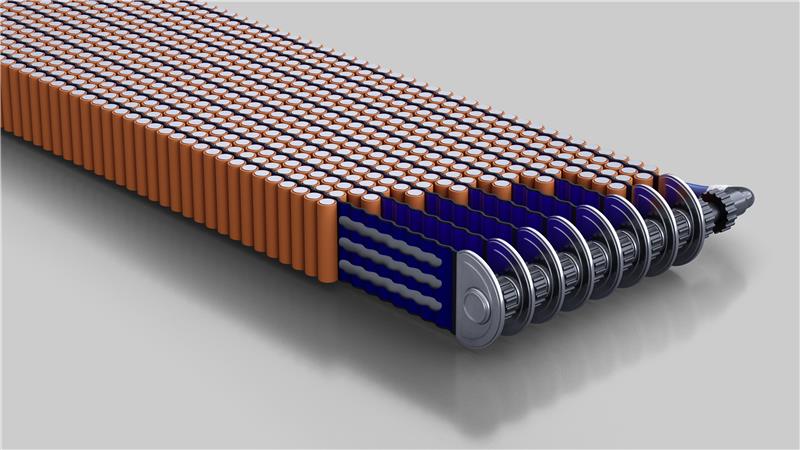
The drive towards higher energy density in electric vehicle (EV) lithium-ion battery packs hinges significantly on effective thermal management. As these batteries operate, they generate heat during charging and discharging cycles, necessitating robust systems to dissipate this energy. Thermally conductive materials, such as gap fillers and adhesives, play a critical role by bridging the interface between battery cells and cooling plates or packs, thereby facilitating heat transfer and displacing insulating air from microscopic surfaces and larger gaps.
Evolving Battery Architectures and Material Demands
Electric vehicle battery pack designs are intrinsically linked to the form factor of the individual cells: pouch, cylindrical, and prismatic. This cell type dictates module and pack construction, directly influencing the requirements for thermal management materials.

Pouch and Cylindrical Cell Module Construction
Pouch and cylindrical cells are commonly assembled into modules before being integrated into the larger battery pack. Pouch cells, lacking inherent structural rigidity, require this modular approach. Cylindrical cells, often numbering over a thousand per pack, also benefit from modular assembly for manageability.
Historically, prismatic cells followed a similar modular pathway. However, the emergence of ‘cell-to-pack’ and ‘cell-to-plate’ architectures has streamlined this process, removing the need for intermediate modules in many designs.
Thermal Management Strategies for Pouch Cells
Pouch cell stacks are typically organized into modules using thermal adhesives or gap fillers. Common methods include:
- Integration into a can without additional adhesives or thermal management.
- Placement within a can utilizing thermal adhesives.
- Stacking with aluminum heat spreaders between cells, with or without thermal materials.
Cylindrical Cell Module Designs
Designs for cylindrical cell modules, prior to pack integration and connection to the cooling loop, generally fall into three categories:
- Assembly into plastic carriers via interference fit or structural adhesives.
- Side bonding to a cooling ribbon using thermal adhesives.
- Fixturing into an array, followed by bonding the cell bottoms to a housing or cooling plate with a thermal adhesive.
Prismatic Cell Module and Pack Assembly
Prismatic cells are used to create modules or directly form packs. Thermal adhesives or gap fillers are commonly employed in these configurations:
- Modules are formed by grouping cells into stacks, which are then housed or placed onto a cooling plate, secured with thermal adhesives or gap fillers.
- In ‘pack’ designs, large format prismatic cells (often around 1 meter in length) are directly bonded to the bottom plate using thermal adhesives or gap fillers.
Addressing Design and Manufacturing Challenges with Advanced Materials
Each cell form factor presents unique design and manufacturing challenges that advanced thermal management materials are engineered to overcome. These challenges are critical considerations for optimizing battery pack performance and longevity.
Pouch Cell Challenges
Key challenges for pouch cells include:
- Limited structural rigidity, often necessitating secondary housing structures.
- The use of low surface energy polyethylene films as the outermost layer, which can restrict the ultimate bond strength achievable with adhesive-based assembly.
- A comparatively small surface area for heat dissipation when cells are stacked without heat spreaders, leading to reliance on edge cooling.
Cylindrical Cell Challenges
Cylindrical cells face a distinct set of hurdles:
- Their smaller size necessitates a high cell count to achieve desired vehicle range, increasing complexity.
- The sheer number of cells requires precise positioning for efficient downstream manufacturing processes.
- Significant mechanical fixturing is often required to maintain cell placement.
- Bonding to nickel-plated steel surfaces, commonly used in cell construction, can be challenging.
- Ensuring proper cell integrity when PVC shrink-wrap sleeves are not utilized.
Prismatic Cell Challenges
Prismatic cells introduce their own set of manufacturing considerations:
- Their larger individual surface area compared to other cell types can lead to tolerance stacking issues for both the cells and the cooling interfaces.
- The use of low surface energy shrink-wrap films or tapes for dielectric protection can limit the achievable bond strength with adhesives.
- The larger dimensions increase the need for flexibility to accommodate tolerance variations and stress from thermal expansion.
Many of these inherent challenges can be effectively mitigated through the strategic application of thermal gap fillers and thermal adhesives, providing both structural integrity and efficient heat transfer.
Evolution of Thermal Adhesives in EV Battery Manufacturing
The early days of EV battery pack development often relied on a limited selection of highly specialized formulations for thermal management. Today, the landscape has shifted dramatically, with a broader portfolio of thermally conductive materials available. While still engineered specifically for the demanding requirements of battery packs, these modern materials offer a wider spectrum of performance characteristics and processing options.
Parker Lord, a key player in this sector, distinguishes between thermal gap fillers and structural adhesives based on their lap shear strength. Gap fillers typically exhibit strengths below 7 MPa (1015 psi), whereas adhesives generally surpass this threshold, indicating their suitability for applications requiring significant mechanical bonding.
Thermally Conductive Structural Adhesives: A New Class of Materials
The evolution of materials used in automotive manufacturing has paved the way for innovative solutions in EV battery technology. Two-component acrylic structural adhesives, a staple in automotive panel bonding for decades, offer excellent adhesion to various metals and finishes, alongside room-temperature curing capabilities. This has significantly reduced the reliance on mechanical fastening and welding.
Similarly, two-component, thermally conductive potting and encapsulation materials have a long history in electronics, providing protection and heat dissipation for sensitive components. By synergizing expertise in both these areas, Parker Lord scientists pioneered a new category of materials: thermally conductive structural adhesives.
Parker Lord’s CoolTherm TC-2002 Thermally Conductive Structural Adhesive was among the first commercial products in this innovative class. Its combination of high strength, thermal conductivity, and the ability to bond dissimilar materials like nickel-plated steel to powder-coated aluminum at room temperature with a manageable fixture time, unlocked considerable design freedom, particularly for cylindrical battery modules.
Critical Role of Adhesives in Cell-to-Pack Architectures
As new ‘cell-to-pack’ and ‘cell-to-plate’ designs become increasingly prevalent in electric vehicle powertrains, the importance of advanced thermal adhesives intensifies. The industry faces a growing demand for innovative adhesive solutions that not only facilitate robust bonding between battery cells and pack components but also address critical performance and manufacturing challenges.
Advancements in Acrylic and Urethane Thermal Adhesives
Recent advancements in acrylic and urethane thermal adhesives have yielded significant improvements:
- Tailorable Bond Strength: Formulations can now be adjusted for either permanent structural bonding or designs requiring reworkability.
- Enhanced Durability: Increased elongation capabilities contribute to greater resilience and longevity under stress.
- Adapted Cure Speeds: Cure characteristics can be modified to suit specific manufacturing throughput requirements.
- High-Throughput Manufacturing: New formulations and application methods are being developed to facilitate high-speed production environments.
CoolTherm TC-850: Next-Generation Performance
Building upon the success of CoolTherm TC-2002, Parker Lord’s latest offering, the CoolTherm TC-850 Thermally Conductive Acrylic Adhesive, represents a significant step forward. Leveraging cutting-edge advancements in structural adhesive technology, this new material offers four times the elongation of its predecessor, along with improved adhesion to plastics and coatings.
Optimizing Bondline Thickness for Thermal Performance
The thickness of the adhesive bondline is a critical factor in determining overall thermal resistance. Generally, adhesives achieve higher bond strength with thinner bondlines. While a standard bondline thickness is often around 250 micrometers (µm), reducing this thickness is paramount when minimizing thermal resistance.
For advanced thermal adhesive applications, a bondline thickness of 100 µm has been identified as ideal. This reduced thickness not only lowers thermal resistance but also optimizes material usage and reduces the required thermal conductivity of the adhesive itself. An illustration demonstrating this principle shows that a material with a thermal conductivity of 0.5 W/m∙K and a 100 µm bondline can achieve lower thermal resistance than a material with 1 W/m∙K conductivity and a 250 µm bondline.
Conclusion: Strategic Material Selection for Optimal EV Battery Packs
The selection of an appropriate thermal adhesive, carefully aligned with specific cell-to-pack designs and operational requirements, is essential for battery pack manufacturers. By making informed material choices, designers and engineers can optimize crucial aspects of battery pack performance, reliability, and cost-effectiveness.
Parker Lord offers extensive expertise and resources to support EV battery design challenges. For consultation with their application engineers and to explore tailored solutions, interested parties are encouraged to reach out.