
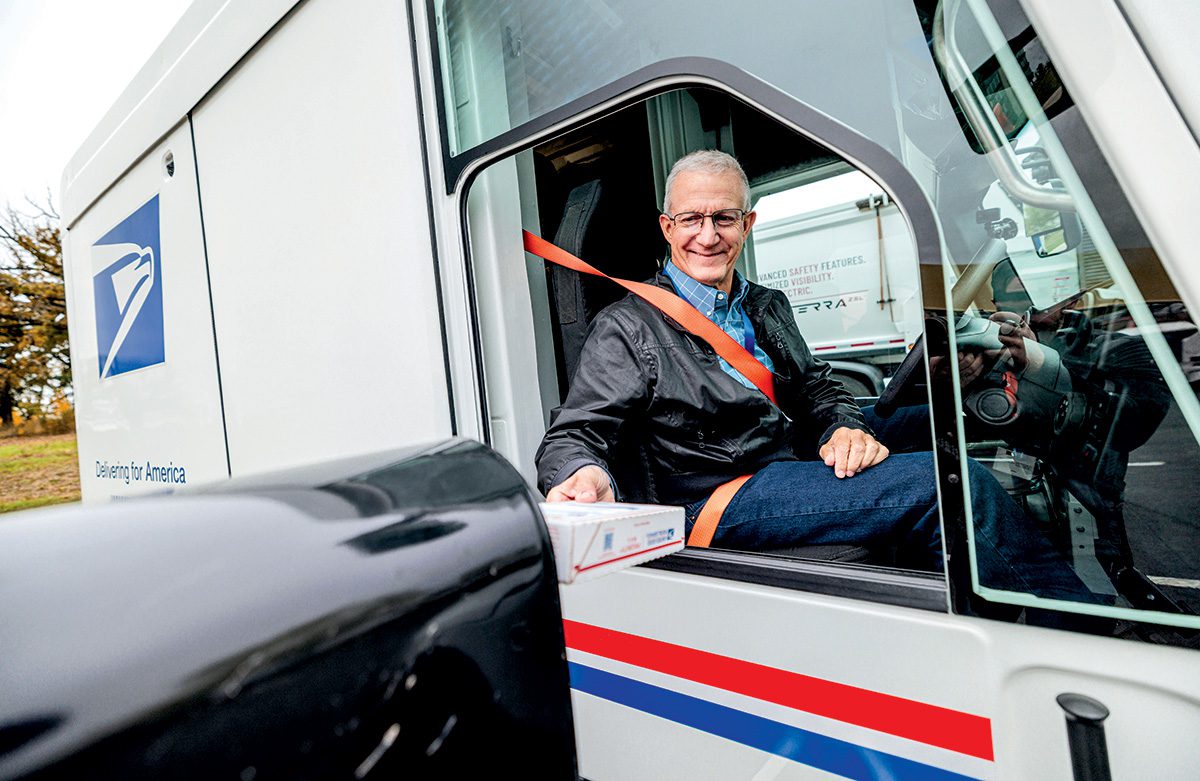
The future of electric vehicles (EVs) on American roads may soon be defined not by sleek consumer cars, but by the ubiquitous white vans delivering mail. The Oshkosh Next Generation Delivery Van (NGDV), now being deployed by the U.S. Postal Service (USPS), represents a significant, large-scale introduction of electric propulsion into a critical national fleet.
A New Era for Mail Delivery Vehicles
While not available for personal purchase, these NGDVs are poised to become a common sight across the nation over the next few years. Their widespread adoption offers a real-world testbed for mass EV integration into daily logistics, highlighting both the potential advantages and challenges of such a transition.

The NGDV electric variant is equipped with a substantial 94 kWh lithium-ion battery pack. This powers a 150 kW (approximately 201 horsepower) motor driving the front wheels. According to EPA documentation, this setup is designed to provide a range of around 120 miles on a single charge.
This 120-mile range is considered more than adequate for the vast majority of mail delivery routes. USPS data indicates that approximately 96 percent of the vehicles the NGDVs will replace cover fewer than 40 miles per day. Even factoring in extreme weather conditions that can impact battery performance, the electric NGDV offers a considerable safety margin over a delivery vehicle’s typical daily mileage of 18 to 24 miles.
Dual Powertrain Strategy Addresses Diverse Needs
Recognizing that not all routes are suited for electric power, the NGDV platform also offers a gasoline-powered option. This version features a turbocharged 2.0-liter inline-4 gasoline engine, available with either front-wheel or all-wheel drive. These models are intended for longer routes, particularly those in rural areas or over challenging terrain where EV charging infrastructure might be less accessible or the range insufficient.
As of early 2026, around 5,000 NGDVs, encompassing both electric and gasoline powertrains, have been delivered to USPS facilities. These are part of a larger order for 29,000 new USPS vehicles this year. The Postal Service has a broader procurement plan encompassing 106,500 new vehicles of all types, with a significant commitment to electrification: 66,000 of these are slated to be zero-emission vehicles, including the Oshkosh NGDVs.
The current contract with Oshkosh is for 51,500 vans, with the potential to procure an additional 110,000 units in the future, underscoring the scale of this fleet modernization effort.
Evolving Contract Reflects EV Viability
Oshkosh Corporation’s innovative approach played a key role in shaping the final NGDV contract. Initially, USPS sought separate bids for purely electric and gasoline-powered fleets. However, Oshkosh was the sole bidder to propose a unified vehicle design capable of accommodating both powertrain options.
According to Oshkosh CEO John C. Pfeifer, this single-vehicle strategy was favored by the Postal Service, as it simplifies driver training and familiarity, regardless of the specific powertrain. A testament to efficient engineering, approximately 90 percent of the components are common across both the electric and gasoline versions of the NGDV.
The initial contract stipulated a production ratio of 90 percent gasoline vehicles and only 10 percent electric models. However, through the process of prototype testing, performance validation, and detailed analysis of long-term operating costs, the USPS recognized the compelling economic and operational advantages of the electric NGDVs.
This reassessment led to a revised contract, specifying a significantly higher proportion: 70 percent of the NGDVs purchased will be electric, with the remaining 30 percent being gasoline-powered. This 70-30 split is currently being implemented.
The path to this ratio was not without its challenges. Anti-EV lawmakers attempted to introduce a provision into a major Congressional bill that would have drastically reduced the number of electric NGDVs purchased. However, Oshkosh and its advocacy team presented compelling data on the substantial increase in operating costs the USPS would face if forced to abandon its EV commitment. This evidence led to the removal of the restrictive provision, preserving the 70-30 EV-centric ratio.
Design Optimized for Postal Duties
The Oshkosh NGDV possesses a distinctive appearance, often described as having a “duck-billed” front end characterized by a low, rounded nose leading to a tall windshield. While this design has drawn some commentary, it is a clear example of form strictly following function, prioritizing the specific needs of mail delivery.
The low-profile front end, with edges sloping downwards from the centerline, is engineered to maximize driver visibility. This is crucial for navigating neighborhood streets where mail carriers must constantly be aware of potential hazards, including pedestrians, children, pets, mailboxes, and other obstacles.
This unique front-end design is exclusive to the USPS NGDVs. While Oshkosh can offer the NGDV platform to other commercial clients, those vehicles will feature a different front-end configuration.
The tall, expansive cargo body of the NGDV is another functional adaptation. It reflects the evolving mission of the USPS in the 21st century, which now handles a significantly higher volume of parcels compared to the era when the older Long Life Vehicles (LLVs) were introduced in the late 1980s. With declining volumes of traditional First Class mail, parcel delivery, especially last-mile logistics for e-commerce giants, has become a central part of the Postal Service’s operations.
The cargo area is designed for efficiency and ease of use, standing 78.5 inches (over six and a half feet) tall, allowing an average adult to stand upright within the space, even with the roller door open. This is a stark contrast to the older LLVs, which often required drivers to stoop or access cargo from the rear.
The NGDV boasts a cargo volume of 330 cubic feet, a substantial increase from the LLVs’ 120 cubic feet. Furthermore, its rated payload has doubled to 2,000 pounds, accommodating the growing demands of parcel delivery.
Replacing a Fleet That Outlasted Its Design
The NGDVs are set to replace the aging Long Life Vehicles (LLVs). These iconic mail trucks, built by Grumman, featured an aluminum van body atop a Chevrolet S-10 light-truck chassis and were powered by GM’s 2.5-liter “Iron Duke” four-cylinder engine. The original USPS requirements in 1984 called for right-hand drive, easy ingress/egress, standardized powertrains capable of 12-hour daily operation, and durability in harsh climates.
These LLVs underwent rigorous testing, covering tens of thousands of miles on various surfaces. Simplicity of maintenance and ease of repair were also paramount design considerations.
Production of the LLVs ran from 1986 to 1994, with a total of 140,000 units built. Originally designed for a 24-year lifespan, an astonishing 130,000 of these vehicles remain in service today, nearly four decades after their introduction. These vehicles were notably basic, lacking modern amenities such as airbags, air conditioning, or anti-lock brakes, and achieved a mere 8 miles per gallon in typical stop-and-go urban use.
Following the LLVs, the USPS also deployed Ford UtiliMaster vans from 1999 to 2001. Built on a Ford Explorer chassis, these were capable of running on alternative fuels, including E85 ethanol, thanks to their 4.0-liter Ford V6 engines. Despite their more advanced capabilities, their fuel economy was often even worse than that of the Grummans, and many of these also remain in service.
The Inherent Drawbacks of Gasoline for Delivery Routes
The extended service life of the LLVs and their successors highlights a fundamental challenge: traditional gasoline engines are ill-suited for the demanding duty cycles of postal delivery. The constant stopping and starting, low average speeds, and relatively short daily mileages create an inefficient and taxing environment for internal combustion engines.
A typical curbside delivery route involves approximately 500 stops spread over just over 20 miles, usually completed in about six hours. Critically, only about a quarter of this time is spent driving; the remaining 64 percent is spent stationary during deliveries. The average distance between stops is a mere 11 seconds.
This constant cycling between idling and short bursts of acceleration is detrimental to gasoline engines. Mechanics note that engines rarely reach optimal operating temperature, leading to increased wear due to insufficient lubrication during startup phases. Moisture from incomplete combustion can accumulate in exhaust systems, accelerating corrosion. Compounding these issues, certain USPS maintenance policies historically limited work to vehicles only after they broke down, hindering preventative care.
Consequently, maintaining these aging gasoline vehicles is costly. Each LLV reportedly incurs around $10,000 annually in maintenance, with over 100,000 still operational.
Electric Powertrains Prove Ideal for Delivery Cycles
In contrast to the challenges faced by gasoline engines, electric powertrains are exceptionally well-suited for the stop-and-go nature of mail delivery. EVs eliminate the need for engine warm-up cycles, minimize wear from constant on/off operation, and produce zero tailpipe emissions.
Furthermore, the cost per mile for electricity is significantly lower than that of gasoline, especially for a vehicle achieving only 8 mpg. The regenerative braking feature in EVs also helps recapture energy, further improving efficiency.
The USPS contract specifies a 20-year lifespan for the NGDVs, slightly shorter than the LLVs’ extended service. However, the inherent simplicity of the electric powertrain, with fewer moving parts and no need for traditional engine maintenance, suggests the NGDVs could also significantly exceed their design life with substantially lower upkeep costs.
Moreover, the modular nature of EV battery technology allows for potential upgrades. Should battery degradation become an issue over the NGDVs’ lifespan, USPS could potentially retrofit vehicles with newer, more cost-effective, higher-capacity battery packs.
A Glimpse Inside the Electric NGDV
A test drive of an early electric NGDV prototype revealed a vehicle focused on utility rather than luxury. The interior is basic, featuring durable rubber floor mats, vinyl seats, a manual window crank, and robust industrial controls. However, it represents a significant technological leap for postal workers, introducing essential modern safety features.
These include automatic emergency braking, a backup camera (crucial given the lack of rear visibility), and, perhaps most appreciated by carriers enduring hot summer days, air conditioning. Reports suggest that some mail carriers have expressed profound relief and even emotional reactions, such as bursting into tears, after their first experience with the NGDV’s climate control system.
While not built for speed, the electric NGDV delivers predictable power, particularly at the low speeds required for navigating residential streets. The regenerative braking engages smoothly after a slight delay, providing a linear deceleration. The absence of “idle creep”—where a vehicle moves forward even when not accelerating—enhances safety in the frequent stop-start environment.
Interestingly, the NGDV does not offer full one-pedal driving; the brake pedal is necessary to bring the vehicle to a complete stop. This design choice ensures that the driving experience is similar between the electric and gasoline versions, minimizing potential driver confusion when switching between powertrains.
The test drive concluded with a familiar maneuver: pulling alongside a standard mailbox, reaching out the open window, and depositing envelopes, mirroring the daily actions of a USPS employee.
The deployment of the Oshkosh NGDV marks a pivotal moment for electric vehicle adoption in the United States. Its success in the demanding world of daily mail delivery could pave the way for wider electrification of commercial fleets nationwide. Residents are encouraged to watch for these new vehicles in their neighborhoods and perhaps inquire with their postal carriers about their experience.
Note: Oshkosh Corporation covered travel and accommodation expenses for the author’s participation in the drive report.