
Key Takeaways (TL;DR):
-
Precision laser welding is critical for robust, repeatable, and manufacturable electrical interconnects in batteries and power electronics, essential for the evolving EV landscape.
-
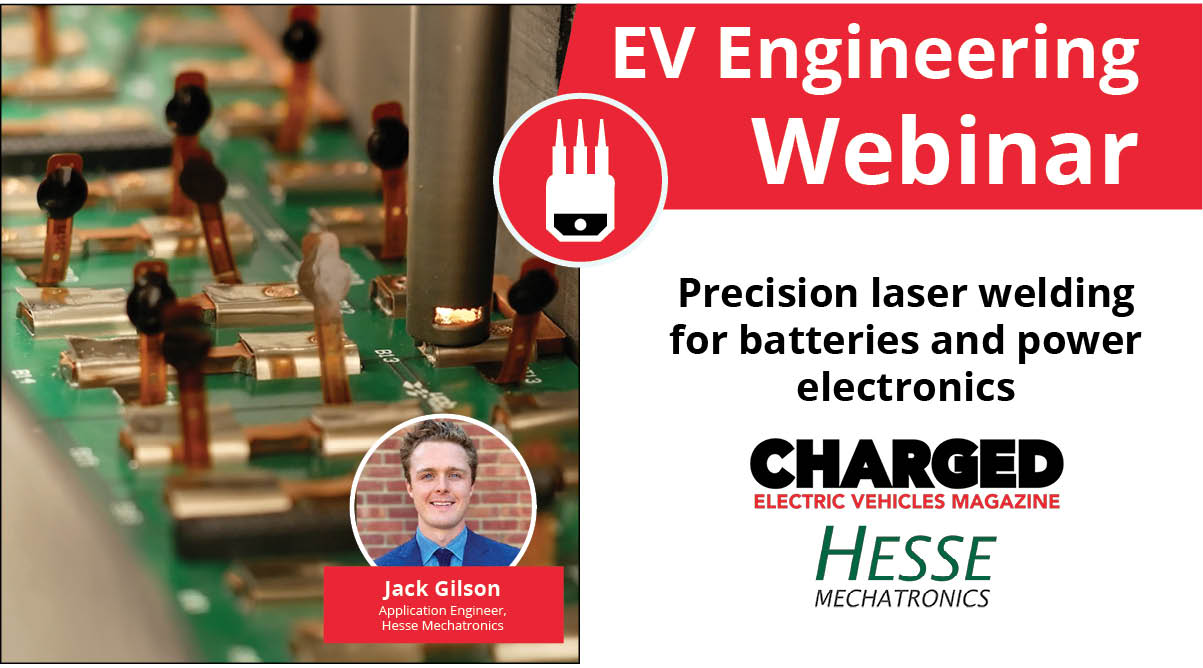
A forthcoming webinar on Tuesday, June 2nd, at 1 pm EDT, will explore advanced process strategies for applications like busbars, tabs, terminals, and power-module interconnects.
-
Topics covered include intricate weld geometry, material metallurgy, precise penetration control, crucial fixturing, real-time inline monitoring, and rigorous process validation through cross-sectional analysis.
-
The session aims to provide production-oriented approaches to enhance the reliability and efficiency of advanced electrical connections in high-volume manufacturing.
-
Registration for this in-depth, free webinar is now open, offering valuable insights for engineers and manufacturers in the e-mobility sector.


The Imperative of Precision Laser Welding in Modern EV Technology
The burgeoning electric vehicle (EV) market demands increasingly sophisticated and reliable manufacturing techniques, particularly for critical components like batteries and power electronics. At the forefront of this evolution is precision laser welding, a technology rapidly becoming indispensable for creating robust and efficient electrical interconnects.
As manufacturers strive for higher performance, greater energy density, and extended lifespan in EV batteries and associated power modules, the integrity of every connection becomes paramount. Traditional welding methods often fall short in meeting the stringent requirements for miniaturization, material diversity, and overall quality control.
Precision laser welding offers a non-contact, high-energy-density solution that minimizes heat input, reduces material distortion, and delivers welds with superior electrical conductivity and mechanical strength. This capability is vital for ensuring the longevity and safety of modern e-mobility systems.
Core Applications: From Busbars to Power Modules
The scope of precision laser welding applications across the EV ecosystem is extensive and continues to grow. It is fundamental to the assembly of numerous critical components that facilitate power flow and ensure operational integrity.
For battery packs, precision laser welding is used to connect busbars, tabs, and terminals. These interconnects are crucial for efficiently distributing current within and between battery cells, impacting overall pack performance, thermal management, and safety.
In power electronics, such as inverters, converters, and on-board chargers, laser welding plays a key role in joining delicate power-module interconnects. These connections must withstand high current densities and temperature fluctuations, making the consistent quality afforded by precision laser welding essential.
The webinar will delve into these specific applications, providing real-world examples and demonstrating how optimized laser welding strategies directly contribute to the reliability and manufacturability of these advanced electrical components.
Unpacking Key Strategies for Optimal Welding Performance
Achieving superior quality in precision laser welding requires a nuanced understanding and meticulous control of various process parameters. The upcoming webinar is designed to demystify these complexities, offering practical insights into strategies that enhance weld integrity and production efficiency.
From the foundational aspects of joint design to advanced monitoring techniques, each element plays a critical role in the overall success of the welding operation. Mastering these strategies is key to unlocking the full potential of laser welding in battery and power electronics manufacturing.
Mastering Weld Geometry and Metallurgy
The success of any weld begins with appropriate geometry and a deep understanding of the materials involved. For precision laser welding, considerations for weld geometry include the joint design (e.g., lap, butt, fillet), weld seam width, and penetration depth required for specific electrical and mechanical performance.
Metallurgy is equally crucial, especially when joining dissimilar materials, a common scenario in battery and power electronics applications. The webinar will explore how different material compositions react to laser energy, discussing challenges like intermetallic formation, solidification cracking, and microstructure control. Understanding these aspects is vital for creating durable and reliable connections that meet stringent industry standards.
Achieving Precise Penetration Control
Consistent and accurate penetration control is a hallmark of high-quality precision laser welding. Insufficient penetration can lead to weak electrical connections and mechanical failures, while excessive penetration risks damaging underlying components or causing unwanted thermal stress.
The session will cover techniques to achieve precise penetration, including optimized beam shaping, controlled power modulation, and the strategic use of process gases. These methods ensure that the laser energy is delivered precisely where needed, creating welds with consistent depth and width, crucial for uniform electrical pathways and long-term reliability.
Fixturing and Clamping: Ensuring Stability and Repeatability
In high-volume manufacturing environments, robust fixturing and clamping are non-negotiable for successful precision laser welding. These systems are essential for accurately positioning components, maintaining tight tolerances, and preventing distortion during the welding process.
The webinar will address critical considerations for designing and implementing effective fixturing solutions. Proper clamping not only ensures repeatable weld quality but also contributes significantly to process robustness by minimizing variations that could lead to defects, ultimately enhancing overall manufacturability.
Real-time Quality Assurance: Inline Monitoring and Process Validation
Ensuring consistent quality in precision laser welding requires sophisticated real-time quality assurance mechanisms. Inline monitoring systems are increasingly integrated into production lines to detect anomalies and deviations as they occur, preventing defective parts from moving further down the assembly line.
The webinar will explore various inline monitoring technologies, such as melt pool cameras, pyrometers for temperature sensing, and force sensors for consistent clamping pressure. Complementing these are robust process validation techniques, including destructive and non-destructive testing.
A critical aspect discussed will be cross-sectional analysis, which provides invaluable insights into the internal structure of welds, revealing penetration depth, porosity, and metallurgical characteristics. This comprehensive approach to monitoring and validation is essential for maintaining high product quality and meeting regulatory compliance in the EV sector.
Driving Production Efficiency: Robustness and Manufacturability
The ultimate goal of adopting advanced precision laser welding strategies is to enhance production efficiency, leading to more robust and manufacturable electrical interconnects. For the rapidly expanding EV industry, the ability to scale production while maintaining uncompromising quality is paramount.
The approaches detailed in the webinar are specifically designed to improve process robustness, ensuring consistent quality even under varying production conditions. This includes implementing standardized procedures, utilizing advanced automation, and continuously optimizing process parameters based on real-time data.
Furthermore, these strategies directly contribute to repeatability, meaning that identical high-quality welds can be produced consistently across millions of components. This level of control is fundamental for mass production and for minimizing scrap rates.
Finally, manufacturability is significantly improved by integrating these production-oriented laser welding solutions, making assembly processes smoother, more efficient, and cost-effective. These advancements are critical for accelerating the development and deployment of next-generation EV battery and power electronics systems.
Engage with Experts: A Deep Dive into Laser Welding Solutions
This comprehensive session promises to be an invaluable resource for engineers, production managers, and researchers focused on the intricate demands of battery and power electronics manufacturing. Participants will gain practical knowledge applicable to real-world production challenges.
Join industry experts for this insightful discussion on Tuesday, June 2nd, at 1 pm EDT. The webinar offers a unique opportunity to understand advanced laser welding strategies, examine application examples, and review critical analysis techniques that drive innovation and quality in the e-mobility sector.
Registration for this free event is now open. Secure your spot to explore how precision laser welding is shaping the future of advanced electrical interconnects.
Other Key Discussions in EV Engineering
Beyond this focused session, a wealth of knowledge on EV engineering is available through on-demand webinar sessions from the recent Spring Virtual Conference. These recordings and presentations offer further insights into critical areas of electric vehicle development.
-
Automotive CoolGaN™ Enabling Highly-Efficient & Affordable E-Mobility
Register
-
Exclusive Introduction To LOCTITE SOLVE: AI-powered Virtual Adhesives Hub
Register
-
Unlocking Next-Gen xEV Power Conversion: New CoolSiC™ Devices
Register
-
Reset Instead Of Replace: Solving EV Circuit Protection Challenges
Register
-
Designing Safer E-Mobility Battery Packs: Materials And Testing Insights
Register
-
Modeling Hydrogen Fuel Cells And Electrolyzers
Register
-
Building Realistic And Dynamic Testing Environments For EV Technology Verification
Register
-
New Strategies For High Voltage Fault Management In Next-Gen EVs
Register
-
How To Decrease Risks Of Catastrophic Failures In EV Battery Cells: It Is Not What You Think
Register
-
Rethinking Waste: How Fujipoly Is Turning Thermal Interface Material Scrap Into Sustainability
Register
-
Full‑Power EV Inverter Validation Using Power HIL Systems
Register
-
Megawatt Charging Systems: Accelerated Testing Of Power‑Level Charging And Communication Control
Register
-
Applying Functional Safety To eMobility Battery Systems
Register
-
Designing Ethernet & CAN Bus Cables: What Specs Don’t Tell You
Register
-
Designing Batteries For Upcoming Regulations: No Flame Out, No Explosion
Register
-
How To Bring Your BMS To Market Faster Without Compromising Quality Or Safety
Register
-
How To Isolate Charging Interoperability Failures Fast, Without Endless Site Hopping And Raw Hex Dumps
Register
-
Centralized And Flexible: Scalable Measurement At Your Desk
Register
-
Measuring Shield Currents in HV Cables – Even On The Go
Register
Frequently Asked Questions (FAQ)
What is precision laser welding used for in EV batteries?
Precision laser welding is primarily used for creating critical electrical interconnects in EV battery packs. This includes joining busbars, battery tabs, and terminals, ensuring efficient current flow, robust mechanical connections, and contributing to the overall safety and performance of the battery system.
Why is penetration control important in laser welding for power electronics?
Penetration control is crucial for optimal performance in power electronics welding. It ensures that welds have consistent depth and width, preventing damage to sensitive underlying components while guaranteeing robust electrical and mechanical connections. Precise control minimizes resistance and enhances thermal management.
What role do fixturing and clamping play in laser welding?
Fixturing and clamping are vital for accurately positioning components and maintaining their alignment during the laser welding process. This prevents distortion, ensures consistent weld geometry, and is fundamental for achieving high repeatability and quality in automated, high-volume manufacturing environments for EV components.
How does inline monitoring improve laser welding processes?
Inline monitoring systems enhance laser welding by providing real-time feedback on critical process parameters. This allows for immediate detection of deviations or potential defects, enabling quick adjustments and reducing scrap rates. Technologies like melt pool cameras and pyrometers are key to this quality assurance.
What is process validation and cross-sectional analysis in this context?
Process validation confirms that a welding process consistently produces components meeting specified quality standards. Cross-sectional analysis is a key validation tool, involving cutting and examining a weld to assess its internal structure, penetration depth, and metallurgical characteristics, ensuring the integrity and reliability of the electrical interconnects.
How does precision laser welding contribute to EV manufacturability?
Precision laser welding significantly improves EV manufacturability by offering a highly repeatable, robust, and automated joining process. It enables efficient assembly of complex battery and power electronic modules, reduces rework, and supports high-volume production while consistently delivering the stringent quality required for e-mobility applications.