
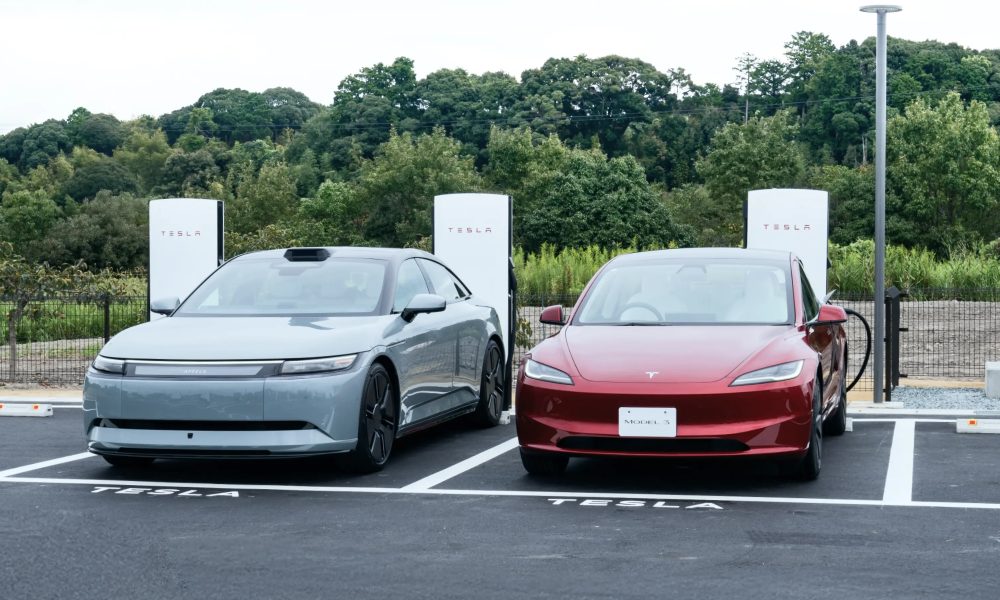
In a significant development for the global automotive industry, Sony Honda Mobility (SHM) has officially ceased the development of its highly anticipated AFEELA electric vehicles. This announcement, made on March 25, 2026, marks the end of aspirations for the AFEELA 1 luxury sedan and a planned SUV model, highlighting the intense competition and evolving dynamics within the burgeoning electric vehicle market.
The joint venture between technology giant Sony and automotive stalwart Honda had positioned AFEELA as a premium, tech-forward entrant designed to challenge established players. Its abrupt discontinuation underscores the formidable hurdles new ventures face in scaling production and securing market share in a rapidly shifting economic and technological landscape.

Aspiration Meets Reality: The AFEELA Project’s Trajectory
The AFEELA project was introduced with considerable fanfare in 2022, promising a blend of cutting-edge technology and established automotive engineering. Conceived as a collaboration between two industry leaders, SHM aimed to combine Honda’s renowned reliability and manufacturing prowess with Sony’s deep expertise in entertainment, artificial intelligence, and software development.
Prototypes unveiled to the public showcased an array of advanced features intended to redefine the in-car experience. These included sophisticated autonomous driving systems, immersive in-cabin displays, and even direct integration with PlayStation, suggesting a vehicle designed not just for transport, but for a comprehensive digital lifestyle.
With an estimated price point of around $90,000, the AFEELA 1 luxury sedan was slated for limited production at one of Honda’s facilities in Ohio, with initial deliveries targeted for late 2026. The vehicle quickly garnered attention from industry observers and media outlets, with many labelling it as a potential ‘Tesla Killer’—a direct challenger to Tesla’s longstanding dominance in software, connectivity, and premium electric vehicle appeal.

The ambitious project sought to carve out a niche in the high-end segment of the electric vehicle market, leveraging its unique technological blend. However, this promising beginning has now culminated in a premature end, serving as a stark reminder of the complexities inherent in launching and sustaining a new electric vehicle brand.
Honda’s Strategic Pivot and Its Ramifications
The decision to halt AFEELA’s development directly follows a broader reassessment of Honda’s global electrification strategy. On March 12, 2026, the Japanese automaker announced significant changes to its electric vehicle plans, which included scrapping several upcoming EV programs.
This strategic recalibration by Honda was attributed to a confluence of factors currently affecting the global electric vehicle market. These include a noticeable slowing in consumer demand for electric vehicles, persistent high interest rates that impact purchasing power, and dynamic shifts in overall market conditions and consumer preferences.
In the wake of Honda’s revised strategy, SHM issued a statement clarifying its position. The joint venture indicated that it could no longer rely on critical Honda technologies and manufacturing assets, a fundamental pillar of the AFEELA project. This withdrawal of essential resources left SHM with ‘no viable path forward’ for the continuation of its electric vehicle development.
Consequently, reservation fees collected from early buyers, particularly those in California, are being fully refunded. The future of the Sony Honda Mobility joint venture itself is now under comprehensive review, casting uncertainty over the long-term collaboration between the two industrial giants in the rapidly evolving electric vehicle market.
The ‘Tesla Killer’ Graveyard: A Growing List of Aspirants
The narrative of an emerging ‘Tesla Killer’ has been a recurring theme in the electric vehicle market for over a decade. Yet, time and again, ambitious projects designed to dethrone Tesla from its commanding position, or even merely establish a strong foothold, have struggled to meet expectations or ultimately failed to materialize.
The AFEELA’s quiet demise now adds it to a lengthening list of vehicles once heralded as the next big thing in the electric vehicle market. These ventures, despite significant investment and media hype, have often fallen victim to the unforgiving realities of automotive production, market adoption, and financial viability.
Fisker Ocean: From Hype to Bankruptcy
Among the notable examples is the Fisker Ocean SUV, representing the second major automotive venture by designer Henrik Fisker. Launched in the late 2010s, the Ocean promised stylish design, innovative features like a solar roof, and advanced battery technology.
Despite generating initial excitement, the company succumbed to bankruptcy in 2024. Its collapse was attributed to a series of production delays, persistent quality control issues, and significant financial shortfalls, illustrating the challenges of converting design vision into sustainable mass production within the highly competitive electric vehicle market.
Faraday Future: High-Tech Dreams Derailed
Faraday Future, another high-profile startup, poured billions of dollars into the development of its FF 91 luxury sedan. The vehicle was marketed as a hyper-tech rival, boasting unmatched performance and a suite of futuristic features designed to appeal to the premium segment.
However, despite the massive investment and considerable hype, Faraday Future delivered fewer than 100 vehicles before largely fading into obscurity. This outcome highlighted the immense capital requirements and execution challenges involved in bringing a complex, high-technology electric vehicle to market at scale.
Lordstown Motors: Buzz to Bankruptcy
The electric pickup truck segment also saw its share of failed aspirants, with Lordstown Motors’ Endurance being a prominent case. The electric pickup generated substantial pre-order buzz and attracted significant Wall Street excitement, particularly for its innovative in-wheel hub motors.
However, the company’s trajectory quickly reversed following reports of exaggerated range claims, leading to regulatory scrutiny. Coupled with the sale of its factory and subsequent financial difficulties, Lordstown Motors ultimately imploded, filing for bankruptcy and underscoring the severe consequences of over-promising and under-delivering in the discerning electric vehicle market.
Navigating the Turbulence: Challenges for Established Competitors
Even companies that have managed to bring highly acclaimed electric vehicles to market are not immune to the severe pressures defining the current electric vehicle market. While they have avoided the fate of bankruptcy, their growth trajectories have been fraught with challenges.
Lucid Motors: Luxury Appeal Versus Sales Hurdles
Lucid Motors, with its luxurious Air sedan, was frequently positioned as a direct ‘Tesla slayer’ due to its superior range ratings and opulent interior appointments. The Air received strong reviews from critics and was praised for its engineering prowess and performance.
Yet, despite its accolades, Lucid has continually struggled with sluggish sales volumes and has consistently missed its production and growth targets. This suggests that even a compelling product in the premium segment faces significant headwinds when it comes to attracting a broader customer base and achieving economies of scale in the broader electric vehicle market.
Rivian: Production Ramps and Profitability Pressures
Similarly, Rivian, known for its innovative R1T electric pickup truck and R1S SUV, enjoyed widespread early acclaim and a blockbuster initial public offering (IPO). The brand quickly established a reputation for robust off-road capability and unique adventure-oriented design.
However, like many new entrants, Rivian has encountered substantial production ramp-up challenges and persistent profitability woes. These operational difficulties have prevented it from effectively challenging Tesla’s overall market leadership, emphasizing that product appeal alone is insufficient without efficient manufacturing and a clear path to sustained financial health in the competitive electric vehicle market.
Deepening Realities in the Electric Vehicle Market
The AFEELA’s discontinuation serves as a potent microcosm of the broader shifts and intensifying challenges within the global electric vehicle market. The industry, which experienced a period of explosive growth, is now confronting a more complex reality.
Slowing Demand and Economic Headwinds
A key factor is the global deceleration in electric vehicle demand. While adoption continues, the pace has moderated from earlier projections, largely due to consumer concerns over charging infrastructure, range anxiety, and the upfront cost of EVs. This, combined with persistent high interest rates, makes the purchase of new, often expensive, electric vehicles a more daunting prospect for many consumers, directly impacting sales volumes across the sector.
The Unyielding Advantage of Tesla
Tesla’s enduring market stronghold remains formidable, built on several foundational advantages. Its first-mover status in software integration, a proprietary and extensive charging infrastructure, and a powerful, globally recognized brand loyalty continue to provide a significant competitive moat. These elements are difficult and costly for newcomers or even established legacy automakers to replicate quickly.
The company’s continuous innovation in battery technology, manufacturing processes, and autonomous driving capabilities further solidifies its position, making it a moving target for competitors attempting to catch up in the fast-paced electric vehicle market.
Complexities of Scaling in the EV Sector
Perhaps the most understated challenge is the sheer complexity of scaling the production of desirable and affordable electric vehicles. It involves not just technological innovation but also mastering global supply chains, optimizing manufacturing efficiency, building robust service networks, and adapting to diverse regulatory environments.
Many legacy automakers and tech newcomers alike have consistently underestimated these multifaceted requirements. The transition from designing a compelling prototype to mass-producing millions of high-quality vehicles profitably is an arduous journey, demanding vast capital, engineering expertise, and operational precision, which is critical for survival in the evolving electric vehicle market.
The AFEELA’s quiet demise underscores a harsh reality prevalent across the electric vehicle market. While the allure of innovation and the promise of a greener future drive many ventures, the actual journey from concept to market dominance is paved with significant obstacles. This latest development serves as another stark reminder that in the demanding automotive sector, innovation alone is rarely sufficient to dismantle the leadership of established players or guarantee a sustainable future.