
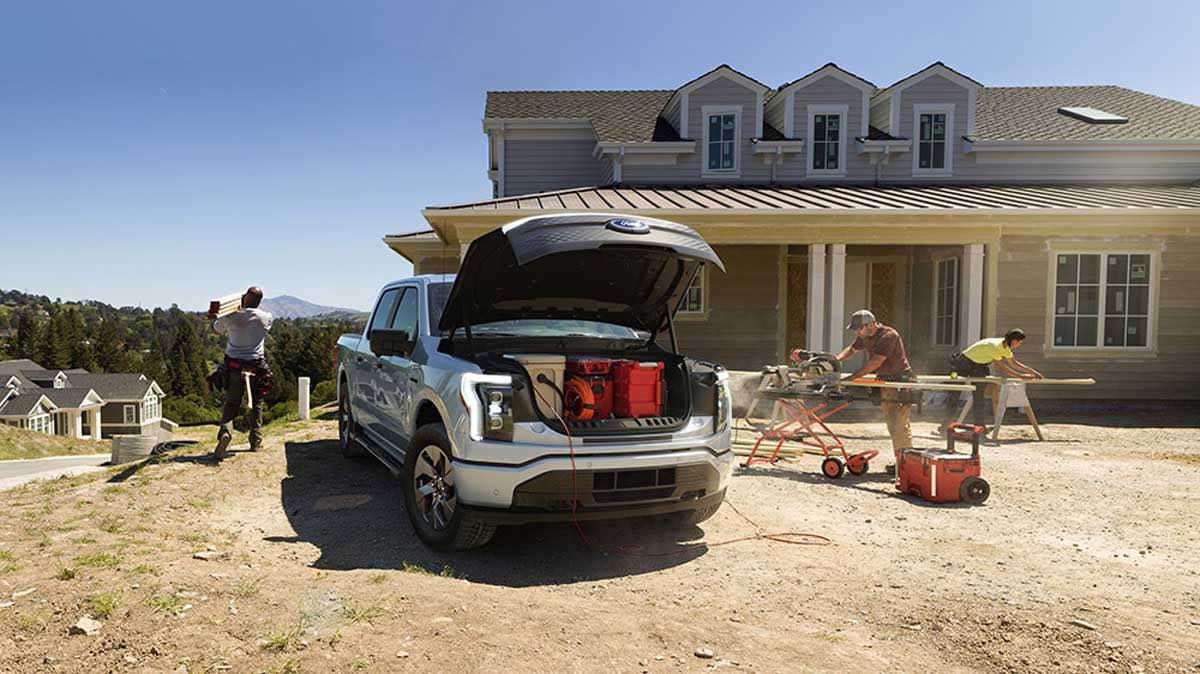
Owners of the Ford F-150 Lightning electric ute in Australia are confronting a deepening crisis, as a nationwide recall notice now mandates trickle charging for their vehicles. This critical development unfolds concurrently with the news that Bosscap, the parent company of local distributor AusEV, has entered receivership, severely impacting warranty support for the approximately 150 affected vehicles.
The convergence of these events has created a complex and challenging situation for Australian owners of the formidable Ford F-150 Lightning electric ute, a vehicle once heralded for its potential to redefine the electric vehicle (EV) landscape. The directive to avoid high-power direct current (DC) fast charging introduces significant inconvenience, while the distributor’s financial distress leaves owners in a precarious position regarding necessary repairs and support.

Immediate Crisis Unfolds for F-150 Lightning Owners
For the estimated 150 Australian consumers who invested in the large Ford F-150 Lightning electric ute, the past few days have brought a series of escalating concerns. A recent recall notice has specifically instructed these owners to revert to trickle charging methods for the foreseeable future. This operational change is not merely an inconvenience but a critical safety measure, necessitated by potential risks associated with the vehicle’s charging system.
Adding to this operational challenge is the significant corporate upheaval affecting the local supply chain. AusEV, the company responsible for converting these left-hand drive vehicles to right-hand drive for the Australian market, is inextricably linked to Bosscap Group. The recent placement of Bosscap into receivership on March 17 has effectively suspended all its operations, casting a long shadow over the future of customer support and warranty fulfillment for the imported electric utes.
Distributor’s Parent Company Enters Receivership
The financial distress of Bosscap Group, AusEV’s parent entity, marks a pivotal downturn for the Australian Ford F-150 Lightning electric ute community. The company announced its receivership last week, confirming that all business operations have been halted as receivers commence an assessment of the business. This move directly impacts the ability of AusEV to continue its services, including crucial warranty repairs.

In a public statement via LinkedIn, Bosscap attributed its downfall to external factors, explaining: “a sudden change in global production strategy from Ford materially impacted the availability of the underlying platform the business relied on. This decision which was outside” of its control.
This development is particularly critical given the timing of the recall. With Bosscap’s inability to undertake warranty repair works, as stated in their LinkedIn post, owners are left searching for alternative solutions to address the safety issues now identified in their vehicles.
The F-150 Lightning’s Journey to Australia
The Ford F-150 Lightning electric ute initially garnered considerable attention following its unveiling in May 2021 and subsequent deliveries a year later. It was promoted as a versatile electric utility vehicle, boasting impressive capabilities for its segment. The base model offered an estimated range of 370 kilometres, while the top-tier variant extended this to 515 kilometres.
Beyond its conventional driving range, the F-150 Lightning was notable for its innovative vehicle-to-grid (V2G) and vehicle-to-load (V2L) functionalities. These features promised the ability for the ute to power external devices, ranging from essential job site tools to recreational vehicles like caravans, and even providing backup power for homes during outages, positioning it as a truly multi-functional asset.
Despite its global appeal, an official launch of the Ford F-150 Lightning electric ute in Australia by Ford itself remained unlikely. It was through the efforts of Queensland-based AusEV, an independent firm without official ties to Ford, that a limited number of these electric utes were imported and converted to right-hand drive. The first models became available in early 2024, with prices starting from approximately $225,000, reflecting the significant costs associated with importation and conversion.
Changing Fortunes at Ford’s Global EV Strategy
The challenges faced by AusEV and Bosscap are, in part, a ripple effect of broader strategic shifts within Ford globally. The American automotive giant initiated a re-evaluation of its electric vehicle production strategy in October of the previous year. This was reportedly influenced by a combination of factors, including slower-than-anticipated consumer demand for the F-150 Lightning and a change in leadership, leading to a recalibration of Ford’s ambitious EV targets.
Initially, Ford announced a temporary halt in the production of the F-150 Lightning. This was quickly followed by media reports suggesting a potential discontinuation of the model. These reports were later substantiated when Ford confirmed plans to reinvent the vehicle, transforming it into an extended-range electric vehicle rather than an entirely new design. These strategic adjustments by Ford on a global scale were explicitly cited by Bosscap as having a “material impact” on the availability of the underlying platform essential for their conversion business.
Nationwide Recall Issued for Charging System Flaw
The difficulties for Ford F-150 Lightning owners have been further compounded by a critical safety recall notice issued by the Australian government’s Vehicle Recalls website. This recall affects 146 units of the F-150 Lightning and highlights a significant concern related to the vehicle’s charging infrastructure.
Specifically, the recall details that the F-150 Lightning, when fitted with a Combined Charging System (CCS2) charge port, “may experience increased electrical resistance during high-power Direct Current (DC) fast charging causing the internal charging pins to overheat.” This issue directly led to the urgent recommendation for owners to “avoid charging the vehicle using DC fast chargers” and to exclusively use AC charging methods instead.
The potential risks outlined in the recall notice are severe. Owners have been explicitly warned that “If a person makes direct contact with the overheated charge port pins immediately after a charging session, there is a risk of burns or serious injury.” This underscores the gravity of the situation and the necessity for strict adherence to the new charging protocols to prevent harm.
The Critical Role of Performax International
With AusEV and Bosscap now unable to provide warranty support or facilitate the necessary rectification work, a crucial question arose regarding who would address the recall. In a commendable move for public safety, Performax International has stepped forward.
Performax International, recognised as Australia’s largest independent importer, converter, and retailer of American vehicles, has offered its services to address the affected F-150 Lightning units. The recall notice directs owners of the recalled vehicles to contact Performax International “to schedule an appointment to have their vehicle inspected and rectification carried out.”
It is important to note, as the recall states, that “Performax did not design or modify these vehicles or supply them to the Australian market.” Their involvement is purely in the interest of public safety. However, this assistance is not without potential financial implications for owners, as the recall notice clearly states that “A cost may be incurred for these repairs.” Owners are advised to consult the recall notice for specific contact information for Performax International.
Implications for Australian EV Market
The unfolding events surrounding the Ford F-150 Lightning electric ute in Australia underscore the complexities of the parallel import market, particularly for specialised electric vehicles. While such imports can bring desirable models to a local market not officially served by manufacturers, they also introduce unique challenges related to warranty, servicing, and manufacturer support, especially when the converting entity faces unforeseen corporate difficulties.
For the approximately 150 Australian owners, the situation presents both immediate operational adjustments due to charging limitations and long-term concerns regarding vehicle maintenance and resale value. The imperative to solely use AC charging, effectively reducing the convenience and utility of a vehicle designed for fast DC charging, significantly alters the ownership experience of the Ford F-150 Lightning electric ute.
As the assessment of Bosscap Group by receivers continues and owners navigate the recall process with Performax International, the Australian EV community will be closely watching the resolution of these issues. The case serves as a poignant reminder of the multifaceted considerations involved in the acquisition and support of imported electric vehicles in a rapidly evolving global automotive landscape.