
The United Kingdom government has recently unveiled a substantial financial commitment, allocating £1 billion in new funding. This significant investment is earmarked to bolster the deployment of zero-emission trucks and vans across the nation, directly addressing both the formidable costs associated with acquiring electric vehicles and the development of essential charging infrastructure. This initiative underscores a clear strategic intent to accelerate the transition towards a greener transport sector.
While the industry has largely welcomed this government intervention, energy and infrastructure specialist VEV views it as a crucial, albeit potentially insufficient, step forward. VEV acknowledges the funding as a ‘significant and welcome step for the industry.’ However, the company cautions that this financial impetus alone may not be enough to fully persuade commercial operators to commit wholeheartedly to transitioning their entire fleets to electric vehicles.

VEV’s Insight: Overcoming Operational Complexity
VEV operates at the forefront of the EV ecosystem, specializing in developing comprehensive EV charging infrastructure and integrated energy systems. These solutions are meticulously designed to cater to the diverse needs of fleet operators, transport providers, and local authorities. Central to VEV’s offering is its VEV-IQ platform, an advanced system engineered to empower operators with the tools necessary to monitor, optimize, and efficiently manage depot energy consumption, ensuring seamless and cost-effective operations.
Mike Nakrani, CEO of VEV, articulated a nuanced perspective on the challenges facing fleet electrification. He stated, “This funding is a positive step, but it doesn’t remove the core challenge facing fleet electrification. The issue isn’t upfront cost—it’s the complexity of making electric fleets work operationally at scale. The focus now needs to shift from funding vehicles to delivering integrated charging and energy solutions that actually work in the real world. At the moment, industry just isn’t seeing that happening.” This highlights a critical distinction between initial investment hurdles and the deeper operational intricacies that deter widespread adoption.
The operational complexities, according to VEV, extend beyond merely purchasing electric vehicles. They encompass everything from managing electricity supply and demand at depots to integrating charging schedules with vehicle routes and ensuring grid stability. Addressing these multifaceted challenges requires a holistic approach that moves beyond simple subsidies and delves into sophisticated energy management.

The Power of Managed Charging for Commercial Fleets
Commercial fleets inherently possess unique characteristics that lend themselves perfectly to strategic energy management. Their operations are typically characterized by predictable routes and consistent schedules, which allow for structured planning. Furthermore, a key advantage is that these vehicles spend considerable periods parked at depots between shifts. This ‘dwell time’ represents a golden opportunity for implementing managed charging strategies.
Managed charging involves intelligently controlling when and how much power is delivered to vehicles. By staggering energy demand throughout the day or night, operators can significantly reduce their peak electricity consumption. This not only translates into lower electricity costs due to avoidance of demand charges but also alleviates considerable pressure on local electrical grids, ensuring a more stable and efficient energy distribution system.
The ability to schedule charging during off-peak hours, when electricity is often cheaper and grid demand is lower, presents a substantial economic benefit for fleet operators. This proactive management of energy consumption is a cornerstone of making fleet electrification economically viable and operationally sound.
Real-World Success: Stagecoach Chesterfield Leads the Way
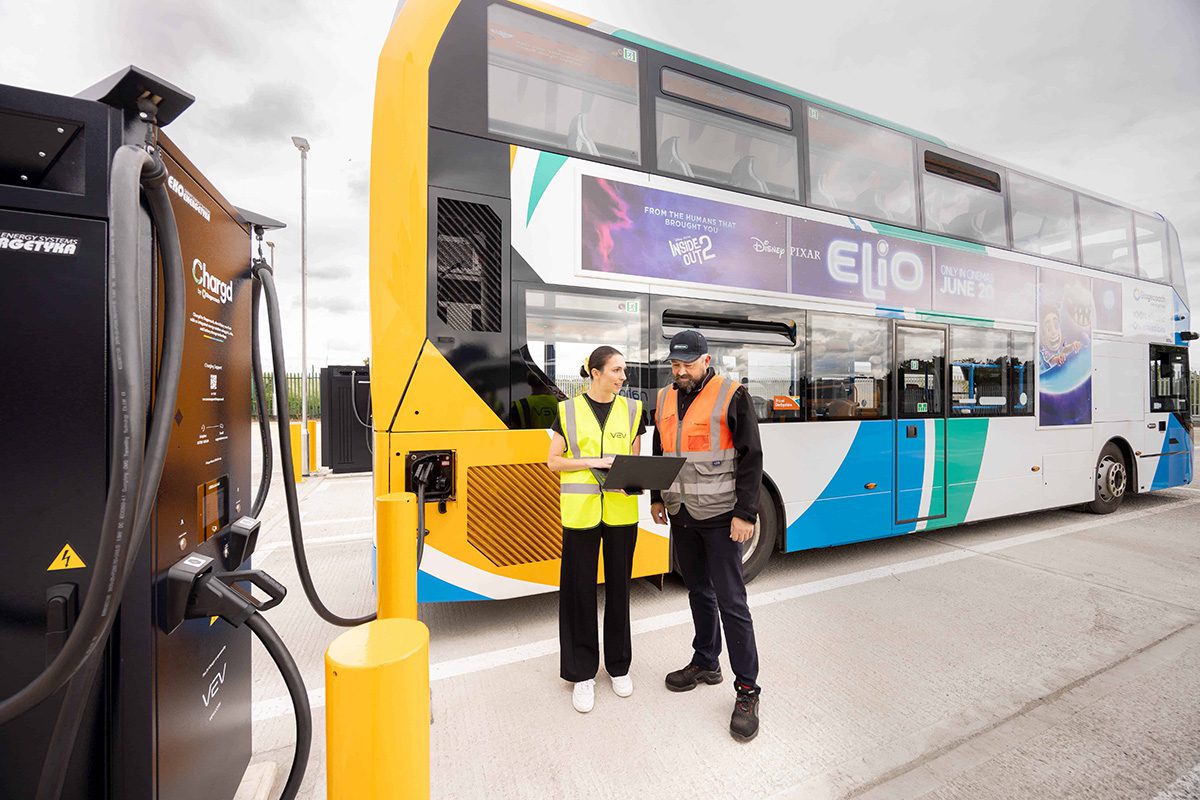
The efficacy of integrating smart charging with on-site energy systems is not merely theoretical; it is being demonstrably proven in real-world applications. A prime example is Stagecoach’s electrified depot located in Chesterfield, England. This pioneering facility is designed to support a substantial fleet of 57 electric buses, showcasing the potential for large-scale electric fleet operations.
Crucially, the Chesterfield depot incorporates advanced solar generation capabilities. This integration allows the depot to generate a portion of its own electricity, reducing reliance on the grid and further lowering operational costs. By intelligently combining renewable energy sources with smart charging protocols, Stagecoach has effectively created a resilient and cost-efficient ecosystem. This model demonstrates how fleets can effectively manage power costs, enhance energy independence, and improve overall operational flexibility, setting a precedent for future developments in EV charging infrastructure.
Optimising Infrastructure for Fleet Growth
A critical insight, frequently echoed by industry experts and highlighted by VEV, revolves around the concept of ‘right-sizing’ EV charging infrastructure. This principle suggests that by meticulously planning and implementing managed charging protocols, fleet operators can often support a greater number of electric vehicles than might be indicated by the nameplate power capacities of their grid connections alone.
The key lies in efficient energy distribution and smart scheduling, avoiding the need for excessively large and costly grid upgrades. Instead of building infrastructure for simultaneous peak demand, managed charging allows for a more spread-out consumption profile. This strategic approach to EV charging infrastructure deployment is crucial for scaling fleet electrification economically, enabling businesses to maximise their existing electrical assets and avoid prohibitive upfront investments in grid connections.
Fleet Electrification’s Pivotal Role in Grid Stability
Beyond the direct benefits to fleet operators, the widespread electrification of commercial fleets holds a significant, broader potential: to play an integral role in supporting and stabilizing local electrical grids. As national electricity systems increasingly transition towards a greater reliance on intermittent renewable energy sources, such as wind and solar, the ability to manage demand flexibly becomes paramount.
Electric vehicle charging depots, with their inherent capacity for managed and scheduled charging, are uniquely positioned to offer this flexibility. During periods of high renewable generation and surplus supply, EV charging demand can be strategically ramped up to absorb excess energy. Conversely, during peak demand periods on the grid, charging can be temporarily reduced or paused, effectively lowering overall grid strain and preventing potential overloads.
Mike Nakrani reiterated the immense value of this capability, stating, “As the electricity system becomes more reliant on renewable energy, flexible demand will become increasingly valuable. Commercial fleets are one of the few energy loads that can provide that flexibility at scale.” This underscores the potential for electric fleets to become active participants in grid management, transforming from mere energy consumers into dynamic assets that contribute to a more resilient and sustainable energy infrastructure.
The Future: Integrated Energy Solutions for Sustainable Fleets
The path to widespread fleet electrification in the UK, while supported by substantial government funding, clearly necessitates a deeper focus on integrated energy solutions. The emphasis must shift from merely funding vehicle acquisitions to enabling sophisticated, operational strategies that address the inherent complexities of managing electric fleets at scale. Strategic energy management, including intelligent charging and on-site generation, emerges as the linchpin for unlocking the full potential of zero-emission commercial transport.
Companies like VEV, with their expertise in EV charging infrastructure and energy management platforms, are crucial enablers in this transition. By providing tools that optimize energy usage, reduce operational costs, and support grid stability, they pave the way for a future where electric fleets are not only environmentally friendly but also economically robust and operationally efficient. The success of the UK’s green transport agenda hinges on embracing these integrated approaches, moving beyond simple financial incentives to foster a truly sustainable and scalable EV ecosystem for commercial vehicles.