
Key Takeaways
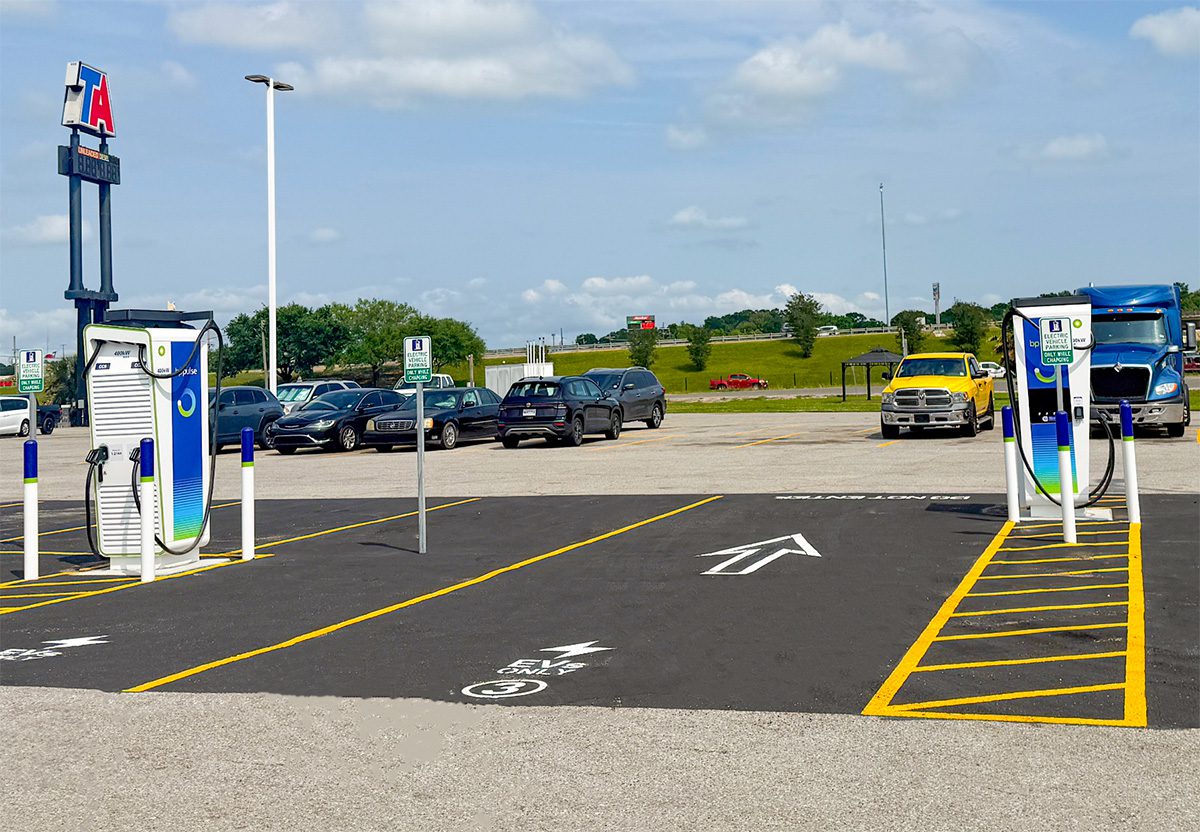
- Strategic Expansion: bp pulse has inaugurated its first EV fast charging site in Louisiana and added two more in Texas and Virginia, strategically located along major interstate highways.
- High-Power Capabilities: Each new station features 12 charging bays, offering up to 400 kW charging speeds with both CCS and NACS connectors, ensuring broad compatibility for electric vehicles.
- Traveler-Centric Locations: All three sites are co-located at Travel Centers of America (TA) stations, providing essential amenities like restrooms, restaurants, and convenience stores for EV drivers.
- Crucial Connectivity: The new stations are positioned on key routes—I-10 in Louisiana and Texas, and I-95 in Virginia—to enhance long-distance electric vehicle travel.
- Strengthening Infrastructure: This expansion underscores bp pulse’s commitment to building a robust and reliable EV charging network, supporting the accelerating shift towards electric mobility across the United States.
In a significant move reinforcing the accelerating shift towards electric mobility, bp pulse has announced a substantial expansion of its public DC fast charging network in the United States. The company, a prominent player in the global energy transition, has recently launched its inaugural charging site in Louisiana, complementing two additional operational stations in Texas and Virginia.
This strategic rollout directly addresses the escalating demand for reliable and high-speed electric vehicle charging infrastructure, particularly along crucial interstate corridors. The expansion highlights the increasing commitment of major energy entities, including those with historical roots in conventional fuels, to invest heavily in the future of sustainable transportation.
Strategic Expansion Across Key US Corridors
The newly activated sites are pivotal additions to the rapidly growing `bp pulse EV charging network`, designed to bolster long-distance travel capabilities for electric vehicle owners. Each of these state-of-the-art facilities is equipped with 12 charging bays, featuring both CCS (Combined Charging System) and NACS (North American Charging Standard) connectors, offering universal compatibility for a wide array of EVs.
Boasting impressive charging speeds of up to 400 kW, these stations are engineered to significantly reduce charging times, allowing drivers to quickly replenish their vehicle’s battery. This high-power capability is essential for minimizing range anxiety and making electric vehicle ownership more convenient and practical for extended journeys.
A key aspect of this expansion strategy is the partnership with Travel Centers of America (TA). All three new bp pulse EV charging locations are situated at TA stations, ensuring that EV drivers have access to a full suite of amenities. These include travel stores, clean restrooms, ATMs, dedicated pet areas, and diverse restaurant options, transforming a charging stop into a comprehensive and comfortable rest break.
Louisiana’s Inaugural bp pulse Hub
Louisiana welcomes its very first bp pulse fast charging site, a landmark development for EV drivers traversing the Gulf Coast region. Located at Exit 266 on I-10 near Slidell, this new station offers an ideal stopping point for travelers journeying to and from the vibrant city of New Orleans.
The Slidell location has been thoughtfully designed with user convenience in mind, featuring pull-through charging stalls that are particularly beneficial for larger electric vehicles or those towing trailers. Additionally, the inclusion of ADA (Americans with Disabilities Act) compliant charging stalls ensures accessibility for all drivers, reinforcing bp pulse’s commitment to inclusive infrastructure.
The positioning on I-10, a vital East-West artery, underscores the strategic intent to create seamless electric travel routes across the southern United States. This addition to the `bp pulse EV charging network` in Louisiana is expected to significantly encourage EV adoption in the state.
Enhancing Connectivity in Texas
Further west along the expansive I-10 corridor, bp pulse has activated another critical EV charging hub near East San Antonio, Texas. This site caters to the growing number of electric vehicle owners navigating the Lone Star State, one of the fastest-growing EV markets in the nation.
San Antonio, a major metropolitan area and a key economic center, benefits immensely from enhanced charging infrastructure that supports both local commuters and interstate travelers. The availability of high-speed charging in this strategically important location addresses a crucial need for reliable power on long stretches of highway.
This Texas expansion of the `bp pulse EV charging network` is set to become a frequently utilized stop for those traveling across the southern tier of the United States, connecting disparate regions with essential charging capabilities.
Bolstering East Coast EV Travel in Virginia
On the Eastern Seaboard, the bp pulse EV charging network has been strengthened with a new site at Exit 89 on I-95, situated near North Richmond, Virginia. I-95 represents one of the busiest and most critical transportation arteries in the entire United States, linking major cities from Florida to Maine.
The addition of a high-power charging station in North Richmond provides a much-needed boost for electric vehicle drivers undertaking journeys along this heavily trafficked route. It serves as a convenient and efficient stop for those traveling between the Mid-Atlantic and Southern states, alleviating concerns about charging availability on long drives.
This Virginia location reinforces bp pulse’s strategy of establishing a comprehensive network along primary travel corridors, ensuring that EV drivers can undertake cross-country trips with confidence and minimal disruption.
Powering the Journey: Advanced Charging Technology and Amenities
The technological specifications of these new bp pulse stations are designed to meet the current and future demands of electric vehicles. The inclusion of 12 charging bays at each site signifies a commitment to reducing wait times, particularly during peak travel periods.
The dual provision of CCS and NACS connectors is forward-thinking. CCS remains a dominant standard for many existing EVs, while NACS is rapidly gaining traction as an industry standard, especially with many automakers adopting Tesla’s connector design. This ensures that the bp pulse EV charging network remains accessible to the broadest possible range of electric vehicles.
A maximum output of 400 kW positions these stations among the fastest public DC fast chargers available. This ultra-fast charging capability can add hundreds of miles of range in a matter of minutes, a critical factor for drivers on tight schedules or those covering significant distances.
The strategic co-location with Travel Centers of America stations is a testament to understanding the holistic needs of an EV traveler. Beyond just energy for the vehicle, drivers require comfort, sustenance, and services. The availability of travel stores, diverse dining options, and clean facilities significantly enhances the overall charging experience, making long-haul EV travel more appealing.
The Evolving Role of Energy Giants in EV Infrastructure
bp pulse’s continuous expansion underscores a broader trend within the global energy sector: the proactive pivot of traditional oil and gas companies towards renewable energy and electric vehicle infrastructure. This transformation reflects a recognition of the inevitable shift towards sustainable energy solutions and a commitment to maintaining relevance in a decarbonizing world.
As a key player in this transition, bp pulse is leveraging its extensive experience in energy distribution and customer service to build a robust and user-friendly EV charging ecosystem. Their investments in high-speed, accessible charging points are crucial for normalizing electric vehicle ownership and supporting national decarbonization goals.
The development of the `bp pulse EV charging network` is part of a larger, long-term strategy to provide critical infrastructure that supports the mass adoption of electric vehicles, contributing to a more sustainable future for transportation.
Addressing the Growing Demand for Public Fast Charging
The rapid increase in electric vehicle sales across the United States has amplified the urgent need for a pervasive and reliable public fast-charging infrastructure. While home charging remains the primary method for many EV owners, public DC fast charging is indispensable for long-distance travel, urban areas where home charging is not feasible, and emergency situations.
The current pace of charging infrastructure deployment, while accelerating, must keep pace with EV adoption to prevent bottlenecks and ensure a smooth transition for consumers. Companies like bp pulse are playing a vital role in closing this infrastructure gap, particularly along major highway networks where charging options have historically been sparse.
Reliability and uptime are paramount for public charging stations. bp pulse’s focus on modern, high-capacity equipment and integration with established travel centers aims to deliver a dependable experience, building trust among EV drivers and encouraging wider adoption of zero-emission vehicles.
Impact on Sustainable Transportation and Regional Economies
The expansion of the `bp pulse EV charging network` carries significant implications for sustainable transportation. By facilitating easier and more convenient long-distance EV travel, these new stations directly contribute to reducing greenhouse gas emissions and improving air quality.
Furthermore, the establishment of these charging hubs can have positive economic impacts on the surrounding communities. Travel Centers of America locations, by nature, attract travelers, and the presence of EV charging can draw in a new demographic of visitors, potentially boosting local businesses through increased foot traffic and spending on amenities.
The strategic deployment of this infrastructure also aligns with federal and state initiatives aimed at fostering a clean energy economy and supporting the growth of green jobs within the automotive and energy sectors.
What’s Next for the bp pulse EV Charging Network?
This latest expansion signals bp pulse’s continued aggressive strategy to grow its presence in the North American EV charging market. With a clear focus on high-speed charging, strategic locations, and comprehensive amenities, the company is poised to become an even more significant provider of essential EV infrastructure.
As the electric vehicle market matures, the accessibility and reliability of charging networks will be critical determinants of consumer confidence and adoption rates. Initiatives like those undertaken by bp pulse are foundational to building the necessary ecosystem for a fully electrified transportation future.
The ongoing development of the `bp pulse EV charging network` demonstrates a long-term vision to support electric mobility, ensuring that drivers have the power they need, wherever their journeys may take them.
Frequently Asked Questions (FAQ)
What types of connectors do bp pulse stations offer?
The new bp pulse EV charging stations are equipped with both CCS (Combined Charging System) and NACS (North American Charging Standard) connectors, ensuring compatibility with a wide range of electric vehicle models available in the market.
What charging speeds are available at these new sites?
Each of the newly opened bp pulse charging sites offers DC fast charging speeds of up to 400 kW. This high-power capability allows electric vehicle drivers to rapidly recharge their vehicles and significantly reduce travel times.
Where are the new bp pulse EV charging stations located?
The latest additions to the `bp pulse EV charging network` include its first site in Louisiana near Slidell on I-10, another in Texas near East San Antonio on I-10, and a third in Virginia near North Richmond on I-95.
Why are Travel Centers of America locations chosen for these sites?
Travel Centers of America (TA) locations are selected for their comprehensive amenities, which enhance the EV charging experience. These sites offer restrooms, travel stores, restaurants, ATMs, and pet areas, providing comfort and convenience for drivers during their charging stops.
What is the significance of bp pulse’s expansion for EV drivers?
The expansion by bp pulse significantly improves the availability of high-speed charging along critical interstate highways. This helps alleviate range anxiety, makes long-distance EV travel more feasible, and supports the broader adoption of electric vehicles by offering reliable infrastructure.
How does bp pulse contribute to the broader EV ecosystem?
bp pulse contributes to the EV ecosystem by building and operating a robust network of fast-charging stations. This investment in infrastructure is crucial for supporting the growing number of electric vehicles on the road and facilitating the transition to sustainable transportation across the globe.
Are the charging stalls accessible?
Yes, the new bp pulse EV charging site in Louisiana, and potentially others in the network, includes ADA (Americans with Disabilities Act) compliant charging stalls. This design ensures that the charging facilities are accessible and convenient for all electric vehicle drivers.