
Key Takeaways:
- Researchers at Tokyo University of Science have developed a groundbreaking computational model, eX-GL, to understand and mitigate iron loss in electric vehicle (EV) motor cores.
- The model maps the complex magnetization reversal in ‘maze domains’ within soft magnetic materials, a primary source of energy dissipation known as hysteresis loss.
- Combining persistent homology, machine learning, and physics-based calculations, eX-GL identified four critical energy barriers governing magnetization reversal.
- Findings indicate that the complexity of maze domains, driven by entropy and exchange energy coupling, directly influences motor efficiency and performance.
- This breakthrough offers a deeper understanding of magnetic phenomena, paving the way for more efficient and robust EV motor designs.
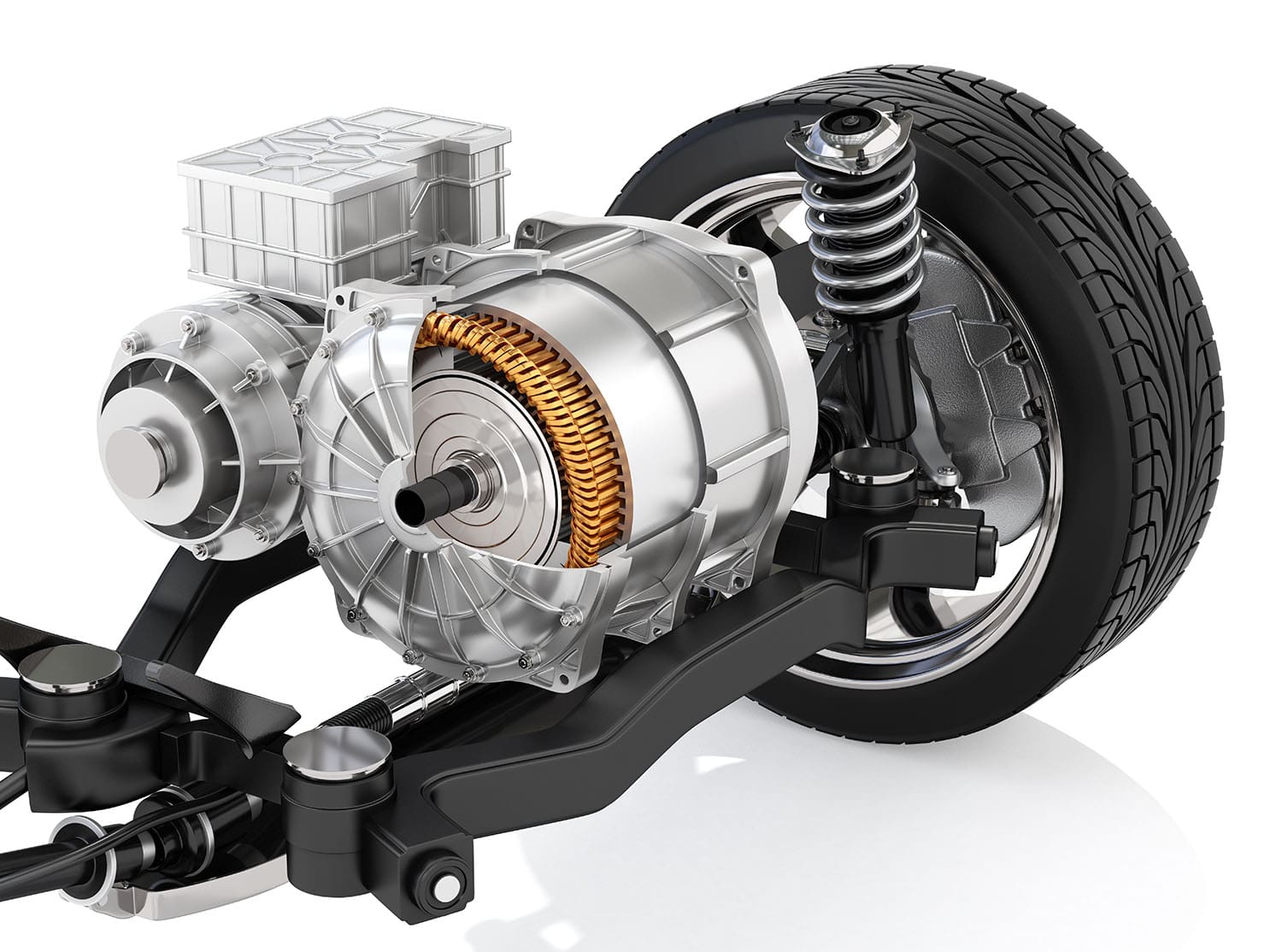
In a significant stride for electric vehicle technology, researchers at Tokyo University of Science have unveiled a sophisticated computational model aimed at tackling one of the most persistent challenges in EV motor design: iron loss. This innovative model promises to unlock a deeper understanding of how magnetic energy dissipates within motor cores, a critical factor in enhancing EV motor efficiency and overall performance.

The breakthrough, detailed in Scientific Reports in February 2026, centers on tracing the intricate behavior of “maze domain” structures in soft magnetic materials. These materials are fundamental components of electric motor cores, and their magnetic properties directly influence the efficiency of power conversion.
The Pervasive Challenge of Iron Loss in EV Motor Efficiency
Electric motors, the heart of every EV, rely on rapidly changing magnetic fields to generate motion. However, this dynamic process is not without its energy toll. A phenomenon known as iron loss, primarily comprising eddy current loss and hysteresis loss, represents a significant source of energy dissipation within the motor’s magnetic core.
Repeated magnetic field reversal, an inherent part of motor operation, continuously subjects the core materials to magnetic stresses. This constant reorientation of magnetic states leads to energy being converted into unwanted heat, rather than useful mechanical work. The consequence is reduced EV motor efficiency, diminished range, and increased thermal management requirements for battery technology.
Understanding and mitigating these losses is paramount for advancing sustainable mobility. Every percentage point of efficiency gain contributes to a more robust and environmentally friendly electric vehicle ecosystem, directly impacting everything from battery life to charging infrastructure.
Unraveling Magnetic Domains and Hysteresis
At the microscopic level, soft magnetic materials, crucial for applications like EV motor cores, are not uniformly magnetized. Instead, they spontaneously organize into discrete regions known as magnetic domains. Within each domain, the magnetization points in a uniform direction. The boundaries between these domains are called domain walls.
In certain soft magnetic materials, these domains arrange themselves into highly complex, zigzagging patterns referred to as maze domains. These structures exhibit peculiar and often abrupt magnetization reversal behaviors, particularly sensitive to temperature changes. This complexity has historically rendered them notoriously difficult to model and predict using conventional physics-based approaches.
The behavior of these magnetic domains directly governs hysteresis loss. Hysteresis is the lagging of magnetic induction behind the magnetic field intensity, meaning that the energy required to magnetize a material is not fully recovered when the magnetic field is removed or reversed. This energy difference is dissipated as heat, making it a direct contributor to iron loss and a primary target for improving EV motor efficiency.
Introducing eX-GL: A Novel Computational Model
To overcome the limitations of previous models, the Tokyo University of Science team developed eX-GL, an innovative entropy-feature-eXtended Ginzburg-Landau model. This powerful computational framework represents a significant leap in materials science and engineering by offering an unprecedented ability to trace the intricate process of magnetization reversal within these complex maze domains.
The eX-GL model integrates three advanced methodologies. Firstly, it employs persistent homology, a sophisticated mathematical tool derived from topological data analysis. Persistent homology excels at extracting robust topological features—such as the number of holes or connected components—from complex datasets, enabling a quantitative description of the maze domain structures’ geometric and connectivity changes during magnetization reversal.
Secondly, the model incorporates machine learning algorithms. These algorithms are trained to identify patterns and relationships within the vast amounts of data generated from microscopic domain images, allowing for predictive capabilities and a deeper understanding of the underlying physical mechanisms. Machine learning assists in discerning subtle correlations that might be overlooked by traditional analytical methods.
Finally, eX-GL is anchored by physics-based free energy calculations. The Ginzburg-Landau theory provides a framework for describing phase transitions in materials, offering a robust foundation for calculating the free energy associated with different magnetic configurations. By combining these three elements, eX-GL can accurately map the energy landscape that dictates how magnetic domains evolve and reverse their magnetization.
Breakthrough Findings: Identifying Energy Barriers
The researchers applied their eX-GL model to microscopic images obtained from a rare-earth iron garnet sample, a material chosen for its characteristic maze domain patterns. By observing the material at varying temperatures, the team meticulously traced the magnetization reversal process.
Through this detailed analysis, the model successfully identified four key energy barriers that govern the magnetization reversal process. These barriers represent critical junctures where the system requires specific energy input to transition from one magnetic state to another. Understanding these barriers is crucial, as they directly dictate the magnitude of hysteresis loss.
The study further illuminated how various fundamental physical interactions—namely, exchange interactions, demagnetizing effects, and entropy—interact dynamically to drive domain behavior. Exchange interactions are quantum mechanical forces that align neighboring magnetic moments, while demagnetizing effects arise from the magnetic fields generated by the material itself, often opposing the overall magnetization.
Perhaps one of the most profound findings was the discovery that as domain walls lengthen, maze domains become increasingly complex. This escalating complexity is not random; it is driven by a strong coupling between entropy and exchange energy. Entropy, a measure of disorder, plays a critical role in determining the stable configurations of magnetic domains, particularly at different temperatures. This intricate interplay directly influences the energy required for magnetization reversal, thereby impacting the overall EV motor efficiency.
Implications for Advanced EV Motor Design
The insights garnered from the eX-GL model hold profound implications for the future of EV motor design and advanced engineering. By quantitatively mapping the energy barriers and understanding the forces that drive magnetization reversal, engineers can now approach the design of soft magnetic materials with unprecedented precision.
This research provides a scientific basis for developing new materials or optimizing existing ones to minimize hysteresis loss. For instance, designers could explore ways to engineer materials where the identified energy barriers are lower or where the coupling between entropy and exchange energy leads to less complex, more easily reversible domain structures. Such advancements would directly translate into significant gains in EV motor efficiency, reducing energy waste and potentially allowing for smaller, lighter battery packs or extended vehicle ranges.
Furthermore, the ability to predict and control magnetic domain behavior could lead to innovations in thermal management systems. Less energy dissipated as heat means less need for extensive cooling mechanisms, contributing to a lighter, more compact, and cost-effective electric powertrain. This could accelerate the development of next-generation electric vehicles that are not only more efficient but also more sustainable and accessible.
The Road Ahead for EV Engineering
The work from Tokyo University of Science underscores the critical role of fundamental materials science in driving technological progress in the automotive industry. As the world continues its rapid transition towards electric mobility, breakthroughs in understanding and optimizing core components like electric motors are indispensable.
The eX-GL model offers a powerful new tool for researchers and engineers globally, enabling them to simulate and predict the performance of soft magnetic materials under various operating conditions. This predictive capability can significantly shorten development cycles for new motor designs, allowing for faster iteration and innovation.
Ultimately, this research serves as a testament to the ongoing quest for perfect EV motor efficiency. By demystifying the complex world within magnetic materials, scientists are paving the way for a future where electric vehicles are not just an alternative, but the unequivocal standard for high-performance, sustainable transport.
Frequently Asked Questions (FAQ)
What is iron loss in EV motors?
Iron loss refers to the energy dissipated as heat within an electric motor’s magnetic core, primarily due to hysteresis and eddy currents. It occurs during the repeated magnetization and demagnetization cycles required for motor operation, reducing overall efficiency and increasing the motor’s operating temperature.
Why is reducing iron loss important for electric vehicles?
Reducing iron loss is crucial for enhancing EV motor efficiency, which directly impacts vehicle range, battery life, and overall performance. Less energy wasted as heat means more power delivered to the wheels, leading to greater efficiency, lower charging demands, and reduced thermal management complexity for sustainable transport.
What are ‘maze domains’ in soft magnetic materials?
Maze domains are intricate, zigzagging patterns of magnetic regions found in certain soft magnetic materials used in motor cores. Within each domain, magnetization is uniform, but their complex arrangement and abrupt reversal behavior make them challenging to model, yet crucial for understanding hysteresis loss.
How does the eX-GL model work?
The eX-GL (entropy-feature-eXtended Ginzburg-Landau) model is a computational tool combining persistent homology (for topological feature extraction), machine learning (for pattern recognition), and physics-based free energy calculations. It traces how magnetic domains reverse their magnetization and identifies the energy barriers involved.
What are the key findings of this research?
The research identified four key energy barriers governing magnetization reversal in maze domains. It also revealed that the complexity of these domains increases as domain walls lengthen, a process strongly driven by the coupling of entropy and exchange energy, impacting EV motor efficiency.
How will this research impact future EV motor design?
By providing a deeper understanding of magnetic domain behavior and energy dissipation, this research enables engineers to design soft magnetic materials and motor cores with significantly reduced hysteresis loss. This will lead to more efficient, lighter, and potentially more cost-effective EV motors, enhancing electric vehicle technology.
When was this research published?
The findings of this research were published in Scientific Reports in February 2026, marking a significant advancement in the field of materials science and electric vehicle engineering.