
A notable shift is underway in Australia’s competitive automotive market, particularly within the burgeoning electric vehicle (EV) sector. Once a stronghold for traditional Japanese automakers, the landscape is increasingly being redefined by the rapid ascent of Chinese car manufacturers. This significant development has become a central talking point among industry experts and enthusiasts alike, prompting discussions on the underlying factors driving this transformation.
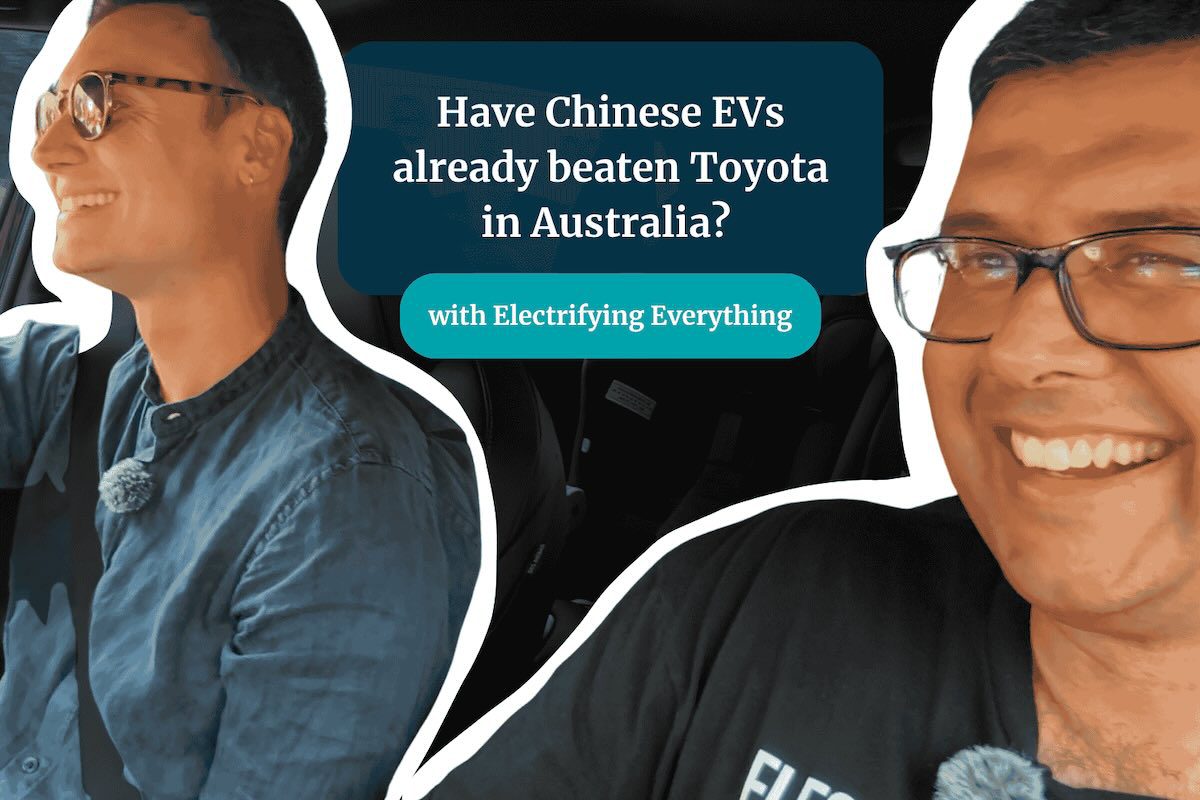
The evolving dynamics were recently highlighted in a conversation between Neerav from Electrifying Everything and Sam Parkinson, Chief Operating Officer for Renew Economy and EV Media. Their discussion, conducted within an updated Toyota BZ4X, centered on the critical reasons why Chinese carmakers are now demonstrably outselling their Japanese counterparts in Australia, marking a pivotal moment in the nation’s automotive history.

The Shifting Tides in Australian Automotive
Australia’s automotive market has historically been shaped by a preference for reliable, value-for-money vehicles, a segment long dominated by Japanese brands such as Toyota, Mazda, and Mitsubishi. These manufacturers built a formidable reputation for quality, durability, and a wide service network, cementing their place in Australian households and fleets for decades.
However, the transition to electric vehicles has introduced a new paradigm, challenging established hierarchies and creating fertile ground for new entrants. Australian consumers are increasingly considering EVs, driven by factors such as rising fuel costs, environmental consciousness, and evolving technology.
Accelerated EV Adoption and Market Penetration
The pace of EV adoption in Australia has gained considerable momentum in recent years. While still trailing some European nations, the upward trend in sales figures indicates a growing appetite for electrified transport solutions. This growth creates opportunities for brands that can meet consumer demands for accessible pricing, advanced features, and diverse model ranges.

Government incentives, though varying by state, along with expanding charging infrastructure, are also contributing to the increasing viability of EVs for a broader segment of the population. This supportive environment has proven particularly advantageous for agile manufacturers capable of quickly adapting to market needs.
The Ascent of Chinese Electric Vehicle Dominance
The most striking feature of this market evolution is the dramatic rise of Chinese electric vehicle manufacturers. Brands like BYD, MG, and GWM Ora have rapidly carved out significant market shares, often surpassing established players in specific EV segments. Their strategic approach has often involved aggressive pricing, rapid model rollouts, and a strong focus on battery technology and connectivity.
This surge in Chinese electric vehicle dominance is not merely anecdotal; it is reflected in sales data that shows these brands increasingly capturing a larger slice of the overall EV market, and in some instances, the broader new car market in Australia. This trend indicates a fundamental shift in consumer perception and purchasing habits.
Competitive Pricing and Feature-Rich Offerings
One of the primary drivers behind the success of Chinese EVs in Australia is their highly competitive pricing. Many Chinese models offer a compelling value proposition, providing advanced features, impressive range, and modern designs at price points that often undercut comparable offerings from traditional automakers.
Consumers are increasingly discovering that they can acquire feature-rich electric vehicles without paying a premium, challenging the notion that EVs are exclusively a luxury item. This accessibility has broadened the appeal of electric motoring to a wider demographic, fueling the growth of Chinese brands.
Rapid Innovation and Technology Integration
Chinese manufacturers have demonstrated remarkable agility in innovation and the rapid integration of cutting-edge technology. From advanced battery chemistries that deliver extended range to sophisticated infotainment systems and comprehensive driver-assistance suites, these vehicles are often at the forefront of automotive tech.
This focus on technological prowess, combined with efficient manufacturing processes and robust supply chains, allows Chinese brands to bring new models to market quickly, responding to consumer trends and technological advancements with greater speed than some of their legacy competitors.
Traditional Japanese Brands Facing New Challenges
For decades, Japanese brands like Toyota have enjoyed an unparalleled reputation for reliability, fuel efficiency (in internal combustion engine vehicles), and strong resale value in Australia. Toyota, in particular, has been a market leader for an extended period, largely due to its diverse range and extensive dealer network.
However, the transition to EVs presents a different set of challenges and opportunities. While Japanese manufacturers have excelled in hybrid technology, their full battery electric vehicle (BEV) offerings have, in some instances, been slower to market or have faced initial hurdles compared to the rapid deployment from Chinese rivals.
Toyota’s Position in the Evolving EV Market
The conversation between Neerav and Sam, taking place in an updated Toyota BZ4X, underscores the crucial juncture at which Toyota finds itself. While the BZ4X represents Toyota’s commitment to the full EV segment, its market introduction and reception have been closely scrutinized. Toyota’s legacy of internal combustion engine and hybrid leadership provides a strong foundation, but adapting this dominance to the purely electric realm requires significant strategic adjustments.
The success of Japanese brands in the Australian EV market will increasingly depend on their ability to match the competitive pricing, rapid technological advancements, and diverse model portfolios offered by their Chinese counterparts, while leveraging their established strengths in quality and reliability.
Looking Ahead: The Future of Australia’s EV Landscape
The current trends suggest that Chinese electric vehicle dominance is not a fleeting phenomenon but a significant and potentially long-term restructuring of the Australian automotive market. The sustained growth of these brands is compelling traditional automakers to accelerate their own EV strategies and reassess their market positioning.
As competition intensifies, Australian consumers stand to benefit from a wider array of EV choices, potentially leading to further reductions in pricing and advancements in technology. The discussion among industry experts reflects a recognition that the Australian automotive landscape is undergoing a profound and irreversible transformation, with new leaders emerging in the race for electrification.
Implications for Consumers and the Industry
For consumers, this shift means more options, potentially better value, and faster access to the latest EV technologies. For the broader automotive industry in Australia, it signifies a need for continuous adaptation, innovation, and strategic investment to remain competitive in a rapidly evolving market. The era of unchallenged dominance by traditional players may well be drawing to a close, paving the way for a more diverse and dynamic automotive future.