
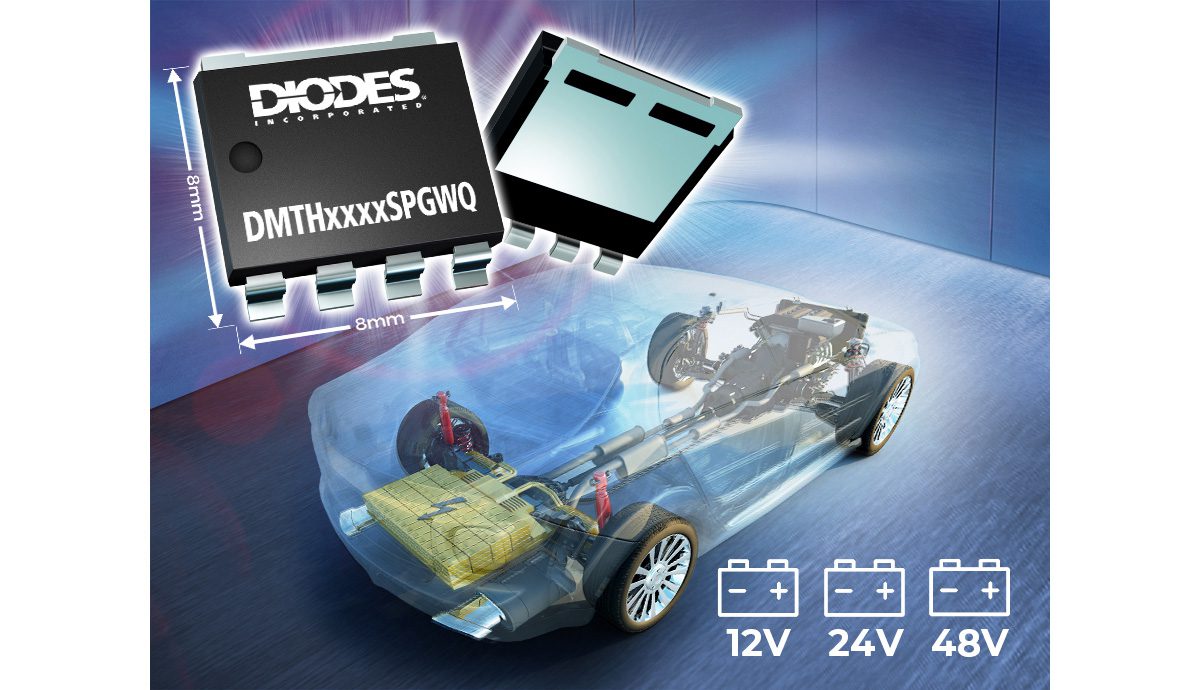
Diodes Incorporated, a prominent global manufacturer and supplier of high-quality application-specific standard products, has announced a significant expansion of its automotive-compliant PowerDI8080-5 MOSFET portfolio. The company has introduced a new 100 V N-channel device, specifically engineered to offer industry-leading on-resistance, a critical performance metric for modern 48 V automotive designs, particularly within the burgeoning field of EV Power Electronics.
This latest addition, the DMTH10H1M7SPGWQ, distinguishes itself with an exceptionally low maximum RDS(on) of 1.5 mΩ. This characteristic is paramount for minimizing power losses and enhancing efficiency in high-power applications. The device is strategically aimed at addressing the demanding requirements of 48 V Brushless DC (BLDC) motor drives, which are integral to advanced automotive systems such as electric power steering and sophisticated braking systems. Furthermore, its robust design makes it ideal for critical functions like battery disconnect switches and the essential components found within onboard chargers (OBCs) for electric vehicles.

Advancing Efficiency in 48 V Automotive Architectures
The automotive industry’s pivot towards 48 V mild-hybrid and full-electric vehicle architectures is driven by the need for improved fuel economy, reduced emissions, and enhanced vehicle performance. These systems require power semiconductor devices that can handle higher currents and voltages while maintaining superior efficiency. The DMTH10H1M7SPGWQ’s 100 V rating provides ample headroom for 48 V systems, ensuring reliability and robustness under varying operating conditions, a key consideration for advanced EV Power Electronics.
The ultra-low on-resistance of 1.5 mΩ directly translates to significantly reduced conduction losses. In practical terms, this means less heat generation within the MOSFET itself, leading to cooler operation, potentially simpler thermal management systems, and ultimately, greater energy efficiency across the entire 48 V subsystem. This level of efficiency is crucial for extending battery range in EVs and optimizing performance in other electrified automotive components.
The PowerDI8080-5 Package: A Foundation for Performance
A significant aspect of Diodes’ new offering lies in its innovative PowerDI8080-5 package. This package design is a cornerstone of the product’s value proposition, addressing several critical engineering challenges in automotive electronics. Its compact footprint, measuring just 64 mm², represents a substantial space saving – approximately 40% less board area compared to a traditional TO-263 (D2PAK) package. This miniaturization is vital for modern vehicles where every millimeter of space is at a premium, especially in tightly integrated EV Power Electronics modules.
Beyond its compact size, the PowerDI8080-5 package features a low profile of just 1.7 mm. This slender design facilitates deployment in space-constrained applications, allowing engineers greater flexibility in layout and design. The package’s thermal performance is equally impressive, largely due to Diodes’ use of copper-clip die bonding technology. This advanced bonding method drastically reduces the junction-to-case thermal resistance, achieving figures as low as 0.3 °C/W. This superior thermal pathway enables the device to support very high drain currents, up to 847 A, without compromising reliability or performance, a critical factor for high-power EV Power Electronics.
Reliability and Inspection with Gullwing Leads
Another distinguishing feature of the PowerDI8080-5 package is its gullwing leads. These leads are specifically designed to facilitate automated optical inspection (AOI) processes, which are standard in high-volume automotive manufacturing. The ability to visually inspect solder joints through AOI enhances manufacturing quality and reduces potential defects. Moreover, the gullwing leads significantly improve the device’s temperature-cycling reliability, an essential characteristic for components operating in the harsh and variable thermal environments typically found in automotive applications, further bolstering the trustworthiness of EV Power Electronics.
Driving Key Automotive Applications
The applications targeted by the new DMTH10H1M7SPGWQ MOSFET underscore its versatility and critical role in the evolution of automotive technology:
Electric Power Steering and Braking Systems
Modern electric power steering (EPS) and advanced braking systems rely heavily on efficient BLDC motor drives. These systems require precise control and rapid response times, demanding high-performance MOSFETs that can handle significant power surges while maintaining thermal stability. The new Diodes MOSFET, with its low on-resistance and excellent thermal characteristics, ensures these safety-critical systems operate reliably and efficiently, directly impacting vehicle dynamics and driver experience.
Battery Disconnect Switches
In electric vehicles, battery disconnect switches are vital safety components. They are designed to isolate the high-voltage battery from the rest of the vehicle’s electrical system in case of an emergency, fault, or during maintenance. These switches must handle very high currents with minimal voltage drop to avoid power loss and heat generation. The DMTH10H1M7SPGWQ’s high current capability and low RDS(on) make it an ideal choice for such demanding, safety-critical applications within EV Power Electronics.
Onboard Chargers (OBCs)
Onboard chargers are crucial for converting AC power from the grid into DC power to charge an EV’s battery pack. The efficiency of the OBC directly impacts charging time and energy waste. MOSFETs are key components in the power conversion stages of OBCs. The DMTH10H1M7SPGWQ’s performance metrics are highly beneficial for improving the overall efficiency and power density of OBC designs, contributing to faster and more efficient EV charging solutions.
A Comprehensive Portfolio for Diverse Needs
Alongside the flagship 100 V device, Diodes Incorporated has concurrently introduced additional MOSFETs within the same 8 mm x 8 mm gullwing-leaded PowerDI8080-5 package, catering to a wider spectrum of automotive voltage requirements. This expanded lineup includes 40 V, 60 V, and 80 V devices.
Notably, a new 40 V part boasts an impressive 0.4 mΩ maximum RDS(on), which the company indicates is among the lowest in the industry for this voltage class. This 40 V device, along with others, is specifically designed for 12 V motor drives, DC-DC conversion units, and various microcontroller-driven automotive loads. This broad offering ensures that automotive designers have access to a versatile range of high-performance MOSFETs optimized for different voltage domains and power requirements across the entire vehicle electrical system, from auxiliary systems to core EV Power Electronics.
Ensuring Automotive-Grade Reliability and Trustworthiness
In adherence to the stringent demands of the automotive sector, Diodes Incorporated confirms that all these new devices are AEC-Q101 qualified. This certification signifies that the components have met the rigorous standards for reliability and quality required for automotive applications. Furthermore, the manufacturing facilities where these devices are produced are IATF 16949-certified. The IATF 16949 standard represents a globally recognized quality management system specific to the automotive industry, ensuring the highest levels of process control, consistency, and product quality. This commitment to stringent automotive standards underscores Diodes’ dedication to providing trustworthy and durable EV Power Electronics solutions to the market.
The introduction of these advanced MOSFETs reinforces Diodes Incorporated’s position as a key enabler in the ongoing transformation of the automotive industry, particularly in the realm of electric vehicles. By combining industry-leading on-resistance with innovative packaging and unwavering commitment to automotive quality, these new components are poised to drive greater efficiency, reliability, and performance in next-generation 48 V automotive systems and critical EV Power Electronics applications.