
EGI Battery to Launch US Manufacturing in Michigan by Q3 2026
US-based advanced lithium-ion battery manufacturer EGI Battery has announced the establishment of its inaugural U.S. battery manufacturing campus in Ann Arbor, Michigan. This strategic move positions the company to produce high-performance lithium-ion pouch cell batteries, crucial for applications mandated by the National Defense Authorization Act (NDAA).
The new facility is set to power a range of critical technologies, including drones, electric aviation, aerospace, and emerging sectors like humanoid robotics. The company aims to fulfill the growing demand for domestically manufactured, advanced battery solutions in these key industries.

Zeeb Campus: A Foundation for Scaled Production
The initial phase of the Zeeb Campus encompasses approximately 15,000 square feet dedicated to advanced manufacturing and laboratory operations. Complementing this are 5,000 square feet of office space, providing essential administrative and research support. The site offers access to a total building capacity of 130,000 square feet, explicitly designed to accommodate significant long-term expansion.
EGI Battery has architected the facility with a phased scale-up model. This approach allows for the incremental expansion of production capabilities in carefully measured, performance-driven stages. The company is targeting Site Acceptance Testing to be completed by the end of the first quarter of 2026.
Following successful testing, EGI Battery anticipates commencing battery production during the third quarter of 2026. This timeline underscores the company’s commitment to establishing a robust domestic manufacturing footprint within the specified timeframe.
Phased Production Rollout and Capacity Targets
Phase 1 deployment of the Zeeb Campus will concentrate on critical battery production processes. These include electrolyte filling, aging, sealing, folding, formation, and grading operations. The initial production line is engineered for a throughput of one part per minute (ppm) for filling and formation.
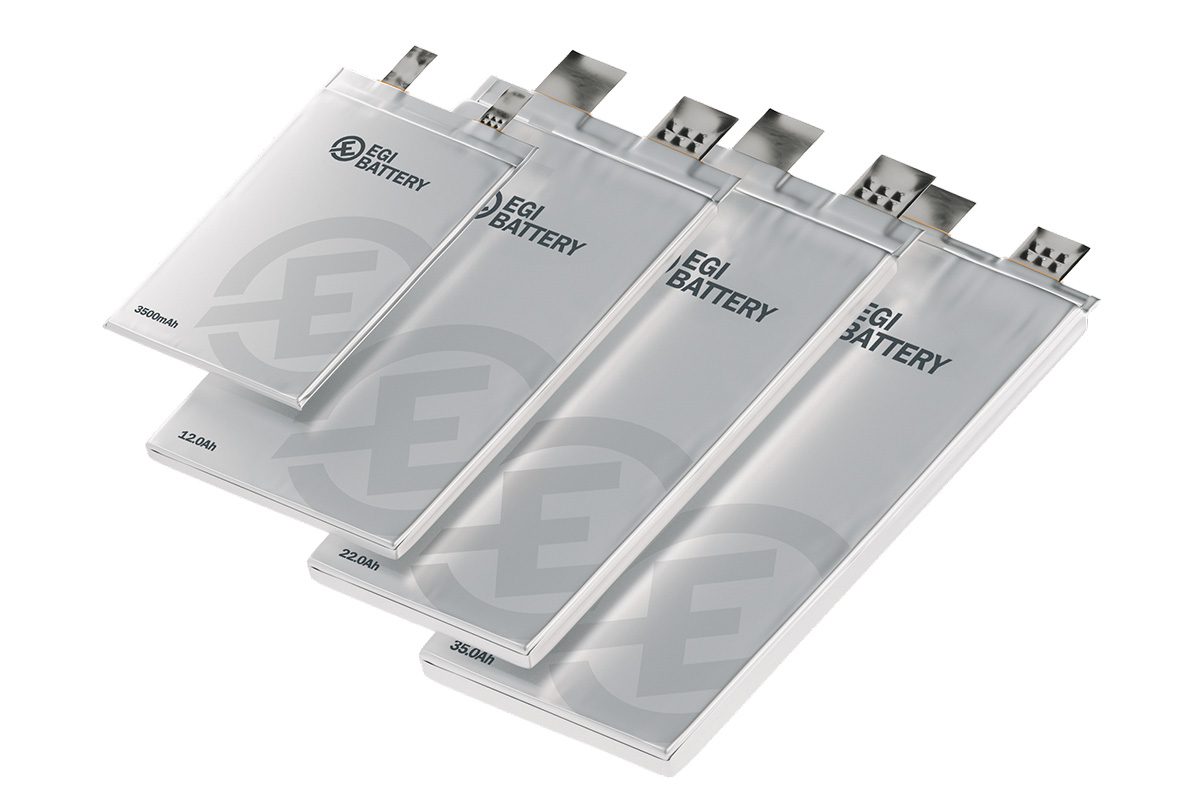
At full operational capacity, with three shifts running, this phase is designed to support up to 300,000 cells annually. This volume translates to an annual capacity of approximately 40 megawatt-hours (MWh). The 40 MWh target is based on EGI’s commercially available nickel manganese cobalt (NMC) lithium-ion pouch cells, which are specifically designed for Class 1 and Class 2 drones and offer a 35 Ah capacity.
The subsequent Phase 2 expansion, slated to commence in 2027, will introduce further vertical integration. This expansion will incorporate additional core processes, covering the entire manufacturing chain from electrode making to cell assembly and final formation. Upon completion of Phase 2, EGI Battery expects the production throughput to increase to two ppm.
This enhanced throughput will enable the facility to support up to 600,000 cells annually, approximating an 80 MWh annual capacity. This scalable approach ensures that EGI Battery can meet growing market demands efficiently.
Technology and Quality Assurance
EGI Battery’s technological portfolio is central to its manufacturing capabilities. The company designs and produces battery cells utilizing advanced technology, including silicon-enhanced and graphite anodes. Furthermore, EGI Battery specializes in developing application-specific, client-bespoke battery formats precisely tailored to meet Original Equipment Manufacturer (OEM) system requirements.
The company is rigorously building the campus and its operational workflows to align with stringent quality standards. EGI Battery is pursuing ISO 9001 and AS9100 quality certifications. These certifications are critical for ensuring the reliability and performance demanded by its target industries.
A key aspect of EGI Battery’s compliance strategy is adherence to the National Defense Authorization Act (NDAA). The company is committed to ensuring that at least 95% of its materials, by cost, will be NDAA-compliant by 2028. This focus on compliant materials is essential for serving defense and government contracts.
Strategic Vision for Domestic Battery Manufacturing
Thomas McGuckin, CEO and Founder of EGI Battery, emphasized the strategic significance of the new facility. “The Zeeb Campus represents the operational foundation of EGI’s long-term manufacturing strategy,” McGuckin stated.
He further elaborated on the company’s objectives: “We are building scalable, high-yield production capabilities in Michigan to serve mission-critical industries that require a secure supply chain for domestically manufactured batteries.”
McGuckin highlighted the benefits of their phased approach: “Our phased expansion model allows us to expand production capacity responsibly while maintaining performance, safety, and product quality leadership.” This strategy aims to balance rapid growth with the meticulous standards required for advanced battery production.
The establishment of the Zeeb Campus in Ann Arbor marks a significant step for EGI Battery, reinforcing the growth of the domestic battery manufacturing sector and supporting the advancement of key technological industries in the United States. The focus on NDAA compliance and high-quality certifications underscores EGI Battery’s commitment to being a trusted supplier for critical applications.