
Expanding EV Charging Infrastructure
Essential Energy, a major electricity distribution network company, is set to launch a trial initiative aimed at significantly enhancing electric vehicle (EV) charging accessibility in regional, rural, and remote areas of New South Wales.
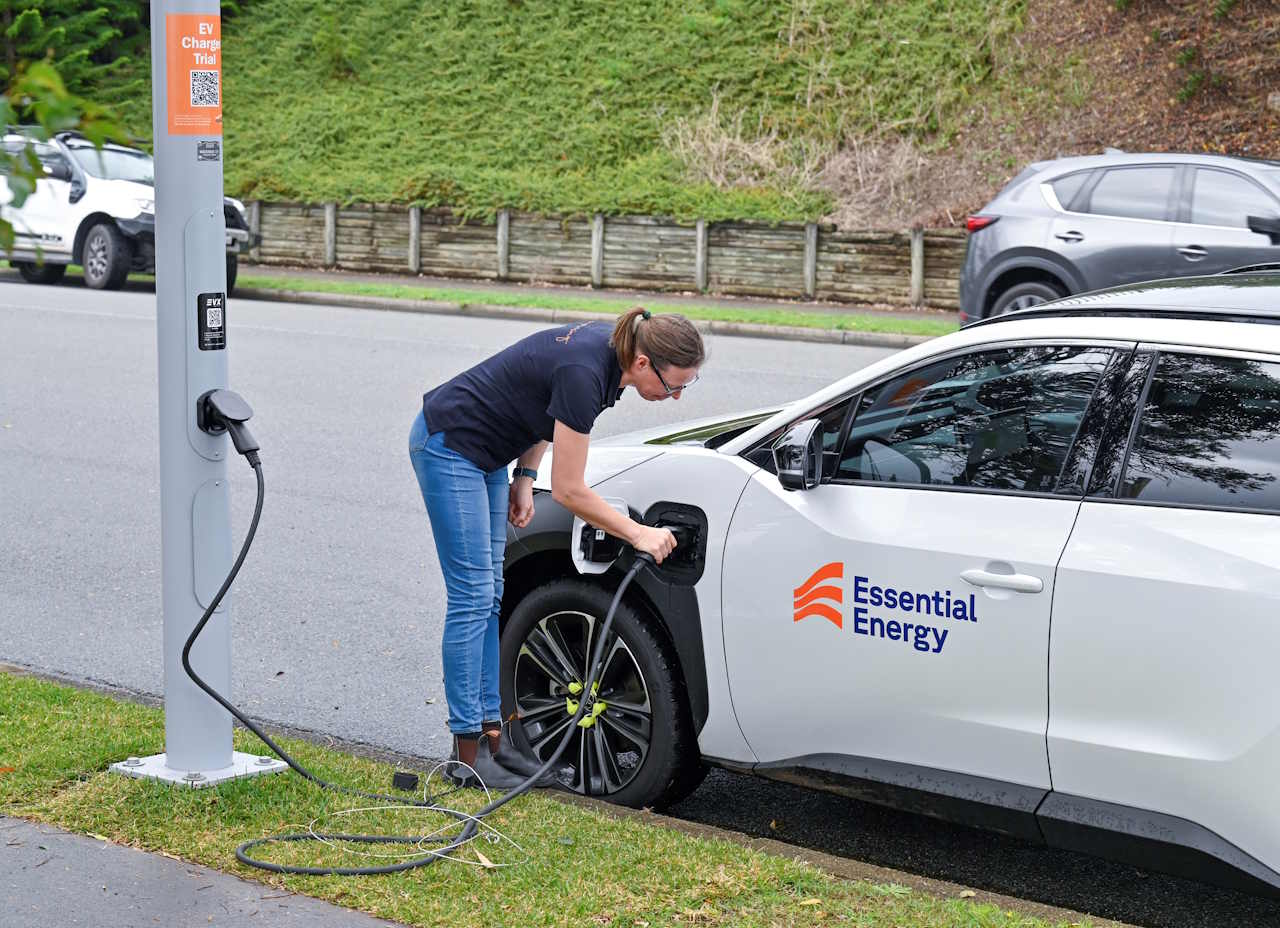
The company, which manages one of Australia’s largest electricity distribution networks spanning NSW and parts of southern Queensland, plans to integrate 7-kilowatt (kW) EV chargers directly into 300 existing streetlight poles across its service area.

This strategic deployment is designed to address the current deficit in public charging infrastructure in areas where EV adoption has been hampered by a lack of convenient charging options.
The ‘Plug and Play’ Initiative
Dubbed the ‘Plug and Play’ EV charging program, the initiative receives partial funding from the Australian Renewable Energy Agency’s (ARENA) Driving the Nation Program. The project leverages Essential Energy’s existing infrastructure, including its extensive network of power poles, and its established relationships with local councils and communities.
This approach aims to reduce the financial and logistical hurdles typically associated with establishing public charging stations in less densely populated and geographically dispersed regions.

Addressing Regional Disparities
Unlike metropolitan areas where the density of demand and existing infrastructure make EV charger installation more straightforward and cost-effective, regional and remote locations present unique challenges.
High upfront investment costs and the complexities of serving smaller, more spread-out populations reliant on scarce network infrastructure have historically limited the rollout of EV charging facilities in these areas.
A Model for Private Sector Engagement
Essential Energy is actively seeking participation from private charge point operators for the initial network of 300 chargers. The company is preparing an application for a ring-fencing waiver from the Australian Energy Regulator (AER) to facilitate this collaboration.
Under this proposed model, private operators would assume responsibility for all aspects of the charging service, including pricing, customer interaction, and even branding. They would utilize charging hardware installed and maintained by Essential Energy.
This framework is intended to create a viable business case for charge point operators to enter markets they might otherwise avoid due to the prohibitive costs and operational difficulties associated with establishing charging infrastructure in remote locations, especially where initial usage might be limited.
Paving the Way for Future Investment
Beyond the initial 300 chargers, the ‘Plug and Play’ program also aims to identify an additional 1,000 power poles suitable for private operators to install their own charging infrastructure. This broader objective is to foster a sustainable ecosystem for public EV charging, encouraging further private investment in the sector.
Quotes on the Initiative’s Goals
Andrew Hillsdon, Essential Energy’s general manager for commercial development, highlighted the necessity of proactive steps to support regional EV adoption.
“We know there are a lot of towns where there is no ready-made market, but if no-one takes the first step to install the infrastructure and lower the barriers to entry then regional people will continue to lag behind their metropolitan counterparts,” Hillsdon stated.
He explained that the trial is specifically designed to stimulate the development of a market for EV charging in these underserved areas, acknowledging the inherent difficulties involved.
“Essential Energy has the distribution network already with the poles and the wires and it makes sense for us to take this next step to deliver the charging infrastructure that regional people need,” Hillsdon added.
He further clarified the company’s role: “We are applying for a waiver to create the opportunity for private operators to use their technology with our infrastructure – not so we can operate the chargers.”
Future Outlook
The Essential Energy trial represents a significant move to democratize EV charging access, ensuring that residents of regional, rural, and remote New South Wales are not left behind as the nation transitions towards electric mobility. The success of this model could serve as a blueprint for other regions facing similar infrastructure challenges.