
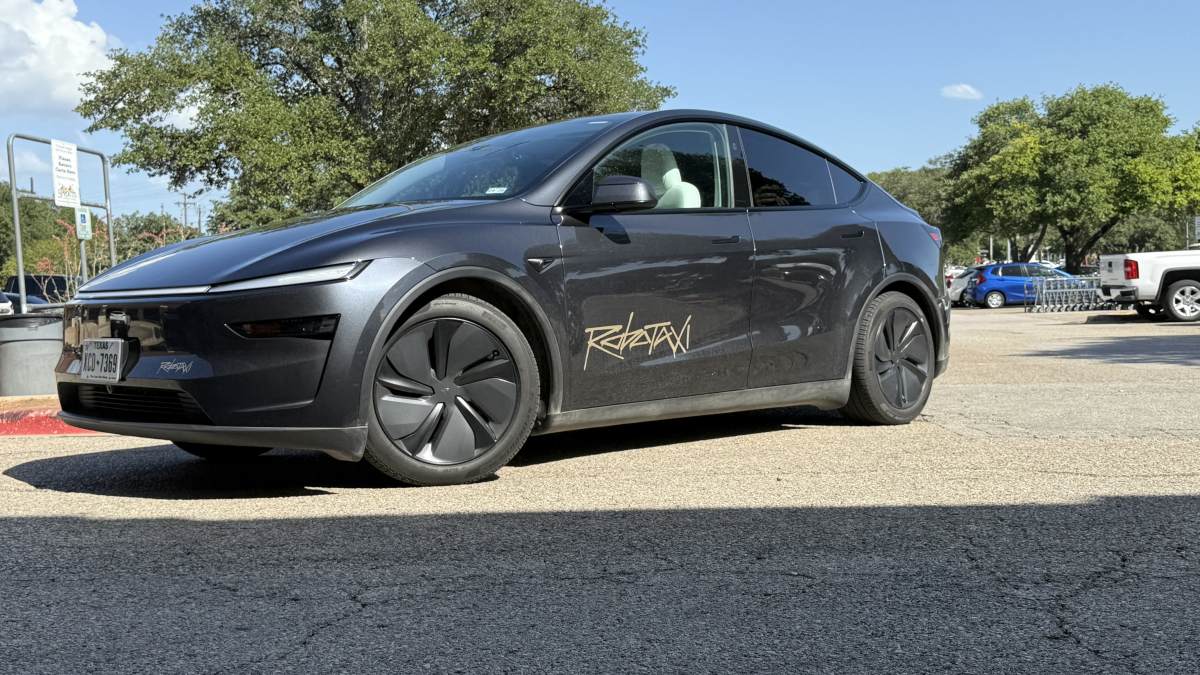
Tesla has significantly altered the pricing structure for its Robotaxi service, implementing price increases less than nine months after its initial rollout. The adjustments, which became apparent on March 11, 2026, see a notable rise in per-mile charges while the initial flagfall fee has been reduced.
Robotaxi Service Sees Significant Price Revision
Reports from Robotaxi Tracker on X indicate that the per-mile rate for Tesla’s autonomous taxi service has increased from $US1.00 to $US1.40. Concurrently, the base fare, or flagfall fee, has been lowered from $US3.25 to $US3.00 per ride. This shift represents a nearly 40 percent increase in the per-mile cost.
The changes were first observed in Austin, Texas, the initial city where the Robotaxi service was launched. While this marks a substantial price hike in that specific market, there is an expectation that as the service becomes more widespread across the United States, pricing might stabilize or even decrease in other regions.
International Price Comparison and Value Proposition
The new per-mile rate translates to approximately $US1.40, which, when converted to Australian dollars, is under $A1.25 per kilometer. This pricing remains competitive when compared to traditional taxi services in Australia, some of which charge over $A2.20 per kilometer. This suggests that even with the price increase, Tesla’s Robotaxi may continue to offer a cost-effective option for consumers.
Evolution of the Tesla Robotaxi Service
The Tesla Robotaxi service commenced operations in Austin, Texas, on June 22, 2025. Initially, selected users were invited to download the dedicated Tesla Robotaxi app to book rides. The service operated daily between 6 AM and Midnight.

Early adopters in Austin experienced a flat fee of $US4.20 per ride. Since its inception, the service has expanded its reach to multiple markets, including California, with further expansion plans across other US regions.
Fleet Expansion and Global Ambitions
To support the growing Robotaxi network, Tesla has been actively hiring for roles related to the service across various US states. These positions, some with a global scope, signal the company’s long-term strategy to deploy its autonomous technology internationally.
For instance, a senior software engineer role advertised in September 2025 focused on mapping airport experiences worldwide. This indicates a clear ambition to integrate Robotaxi services into major global transportation hubs, potentially addressing the high volume of daily trips at airports.
Further underscoring the scale of the expansion, Tesla’s CEO, Elon Musk, stated in a November podcast interview that the fleet in Texas is slated to grow to 500 vehicles, while the Bay Area in California will host over 1,000 autonomous vehicles.
Cybercab Introduction and Future Outlook
The recent pricing update comes less than 18 months after the unveiling of the next-generation Robotaxi, the Cybercab, at the We Robot event. While mass production of the Cybercab is reportedly set to begin next month, Tesla is currently utilizing its existing Model Y fleet for the Robotaxi service, operating under the revised pricing model.
It is anticipated that the new pricing structure will carry over to the Cybercab vehicles once they are integrated into the service in the coming months. Despite the recent price adjustments, the Robotaxi service is expected to remain a more affordable alternative compared to established ride-sharing platforms such as Waymo and Uber.