
Key Takeaways
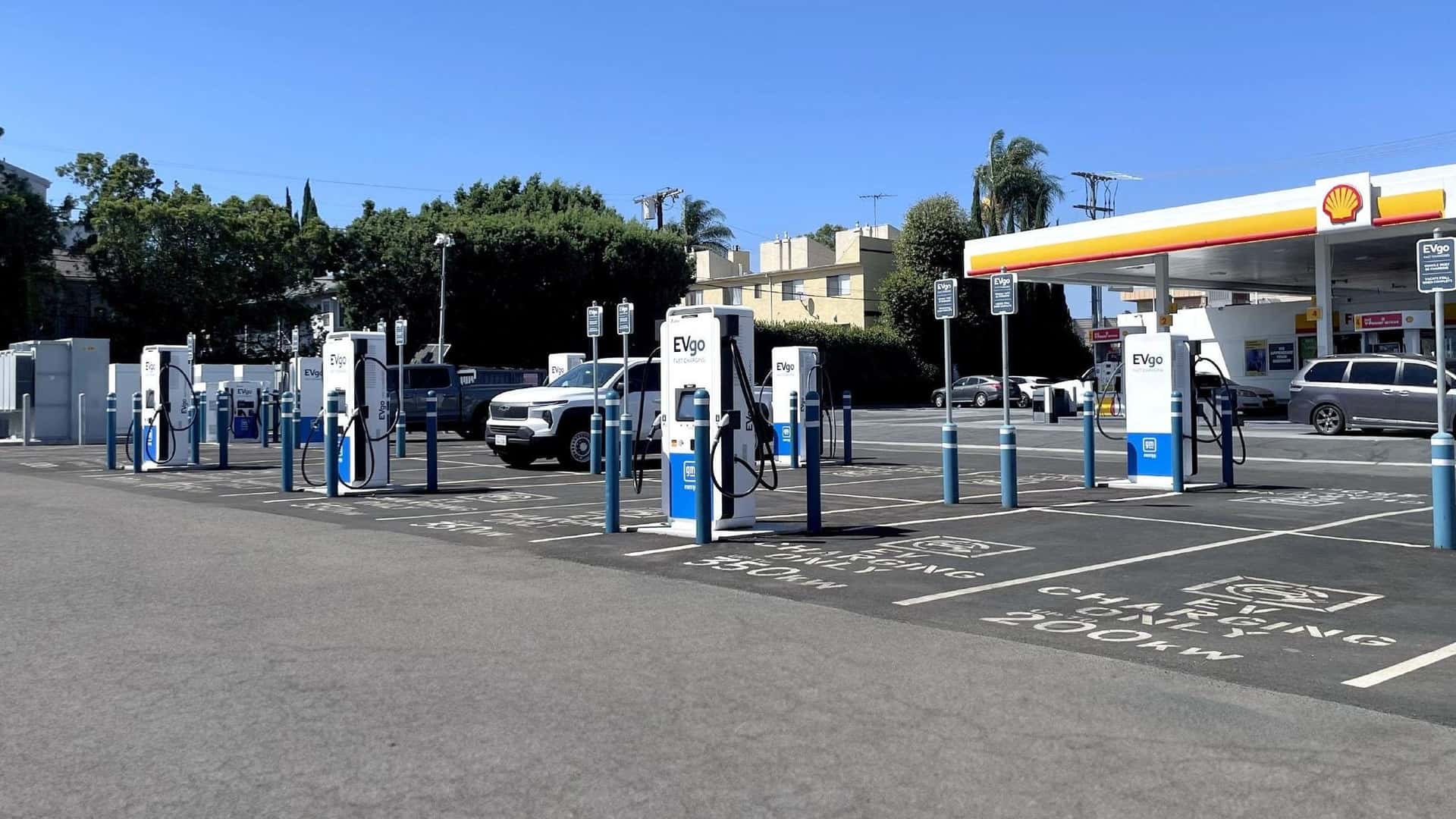
- EVgo has launched a significant new fast-charging facility in Los Angeles, marking it as the city’s largest non-Tesla station.
- The station boasts 10 stalls and 20 plugs, offering advanced charging speeds up to 350 kilowatts.
- Notably, the new hub maintains support for the legacy CHAdeMO connector, catering to older electric vehicles like early Nissan Leaf models.
- This strategic development enhances the Los Angeles EV charging network by providing diverse power options and convenience for a broad spectrum of EV users.
- EVgo’s commitment to varied charging standards reflects an evolving strategy amidst the industry’s shift towards CCS and NACS.
Boosting Los Angeles EV Charging Infrastructure
Los Angeles, a burgeoning hub for electric vehicle adoption, has witnessed a significant enhancement in its charging capabilities with the inauguration of a new fast-charging station. EVgo, one of the foremost charging networks operating across the United States, has officially opened what it describes as the largest non-Tesla EV fast charging station within the city limits of Los Angeles.
This landmark development is poised to significantly bolster the existing Los Angeles EV charging network, offering a critical resource for the city’s expanding fleet of electric vehicles. The station’s expansive capacity and advanced technological features address a growing demand for accessible and rapid charging solutions.
A Major Expansion in Mid-City
Situated strategically on S Robertson Boulevard in the vibrant Mid-City neighbourhood, the new EVgo facility is designed for optimal convenience. Its location, just off the busy Santa Monica Freeway, places it along a central corridor frequented by numerous drivers daily.
The station features a total of 10 stalls and 20 individual plugs, making it a substantial addition to the public charging infrastructure. Drivers can easily access the facility while undertaking various daily activities, from dining at local restaurants to running errands and shopping, integrating seamlessly into urban routines.
The Strategic Role of CHAdeMO Support
Amidst the rapid evolution of electric vehicle technology and charging standards, one aspect of the new EVgo station stands out: its continued support for the CHAdeMO connector. This decision is particularly noteworthy given the industry’s widespread transition towards other dominant charging protocols.
The inclusion of CHAdeMO ports reflects a commitment to inclusivity, ensuring that a broader range of electric vehicles, including older models, can still utilise high-speed public charging. This thoughtful approach extends the usability of the network to a wider demographic of EV owners.
Catering to Legacy Electric Vehicles
The CHAdeMO connector, while less prevalent in newer electric vehicles, remains essential for specific older models. Notably, the two previous generations of the popular Nissan Leaf, a foundational model in the mass-market EV segment, rely on this charging standard.
Additionally, some Japanese-made plug-in hybrids, such as the Mitsubishi Outlander PHEV, also utilise CHAdeMO ports. By providing this support, EVgo ensures that owners of these legacy electric vehicles are not left behind as the Los Angeles EV charging network expands and modernises.
The two CHAdeMO ports at the new LA station are capable of delivering up to 100 kilowatts of power. This capacity is sufficient for a quick top-up for vehicles designed to accept this standard, offering practical utility for their owners.
Navigating Evolving Charging Standards
The landscape of EV charging standards is currently dominated by CCS (Combined Charging System) and the rapidly emerging NACS (North American Charging Standard), primarily associated with Tesla vehicles. The remaining 18 cables at EVgo’s new Los Angeles station are equipped with CCS connectors, aligning with the prevalent standard for most non-Tesla EVs.
While NACS cables are not present at this specific site, NACS-equipped electric vehicles are generally able to use charging adapters with CCS chargers. This interoperability provides a degree of flexibility for Tesla owners seeking charging options outside the Supercharger network.
Conversely, using a CHAdeMO adapter with a CCS station presents significant challenges, being both very expensive and not recommended by the CHAdeMO association itself. This underscores the importance of direct CHAdeMO support for older vehicles, highlighting EVgo’s consideration for diverse user needs.
Advanced Technology and Diverse Power Options
The new EVgo station is a testament to modern charging technology, designed to accommodate a wide array of electric vehicles with varying battery capacities and charging preferences. Its architecture allows for flexible power delivery, optimising charging times for different models.
This advanced infrastructure enhances the overall efficiency and user experience across the Los Angeles EV charging network. The ability to offer diverse power levels is crucial for managing demand and ensuring quicker turnaround times for drivers.
A Spectrum of Charging Capacities
The facility’s power levels are meticulously distributed to cater to a broad spectrum of electric vehicles. The station includes two 100-kilowatt stalls, ideal for vehicles with smaller battery packs or those requiring a less intensive charge.
For mid-range requirements, there are three 200-kW stalls, offering a balance of speed and compatibility. At the high end, five 350-kW stalls provide ultra-fast charging, capable of quickly replenishing the batteries of the latest generation of electric vehicles designed for such high power inputs.
Seamless Charging Experience with Plug & Charge
Enhancing user convenience, most EVgo stations, including this new Los Angeles facility, offer Plug & Charge functionality. This feature streamlines the charging process significantly, eliminating the need for manual authentication or payment initiation through an app or card reader.
With Plug & Charge, a charging session commences automatically as soon as the vehicle is plugged into the station. This seamless operation relies on a pre-configured payment method within the user’s EVgo account, providing a hassle-free experience that aligns with modern consumer expectations for convenience.
EVgo’s Broader Vision for the EV Ecosystem
EVgo’s recent expansion in Los Angeles is part of a larger, comprehensive strategy to build out a robust and inclusive electric vehicle charging ecosystem across the nation. The company’s efforts extend beyond its proprietary network to integrate with other key players in the industry.
This multi-faceted approach aims to address the varied needs of EV drivers and accelerate the broader adoption of electric vehicles. The ongoing advancements in the Los Angeles EV charging network reflect a national trend of significant infrastructure investment.
Expanding National Reach and Future Integrations
According to data from the Department of Energy’s Alternative Fuels Data Center (AFDC), EVgo currently operates 1,175 EV fast charging stations across the U.S., encompassing a total of 5,185 individual charging ports accessible to the public. These figures underscore the company’s substantial contribution to national EV infrastructure.
Furthermore, EVgo is actively involved in integrating Tesla’s Supercharger technology into its offerings. The company has commenced installing Tesla Superchargers, which feature V4 dispensers capable of delivering up to 500 kW at 1,000 volts. These new Superchargers are designed for automatic integration into the Tesla in-app navigation system, enhancing convenience for Tesla owners.
In parallel, NACS plugs are also being added to existing EVgo stations, reflecting the company’s adaptable strategy to support all major charging standards as the market evolves. This forward-looking approach ensures EVgo remains a central player in the rapidly expanding electric mobility sector.
The Impact on Urban Mobility
The inauguration of such a significant charging facility in Los Angeles carries substantial implications for urban mobility and environmental sustainability. By providing reliable and diverse fast-charging options, EVgo contributes directly to reducing range anxiety, a key barrier to EV adoption.
The strategic placement in a busy urban corridor ensures that drivers have convenient access to charging, facilitating longer journeys and daily commutes within the metropolitan area. This expansion underscores Los Angeles’s commitment to fostering a sustainable transportation future and developing a world-class Los Angeles EV charging network.
As the number of electric vehicles on the road continues to grow, robust charging infrastructure becomes increasingly vital. Initiatives like EVgo’s new station play a crucial role in supporting this transition, promoting cleaner air, and reducing reliance on fossil fuels across the city.
Frequently Asked Questions (FAQs)
What is the significance of the new EVgo charging station in Los Angeles?
The new EVgo station on S Robertson Blvd is significant as it is the largest non-Tesla EV fast charging station in the City of Los Angeles. It substantially expands the city’s public charging capacity, offering advanced power levels and catering to a broad range of electric vehicles.
How many plugs and stalls does the new station feature?
The new EVgo facility is equipped with 10 charging stalls and a total of 20 individual plugs. This substantial capacity ensures multiple electric vehicles can charge simultaneously, reducing wait times and improving overall accessibility for the Los Angeles EV charging network.
Why is CHAdeMO support considered a surprise at a new charging station?
CHAdeMO support is surprising because it’s a legacy charging standard largely superseded by CCS and NACS in newer EVs. Its inclusion demonstrates EVgo’s commitment to supporting owners of older electric vehicles, such as previous generations of the Nissan Leaf and some Mitsubishi Outlander PHEVs.
What are the power capabilities of the chargers at this station?
The station offers diverse power levels: two CHAdeMO ports at 100 kW, two CCS stalls at 100 kW, three CCS stalls at 200 kW, and five CCS stalls providing up to 350 kW. This variety accommodates different EV models and battery charging rates efficiently.
Can Tesla vehicles use this new EVgo charging station?
While this specific station does not have native NACS plugs, NACS-equipped Tesla vehicles can typically utilise the CCS chargers via an adapter. EVgo is also actively installing Tesla Superchargers with NACS plugs at other locations as part of its broader network expansion strategy.
Does EVgo offer Plug & Charge functionality?
Yes, most EVgo stations, including this new Los Angeles site, offer Plug & Charge functionality. This feature allows a charging session to start automatically upon plugging in, provided a payment method is set up in the user’s account, streamlining the entire charging process for convenience.
How extensive is EVgo’s national charging network?
According to the Department of Energy’s Alternative Fuels Data Center, EVgo operates 1,175 EV fast charging stations across the U.S., providing a total of 5,185 individual ports available to the public. This makes EVgo one of the largest and most widespread charging networks nationally.