
Key Takeaways:
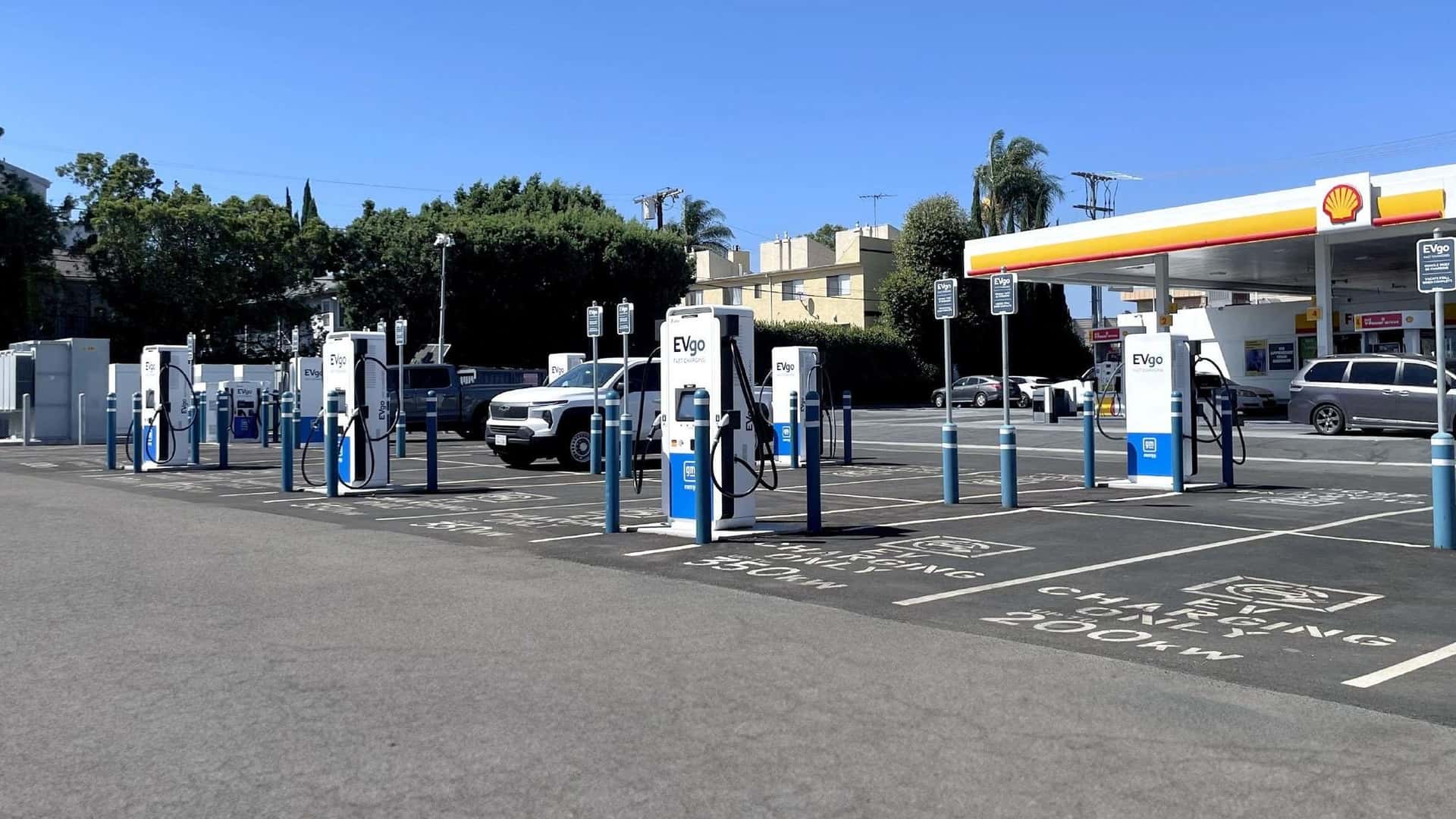
- EVgo has inaugurated the largest non-Tesla electric vehicle (EV) fast charging station in the City of Los Angeles, featuring 10 stalls and 20 plugs.
- The new facility on S Robertson Blvd offers a formidable charging capacity, with individual plugs delivering up to 350 kilowatts (kW) of power.
- In a notable move, the station includes two CHAdeMO ports, offering continued support for older EV models like the Nissan Leaf, alongside 18 CCS connectors.
- This expansion by EVgo underscores the ongoing development of public EV charging infrastructure and the network’s commitment to diverse charging standards.
- The strategic location provides convenient access for Los Angeles drivers, integrating charging into daily routines with nearby amenities.
Transforming EV Infrastructure in Los Angeles
Los Angeles, a burgeoning hub for electric vehicle adoption, has witnessed a significant enhancement in its charging infrastructure with the opening of a new, state-of-the-art fast charging station. EVgo, a prominent electric vehicle charging network in the United States, has officially launched what it terms the largest non-Tesla EV fast charging station within the City of Los Angeles. Located strategically on S Robertson Blvd, this new facility marks a pivotal development for electric vehicle owners across the region.
The newly unveiled LA EV charging station is equipped with 10 charging stalls, providing a total of 20 individual plugs. These advanced chargers are capable of delivering power levels up to an impressive 350 kilowatts (kW), ensuring rapid replenishment for a wide array of modern electric vehicles. This substantial capacity is designed to alleviate range anxiety and support the increasing number of EVs on Los Angeles roads, making EV ownership more convenient and accessible.
A Nod to Legacy: CHAdeMO Support Retained
While the charging industry rapidly evolves towards newer standards, EVgo’s latest LA EV charging station includes a significant, and somewhat unexpected, feature: continued support for the CHAdeMO connector. This port type, primarily associated with earlier generations of electric vehicles such as the Nissan Leaf and certain Japanese-made plug-in hybrids like the Mitsubishi Outlander PHEV, is increasingly rare in new installations.
The inclusion of two 100 kW CHAdeMO ports demonstrates EVgo’s commitment to serving a broader spectrum of the EV community, including owners of older models who might otherwise find fast charging options dwindling. This thoughtful approach ensures that even vehicles, which are becoming more affordable in the used EV market, retain access to essential fast charging services. The remaining 18 cables at the station are equipped with the more prevalent CCS (Combined Charging System) connectors, catering to the majority of contemporary non-Tesla EVs.
Understanding the Charging Standards Landscape
The electric vehicle charging landscape is characterized by several competing and evolving standards. The CCS connector is currently the dominant fast-charging standard for most non-Tesla EVs in North America and Europe, known for its high power delivery capabilities. On the other hand, the CHAdeMO standard, while historically significant, has seen declining adoption in new vehicle models and charging infrastructure projects, making its presence at a new, large-scale LA EV charging station particularly noteworthy.
Tesla’s proprietary North American Charging Standard (NACS) has recently gained significant traction, with numerous automakers announcing their transition to incorporate NACS ports in their future models. While EVgo’s new Los Angeles site does not feature native NACS cables, NACS-equipped electric vehicles can still utilize the CCS chargers via widely available adapters. Conversely, using a CHAdeMO adapter with a CCS station is generally more complex, expensive, and not officially recommended by the CHAdeMO association, highlighting the importance of native CHAdeMO availability for compatible vehicles.
Strategic Power Distribution for Optimal Charging
The design of the new EVgo LA EV charging station reflects a well-planned distribution of power levels, aiming to optimize charging times for different electric vehicle battery capacities and requirements. The station features two 100-kilowatt (kW) stalls, ideal for vehicles with smaller battery packs or those requiring a less intensive charge.
Further enhancing its versatility, the facility includes three 200-kW stalls, catering to a broad range of EVs that can benefit from faster charging without needing the absolute maximum power. For the latest generation of electric vehicles with advanced battery architectures, the station offers five high-power 350-kW stalls, ensuring the quickest possible charging experience. This tiered approach maximizes throughput and reduces wait times for all users of the EVgo charging network.
EVgo’s Broader Commitment to Expanding Charging Access
The launch of this significant LA EV charging station is part of EVgo’s broader strategy to expand and diversify its charging infrastructure across the United States. According to data from the Department of Energy’s Alternative Fuels Data Center (AFDC), EVgo currently operates 1,175 EV fast charging stations nationwide, comprising a total of 5,185 individual charging ports accessible to the public.
Beyond traditional CCS and CHAdeMO deployments, EVgo is also actively integrating Tesla Superchargers into its network. These V4 dispensers are designed to deliver up to 500 kW at 1,000 volts and are seamlessly integrated into the Tesla in-app navigation system, offering a comprehensive charging solution. Moreover, EVgo is proactively adding NACS plugs to its existing stations, demonstrating a forward-looking approach to accommodating the evolving preferences of the EV market and ensuring future-proof charging options.
Prime Location Enhances User Convenience
The selection of the S Robertson Blvd location for this major LA EV charging station was meticulously planned to maximize convenience for electric vehicle drivers. Situated just off the Santa Monica Freeway in the bustling Mid-City neighborhood, the station serves a central corridor known for high traffic and numerous daily errands. This strategic positioning allows drivers to conveniently recharge their vehicles while engaging in various activities.
The station is within easy walking distance of several restaurants, diverse grocery stores, and a variety of shopping options. This integration of charging with everyday amenities transforms the charging experience from a dedicated stop into a seamless part of a driver’s routine, a crucial factor in accelerating electric vehicle adoption. Furthermore, many of EVgo’s stations, including this new one, offer Plug & Charge functionality, which streamlines the charging process by automatically initiating a session upon plugging in, provided a payment method is linked to the user’s account.
The Future of EV Charging in Urban Centers
The inauguration of the EVgo LA EV charging station on S Robertson Blvd represents more than just an increase in charging ports; it signifies a maturing electric vehicle ecosystem capable of supporting a diverse range of vehicles and driver needs. By combining cutting-edge high-power charging with essential legacy support and strategic urban placement, EVgo is contributing significantly to building a robust and resilient EV infrastructure in one of the most EV-dense cities in the world.
As the transition to electric mobility continues to accelerate, the development of comprehensive and accessible charging networks remains paramount. Initiatives like this new EVgo facility are critical steps towards a future where electric vehicle charging is as ubiquitous and convenient as traditional refuelling, fostering greater confidence and broader adoption among consumers.
Frequently Asked Questions (FAQs)
What makes the new EVgo station in LA significant?
The new EVgo station on S Robertson Blvd is significant as the largest non-Tesla fast charging station in Los Angeles. It features 20 plugs, with some delivering up to 350 kW, and notably includes support for the older CHAdeMO connector, catering to a wide range of EV models, including legacy vehicles.
Which charging connectors are available at the new LA EVgo station?
The station offers a mix of charging connectors. It includes 18 CCS (Combined Charging System) connectors, which are standard for most modern non-Tesla EVs, and two CHAdeMO ports, specifically for vehicles like the Nissan Leaf and Mitsubishi Outlander PHEV, ensuring broad compatibility.
What power output can drivers expect from the chargers?
Drivers can expect varied power outputs tailored to different needs. The station has two 100 kW stalls (CHAdeMO), three 200 kW CCS stalls, and five high-power 350 kW CCS stalls, allowing for efficient charging based on vehicle capability and desired speed.
Why is CHAdeMO support noteworthy at a new station?
CHAdeMO support is noteworthy because it’s a declining standard, largely replaced by CCS and NACS in newer EVs. Its inclusion ensures that owners of older models, which are often more affordable on the used market, continue to have access to vital fast charging infrastructure, preventing them from being left behind.
Can Tesla vehicles charge at this new EVgo station?
While the station does not have native NACS (Tesla) plugs, NACS-equipped EVs can typically charge using readily available adapters that convert a CCS plug to an NACS plug. EVgo is also actively integrating Tesla Superchargers and NACS plugs into its wider network.
What convenience features does the station offer for drivers?
The station is strategically located near the Santa Monica Freeway in Mid-City, close to restaurants, grocery stores, and shopping, enabling drivers to combine charging with errands. It also supports Plug & Charge functionality for seamless, automatic charging sessions, enhancing overall user convenience.