
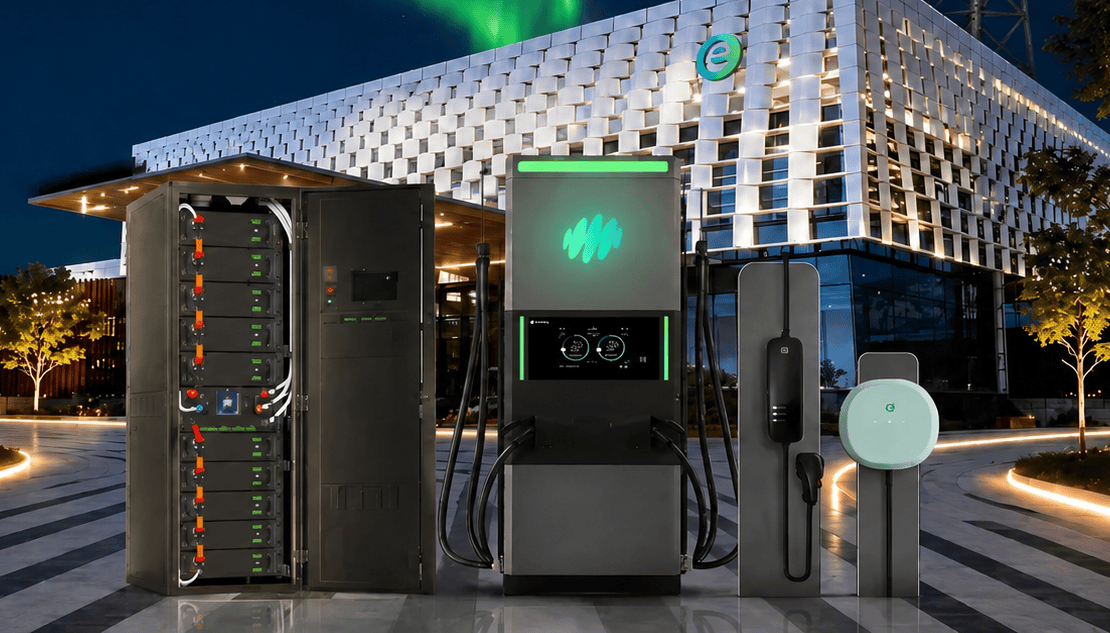
Key Takeaways (TL;DR)
- Exicom has commenced manufacturing liquid-cooled AC and DC power modules for EV chargers at its Hyderabad Smart Manufacturing Facility.
- This makes Exicom the first company in India to produce this advanced class of power electronics for both domestic and international markets.
- Liquid cooling significantly enhances charger reliability and longevity by mitigating thermal stress, which accounts for nearly 60% of power electronics failures.
- The initial modules are designated for Tritium’s DC charger portfolio in North America and Europe, with future integration into Exicom’s own Harmony DC chargers and Tritium’s India deployments.
- The fully sealed design offers superior protection against environmental elements like dust, moisture, and salt air, ensuring continuous operation and lower lifetime costs.
Exicom Ushers in New Era for EV Charging Infrastructure with Indigenous Manufacturing
Hyderabad, India – In a significant leap forward for India’s electric vehicle (EV) ecosystem and global EV charging infrastructure, Exicom has announced the commencement of manufacturing liquid-cooled AC and DC power modules at its state-of-the-art Smart Manufacturing Facility in Hyderabad. This strategic move positions Exicom as the pioneer in India, becoming the first company to produce this advanced class of power electronics designed for both domestic and international markets.

The introduction of these liquid-cooled modules represents a critical advancement in electric vehicle charging technology, addressing long-standing challenges related to charger reliability and performance, especially in demanding operational environments. This initiative underscores India’s growing prowess in high-tech manufacturing and its commitment to fostering sustainable mobility solutions worldwide.
Mitigating Thermal Stress: The Imperative for Liquid Cooling
The reliability of power electronics, particularly in high-power applications like EV charging, is profoundly impacted by thermal management. Exicom highlights that reliability studies attribute nearly 60% of power electronics failures to thermal stress. This vulnerability is exacerbated by the principle that a 10°C to 15°C rise in temperature can effectively double a component’s failure rate, leading to decreased operational lifespan and increased maintenance requirements.
Traditional air-cooled systems often struggle to maintain optimal internal temperatures, especially when chargers operate at high capacities for extended periods or under challenging ambient conditions. Liquid coolant technology offers a robust solution, capable of sustaining internal temperatures approximately 10°C lower than its air-cooled counterparts. This significant temperature reduction is pivotal in extending the operational life of components and ensuring consistent performance.

Global Deployment and Strategic Synergies with Tritium
The initial batches of these innovative liquid-cooled power modules are slated for deployment in key international markets, primarily North America and Europe. They will be integrated into the DC charger portfolio of Tritium, a global leader in DC fast charging solutions, including their renowned TRI-FLEX and DC-FLEX models.
This collaboration stems from Exicom’s strategic acquisition of the DC fast charging company Tritium in 2024, a move that brought advanced liquid-cooled capabilities in-house. This synergy enables Exicom to leverage Tritium’s refined liquid-cooled architecture, proven across some of the world’s most demanding charging environments, and scale its production from India.
Looking ahead, Exicom plans to extend the benefits of this cutting-edge technology to its direct clientele in India. Future phases will see the liquid-cooled modules integrated into Tritium’s range of DC fast chargers, which are currently being deployed across India for charge point operators, fleet managers, and original equipment manufacturers (OEMs). Moreover, Exicom intends to incorporate this advanced liquid-cooled architecture directly into its proprietary Harmony DC chargers, further solidifying its market position.
Enhanced Durability and Operational Efficiency
Beyond superior thermal management, the liquid-cooled power modules boast a fully sealed construction, offering unparalleled protection against common environmental aggressors. This robust design effectively keeps out dust, moisture, and corrosive salt air, elements known to significantly shorten the lifespan of chargers operating in the field. This inherent resilience translates directly into greater charger uptime and reduced operational expenditures over the module’s lifetime.
Exicom also credits this innovative design with enabling more power output within a remarkably compact footprint. This efficiency in space utilization is crucial for urban installations and sites where physical space is a premium. The ability to ensure continuous operation under heavy load, coupled with the projected lower operating costs, makes these liquid-cooled modules a compelling choice for the evolving landscape of electric vehicle charging.
Hyderabad Facility: A Hub for Advanced Manufacturing
The Hyderabad Smart Manufacturing Facility, where these modules are being produced, represents the pinnacle of modern industrial practices. Exicom has equipped the plant with advanced automation, ensuring precision and consistency in every module manufactured. The facility also integrates digital traceability systems, providing comprehensive oversight throughout the production process, from raw materials to finished goods.
Furthermore, specialized testing protocols are embedded within the manufacturing workflow, guaranteeing that each liquid-cooled power module meets stringent quality and performance standards. This sophisticated infrastructure underscores Exicom’s commitment to delivering world-class products that are reliable, efficient, and built to last in diverse operational settings, serving both domestic and international markets.
Driving India’s EV Future: A Vision for Innovation
Anant Nahata, Exicom’s CEO and Managing Director, articulated the profound impact of this manufacturing milestone. “Anyone who has stood next to a fast charger on a 45-degree afternoon knows what heat does to electronics. EV Charging is getting faster with chargers running more hours a day, and customers expect them to work every season and at every site,” Nahata remarked, emphasizing the critical need for advanced thermal management in contemporary charging solutions.
Nahata further highlighted the strategic importance of local manufacturing for the adoption of liquid-cooled EV charger technology in India. “Globally, liquid cooling has become the architecture of choice for high-power charging. We are bringing this technology to India. Local manufacturing matters because we now own more of that technology ourselves. We can engineer it, improve it and adapt it faster, for our customers here and across the world,” he stated.
This move is not merely about producing components but about fostering a deeper level of technological ownership and innovation within India. By localizing the manufacturing of such critical components, Exicom is poised to accelerate the development and deployment of robust, reliable, and sustainable EV charging infrastructure, cementing India’s position as a key player in the global electric mobility revolution.
Frequently Asked Questions (FAQs)
What is Exicom’s latest manufacturing achievement?
Exicom has started producing liquid-cooled AC and DC power modules for EV chargers at its Hyderabad Smart Manufacturing Facility, becoming the first company in India to manufacture this advanced class of power electronics for global markets.
Why is liquid cooling important for EV chargers?
Liquid cooling is crucial because thermal stress accounts for nearly 60% of power electronics failures. It keeps internal temperatures approximately 10°C lower than air-cooled systems, significantly improving charger reliability, longevity, and performance, especially under high usage or extreme weather conditions.
Where will these new liquid-cooled modules be initially deployed?
The first modules are primarily destined for North America and Europe, where they will be integrated into Tritium’s DC charger portfolio, including the TRI-FLEX and DC-FLEX models.
How does this technology benefit Indian customers?
Later phases will see this technology reach Exicom’s Indian customers, including charge point operators, fleets, and OEMs, through Tritium’s DC fast chargers deployed in India. Exicom also plans to integrate this architecture into its own Harmony DC chargers.
What are the key advantages of a fully sealed, liquid-cooled design?
The fully sealed construction protects against dust, moisture, and salt air, extending charger life. It also allows for more power in a compact footprint, ensures continuous operation under load, and contributes to lower operating costs over the module’s lifetime.
What role does Exicom’s Hyderabad facility play in this initiative?
The Hyderabad plant is equipped with automation, digital traceability, and specialized testing capabilities. It serves as the production hub for these advanced liquid-cooled modules for both domestic and international markets, showcasing India’s manufacturing prowess.
What is Exicom’s long-term vision with this new technology?
Exicom aims to lead the adoption of liquid-cooled EV charger technology in India, enhancing reliability and efficiency. By localizing manufacturing, the company can engineer, improve, and adapt this technology faster for customers in India and globally, reinforcing India’s position in advanced EV infrastructure.
Who is Anant Nahata and what is his perspective on this development?
Anant Nahata is Exicom’s CEO and Managing Director. He emphasizes that liquid cooling is essential for faster, more reliable EV charging in all seasons and sites, and views local manufacturing as key to owning and innovating this critical technology faster for global and domestic markets.