
Key Takeaways
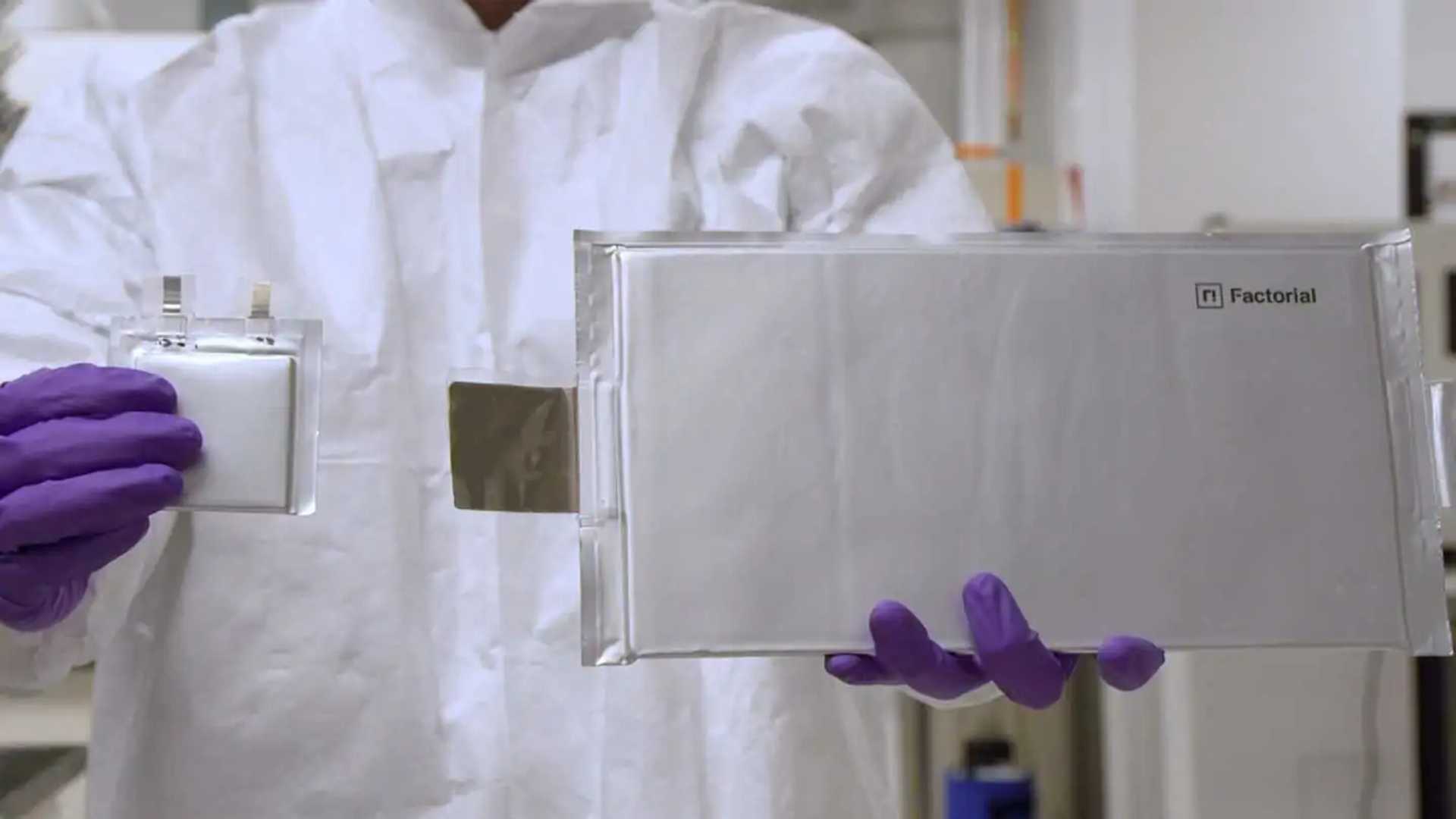
- Factorial Energy, a Massachusetts-based battery startup, has signed a memorandum of understanding with South Korean giant SK On.
- The partnership aims to explore the mass production of Factorial’s solid-state batteries using SK On’s existing lithium-ion manufacturing infrastructure.
- Solid-state batteries promise higher energy density, faster charging, and improved safety but face significant challenges in scaling production.
- Factorial’s semi-solid-state batteries are already undergoing real-world testing in prototype electric vehicles from Mercedes-Benz and Stellantis.
- This collaboration is crucial for overcoming the manufacturing hurdles associated with next-generation solid-state battery technology.
In a significant development for the future of electric vehicle (EV) technology, Massachusetts-based battery innovator Factorial Energy has formally aligned with South Korean battery manufacturing powerhouse SK On. The two entities have signed a memorandum of understanding (MoU) to jointly investigate methods for mass-producing advanced solid-state batteries on existing lithium-ion battery production lines. This collaboration addresses one of the most critical hurdles facing the widespread adoption of next-generation battery technology: scalable manufacturing.
Factorial Energy stands as a prominent frontrunner in the global race to commercialize solid-state batteries. The startup has already established key partnerships with major automotive manufacturers, including Mercedes-Benz, Stellantis, and Hyundai, all of whom are actively testing Factorial’s cells in their real-world prototype vehicles.
The Promise of Solid-State Technology
Solid-state batteries represent a paradigm shift from conventional lithium-ion batteries. They are engineered to replace the flammable liquid electrolytes found in current battery designs with solid materials. This fundamental change promises several transformative advantages, including significantly higher energy density, leading to greater driving ranges for electric vehicles.
Beyond range, solid-state batteries are expected to enable faster charging capabilities and enhance overall safety by virtually eliminating the risk of thermal runaway, a concern associated with liquid electrolytes. However, despite these compelling benefits, the transition from laboratory prototypes to large-scale commercial production has proven notoriously challenging, largely due to the difficulty in manufacturing these delicate cells without introducing defects.
Earlier this year, Mercedes-Benz publicly highlighted the potential of Factorial’s technology. An EQS prototype equipped with Factorial’s semi-solid-state battery achieved an impressive travel distance of 749 miles on a single charge. Critically, the vehicle reportedly retained an estimated 84 miles of range upon reaching its destination, underscoring the efficiency and capacity of these advanced cells.
Similarly, Stellantis has integrated Factorial’s battery technology into a prototype Dodge Charger Daytona. This initiative forms a crucial part of the automotive giant’s comprehensive on-road testing program, gathering valuable data on performance and durability under real-world driving conditions.
Bridging the Manufacturing Gap
The core of the partnership between Factorial Energy and SK On lies in overcoming the persistent manufacturing obstacles associated with solid-state batteries. SK On, a global leader in battery production, brings to the table an expansive and sophisticated manufacturing footprint that spans various regions worldwide. The company’s expertise will be leveraged to assess how its vast facilities can be adapted to scale Factorial’s cutting-edge solid-state technology for mass production.
Dr. Siyu Huang, the CEO of Factorial, articulated the critical importance of this collaboration in a recent statement. She emphasized, “A battery breakthrough only matters if it can be manufactured at scale.” Dr. Huang further highlighted SK On’s invaluable contribution, stating, “[SK On’s] manufacturing footprint spans some of the world’s most advanced battery facilities, and their expertise will be critical in shaping how solid-state battery technology integrates into global production ecosystems.”
SK On’s Global Presence and Market Dynamics
SK On is a key supplier to several major automotive brands, including Hyundai, Kia, Ford, Volkswagen, and Ferrari. The company boasts an impressive annual battery manufacturing capacity of approximately 200 gigawatt-hours (GWh) globally. A substantial portion of this capacity, roughly 100 GWh, is currently installed within the United States, making it a pivotal player in the North American battery supply chain.
However, the battery maker has recently adjusted its U.S. operations. Following the termination of federal EV incentives by the previous administration, which led to a reassessment of EV demand, SK On scaled back some of its planned expansions. Notably, SK On and Ford also concluded their joint venture, opting to redirect their strategic focus towards the rapidly expanding stationary energy storage market, a sector with significant growth potential.
Strategic Alliances for Future Growth
The MoU with SK On is not Factorial Energy’s first strategic alliance aimed at industrializing its advanced battery technology. The startup has previously forged similar non-binding agreements with other key players in the battery ecosystem. These include LG Chem, another prominent South Korean chemical company with extensive battery interests, and South Korean battery materials suppliers Philenergy and Posco Future M.
It is important to note that, much like these earlier agreements, the memorandum of understanding with SK On is non-binding. This structure allows both companies the flexibility to disengage from the collaboration if the joint efforts do not yield the anticipated manufacturing breakthroughs or if the integration proves commercially unviable. This pragmatic approach underscores the inherent complexities and uncertainties in pioneering new battery chemistries and their production methodologies.
Frequently Asked Questions (FAQs)
What are solid-state batteries?
Solid-state batteries are a type of battery technology that uses solid electrodes and a solid electrolyte, unlike conventional lithium-ion batteries which use liquid or gel electrolytes. This design aims to offer higher energy density, faster charging, and improved safety due to the elimination of flammable liquids.
What is Factorial Energy’s role in this partnership?
Factorial Energy is a startup specializing in solid-state and semi-solid-state battery technology. Their role is to provide the advanced battery cell designs and intellectual property, which SK On will then evaluate for compatibility with existing mass production processes and scale-up strategies.
Why is mass production a challenge for solid-state batteries?
Solid-state batteries are notoriously difficult to manufacture at scale. The delicate nature of solid electrolytes, the need for precise interfaces between solid components, and the prevention of defects during high-volume production are significant technical and engineering hurdles that need innovative solutions.
What is SK On’s contribution to this collaboration?
SK On contributes its vast experience and infrastructure in large-scale battery manufacturing. With significant global production capacity, including substantial operations in the U.S., SK On will assess how its existing lithium-ion battery lines can be adapted to efficiently produce Factorial’s solid-state battery cells.
Which automakers are currently testing Factorial’s batteries?
Factorial Energy has established partnerships with leading automotive manufacturers such as Mercedes-Benz, Stellantis, and Hyundai. These companies are actively testing Factorial’s semi-solid-state batteries in their prototype electric vehicles, evaluating their performance and integration capabilities in real-world scenarios.
Is this a binding agreement between Factorial and SK On?
No, the agreement between Factorial Energy and SK On is a non-binding memorandum of understanding (MoU). This structure allows both parties to explore the potential for collaboration without immediate contractual obligations, providing flexibility to discontinue the partnership if mutual objectives or manufacturing feasibility are not met.