
Key Takeaways:
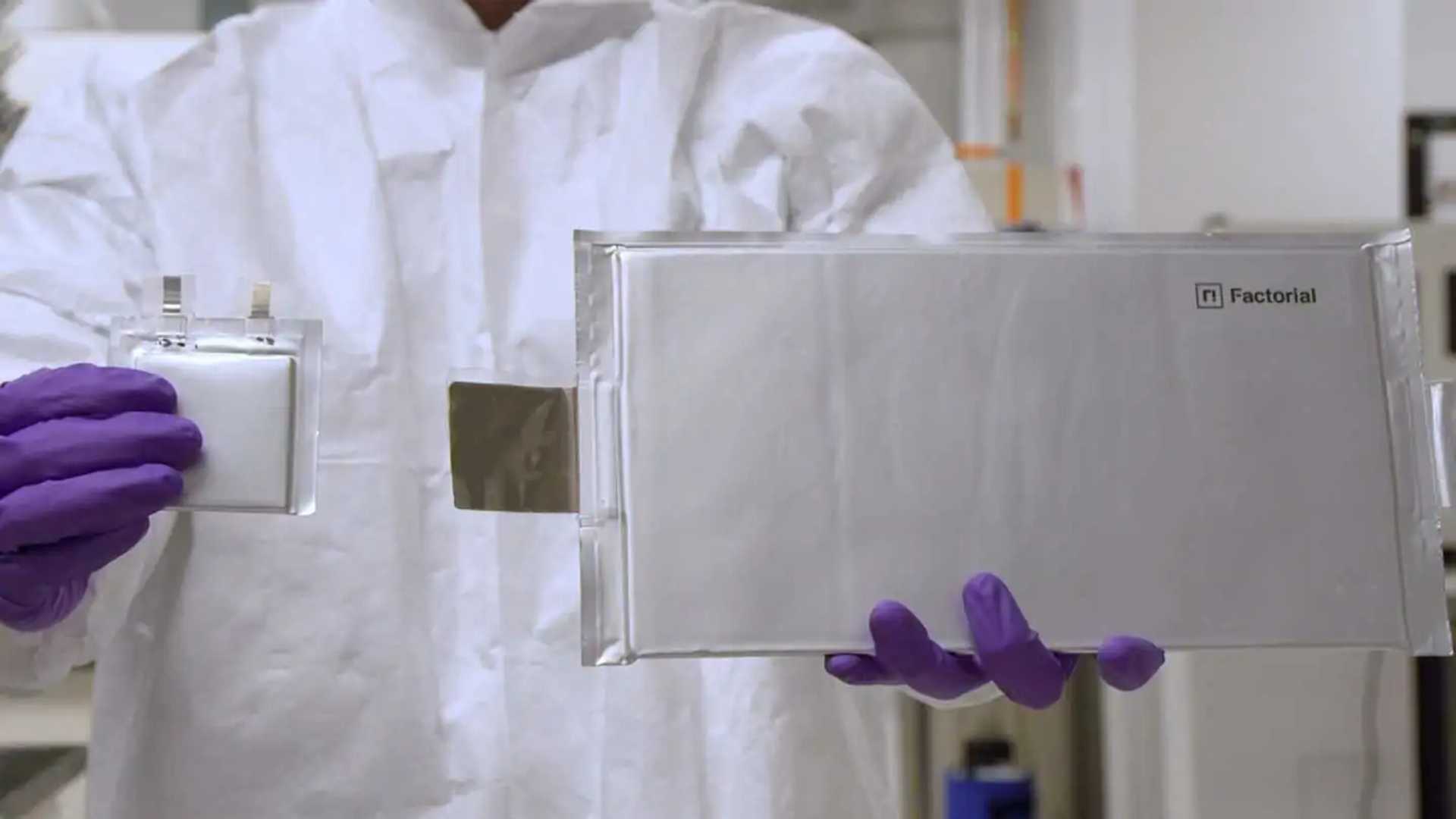
- Factorial Energy, a leader in advanced battery development, is collaborating with South Korean manufacturing giant SK On to address the critical challenge of mass-producing solid-state batteries.
- The partnership aims to evaluate the feasibility of integrating Factorial’s innovative solid-state battery technology into SK On’s extensive existing lithium-ion battery production lines.
- Factorial’s semi-solid-state batteries have already demonstrated impressive real-world performance, with a Mercedes-Benz EQS prototype achieving 749 miles on a single charge.
- SK On brings significant global manufacturing capacity, supplying major automotive brands like Hyundai, Kia, Ford, Volkswagen, and Ferrari, which is crucial for scaling next-generation EV battery production.
- The non-binding agreement underscores a shared industry imperative to accelerate the commercialization of solid-state batteries to meet growing electric vehicle demand.
In a significant move poised to reshape the future of electric vehicle (EV) technology, Massachusetts-based battery innovator Factorial Energy has formalized a memorandum of understanding with South Korean battery manufacturing powerhouse SK On. The collaboration is focused on a pivotal challenge: developing methods for the mass production of advanced solid-state batteries utilizing existing lithium-ion manufacturing infrastructure.
This strategic alliance brings together Factorial Energy, a frontrunner in solid- and semi-solid-state battery research and development, with SK On, a major global supplier to the automotive industry. The core objective is to determine if current battery production facilities can be adapted efficiently to scale up the production of next-generation solid-state cells, overcoming one of the most significant hurdles to widespread adoption of this transformative technology.
The Promise and Perils of Solid-State Battery Technology
Solid-state batteries represent a paradigm shift in energy storage, heralded as the ‘holy grail’ for electric vehicles. Their fundamental design replaces the flammable liquid electrolytes found in conventional lithium-ion batteries with solid materials. This change promises a multitude of benefits, including significantly higher energy density, enabling longer driving ranges for EVs without increasing battery size or weight.
Beyond enhanced range, solid-state battery technology offers substantially faster charging times and improved safety characteristics due to the elimination of volatile liquid components. This reduction in fire risk is a major advantage, potentially accelerating consumer confidence and regulatory approval for electric vehicles globally.
However, the journey from laboratory innovation to commercial viability for solid-state batteries has been fraught with challenges. The intricate materials science involved in solid electrolytes often leads to issues such as interface resistance, dendrite formation, and manufacturing complexities. Producing these advanced cells at scale, reliably and cost-effectively, without introducing defects, has proven notoriously difficult—a problem the Factorial-SK On partnership aims to solve directly.
Factorial Energy: A Leader in Next-Generation Cell Development
Factorial Energy has been at the forefront of solid- and semi-solid-state battery research for several years, garnering attention for its rapid advancements. The company’s approach includes a unique semi-solid-state architecture that aims to bridge the gap between traditional lithium-ion and full solid-state chemistries, potentially offering a more manufacturable solution in the near term.
The efficacy of Factorial’s semi-solid-state battery technology has been validated through rigorous real-world testing with prominent automotive manufacturers. Earlier this year, a Mercedes-Benz EQS prototype equipped with Factorial’s innovative battery achieved a remarkable feat, traveling 749 miles on a single charge. Critically, the vehicle retained an estimated 84 miles of range upon reaching its destination, suggesting an extraordinary total potential range of over 830 miles. This performance far exceeds the capabilities of most contemporary electric vehicles.
Similarly, Stellantis has integrated Factorial’s batteries into a prototype Dodge Charger Daytona. This ongoing on-road testing program by a major global automaker further underscores the practical applicability and potential of Factorial’s cells in high-performance electric vehicles. Collaborations with industry leaders like Mercedes-Benz, Stellantis, and Hyundai position Factorial as a key player in the race to commercialize next-generation EV battery manufacturing.
SK On’s Strategic Role in Mass Production
The alliance with SK On is particularly strategic for Factorial Energy, given the South Korean giant’s extensive experience and vast manufacturing capabilities in the global battery market. SK On currently boasts approximately 200 gigawatt-hours (GWh) of annual battery manufacturing capacity worldwide, with roughly half of that — around 100 GWh — situated in the United States.
SK On’s established position as a tier-one supplier to leading automakers such as Hyundai, Kia, Ford, Volkswagen, and Ferrari provides Factorial with access to a sophisticated global production ecosystem. The partnership will see SK On evaluating how its existing, highly automated lithium-ion battery lines can be adapted to efficiently produce Factorial’s solid-state cells. This evaluation is critical for bridging the gap between innovative lab-scale prototypes and the demands of automotive-grade mass production.
Siyu Huang, the CEO of Factorial, emphasized the importance of this manufacturing expertise, stating, “A battery breakthrough only matters if it can be manufactured at scale. [SK On’s] manufacturing footprint spans some of the world’s most advanced battery facilities, and their expertise will be critical in shaping how solid-state battery technology integrates into global production ecosystems.” This statement highlights the understanding that even the most advanced battery innovation requires robust manufacturing solutions to achieve market relevance.
Navigating Market Dynamics and Expanding Partnerships
While SK On possesses formidable manufacturing prowess, the company has recently navigated evolving market conditions. Last year, SK On recalibrated some of its U.S. operations following the discontinuation of federal EV incentives by the Trump administration, which led to a reassessment of EV demand. This adjustment included the termination of its joint venture with Ford, shifting focus towards the rapidly expanding stationary energy storage market as a strategic pivot.
Despite these market adjustments, SK On’s core expertise in large-scale battery production remains invaluable. The collaboration with Factorial Energy signifies SK On’s continued commitment to advanced battery technology and its proactive role in seeking out the next generation of energy solutions for both the automotive and broader energy storage sectors.
The memorandum of understanding with SK On is a non-binding agreement, similar to other strategic partnerships Factorial Energy has formed within the industry. Factorial has also entered into comparable non-binding agreements with LG Chem, another prominent South Korean battery manufacturer, and South Korean battery materials suppliers Philenergy and Posco Future M. These multiple collaborations underscore Factorial’s strategy of diversifying its manufacturing and supply chain expertise, ensuring multiple pathways to accelerate the commercialization of its innovative solid-state battery technology. Each partnership offers the flexibility for either company to withdraw if the collaboration does not yield the anticipated manufacturing breakthroughs, a common practice in highly dynamic R&D-intensive sectors.
The Road Ahead for EV Battery Manufacturing
The quest for commercially viable solid-state batteries is a global race, with numerous startups and established giants investing heavily in research and development. The success of partnerships like the one between Factorial Energy and SK On could significantly accelerate the transition to more sustainable and efficient electric vehicles. By leveraging SK On’s vast manufacturing footprint and Factorial’s pioneering solid-state battery technology, the automotive industry could soon see a new generation of EVs offering unprecedented range, charging speeds, and safety standards.
A successful transition to solid-state battery technology could alleviate key concerns that currently limit EV adoption, such as range anxiety and charging infrastructure availability. It also holds the potential to reduce the overall cost of electric vehicles in the long term by simplifying battery pack design and improving energy efficiency. As global demand for electric vehicles continues to surge, these strategic collaborations are vital for laying the groundwork for the next era of advanced EV battery manufacturing and energy storage solutions.
FAQ Section
What is a solid-state battery?
A solid-state battery is a type of electric battery that uses solid electrodes and a solid electrolyte, unlike traditional lithium-ion batteries that use liquid or polymer gel electrolytes. This design offers potential advantages in terms of safety, energy density, and cycle life, making it a highly anticipated technology for electric vehicles and other applications requiring advanced energy storage solutions.
Why is mass production of solid-state batteries challenging?
Mass production of solid-state batteries is challenging primarily due to complex manufacturing processes, the need for new materials, and difficulties in scaling laboratory-proven methods to industrial levels. Ensuring consistent quality, preventing defects, and achieving cost-effectiveness on existing production lines are significant hurdles that require extensive research and development to overcome for widespread adoption.
What role will SK On play in this partnership?
SK On, a major global battery manufacturer, will leverage its extensive manufacturing footprint and expertise to evaluate and develop methods for mass-producing Factorial Energy’s solid-state battery cells. The company will assess if its existing lithium-ion battery production lines can be adapted to efficiently manufacture the advanced solid-state technology, aiming to bridge the gap between innovation and large-scale commercialization for the automotive industry.
Which car manufacturers are testing Factorial’s batteries?
Factorial Energy’s semi-solid-state batteries are currently undergoing real-world testing in prototype electric vehicles from several major automotive manufacturers. These include Mercedes-Benz, which tested an EQS prototype demonstrating significant range, and Stellantis, which has installed Factorial’s batteries in a prototype Dodge Charger Daytona as part of its ongoing on-road testing program to validate performance and durability.
What are the key benefits of solid-state batteries for EVs?
Solid-state batteries offer several crucial benefits for electric vehicles. They promise significantly higher energy density, leading to longer driving ranges. The use of solid electrolytes enhances safety by reducing the risk of fire associated with flammable liquid electrolytes. Additionally, they are expected to enable faster charging times and potentially offer a longer lifespan compared to current lithium-ion batteries, enhancing the overall appeal and performance of EVs.
What does a non-binding agreement mean for the partnership?
A non-binding agreement, such as the memorandum of understanding between Factorial Energy and SK On, indicates that the parties intend to collaborate but are not legally obligated to specific outcomes or investments. It allows for exploration and feasibility studies without rigid commitments, providing flexibility. Either company can withdraw if the collaboration does not yield promising manufacturing breakthroughs, enabling agile development in a rapidly evolving technological landscape.