
Key Takeaways:
- Fraunhofer IISB has developed a 750 kW permanent-magnet traction motor with an exceptional 8 kW/kg power density.
- This motor is designed for hybrid-electric regional aircraft and achieves its performance through thin-lamination electrical steel, hairpin windings, and direct oil-spray cooling.
- It is a critical component of Project AMBER, a Clean Aviation EU initiative targeting a ~2 MW hydrogen fuel cell hybrid-electric propulsion system.
- The project aims for at least a 30% reduction in CO₂ emissions for regional aircraft compared to 2020-era models.
- The motor’s design emphasizes fault tolerance and advanced thermal management, crucial for aerospace applications.
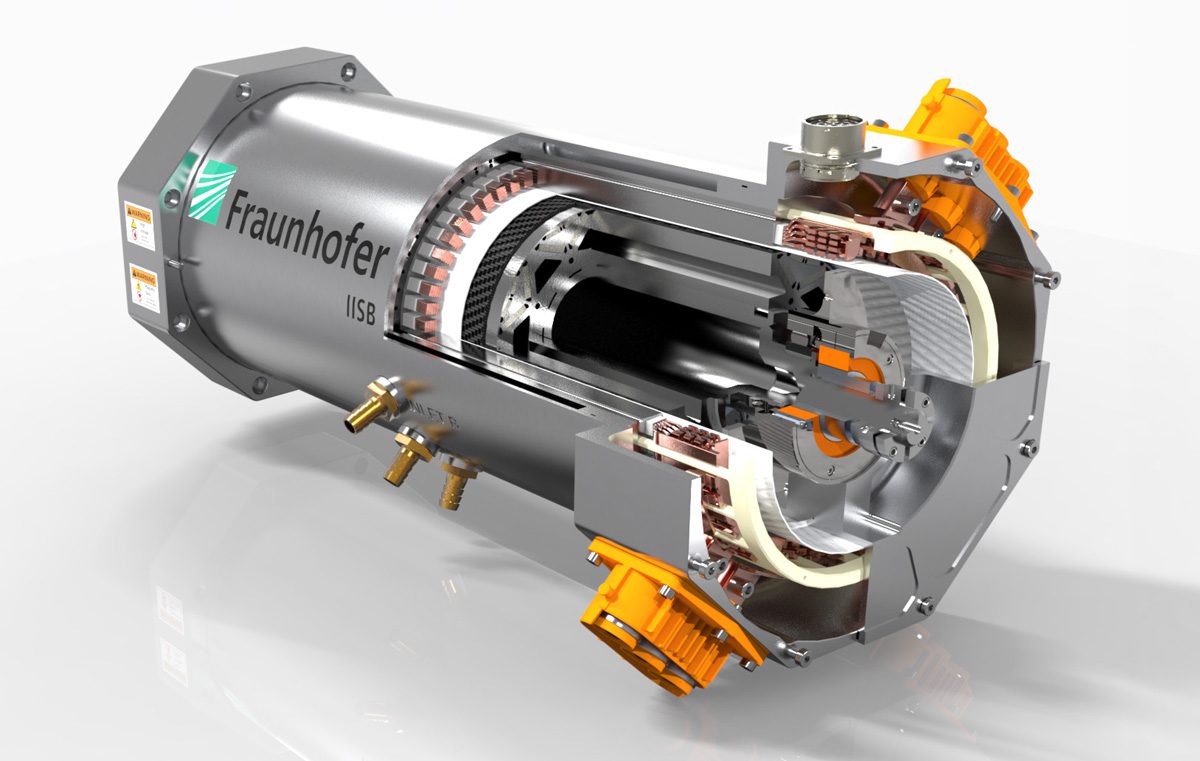
In a significant stride towards sustainable aviation, Fraunhofer IISB has engineered a groundbreaking 750 kW permanent-magnet traction motor specifically designed for the next generation of hybrid-electric regional aircraft. This innovative motor achieves an impressive power density of 8 kW/kg, setting a new benchmark for advanced electric aircraft propulsion systems.

The breakthrough is poised to play a pivotal role in Project AMBER, a major Clean Aviation EU program. This initiative is focused on developing a powerful ~2 MW hydrogen fuel cell hybrid-electric propulsion system, marking a decisive move towards decarbonizing regional air travel.
Engineering the Future of Flight: The 8 kW/kg Breakthrough
The core of this engineering marvel lies in its ability to deliver substantial power while maintaining an exceptionally low weight. With a total weight of just 94 kg, the 750 kW motor achieves its 8 kW/kg power density through a meticulous combination of advanced materials and innovative design principles, pushing the boundaries of what is possible in electric aviation.
This level of power density is critical for aerospace applications, where every kilogram saved directly translates to improved fuel efficiency, extended range, and increased payload capacity. The Fraunhofer IISB motor represents a significant leap forward in making truly electric-powered regional flights a viable reality.

Precision Engineering: Key Components and Materials
Central to the motor’s high performance is the strategic use of NO15 electrical steel. This specialized grade, characterized by its ultra-thin 0.15 mm laminations, is instrumental in minimizing energy losses at high operational speeds. In high-frequency alternating current environments typical of advanced electric aircraft propulsion systems, thicker laminations can lead to significant eddy current and AC losses, reducing overall efficiency and generating unwanted heat.
By selecting such thin laminations, Fraunhofer IISB has effectively mitigated these parasitic losses. This material choice allows the motor to sustain high rotational speeds necessary for aviation applications without compromising efficiency or thermal stability, directly contributing to the ambitious 8 kW/kg power density target.
The motor operates at a rated speed of 21,000 rpm, delivering a torque of 350 Nm. Its compact dimensions, with a diameter of 250 mm and a length of 600 mm, underscore the impressive power-to-volume ratio achieved. These specifications highlight a design optimized for the confined and demanding environment of an aircraft engine bay, crucial for integrated hybrid-electric systems.
Advanced Cooling and Winding Strategies
Thermal management is a paramount concern in high-power density electric motors, especially in aerospace where reliability and performance are non-negotiable. The Fraunhofer IISB motor employs a sophisticated direct oil-spray cooling system. This method ensures efficient heat dissipation, allowing the motor to operate at its rated power even with a coolant temperature of 65 °C.
Direct oil spray cooling offers superior heat transfer capabilities compared to traditional air or indirect liquid cooling methods. By directly applying the coolant to the heat-generating components, such as the stator windings, it rapidly removes heat, preventing thermal runaway and ensuring consistent performance under demanding conditions. This advanced thermal management is indispensable for maintaining the motor’s longevity and operational integrity in a rigorous aviation environment.
The stator design further incorporates a novel 4×3 phase hairpin winding arrangement. This configuration divides the motor into four electrically decoupled sections, each independently driven by its own inverter. This innovative approach significantly enhances the system’s fault tolerance, a critical safety feature for advanced electric aircraft propulsion.
Should a failure occur in one section, the remaining independent sections can continue to operate, preventing a complete system shutdown. This redundancy is vital for aerospace applications, where system reliability and safety are of utmost importance. Furthermore, hairpin windings, compared to conventional round-wire coils, allow for a higher current density within the stator slot and facilitate better thermal contact with the stator core, further improving both power output and cooling efficiency.
Driving Project AMBER: A Vision for Sustainable Aviation
The development of this high-performance motor is a cornerstone of Project AMBER, an ambitious Clean Aviation EU program. The overarching goal of Project AMBER is to pioneer a ~2 MW hydrogen fuel cell hybrid-electric propulsion system designed for regional aircraft, marking a substantial step towards cleaner skies.
The propulsion architecture envisioned by Project AMBER is a parallel hybrid system. In this setup, the newly developed Fraunhofer IISB motor/generator works in tandem with Avio Aero’s advanced Catalyst turboprop engine. This parallel configuration allows for optimized operational flexibility, enabling the aircraft to utilize electric power during certain flight phases, thus reducing emissions and noise, while leveraging the turboprop for additional power when needed.
The Collaborative Consortium
The successful execution of Project AMBER is a testament to strong collaborative efforts among leading aerospace and research entities. Fraunhofer IISB, with its expertise in power electronics and electric drives, is a central player, responsible for the motor’s intricate design and validation.
The consortium also includes Avio Aero, a GE Aviation business specializing in aeronautical engines, contributing its Catalyst advanced turboprop technology. GE Aerospace, a global leader in jet engines and aviation systems, is also an integral part of this strategic alliance. This collaboration brings together diverse expertise, accelerating the development and integration of cutting-edge aerospace solutions for advanced electric aircraft propulsion.
Project AMBER’s environmental target is particularly ambitious: to achieve at least a 30% reduction in CO₂ emissions at entry into service, when compared to regional aircraft models from 2020. This significant reduction underscores the consortium’s commitment to mitigating aviation’s environmental footprint and fostering a more sustainable future for air travel.
Rigorous Development and Aerospace Standards
The entire development cycle of the 750 kW traction motor was conducted meticulously at Fraunhofer IISB, encompassing every stage from initial concept generation and detailed CAD modeling to precise manufacturing, assembly, and rigorous validation. This comprehensive in-house approach ensures tight control over quality and performance, critical for aerospace components.
Crucially, all development activities were executed in strict accordance with stringent aerospace standards. Adherence to these international benchmarks is non-negotiable for components intended for aircraft, ensuring unparalleled levels of safety, reliability, and performance. This commitment to aerospace-grade standards solidifies the motor’s readiness for integration into future hybrid-electric regional aircraft platforms.
The Fraunhofer IISB motor, therefore, represents not just a technical achievement but also a significant step forward in making advanced electric aircraft propulsion systems viable and safe for commercial aviation. Its integration into Project AMBER illustrates a clear pathway towards meeting global carbon reduction targets and shaping a greener future for the aviation industry.
Towards a Greener Sky
The advancements in electric motor technology, exemplified by Fraunhofer IISB’s 750 kW motor, are fundamental to the broader movement towards sustainable aviation. As the global push for decarbonization intensifies, hybrid-electric and fully electric propulsion systems are emerging as key enablers for reducing the environmental impact of air travel. This includes cutting greenhouse gas emissions, reducing noise pollution, and potentially lowering operational costs in the long term.
Regional aircraft are often seen as the primary candidates for early adoption of advanced electric aircraft propulsion technologies due to their shorter routes and lower power requirements compared to larger commercial jets. Innovations like the Fraunhofer IISB motor provide the necessary power density and efficiency to make such applications practical and commercially attractive.
FAQ Section
What is the key innovation of the Fraunhofer IISB motor?
The key innovation is its exceptional power density of 8 kW/kg for a 750 kW permanent-magnet traction motor, achieved through advanced materials and cooling, making it ideal for hybrid-electric regional aircraft.
What technologies contribute to its high power density?
High power density is achieved through the use of NO15 (0.15 mm) electrical steel to reduce losses, hairpin windings for higher current density and thermal contact, and direct oil-spray cooling for efficient heat dissipation.
What is Project AMBER and what is the motor’s role in it?
Project AMBER is a Clean Aviation EU program developing a ~2 MW hydrogen fuel cell hybrid-electric propulsion system. The Fraunhofer IISB motor serves as a crucial motor/generator within this parallel hybrid architecture.
What environmental impact is Project AMBER targeting?
Project AMBER aims to achieve at least a 30% reduction in CO₂ emissions for regional aircraft compared to 2020-era models, contributing significantly to sustainable aviation goals.
What are the benefits of hairpin windings and direct oil-spray cooling?
Hairpin windings allow for higher current density and better thermal contact, while direct oil-spray cooling provides superior heat transfer, both critical for the motor’s high power output and reliability in aerospace applications.
Why is fault tolerance important in this motor’s design?
The motor’s 4×3 phase hairpin winding with four decoupled sections enhances fault tolerance. In aerospace, redundancy is critical, meaning a failure in one section does not lead to a complete system shutdown, ensuring operational safety.
Who are the key partners in Project AMBER?
The primary partners in the Project AMBER consortium include Fraunhofer IISB, Avio Aero (a GE Aviation business), and GE Aerospace, pooling expertise for advanced hybrid-electric aircraft propulsion systems.