
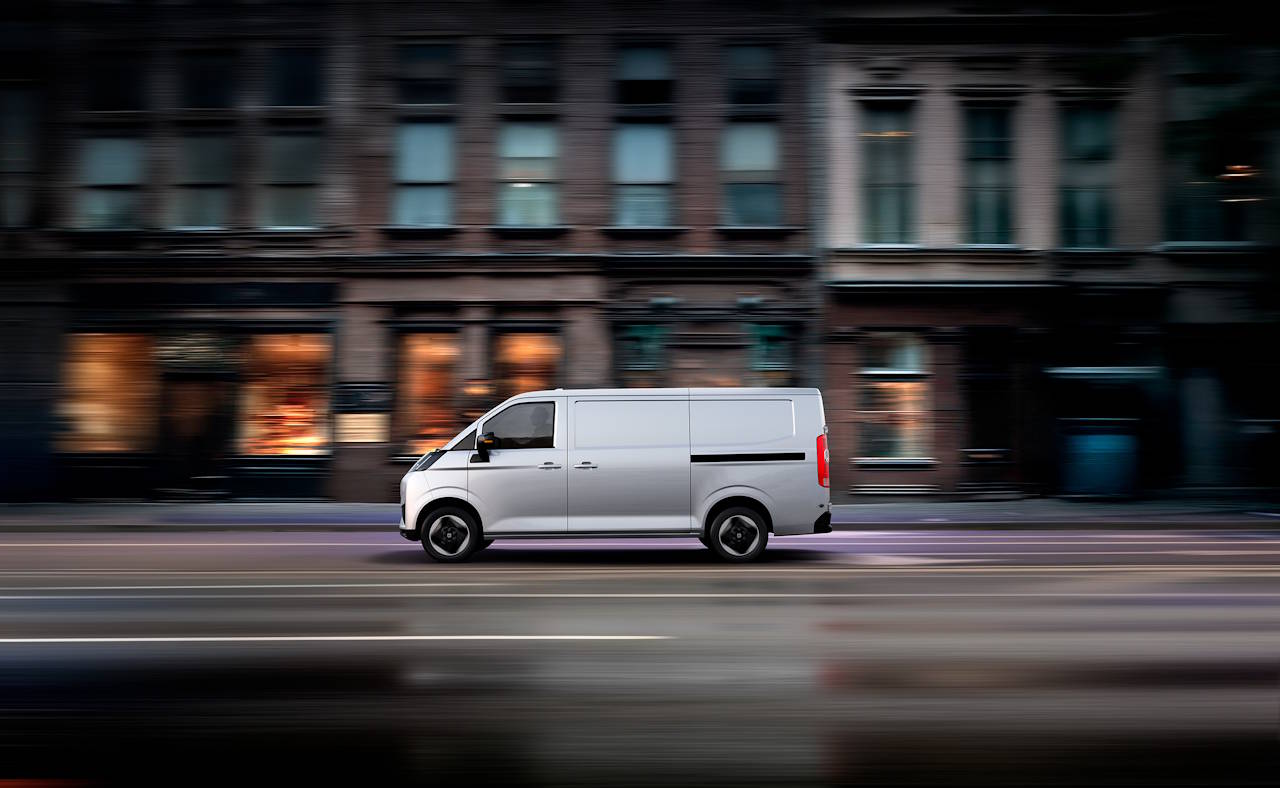
Chinese automotive giant Geely, through its commercial vehicle brand Farizon, has officially launched the new V7E electric commercial van in the Australian market. This move signals an increased focus on providing electric solutions for businesses in the region, aiming to capture the growing demand for sustainable and cost-effective delivery vehicles.
Introducing the Farizon V7E: Designed for Work
The Farizon V7E is engineered with a specific purpose: to serve couriers, contractors, sole traders, and fleet operators. Farizon emphasizes that the van has been developed with a “clear focus on work-rate, durability, and value,” positioning it as a practical and economical choice for businesses transitioning to electric mobility.

Key specifications highlight the van’s utility. It boasts a payload capacity exceeding 1,300 kilograms and a substantial cargo volume of 6.95 cubic meters. Furthermore, the V7E features a narrow body design, which Farizon states contributes to a tight turning circle, enhancing maneuverability in urban environments.
Farizon asserts that the V7E is designed to compete directly with traditional internal combustion engine (ICE) vans in terms of payload, cargo capacity, and overall usability. While specific pricing details are yet to be released, the company anticipates making these announcements in April.
Advanced Battery Technology and Driving Range
Powering the Farizon V7E is an advanced CATL lithium-iron phosphate (LFP) battery. This battery technology is known for its durability and safety. Farizon reports that the V7E can achieve an impressive driving range of up to 330 kilometers on a single charge.

The LFP battery’s design is specifically intended for the rigors of daily commercial use, including frequent stop-start driving cycles common in delivery operations. This focus on durability suggests that the V7E is built to withstand the demands of intensive work environments.
Details regarding the van’s charging specifications are expected to be part of the comprehensive vehicle information to be released in April. First customer deliveries are slated to commence in May, aligning with the detailed announcement of specifications and pricing.
Safety, Comfort, and Connectivity Features
Aligning with Farizon’s broader SV range of electric vans, the new V7E incorporates a suite of features designed to enhance safety, driver comfort, and connectivity. This includes a comprehensive driver assistance system, intended to improve safety and reduce driver fatigue.
The van also offers advanced smartphone connectivity, allowing drivers to integrate their mobile devices seamlessly for navigation, communication, and other work-related applications. Modern safety technologies are also integrated, further contributing to the vehicle’s overall safety profile.
Partnership for Australian Launch
The introduction of the Farizon V7E to the Australian market is being facilitated through a partnership with Jameel Motors Australia, a leading vehicle distributor. This collaboration aims to ensure effective distribution, sales, and after-sales support for the new electric van.
Adam Lawson, country general manager for Jameel Motors Australia, commented on the significance of the V7E’s arrival. “The arrival of V7E reflects a clear shift in how businesses are thinking about their next commercial vehicle,” Lawson stated.
He further elaborated on the market’s priorities: “Operators want capability, usability and value first. The V7E has been developed to deliver on those fundamentals, with electric power supporting the proposition rather than defining it.” This sentiment suggests that the van’s electric powertrain is seen as an enhancement to its core utility rather than its sole defining feature.
Addressing the Shift from ICE Vans
The launch of the V7E in Australia is strategically timed to coincide with a period where many businesses are re-evaluating the operational costs associated with traditional internal combustion engine (ICE) vans. Rising expenses for fuel, maintenance, and overall servicing are driving interest in alternative solutions.
Lawson highlighted this trend, noting, “Many operators are reassessing the true cost of running traditional ICE vans and looking for alternatives that do not require a change in how they work.” This indicates a desire for electric vehicles that can seamlessly integrate into existing business operations without significant disruption.
The Farizon V7E is positioned to meet this need, offering the essential payload and usability that businesses expect from a light commercial vehicle. “The V7E delivers the payload and usability businesses expect from a light commercial vehicle, while offering the potential for lower ongoing costs and simplified ownership over time,” Lawson added. This points to the long-term economic benefits and ease of ownership as key selling propositions for the electric van.