
Key Takeaways (TL;DR)
- Global Battery Materials Corp. (GBM) has initiated the qualification process for its graphite, shipping initial samples from its Ontario mine to a key US customer.
- The company has simultaneously inaugurated a new processing laboratory in Quebec, designed to purify and upgrade natural graphite, showcasing North American processing capabilities.
- These twin milestones signify GBM’s strategic progress in establishing a vertically integrated, domestic graphite supply chain, crucial for the burgeoning electric vehicle (EV) battery sector.
- The developments aim to mitigate reliance on overseas sources, particularly China, which currently dominates the global graphite market.
- GBM’s efforts are aligned with North American policy directives prioritising the development of local critical mineral sources for EV battery production.
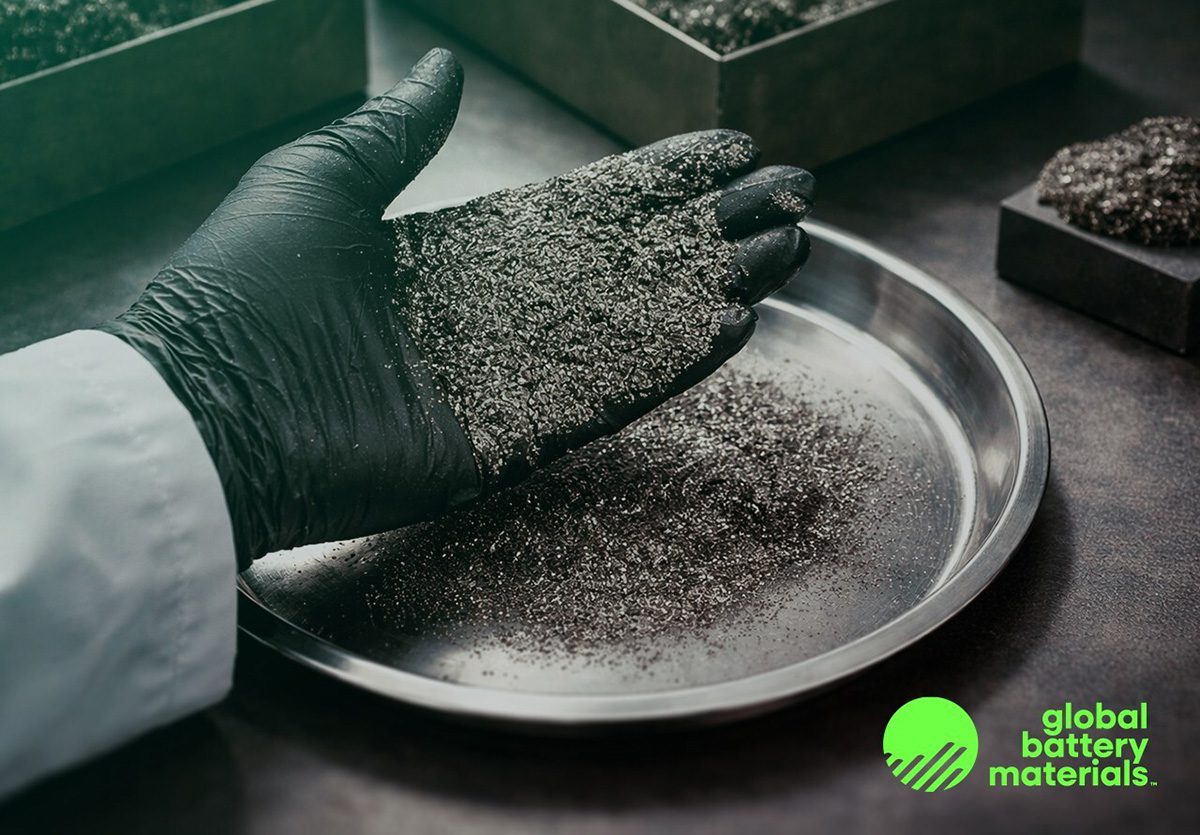
Global Battery Materials Corp. (GBM) has announced two pivotal advancements poised to strengthen North America’s burgeoning electric vehicle (EV) battery supply chain. The company has successfully shipped its inaugural graphite samples to a significant US customer for qualification testing, marking a critical step towards commercial agreements.

Concurrently, GBM has officially opened a state-of-the-art processing laboratory in Quebec. These developments underscore the company’s commitment to cultivating a robust, independent North American graphite supply chain, specifically designed to reduce reliance on foreign production, predominantly from China.
Pioneering Domestic Graphite Supply for US Market
The graphite samples dispatched to the unnamed US customer originated from GBM’s Kearney Mine located in Ontario. This site holds historical significance as one of North America’s few prior-producing natural graphite assets.
More importantly, it is recognised as one of the continent’s largest flake graphite deposits. This geological advantage positions GBM uniquely to contribute substantial raw material volume to the regional battery manufacturing ecosystem.

The shipment represents a crucial phase in the commercialisation pathway: qualification testing. This standard industry procedure involves rigorous evaluation by potential customers to ensure the graphite meets specific performance, purity, and consistency requirements for integration into lithium-ion battery anodes.
Successful qualification is a prerequisite for securing long-term commercial supply agreements, paving the way for sustained domestic sourcing for the North American electric vehicle sector.
Strategic Investment in Quebec Processing Capabilities
Further bolstering its vertically integrated strategy, Global Battery Materials has launched the GBM Graphite Lab in Quebec. This advanced facility is specifically engineered to purify and upgrade natural graphite extracted from raw ore, demonstrating impressive capabilities at a lab scale.
The lab can achieve carbon content levels of up to 97%, a critical purity standard required for high-performance battery anodes. This achievement showcases the technical proficiency available within North America for sophisticated mineral processing.
Operating under ISO 9001 certification, the Quebec lab adheres to stringent quality management standards, ensuring reliability and consistency in its processes. Its design allows for the simulation of full-scale graphite plant operations, providing invaluable data and insights for future industrial expansion.
The facility is overseen by Benoit Briere, a veteran professional with nearly three decades of experience in the natural graphite industry. His extensive expertise is instrumental in guiding the lab’s operations and advancing GBM’s processing technologies.
Vertical Integration and Future Ambitions
Global Battery Materials Corp. is strategically positioning itself as a vertically integrated entity within the critical minerals sector. This approach combines its proprietary Kearney Mine in Ontario with advanced anode processing technology, which has already been validated at a pilot plant located in South Korea.
This integration strategy is designed to control the entire value chain from raw material extraction to the production of battery-grade anode material. The next phase of GBM’s strategic roadmap includes the establishment of a mass anode production site within North America.
Such a facility would represent a monumental step towards localising the complete manufacturing process for a key battery component, significantly de-risking the supply chain for regional EV manufacturers and fostering greater economic independence in the sector.
Addressing North America’s Critical Mineral Deficit
The importance of these developments cannot be overstated, particularly in the context of global supply chain vulnerabilities. Eric Miller, CEO of GBM, articulated the urgency of the situation, stating, “North America has very limited capacity to process critical minerals like graphite, and this announcement marks an important step in urgently closing this gap.”
Miller further highlighted the immediate impact of GBM’s initiatives: “Our lab-scale operations in Quebec are already producing graphite samples for qualifying customers, proving our ability to move quickly and meet urgent local demand.” This demonstrates GBM’s readiness to address a pressing national and continental need for secure and reliable critical mineral supplies.
Graphite’s Indispensable Role in EV Batteries and Geopolitical Context
Graphite serves as the dominant active material in the anodes of lithium-ion batteries, which power the vast majority of electric vehicles globally. Its unique properties, including high energy density and stability, make it indispensable for current battery technologies.
However, the global supply landscape for graphite presents significant geopolitical and economic challenges. China currently controls an overwhelming majority of the world’s graphite mining and, more crucially, its anode material processing capabilities.
This concentrated control has prompted both the United States and Canadian governments to prioritise the development of robust, domestic sources and processing capacities for critical minerals like graphite. Diversifying the supply chain is seen as essential for national security, economic resilience, and the accelerating transition to electric mobility.
The strategic imperative is to ensure a stable and ethical supply of battery materials, insulating North American EV manufacturers from potential disruptions, trade complexities, and fluctuating geopolitical dynamics. GBM’s advancements directly support these governmental policy objectives, contributing to the broader goal of fostering a self-sufficient and resilient EV ecosystem on the continent.
Charting the Course for a Resilient Battery Supply Chain
The recent milestones achieved by Global Battery Materials Corp. represent more than just corporate achievements; they symbolise a tangible shift towards establishing a secure and sustainable battery materials supply chain within North America. By combining domestic mining operations with advanced processing capabilities and a clear roadmap for mass anode production, GBM is actively addressing critical gaps.
These initiatives are crucial for the continued growth and independence of the North American electric vehicle industry. As global demand for EVs escalates, the ability to source and process essential battery materials locally will become an increasingly vital competitive advantage, fostering innovation, creating jobs, and ensuring a resilient future for electric mobility across the continent.
FAQ Section
What is Global Battery Materials Corp. (GBM)?
Global Battery Materials Corp. is a company focused on developing a vertically integrated supply chain for natural graphite, a critical mineral essential for lithium-ion battery anodes. Their strategy aims to establish North American sourcing and processing capabilities to support the electric vehicle industry.
Where did GBM’s first graphite samples originate?
The initial graphite samples shipped by GBM to a US customer came from their Kearney Mine located in Ontario, Canada. This mine is recognised as one of North America’s largest flake graphite deposits and has a history as a prior-producing asset.
What is the purpose of the new GBM Graphite Lab in Quebec?
The GBM Graphite Lab in Quebec is designed to purify and upgrade natural graphite from raw ore. It aims to demonstrate carbon content of up to 97% at lab scale and can simulate full graphite plant processes, crucial for developing battery-grade material.
Why is domestic graphite sourcing important for North America?
Domestic graphite sourcing is vital because North America has limited capacity to process critical minerals like graphite. China dominates global supply, creating vulnerabilities. Developing local sources ensures a stable, secure, and independent supply chain for the rapidly growing electric vehicle battery manufacturing sector.
What does GBM’s vertical integration strategy entail?
GBM’s vertical integration combines its Ontario-based Kearney Mine with patented anode processing technology, validated at a pilot plant in South Korea. The ultimate goal is to establish a mass anode production site in North America, covering the entire process from raw material to finished battery component.
What is ‘qualification testing’ for graphite samples?
Qualification testing is a standard industry step where a potential customer rigorously evaluates graphite samples. This process ensures the material meets specific purity, performance, and consistency requirements necessary for its use in commercial applications, such as lithium-ion battery anodes, before a supply agreement is signed.
Who manages the GBM Graphite Lab in Quebec?
The GBM Graphite Lab in Quebec is managed by Benoit Briere, an industry expert with nearly 30 years of experience in the natural graphite sector. His extensive background is instrumental in guiding the lab’s operations and technological advancements.