
Key Takeaways:
- Global Battery Materials Corp. (GBM) has shipped its inaugural graphite samples from its Ontario mine to a US customer for qualification testing, marking a significant step towards securing domestic supply.
- The company simultaneously inaugurated a new ISO 9001 certified processing lab in Quebec, designed to purify natural graphite to high carbon content, crucial for lithium-ion battery anodes.
- These dual achievements underscore GBM’s strategy to establish a fully integrated North American graphite supply chain, aiming to reduce reliance on foreign, particularly Chinese, production.
- The initiative aligns with strategic policies in both the United States and Canada to foster local critical mineral processing capabilities to support the burgeoning electric vehicle market.
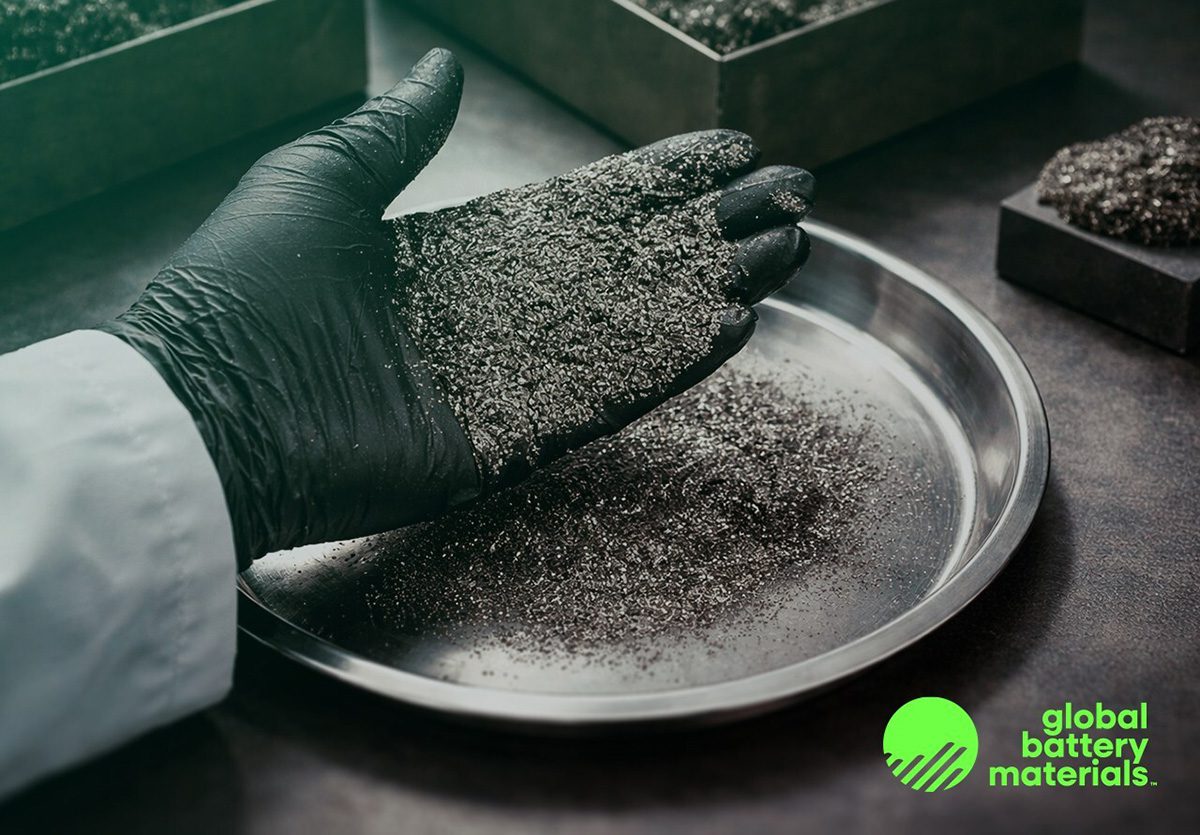
In a pivotal development poised to reshape the electric vehicle (EV) battery landscape in North America, Global Battery Materials Corp. (GBM) has announced two significant milestones. The company has successfully shipped its first graphite samples from its Ontario operations to a crucial US customer for qualification, while simultaneously unveiling a state-of-the-art processing laboratory in Quebec. These actions represent a concrete stride towards establishing a resilient and independent North American graphite supply chain, a strategic imperative for the region’s burgeoning EV industry.

The dual announcement underscores GBM’s commitment to bridging the existing gap in domestic critical mineral processing. With graphite being an indispensable component in lithium-ion battery anodes, the move is expected to bolster regional self-sufficiency and mitigate risks associated with concentrated global supply sources, predominantly in China.
Catalysing Domestic Graphite Production
The shipment of graphite samples marks a critical phase in GBM’s strategy to become a key player in the North American battery materials sector. These samples originated from GBM’s Kearney Mine, located in Ontario, a site historically recognized as one of the continent’s only prior-producing natural graphite assets.
The unnamed US customer will undertake rigorous qualification testing, a standard and essential procedure preceding any potential commercial supply agreements. This step is fundamental to validating the material’s suitability for high-performance battery applications, ensuring it meets the stringent requirements of EV manufacturers.

The Strategic Importance of Kearney Mine
The Kearney Mine holds particular strategic value, not only for its historical production but also for its status as one of North America’s largest flake graphite deposits. Its re-activation and operational progress are central to developing a robust North American graphite supply chain.
Access to such domestic raw material sources is vital for building a secure and localized battery ecosystem, reducing the geopolitical and logistical vulnerabilities inherent in relying on overseas suppliers. The quality and scale of the graphite from Kearney are expected to play a foundational role in this effort.
Quebec Lab: A Hub for Advanced Graphite Processing
Complementing its mining operations, GBM has officially opened the GBM Graphite Lab in Quebec. This facility is engineered to undertake the crucial purification and upgrading of natural graphite, transforming raw ore into high-grade material suitable for battery manufacturing.
The lab’s capabilities have already demonstrated the ability to achieve carbon content of up to 97% at a lab scale. This level of purity is paramount for anode material performance in advanced lithium-ion batteries, impacting energy density, charging speed, and overall battery lifespan.
Ensuring Quality and Vertical Integration
Adding to its credibility, the Quebec facility is ISO 9001 certified, signaling adherence to international quality management standards. This certification provides assurance to potential customers regarding the consistency and reliability of GBM’s processing operations.
The lab is also designed to simulate full graphite plant processes, offering a critical platform for research, development, and process optimization. The facility’s operations are managed by Benoit Briere, an industry veteran boasting nearly 30 years of experience in the natural graphite sector, whose expertise is crucial to its success.
GBM envisions itself as a vertically integrated entity, seamlessly combining its Ontario mining assets with proprietary anode processing technology. This integrated approach, previously validated at a pilot plant in South Korea, positions the company to control the entire value chain from mine to battery-grade material.
Addressing North America’s Critical Mineral Deficit
The broader context of GBM’s achievements lies in the urgent need to address North America’s significant deficit in critical mineral processing capacity. Graphite, as the dominant active material in lithium-ion battery anodes, is at the forefront of this challenge.
Both the United States and Canadian governments have explicitly prioritized the development of domestic sources for critical minerals. This policy focus is driven by economic security concerns, national security interests, and the ambitious goals for transitioning to clean energy and electric vehicles.
Bolstering Battery Material Security
Currently, China exercises a vast majority of control over global graphite mining and anode material processing. This concentrated supply presents substantial risks to global automotive and battery manufacturers seeking to establish independent and secure supply chains outside of Chinese influence.
As Eric Miller, CEO of GBM, articulated, “North America has very limited capacity to process critical minerals like graphite, and this announcement marks an important step in urgently closing this gap.” He further emphasized, “Our lab-scale operations in Quebec are already producing graphite samples for qualifying customers, proving our ability to move quickly and meet urgent local demand.” His statement underscores the immediate impact and strategic importance of GBM’s operational advancements.
The efforts by companies like GBM are crucial for diversifying global supply and strengthening the resilience of the North American graphite supply chain against potential disruptions. It directly contributes to energy independence and environmental sustainability goals.
The Path Ahead: Scaling Up Production
With the successful shipment of samples and the operational readiness of its Quebec lab, GBM is now looking towards the next phase of its ambitious plan. The company has articulated its intention to establish a mass anode production site within North America.
This future facility would represent the culmination of its vertically integrated strategy, transforming purified graphite into finished anode materials on a commercial scale. Such a development would further solidify the region’s independence in battery manufacturing and attract additional investment into the ecosystem.
The envisioned production site will be critical for meeting the rapidly escalating demand for EV batteries. It will ensure that the raw materials extracted and processed in North America can be fully utilized within the continent’s manufacturing footprint, creating jobs and fostering technological innovation.
Conclusion
Global Battery Materials Corp.’s recent dual achievements—shipping critical graphite samples and opening its advanced processing lab—are more than just corporate milestones; they are foundational steps in constructing a vital North American graphite supply chain. These developments are integral to fostering regional self-reliance in critical minerals, supporting the aggressive growth of the EV sector, and ensuring the long-term sustainability of the clean energy transition across the continent. As global supply dynamics continue to evolve, initiatives like GBM’s will prove instrumental in fortifying the economic and environmental future of North America.
Frequently Asked Questions (FAQ)
What are the key milestones announced by Global Battery Materials (GBM)?
GBM recently shipped its first graphite samples from the Kearney Mine in Ontario to a US customer for qualification testing. Simultaneously, the company opened a new, ISO 9001 certified graphite processing lab in Quebec, designed to purify natural graphite to high carbon content levels.
Why is graphite important for electric vehicle (EV) batteries?
Graphite is the dominant active material used in the anodes of lithium-ion batteries, which power most electric vehicles. It plays a critical role in the battery’s performance, including its energy density, charging capacity, and overall lifespan.
What is the significance of establishing a North American graphite supply chain?
Establishing a robust North American graphite supply chain is crucial for reducing dependence on foreign sources, particularly China, which dominates global graphite production. It enhances regional economic security, supports the growth of the domestic EV manufacturing sector, and mitigates geopolitical supply risks.
Where did GBM’s graphite samples originate from?
The initial graphite samples shipped to the US customer came from GBM’s Kearney Mine in Ontario. This mine is notable for being one of North America’s only prior-producing natural graphite assets and one of the largest flake graphite deposits on the continent.
What capabilities does the new Quebec processing lab offer?
The GBM Graphite Lab in Quebec can purify and upgrade natural graphite from raw ore, demonstrating carbon content of up to 97% at lab scale. It is ISO 9001 certified and capable of simulating full graphite plant processes, managed by an expert with nearly 30 years of industry experience.
What are GBM’s future plans for its North American operations?
Following these milestones, GBM plans to establish a mass anode production site in North America. This step aims to complete its vertically integrated strategy, taking purified graphite and manufacturing finished anode materials on a commercial scale for the EV battery market.