
Key Takeaways
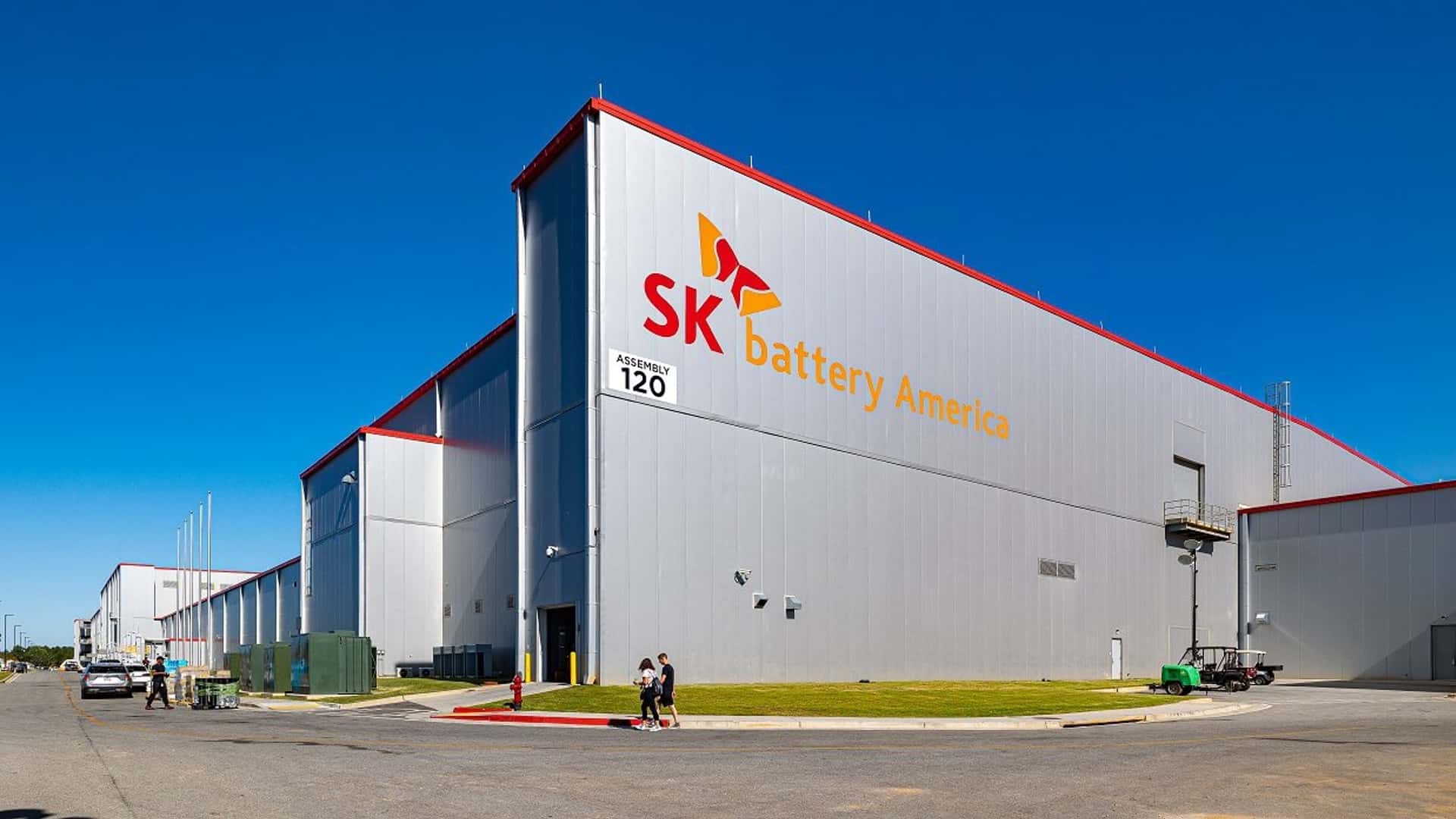
- Hyundai Motor Group and SK On have officially commenced operations at their new $5 billion electric vehicle (EV) battery manufacturing facility in Bartow County, Georgia.
- This joint venture, Hyundai SK Battery Manufacturing America, is a cornerstone of Georgia’s economic development, aiming to solidify a domestic EV supply chain for Hyundai and Kia.
- At full capacity, the 3.3-million-square-foot plant is projected to produce 35 gigawatt-hours (GWh) of batteries annually, sufficient for 300,000 EVs and creating approximately 3,500 jobs.
- Despite a recent slowdown in U.S. EV sales and the expiration of federal tax credits, Hyundai and Kia remain committed to their electrification strategy, with significant manufacturing operations centered in Georgia.
- The new plant will supply critical battery components to Hyundai’s Metaplant America and Kia’s West Point facility, reinforcing the state’s emerging role as a major hub for electric vehicle production.
Bartow County, Georgia – In a significant boost to the American electric vehicle (EV) manufacturing landscape, Hyundai Motor Group and Korean battery giant SK On have officially activated their colossal $5 billion battery production facility. This joint venture marks a pivotal step in establishing a robust domestic supply chain for advanced EV battery components, further cementing Georgia’s strategic position in the burgeoning electric vehicle industry.
The facility, known as Hyundai SK Battery Manufacturing America, initiated trial runs last month and has now transitioned into an early production phase. Plans are underway for a gradual but steady scale-up, according to a Hyundai spokesperson cited by The Atlanta Journal-Constitution. This activation represents one of Georgia’s most substantial economic development projects, poised to generate thousands of jobs and underpin a comprehensive EV manufacturing ecosystem within the state.
Strategic Investment and Production Capacity
The monumental $5 billion investment underscores the commitment of Hyundai and SK On to localize key components of the EV supply chain. This move is strategically aligned with global efforts to enhance supply chain resilience and reduce reliance on overseas manufacturing, particularly for critical electric vehicle components like batteries.
When operating at full capacity, the 3.3-million-square-foot facility is engineered to deliver an impressive 35 gigawatt-hours (GWh) of battery production annually. This output is calculated to be sufficient to power approximately 300,000 electric vehicles each year, significantly contributing to the market availability of EVs.
Beyond its production metrics, the plant is expected to create around 3,500 direct jobs, a substantial boon for the local economy. These roles will span various functions, from advanced manufacturing and engineering to logistics and administrative support, fostering a skilled workforce in a high-growth sector.
Navigating Market Dynamics and Production Timelines
The announcement of this facility dates back to 2022, with initial projections anticipating production to commence last year. While the plant is now operational, the timeline for achieving its full production capacity remains somewhat fluid. This cautious approach reflects the broader market conditions, including a recent moderation in the pace of U.S. EV sales growth, particularly following the conclusion of federal tax credits that previously incentivized purchases.
The demand for electric vehicles, though growing overall, has experienced fluctuations. This necessitates careful calibration of production ramps to match evolving consumer preferences and policy landscapes. Despite these market dynamics, the long-term trajectory for EV adoption remains positive, positioning this new Hyundai EV battery plant as a future-proof investment.
Hyundai and Kia’s Unwavering EV Commitment
While some American automakers have recalibrated their electric vehicle ambitions, pivoting back to more immediately profitable gasoline-powered trucks and SUVs, Hyundai and its affiliate Kia have largely maintained their aggressive electrification strategies. Their steadfast commitment is vividly demonstrated by their deep integration of EV operations within Georgia.
The batteries produced at the Bartow County facility are slated to supply Hyundai’s state-of-the-art Metaplant America, located near Savannah. This facility is responsible for assembling popular EV models like the Hyundai Ioniq 5 crossover and the upcoming three-row Ioniq 9 SUV. Similarly, Kia’s plant in West Point, where the mechanically related Kia EV6 and EV9 are manufactured, will also benefit from this localized battery supply.
This integrated manufacturing approach ensures a streamlined supply chain, reducing logistical complexities and potential disruptions. It also reinforces the economic and environmental benefits of domestic production, aligning with broader goals for a greener economy and energy independence.
Georgia: A Hub for Electric Vehicle Production
The Hyundai SK Battery Manufacturing America facility is not the sole testament to Georgia’s burgeoning role in the EV sector. Hyundai Motor Group also operates another significant joint venture with LG Energy Solution, dubbed HL-GA Battery Company, also situated in Bartow County.
This separate $4.3 billion project was originally planned to achieve a production capacity of 30 GWh, enough to power an additional 300,000 electric vehicles annually. However, this plant faced challenges last year, including a widely reported immigration raid that temporarily disrupted production schedules and led to the detention of Korean nationals involved in its establishment.
Beyond Hyundai’s extensive footprint, other prominent players are also choosing Georgia for their major EV investments. Rivian, the electric truck and SUV manufacturer, is reportedly planning a multi-billion-dollar plant in the state. While its R2 model is currently produced at an expanded facility in Normal, Illinois, the proposed Georgia plant is expected to significantly augment R2 capacity and introduce production of the smaller R3 and up to 50,000 robotaxis envisioned for a partnership with Uber.
These collective investments highlight a trend of significant regional investment in the clean energy transition, with Georgia emerging as a key strategic location for advanced automotive manufacturing. The concentration of these gigafactories and assembly plants is transforming the state into a crucial nexus for the future of electric mobility in North America.
Long-Term Vision Amidst Evolving Market
The commissioning of the Hyundai SK Battery Manufacturing America facility marks a significant milestone, representing a strategic long-term vision despite short-term market uncertainties. The move to onshore battery production is critical for establishing a resilient and competitive electric vehicle industry in the United States.
As the global automotive industry continues its pivot towards electrification, such investments are crucial for meeting future demand, driving innovation in battery technology, and creating sustainable economic growth. The commitment from Hyundai and SK On exemplifies a proactive approach to shaping the future of mobility, ensuring that the necessary components and expertise are cultivated domestically.
The facility’s early production phase will be closely watched as it scales up, serving as an indicator of the broader health and trajectory of the EV market in the coming years. Its success will not only benefit Hyundai and SK On but also contribute significantly to Georgia’s reputation as a leading state for green manufacturing and technological advancement.
Frequently Asked Questions (FAQ)
What is the Hyundai SK Battery Manufacturing America facility?
It is a $5 billion joint venture between Hyundai Motor Group and Korean battery maker SK On in Bartow County, Georgia. Its primary purpose is to produce advanced electric vehicle (EV) batteries for Hyundai and Kia vehicles, aiming to localize the EV supply chain in the United States.
What is the production capacity of the new battery plant?
At its full operational capacity, the 3.3-million-square-foot facility is designed to produce 35 gigawatt-hours (GWh) of EV batteries annually. This output is projected to be sufficient to power approximately 300,000 electric vehicles each year, supporting widespread EV adoption.
How many jobs will the facility create?
The Hyundai SK Battery Manufacturing America plant is expected to generate approximately 3,500 new jobs within Bartow County, Georgia. These jobs will contribute significantly to the local economy and foster a skilled workforce in advanced manufacturing and battery technology.
When did the plant begin operations?
The facility began trial production last month and is now in an early production stage as of July 2024. While it was originally projected to begin production in 2023 when announced in 2022, the actual ramp-up timeline will be gradual.
Which Hyundai and Kia EV models will use these batteries?
The batteries produced in Bartow County will supply Hyundai’s Metaplant America near Savannah, where models like the Ioniq 5 and Ioniq 9 are assembled. They will also be used by Kia’s plant in West Point, which manufactures the Kia EV6 and EV9, bolstering regional EV manufacturing.
Is this Hyundai’s only battery plant in Georgia?
No, Hyundai also has a separate 50-50 joint venture with LG Energy Solution, named HL-GA Battery Company, also located in Bartow County. This $4.3 billion project aims to produce 30 GWh of battery capacity, further expanding Hyundai’s battery manufacturing footprint in the state.
How does this investment impact Georgia’s EV industry?
This $5 billion investment, coupled with other projects like Rivian’s planned plant and Hyundai’s JV with LG Energy Solution, positions Georgia as a major hub for electric vehicle production and battery manufacturing. It attracts further regional investment, creates jobs, and strengthens the state’s role in the global clean energy transition.