
Key Takeaways
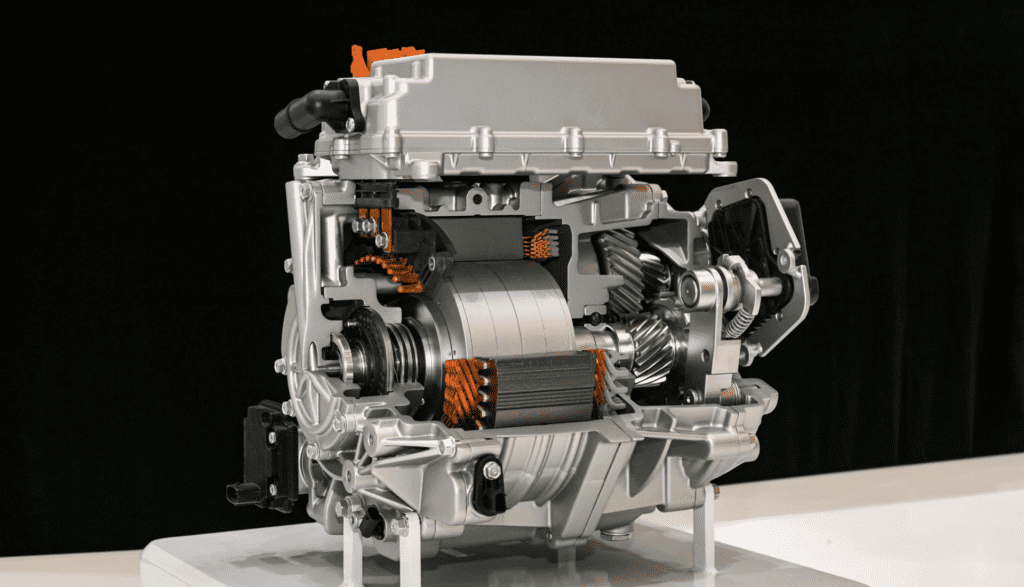
- Hyundai Mobis has developed a new 160 kW Power Electric (PE) system, integrating motor, inverter, and reduction gear into a single unit.
- This innovative EV drive system boasts a 16% increase in specific power and a nearly 20% reduction in overall system volume compared to previous designs.
- The system is designed as a universal platform, standardising core components to offer a scalable solution for multiple global OEM customers.
- This modular approach allows for adaptation across various vehicle classes, from compact models to high-performance EVs, without requiring extensive powertrain redesigns.
- The development signifies a strategic shift in automotive component supply, moving towards versatile, ready-to-integrate solutions for the rapidly expanding electric vehicle market.
In a significant stride for electric vehicle (EV) engineering, Hyundai Mobis, a leading global automotive supplier, has announced the completion of its advanced 160 kW Power Electric (PE) system. This innovative EV drive system is poised to redefine powertrain development, offering a universal platform model designed for seamless integration into diverse vehicle architectures for global original equipment manufacturer (OEM) customers.
The newly developed system represents a departure from traditional component-specific developments, consolidating the motor, inverter, and reduction gear into a single, highly efficient unit. This strategic integration not only streamlines manufacturing but also delivers substantial performance enhancements critical for the next generation of electric mobility.

Setting New Standards in EV Powertrain Efficiency
The 160 kW PE system is engineered to provide an impressive output of up to 215 horsepower, a capability Hyundai Mobis asserts is more than adequate for the majority of EVs currently undergoing mass production. This power output ensures robust performance, responsiveness, and driving dynamics expected by modern EV consumers.
A standout feature of this new EV drive system is its remarkable improvement in specific power. Compared to the company’s previous offerings, the output per unit weight has seen an approximate 16% enhancement. This metric is crucial for EVs, as higher specific power directly translates to lighter powertrains, which can lead to extended driving range and improved overall vehicle efficiency.
Complementing this efficiency gain is a significant reduction in the system’s physical footprint. The overall volume of the integrated PE system has been trimmed by nearly 20%. This compact design offers considerable advantages for vehicle manufacturers, allowing for greater flexibility in vehicle design, optimized interior space, and potentially larger battery packs for even greater range.
Technological Pillars of Performance
These notable advancements in both specific power and volume reduction are the result of several engineering breakthroughs implemented by Hyundai Mobis. The company has meticulously employed a modular design philosophy, coupled with the standardisation of key internal components. Furthermore, a novel motor cooling structure has been devised to manage thermal loads more effectively, ensuring sustained peak performance and longevity.
At the heart of the power module lies the integration of high-efficiency power semiconductors. These advanced components are instrumental in minimising energy losses during power conversion, thereby boosting the overall efficiency of the EV drive system. Their use underscores a commitment to leveraging cutting-edge material science for superior electrical performance.
The Universal Platform: A Paradigm Shift for OEMs
The development of this 160 kW system as a universal platform model marks a strategic pivot in how EV components are developed and supplied. Instead of custom-building solutions for each specific vehicle programme, Hyundai Mobis has focused on standardising three fundamental core components across its PE system lineup: the drive motor stator, the inverter, and the power module.
This platform-centric approach empowers the same underlying architecture to be seamlessly scaled across various vehicle classes. Manufacturers can now adapt the system for different EV models without the prohibitive cost and time investment typically associated with a complete powertrain redesign for every new programme. This contrasts sharply with the traditional model, where global automakers often engaged in bespoke co-development efforts with individual suppliers for component-specific systems.
Benefits for the Global Automotive Market
The implications of such a universal EV drive system are profound for the global automotive industry. OEMs stand to benefit from faster development cycles, reduced engineering costs, and a more streamlined supply chain. This standardisation can accelerate the introduction of new EV models to market, fostering innovation and competition.
Moreover, the inherent scalability of the platform ensures that a wide array of vehicles, from compact city cars to larger family SUVs, can utilise a proven, high-performance powertrain. This flexibility is vital in a rapidly evolving market where consumer demands for diverse EV offerings are continually expanding.
Hyundai Mobis’s Comprehensive Electrification Strategy
The 160 kW PE system is a crucial component of Hyundai Mobis’s broader strategy to establish a comprehensive portfolio of EV drive systems catering to the entire spectrum of electric mobility needs. This current development builds upon previous successes and outlines clear future plans.
Last year, the company successfully completed a high-performance 250 kW PE system, demonstrating its capability to deliver power solutions for the most demanding EV applications. This positions Hyundai Mobis at the forefront of high-performance EV componentry, capable of supplying powertrains for sports-oriented or larger electric vehicles requiring significant power output.
Looking ahead, Hyundai Mobis is also on track to complete a 120 kW model during the first half of 2026. This system is specifically designed to target compact vehicles and emerging markets, where minimised size, weight, and cost are paramount. Its smaller form factor and cost-effectiveness will make electric mobility more accessible and appealing to a wider consumer base in various global regions.
With the forthcoming 120 kW model joining the existing 250 kW and the newly unveiled 160 kW systems, Hyundai Mobis will command a complete lineup. This versatile range will span from solutions suitable for small urban mobility vehicles to robust systems for high-performance electric vehicles, solidifying the company’s position as a one-stop shop for diverse EV powertrain requirements.
Global Interest and Future Outlook
The strategic shift towards a universal platform for its EV drive system has already garnered significant attention internationally. Hyundai Mobis reports that overseas customers have expressed substantial interest in their latest offerings. This early market validation underscores the global demand for efficient, scalable, and readily available EV powertrain solutions.
The ability to run two of the 160 kW units, one at the front and one at the rear, effectively doubles the total output to a formidable 320 kW. This configuration would enable all-wheel-drive capabilities and deliver even higher performance for premium EV segments, further expanding the application possibilities for this versatile system.
As the global automotive industry continues its rapid transition towards electrification, innovations like the Hyundai Mobis 160 kW EV drive system are critical. They not only advance the technological capabilities of electric vehicles but also lay the groundwork for more efficient, sustainable, and accessible mobility solutions worldwide. The focus on standardisation and modularity is expected to accelerate EV adoption by making advanced powertrain technology more readily available and cost-effective for a broad spectrum of automakers.
FAQs About Hyundai Mobis’s New EV Drive System
What is the key innovation of Hyundai Mobis’s new 160 kW PE system?
The primary innovation is its design as a universal platform, integrating the motor, inverter, and reduction gear into a single unit. This standardises core components across different vehicle classes, simplifying development for global OEMs and boosting efficiency by 16% in specific power and reducing volume by 20%.
How does this EV drive system benefit global automotive manufacturers (OEMs)?
OEMs benefit from faster development cycles and reduced costs, as the standardised platform allows for adaptation across various EV models without full powertrain redesigns. This modular approach streamlines the supply chain and accelerates market entry for new electric vehicle offerings, fostering greater innovation.
What performance metrics define the new 160 kW PE system?
The system delivers up to 215 horsepower, which is sufficient for most mass-production EVs. It achieves a 16% improvement in specific power (output per unit weight) and a nearly 20% reduction in overall system volume compared to previous designs, contributing to lighter and more compact electric vehicles.
What technologies contribute to the system’s enhanced efficiency and compactness?
The gains are attributed to a sophisticated modular design, the standardisation of core components like the drive motor stator and inverter, and a new, highly effective motor cooling structure. Additionally, the power module incorporates high-efficiency power semiconductors, minimising energy loss.
How does Hyundai Mobis’s new system fit into its overall EV component strategy?
This 160 kW system is a key part of Hyundai Mobis’s strategy to offer a full range of EV powertrains. It complements their existing high-performance 250 kW system and anticipates the upcoming 120 kW model, creating a comprehensive lineup that caters to small urban vehicles, compact models, and high-performance EVs alike.
Can the 160 kW EV drive system be used for higher power applications?
Yes, the system is highly versatile. For higher power demands or all-wheel-drive configurations, two 160 kW units can be deployed – one at the front and one at the rear – effectively doubling the total output to 320 kW. This flexibility allows for broader application across different vehicle segments.