
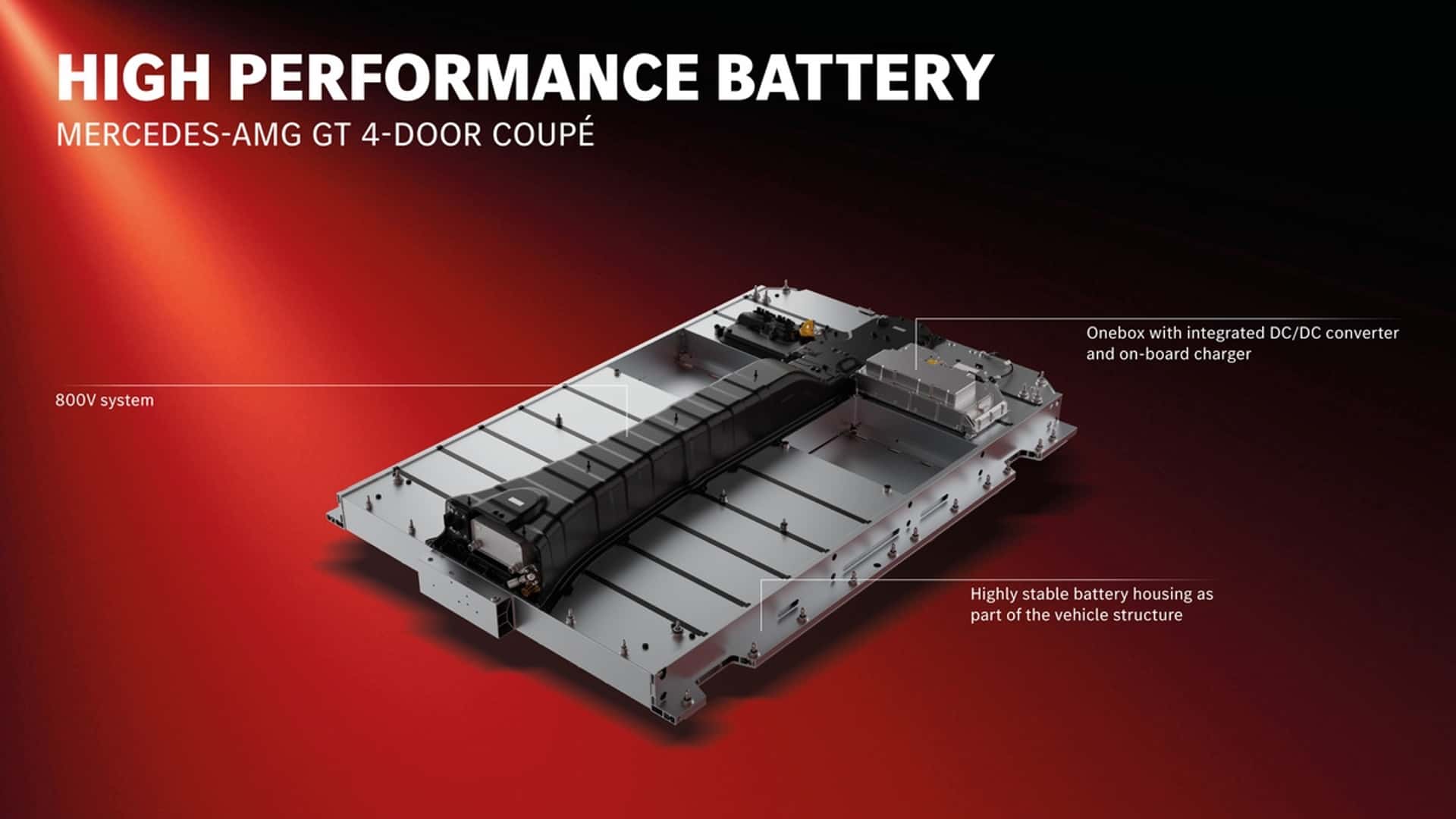
In the rapidly evolving landscape of electric vehicles, managing battery thermal dynamics remains a paramount challenge, particularly for high-performance models. The relentless forces of temperature fluctuations, road conditions, aggressive acceleration, and rapid charging cycles can push EV battery cells to their absolute operational thresholds. Effectively containing and dissipating the immense heat generated under these conditions is not merely an engineering feat but a critical determinant of an electric vehicle’s longevity and safety.
Recent advancements in battery technology are equipping automotive manufacturers with sophisticated cells engineered to withstand the rigors of high-performance electric vehicles (EVs). A prime example of this innovation is found in the new Mercedes-AMG GT 4-Door Coupe. This latest iteration of the luxury super sedan marks a significant departure, shedding its traditional V8 engine for an advanced all-electric powertrain.

The debut of the electric Mercedes-AMG GT generated considerable buzz, not only for its distinctive design but also for its headline-grabbing specifications: a formidable 1,153 horsepower and a peak charging power of 600 kilowatts. Yet, beneath these impressive figures lie two pivotal battery innovations that warrant closer examination: the integration of a silicon anode and an exceptionally engineered cooling loop.
Key Takeaways
- The new Mercedes-AMG GT 4-Door Coupe features advanced EV battery technology, including silicon anodes and a sophisticated cooling system.
- This battery enables a rapid 10-80% charge in just 11 minutes, delivering approximately 250 miles of EPA range in 10 minutes.
- Silicon-graphite anodes offer higher energy density (298 Wh/kg) and faster charging compared to traditional graphite.
- An innovative thermal management system, featuring slim cylindrical cells and ‘on-demand cooling,’ provides a significant 20 kW heat removal capacity.
- This cutting-edge technology sets a new benchmark for high-performance electric vehicle batteries, with potential long-term implications for the broader EV market.
Engineering Peak Performance: The Mercedes-AMG GT’s Electric Leap
The Mercedes-AMG GT’s commitment to electric performance is evident in its robust battery specifications. It boasts 106 kilowatt-hours of usable battery capacity, translating to an impressive 700 kilometers (approximately 434 miles) of range on the European WLTP cycle. This range is projected to be well over 300 miles under the more stringent U.S. EPA testing standards.
Upon its anticipated arrival on U.S. shores later this year, the Mercedes-AMG GT is poised to become the nation’s fastest-charging electric vehicle. Its remarkable ability to charge from 10% to 80% in an unprecedented 11 minutes underscores the transformative power of its underlying battery technology. This rapid replenishment capability is largely attributable to the innovative silicon anode at the core of its energy storage system.

Unpacking the Silicon Anode Revolution
The anode serves as a critical component within an EV battery cell, fundamentally dictating how much energy the battery can store and, crucially, how quickly it can accept a charge. Historically, battery manufacturers have relied on graphite anodes, prized for their inherent stability and commendable energy density.
However, geopolitical factors, including China’s significant influence over graphite supply chains, coupled with growing environmental concerns associated with graphite mining, are compelling automakers to explore alternative materials. The industry is progressively adopting silicon-graphite anodes as an interim solution, with a long-term vision to completely phase out graphite. This transition aims for either 100% silicon-based anodes or advanced synthetic graphite alternatives.
Mercedes-AMG is not an isolated player in this technological shift. A number of prominent companies and innovative startups are actively developing silicon anode solutions. General Motors, alongside pioneering companies such as Group14 and Sila, are at the forefront of this research and development. It is important to acknowledge that silicon anode technology currently occupies a niche position in the market.
While commercially available in limited quantities, silicon anodes have not yet achieved the cost competitiveness and scalability required to universally challenge the dominance of traditional graphite anodes in high-volume production. Despite these nascent stages, the Mercedes-AMG GT’s silicon-containing anode achieves an impressive cell-level energy density of 298 watt-hours per kilogram.
This figure positions it at the upper echelon of today’s commercially available automotive-grade lithium-ion cells. Complementing this advanced anode is a cathode comprised of Nickel, Cobalt, Manganese, and Aluminum (NCMA) chemistry. NCMA cathodes have been historically favored by automakers for their ability to deliver extended range and superior energy density.
The synergy between this cutting-edge silicon anode and the high-performance NCMA cathode is foundational to the Mercedes-AMG GT’s extraordinary capabilities. Mercedes-AMG affirms that this unique combination facilitates the exceptional 600 kW charging rate, enabling the recovery of nearly 250 miles of EPA range in a mere 10 minutes of charging. Furthermore, it ensures a consistently high discharge rate, empowering the vehicle to unleash its full 1,000+ horsepower potential.
Mastering the Heat Challenge: A Sophisticated Cooling Architecture
To sustain such elevated levels of performance and rapid charging without compromise, Mercedes-AMG has deployed an intricate array of cooling systems, complemented by a novel battery cell design. The automaker has opted for slim and tall cylindrical cells, each measuring 4.1 inches in height and 1 inch in diameter.
This reduced diameter is a deliberate engineering choice, designed to minimize the distance from the cell core to its surface. The result is a significantly faster and more efficient dissipation of heat, a critical factor for maintaining optimal battery health and performance under demanding conditions. The cells themselves are enveloped in laser-welded aluminum casings, which further enhance their ability to rapidly cool down or warm up as required by the thermal management system.
A precisely engineered coolant network ensures even flow around each of the 2,660 individual cells within the battery pack, guaranteeing uniform heat dissipation across the entire array. Mercedes-AMG has also integrated what it terms “on-demand cooling” technology. This intelligent system allows for precise temperature management, ensuring that each battery module maintains ideal operational temperatures.
If a specific segment of the battery begins to experience elevated temperatures, the system can selectively direct cooling efforts to that precise area. This targeted approach prevents the inefficiencies of increasing coolant flow to the entire pack, thereby conserving energy and avoiding the potential for over-cooling other, less critical areas.
At the technological heart of this advanced thermal management system lies a sophisticated module comprising a coolant pump, an oil-water heat exchanger, and a central coolant hub. The pump is responsible for circulating the coolant throughout the battery pack, while the heat exchanger efficiently extracts and removes excess heat. The central coolant hub meticulously streamlines the coolant pathways into a single, compact housing.
This integrated design greatly assists the AMG GT in its capacity for targeted cooling of various components. For instance, if the battery pack is already operating within its ideal temperature range, the system possesses the intelligence to redirect the coolant flow towards other components that may require more intensive cooling, such as the electric drive units, optimizing overall system efficiency. Mercedes-AMG reports that, when combined, these comprehensive systems are capable of removing approximately 20 kilowatts of heat.
This capacity represents a substantial advancement, significantly surpassing the typical 5-8 kW of cooling capacity found in the thermal management systems of conventional EV batteries. This robust heat removal capability is instrumental in preserving battery integrity and performance.
Paving the Way for Future EV Advancements
On paper, the Mercedes-AMG GT’s battery and thermal management systems represent a remarkable leap in electric vehicle engineering. However, the true litmus test will unfold as the AMG GT enters real-world driving conditions and as the years progress. The industry will closely observe whether this advanced battery technology can maintain minimal degradation and sustain its extraordinary performance over extended periods.
Beyond the immediate impact on high-performance luxury vehicles, there is a broader, more significant aspiration: the hope that these cutting-edge innovations will eventually permeate and find their way into mass-market electric vehicle models. The promise of blistering charging speeds and robust battery longevity should not remain an exclusive privilege reserved solely for six-figure EVs. The widespread adoption of such advancements holds the potential to democratize high-efficiency electric mobility, benefiting a much wider segment of consumers.
FAQ Section
What makes the Mercedes-AMG GT’s EV battery unique?
The Mercedes-AMG GT 4-Door Coupe features advanced EV battery technology, including a silicon anode and a highly sophisticated, “overengineered” thermal management system. These innovations allow for exceptional fast-charging capabilities and sustained high performance, setting it apart from many contemporary electric vehicles in the market today.
How fast can the Mercedes-AMG GT EV charge?
The Mercedes-AMG GT is engineered for remarkably fast charging. It can charge from 10% to 80% capacity in just 11 minutes. This translates to regaining approximately 250 miles of EPA-comparable range within 10 minutes, making it one of the quickest-charging EVs available in the United States upon its launch.
What is a silicon anode and why is it important?
A silicon anode is a critical component in electric vehicle batteries responsible for energy storage and charging speed. Replacing traditional graphite with silicon-containing anodes increases energy density and allows for significantly faster charging rates. This innovation is crucial for improving EV performance and reducing charge times.
How does the Mercedes-AMG GT manage battery heat?
The Mercedes-AMG GT employs a multi-faceted cooling system. It uses slim, tall cylindrical cells with laser-welded aluminum casings for efficient heat dissipation. An ‘on-demand cooling’ system precisely controls temperatures for each battery module, delivering up to 20 kilowatts of heat removal capacity, significantly more than typical EVs.
What is the range of the new Mercedes-AMG GT?
The Mercedes-AMG GT 4-Door Coupe is equipped with a 106 kilowatt-hour usable battery capacity. This provides an estimated range of up to 700 kilometers (approximately 434 miles) on the European WLTP cycle, which is expected to translate to over 300 miles of comparable range under the U.S. EPA cycle standards.
Will this advanced EV battery technology be available in more affordable EVs?
While silicon anode and advanced cooling technologies are currently predominantly featured in high-performance, premium EVs like the Mercedes-AMG GT, there is significant hope within the industry for these innovations to eventually trickle down into mass-market electric vehicle models. This would democratize rapid charging and improved battery longevity for a broader consumer base.
What is NCMA chemistry in EV batteries?
NCMA refers to a specific cathode chemistry using Nickel, Cobalt, Manganese, and Aluminum. Automakers commonly utilize NCMA cathodes because they contribute to higher energy density and longer driving ranges for electric vehicles. In the Mercedes-AMG GT, NCMA works in conjunction with the silicon anode to achieve its impressive performance metrics.