
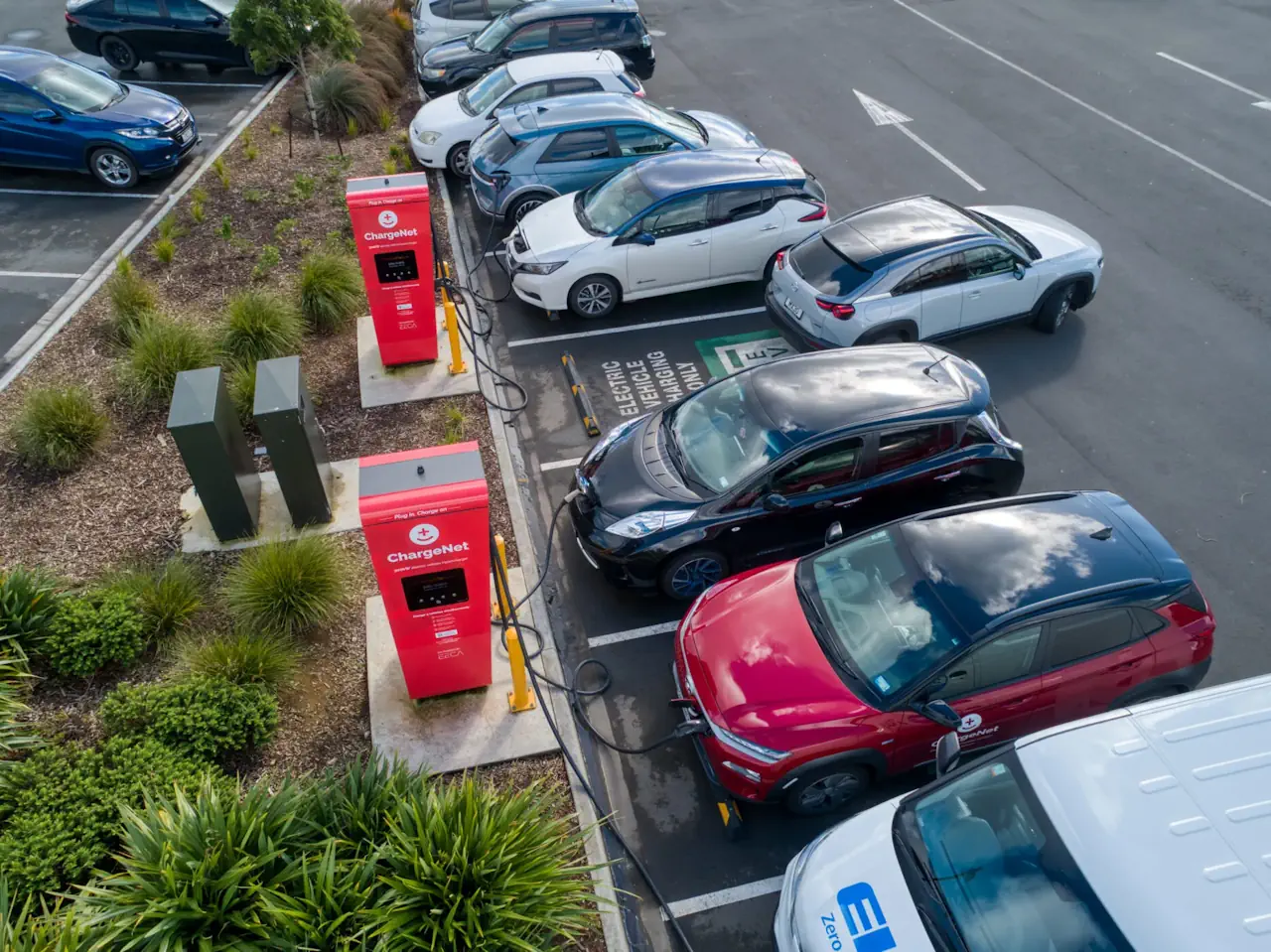
Wellington, New Zealand – In a significant move set to accelerate the nation’s transition to electric vehicles, the New Zealand government has announced a comprehensive co-funding initiative with two leading private operators. This strategic partnership will see an investment exceeding NZ$110 million aimed at deploying more than 2,500 additional EV chargers across the country.
The ambitious plan, unveiled on Monday, involves a substantial financial commitment from the government. It will provide NZ$52.7 million in zero-interest loans, a critical incentive designed to de-risk investment in charging infrastructure. Complementing this, a further NZ$60 million will be invested by the private sector, split between ChargeNet, New Zealand’s foremost EV charging network, and Meridian Energy, a utility known for its 100 per cent renewable electricity generation.

Breaking the EV Adoption Deadlock
This collaborative investment is projected to add 2,574 new charge points to New Zealand’s network, comprising 1,374 DC fast chargers and 1,200 AC chargers. This expansion is poised to effectively double the existing number of EV chargers nationwide, marking a pivotal moment for electric mobility.
Chris Bishop, New Zealand’s Transport Minister, articulated the core challenge this initiative aims to overcome. He noted, “Many New Zealanders have thought about getting an EV, even before the fuel challenges we’re currently facing. But research shows that the lack of public chargers is holding many back from making the switch to an EV.”
Minister Bishop further elaborated on the common dilemma, stating, “The private sector is reluctant to invest in charging infrastructure until there’s sufficient demand, but demand won’t grow until the lack of public chargers stops putting buyers off. Just as the previous National-led government did with the ultrafast broadband network rollout, we’re taking action to break that deadlock.” This analogy highlights the government’s proactive stance in stimulating essential infrastructure development.
Strategic Investment by Key Industry Players
Under the terms of the agreement, ChargeNet has been allocated NZ$37.7 million. The company is committed to matching this amount dollar-for-dollar, funneling the combined resources into its extensive “PowerUp” rollout. This program is slated to deliver over 1,700 new charging points across New Zealand by 2030, significantly enhancing the network’s density and reach.
Meridian Energy, on the other hand, will receive NZ$15 million from the government through matched concessionary loans. This funding will support Meridian’s rollout of 900 new charge points, further contributing to the nationwide expansion of EV chargers and ensuring greater accessibility for electric vehicle owners.
The structured co-funding model, leveraging both public support and private expertise, is designed to rapidly scale the deployment of critical infrastructure. Zero-interest and concessionary loans reduce the financial burden on private companies, encouraging faster and more widespread investment than market forces alone might achieve.
Expanding Reach: Urban Centres and Regional Accessibility
The strategic distribution of these new EV chargers is a key component of the plan. Approximately half of the 2,574 new charge points are earmarked for New Zealand’s main population centres. These include Auckland, Hamilton, Tauranga, the Wellington region, Christchurch, and Dunedin, where the concentration of electric vehicles and potential users is highest.
Crucially, the other half of the new EV chargers will be strategically dispersed throughout the country’s regions. This regional deployment addresses a significant concern for EV owners, particularly those embarking on longer journeys, by mitigating range anxiety and ensuring that electric vehicle travel is viable across the entire nation.
Ensuring equitable access to charging infrastructure, regardless of geographical location, is vital for encouraging widespread EV adoption. This balanced approach is expected to provide confidence to potential buyers in both metropolitan and rural areas.
Path to 10,000 EV Chargers by 2030
Minister Bishop provided an overview of the current EV charging landscape and the government’s ambitious future targets. “New Zealand currently has a bit over 1,800 public charge points, which is among the lowest charger-to-EV ratios in the OECD,” he stated, underscoring the urgency of the expansion.
He added that an additional 161 charge points are presently under development. With the integration of the investment announced, the national total of public EV chargers is projected to reach approximately 4,550. This represents a substantial leap forward, laying a robust foundation for future growth.
Looking ahead, the government has set a definitive target: “The Government is working towards 10,000 charge points by 2030, roughly one for every 40 EVs.” This long-term vision highlights a commitment to building a comprehensive and future-proof charging network that can support a significantly larger electric vehicle fleet.
Achieving 10,000 EV chargers by 2030 would not only place New Zealand among leading nations in terms of charging infrastructure but also solidify its commitment to sustainable transport and climate goals. This initiative is a critical step in transforming New Zealand’s automotive landscape, making electric vehicles a practical and accessible choice for all its citizens.