
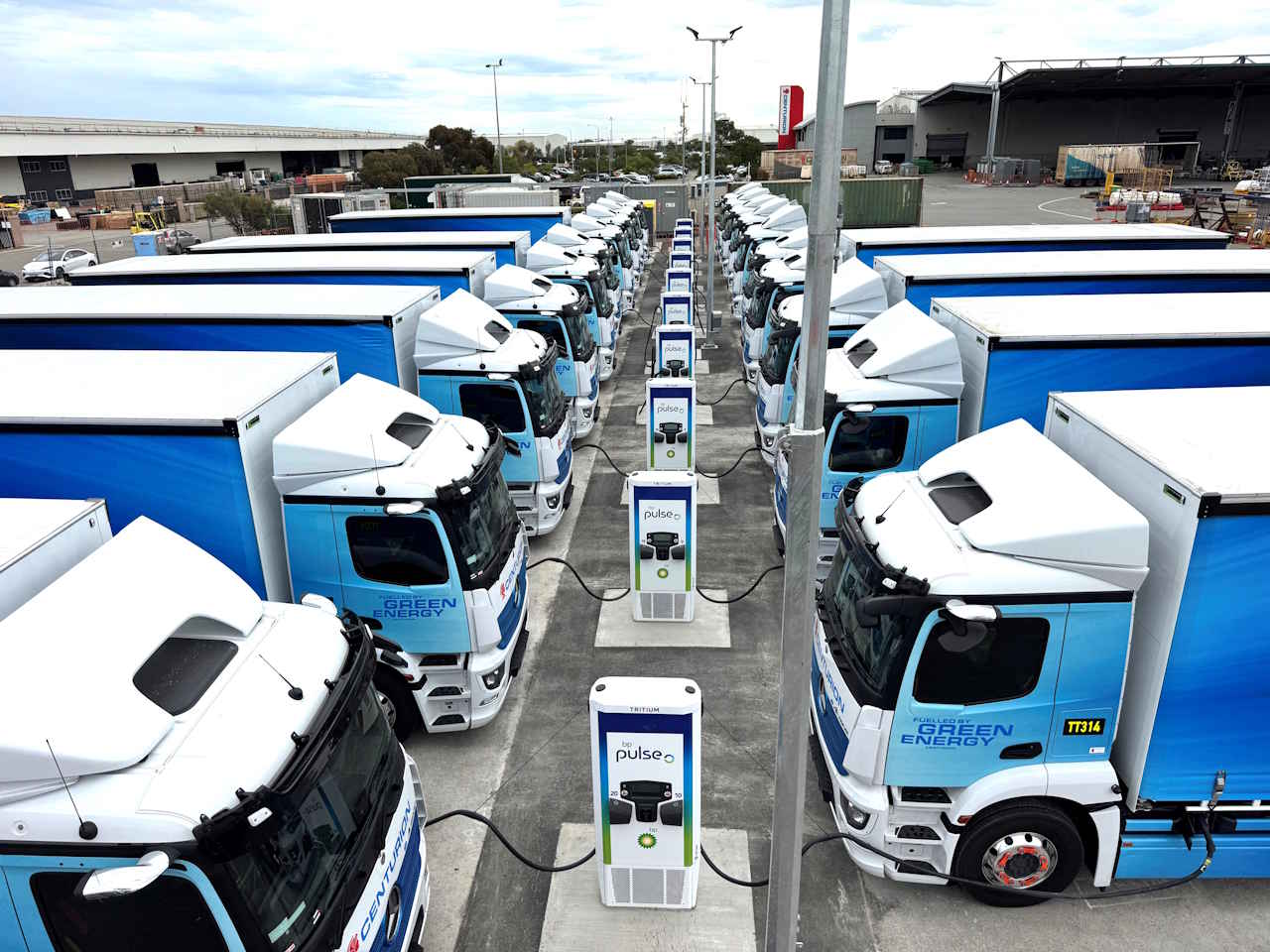
In a significant stride towards fostering sustainable transport and bolstering economic resilience, the Victorian Labor government has launched two pivotal initiatives designed to assist the state’s vital freight industry. These programs aim to alleviate the financial burden of soaring fuel costs while paving the way for a transition to cleaner, low and zero-emission vehicles and associated infrastructure.
Applications are now officially open for these newly unveiled programs. They represent a concerted effort by the government to empower freight operators across Victoria to invest strategically in advanced low and zero-emission vehicles, essential charging infrastructure, and innovative transport technologies. The overarching goal is to reduce operational expenditures and enhance efficiency within a sector critical to the state’s economic fabric.

Strategic Investment to Ease Fuel Burdens and Modernise Fleets
The introduction of the Freight Decarbonisation Co-Investment Program and the Victorian Electric Heavy Vehicle Trial comes at a crucial time, particularly in light of recent fluctuations and crises impacting global fuel prices. These initiatives are specifically engineered to provide tangible support, enabling businesses to mitigate their reliance on traditional fuels and embrace more economically viable and environmentally sound alternatives.
Minister for Ports and Freight, Melissa Horne, underscored the urgency and benefits of these new measures. “We know the cost of fuel is hurting our freight operators which is why rolling out these programs will help freight businesses cut costs, boost efficiency and modernise their fleets for the future,” Minister Horne stated. She further emphasised the practical advantages, adding, “We’re making it easier for operators to save on running costs while transitioning to cleaner, more reliable technology.” This sentiment highlights the dual focus on immediate cost relief and long-term sustainability for Victoria’s freight sector.
The Cornerstone of Victoria’s Economy: A Growing Freight Sector
Victoria’s freight industry plays an indispensable role in the state’s economy, serving as the backbone for commerce and connectivity. This robust sector provides employment for approximately 240,000 individuals and is responsible for the movement of an estimated 440 million tonnes of freight annually. With projections indicating a steady increase in freight volumes in the coming decades, the imperative for efficient, cost-effective, and environmentally responsible transport solutions becomes increasingly clear.

The long-term growth trajectory of the freight sector underscores the strategic importance of early investment in decarbonisation. By supporting businesses in adopting low and zero-emission vehicles now, the government aims to future-proof the industry, ensuring it remains competitive and sustainable amidst evolving environmental regulations and market demands. These programs are designed not just as a response to current challenges but as a proactive step towards a resilient future.
Unpacking the Freight Decarbonisation Co-Investment Program
At the forefront of Victoria’s commitment to cleaner transport is the substantial $8 million Freight Decarbonisation Co-Investment Program. This initiative is structured to offer significant financial assistance, providing grants of up to $300,000 to eligible small and medium-sized freight businesses. The funding is earmarked for investments across a spectrum of sustainable solutions, including cleaner vehicles, advanced charging infrastructure, the adoption of low-emissions fuels, and the integration of new, innovative technologies.
A key feature of this program is its co-investment model, which requires successful grant recipients to contribute financially alongside the government. This mechanism ensures shared commitment and accountability. Specifically, the program mandates a co-investment ratio of 1:5, meaning that for every five dollars received in grant funding, the business must contribute one dollar in cash. For example, a business securing the maximum grant of $300,000 would be required to provide a co-investment of $60,000 in cash. This model aims to foster genuine partnership and encourage thoughtful, strategic investments.
Freight operators interested in leveraging this opportunity must act swiftly, as expressions of interest for the Freight Decarbonisation Co-Investment Program are scheduled to close at 4:00 PM on Wednesday, 22 April 2026. Further comprehensive information regarding eligibility criteria and application procedures is available.
Launching the Victorian Electric Heavy Vehicle Trial
Complementing the co-investment program is the $1.5 million Victorian Electric Heavy Vehicle Trial, a dedicated initiative focused on practical, real-world experience. Delivered in close partnership with the Victorian Transport Association (VTA), this trial is designed to provide freight businesses with firsthand exposure to the operational realities and benefits of electric heavy vehicles.
The trial is expected to generate invaluable data and insights into the performance, charging requirements, and overall feasibility of integrating electric vehicles into existing freight operations. This practical experience will be crucial in informing future policy, infrastructure development, and industry adoption strategies for low and zero-emission vehicles. While specific details regarding the trial’s full scope, participating businesses, and timelines have not yet been publicly released, updates are anticipated as the program progresses.
Industry Voices Champion Decarbonisation Efforts
The announcement of these programs has been met with a positive reception from key industry stakeholders. The Victorian Transport Association (VTA), a prominent advocacy body for the state’s freight sector, warmly welcomed the government’s proactive stance. Peter Anderson, CEO of the VTA, commended the administration for its insightful approach, acknowledging the significant challenges ahead. He praised the government for “recognising the scale of the decarbonisation challenge and for supporting freight operators with meaningful, hands‑on programs.”
Anderson elaborated on the VTA’s long-standing advocacy for a carefully considered and well-informed transition, emphasizing the importance of timing for businesses. “The VTA has consistently advocated for a measured, informed transition so that freight companies can adopt cleaner technologies when it makes operational and commercial sense,” he stated. He also highlighted the foundational importance of the current initiatives, concluding, “While this shift will take years, the most important step is beginning with knowledge, clarity, and a plan.” These sentiments reflect a shared vision for a sustainable and efficient future for Victoria’s freight industry, built on collaboration and practical support for low and zero-emission vehicles.