
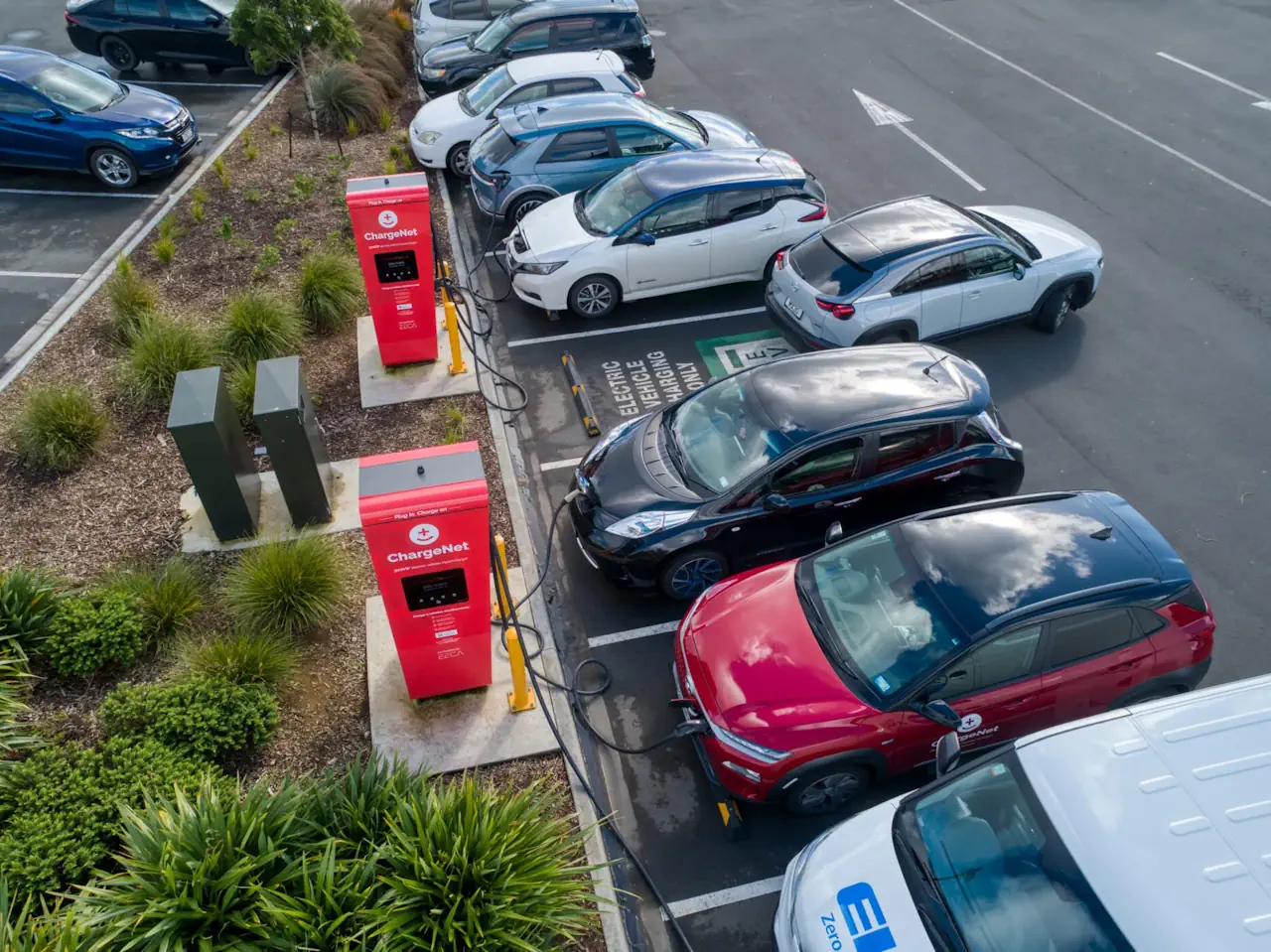
Wellington, New Zealand – In a significant move set to accelerate the nation’s transition to electric vehicles (EVs), the New Zealand government has announced a substantial co-funding agreement with two prominent private operators. This collaborative effort will inject more than $110 million into the expansion of the country’s EV charging network, aiming to deliver over 2,500 additional charging points nationwide.
The ambitious initiative, unveiled on Monday, sees the government commit $NZ52.7 million in zero-interest loans. This crucial public investment is complemented by an additional $NZ60 million from ChargeNet, New Zealand’s leading EV charging network, and Meridian Energy, a 100 per cent renewable electricity utility. The combined funding is poised to effectively double the number of EV chargers across New Zealand, addressing a critical barrier to wider EV adoption.

Strategic Investment to Boost EV Uptake
This landmark co-funding deal underscores the government’s commitment to fostering a robust electric vehicle ecosystem. The investment is strategically designed to mitigate range anxiety and enhance convenience for current and prospective EV owners, thereby encouraging a broader shift away from fossil-fuel-powered transport.
According to the terms of the agreement, the two private companies are tasked with installing a total of 2,574 new charge points. This comprehensive rollout will include 1,374 high-speed DC fast chargers and 1,200 AC chargers, catering to diverse charging needs from rapid top-ups to overnight charging solutions.
Government’s Role and Private Sector Collaboration
The government’s provision of $NZ52.7 million in zero-interest loans is a pivotal component of this strategy. This financial mechanism is designed to de-risk investments for the private sector, encouraging the necessary infrastructure development that might otherwise face significant upfront capital challenges.

ChargeNet, identified as a key player in New Zealand’s EV charging landscape, has been awarded $NZ37.7 million. The company has pledged to match this government contribution dollar-for-dollar for its ambitious “PowerUp” rollout. This programme aims to deploy over 1,700 new charging points across the country by the year 2030, marking a substantial expansion of its existing network.
Similarly, Meridian Energy will receive $NZ15 million in matched concessionary loans from the government. This funding is earmarked for the rollout of an additional 900 charge points. Meridian Energy’s participation, alongside ChargeNet, ensures a diversified and widespread expansion of the charging infrastructure, leveraging the expertise of established energy and charging providers.
Addressing the Public Charging Deficit
New Zealand’s Transport Minister, Chris Bishop, articulated the rationale behind the government’s intervention, highlighting the existing challenges in EV adoption. “Many New Zealanders have thought about getting an EV, even before the fuel challenges we’re currently facing. But research shows that the lack of public chargers is holding many back from making the switch to an EV,” Minister Bishop stated.
He further elaborated on the economic and market dynamics hindering private investment. “The private sector is reluctant to invest in charging infrastructure until there’s sufficient demand, but demand won’t grow until the lack of public chargers stops putting buyers off. Just as the previous National-led government did with the ultrafast broadband network rollout, we’re taking action to break that deadlock.” This proactive approach mirrors successful public-private partnerships in other critical infrastructure sectors.
Geographical Distribution of New Chargers
The strategic deployment of these new EV chargers will be balanced across urban and regional areas to ensure equitable access. Approximately half of the new charge points are slated for installation in New Zealand’s primary population centres. These include major cities such as Auckland, Hamilton, Tauranga, the greater Wellington region, Christchurch, and Dunedin, where EV penetration is already higher.
The remaining half of the chargers will be distributed throughout the country’s regions. This regional focus is critical for enabling long-distance EV travel and ensuring that residents in less densely populated areas also benefit from the expanding network, thereby addressing concerns about inter-city and rural connectivity for electric vehicles.
Current Landscape and Future Ambitions
Minister Bishop provided a candid assessment of New Zealand’s current standing in terms of charging infrastructure. “New Zealand currently has a bit over 1,800 public charge points, which is among the lowest charger-to-EV ratios in the OECD,” he noted, underscoring the urgency of the new investment.
He also highlighted ongoing efforts, stating, “Another 161 charge points are also in progress.” With the integration of the newly announced investment, the national total of public charging points is projected to reach approximately 4,550. This substantial increase represents a significant leap towards the government’s broader objective.
Pathway to 10,000 Chargers by 2030
Looking ahead, the New Zealand government has set an ambitious target to reach 10,000 public charge points nationwide by 2030. This long-term vision aims for a ratio of roughly one charger for every 40 electric vehicles, a standard that would position New Zealand among leading nations in EV infrastructure provision. The current co-funding deal is a foundational step in achieving this overarching goal.
Driving a Sustainable Transport Future
The investment in electric vehicle charging infrastructure is not merely about convenience; it is a vital component of New Zealand’s broader climate change mitigation strategy. By facilitating the transition to electric transport, the nation aims to reduce its reliance on imported fossil fuels, enhance energy security, and significantly lower transport-related greenhouse gas emissions.
This public-private partnership exemplifies a collaborative approach to tackling national infrastructure challenges. By providing strategic funding and fostering an environment conducive to private investment, the government is actively shaping a more sustainable and accessible transport future for all New Zealanders.
The doubling of EV chargers through this comprehensive funding deal marks a pivotal moment for electric mobility in New Zealand, setting the stage for accelerated growth in electric vehicle adoption and reinforcing the country’s commitment to environmental stewardship.