
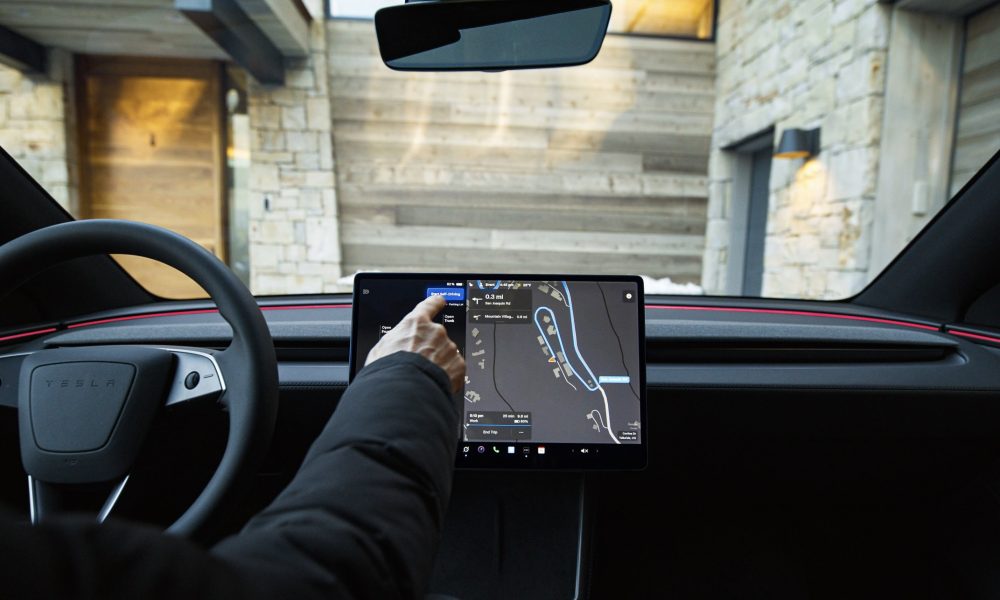
The National Highway Traffic Safety Administration (NHTSA) has significantly advanced its scrutiny of Tesla’s advanced driver-assistance system, Full Self-Driving (Supervised), by elevating its ongoing probe to an Engineering Analysis. This critical development signals a deeper and more intensive examination of the technology’s capabilities and safety protocols.
This comprehensive analysis is poised to impact an estimated 3.2 million Tesla vehicles across the company’s entire product lineup. The primary objective of this escalated investigation is to meticulously identify and assess the functionality of the suite’s degradation detection systems, alongside their overall effectiveness when these vehicles encounter challenging visibility conditions on public roadways.

Understanding the Engineering Analysis
An Engineering Analysis represents a pivotal stage in NHTSA’s investigative process. It signifies that the agency has gathered sufficient preliminary data and identified potential safety concerns warranting a more thorough and technical evaluation.
While this escalation is often a necessary precursor for NHTSA to issue a recall order to an automaker, it is important to note that it does not automatically guarantee such an outcome. The agency will now delve into highly detailed technical reviews, data analysis, and potentially real-world testing to determine if a safety defect exists.
This rigorous phase allows investigators to collect more extensive information, conduct specialized tests, and engage directly with the manufacturer to understand the design, performance, and safety parameters of the system in question.

Scope of the Investigation: 3.2 Million Vehicles
The sheer scale of the probe is noteworthy, encompassing approximately 3.2 million Tesla vehicles. This figure represents a vast portion of Tesla’s fleet currently equipped with or capable of utilizing the Full Self-Driving (Supervised) software.
The broad scope underscores NHTSA’s commitment to ensuring the safety of advanced driver-assistance systems across a wide user base. By examining vehicles across the company’s entire lineup, the agency aims to ascertain if any identified issues are systemic or confined to specific models or software versions.
This extensive reach highlights the potential implications for both Tesla and the broader automotive industry, particularly as autonomous and semi-autonomous technologies continue to integrate into mainstream vehicles.
Core Concerns: Degradation Detection and Visibility
At the heart of NHTSA’s Engineering Analysis lies a specific focus on how the Tesla Full Self-Driving system handles degraded driving conditions, particularly those involving reduced visibility. The agency is keenly interested in the system’s ability to recognize when its sensors, primarily cameras, are compromised.
Furthermore, the investigation seeks to evaluate whether the system adequately alerts the driver in a timely manner when such degradation occurs, providing sufficient time for human intervention and control.
FSD’s Performance in Challenging Conditions
The Office of Defects Investigation (ODI), a division of NHTSA, will thoroughly assess the performance of **Tesla Full Self-Driving** under various degraded roadway conditions. These conditions can include environmental factors like heavy rain, snow-covered roads, dense fog, intense glare from sunlight, and airborne obscurants such as dust or spray.
The investigation will scrutinize how effectively the system detects these challenging scenarios and whether it provides appropriate warnings or limitations to the driver. The agency aims to understand if the system’s reliance on camera-based perception maintains reliability when visibility is significantly impaired.
Role of Software Updates in Scrutiny
Tesla is well-known for its practice of frequently shipping over-the-air software updates to enhance the capabilities and refine the performance of its **Tesla Full Self-Driving** suite. The ODI’s evaluation will therefore extend to examining these updates or modifications made to the degradation detection system.
Investigators will analyze the timing, explicit purpose, and the specific capabilities introduced by these software revisions. This includes determining whether different versions of the FSD software, deployed over time, exhibit varying levels of effectiveness in identifying and responding to degraded visibility conditions, as this could influence the scope of any potential remedies.
Incident Data Driving the Probe
The decision to escalate the probe was not made in a vacuum; it stems from a careful review of available incident data. NHTSA’s findings indicate specific concerns regarding the effectiveness of **Tesla Full Self-Driving** in real-world scenarios where visibility was compromised.
The agency’s report highlights a pattern of potential shortcomings that have prompted this higher level of scrutiny, focusing on the system’s ability to operate safely when its primary sensory inputs are challenged.
Critical Failures Identified by NHTSA
NHTSA has explicitly detailed the issues that are driving this Engineering Analysis. The agency stated, “Available incident data raise concerns that Tesla’s degradation detection system, both as originally deployed and later updated, fails to detect and/or warn the driver appropriately under degraded visibility conditions such as glare and airborne obscurants. In the crashes that ODI has reviewed, the system did not detect common roadway conditions that impaired camera visibility and/or provide alerts when camera performance had deteriorated until immediately before the crash occurred.”
The agency’s review of Tesla’s responses to prior inquiries further revealed additional crashes. In these instances, which occurred in similar environments with compromised visibility, the FSD system “did not detect a degraded state, and/or it did not present the driver with an alert with adequate time for the driver to react. In each of these crashes, FSD also lost track of or never detected a lead vehicle in its path.” These observations underscore critical safety concerns regarding the system’s perception and response capabilities under stress.
Path Forward: Next Steps for the Agency
As the Engineering Analysis progresses, NHTSA will undertake several crucial steps. A key part of this phase involves gathering more detailed information from Tesla concerning its efforts to upgrade and enhance the degradation detection system within **Tesla Full Self-Driving**. This includes requesting technical documentation, testing procedures, and data related to system improvements.
Additionally, the agency will conduct an in-depth analysis of six recent incidents that have been identified as potentially related to the concerns being investigated. These specific incidents will provide critical data points for evaluating the system’s real-world performance and its adherence to safety standards.
The investigation, officially designated as EA26002, will meticulously examine these aspects to determine if a safety defect exists that warrants a recall or other regulatory action. The findings of this analysis will be instrumental in shaping future policy and safety guidelines for advanced driver-assistance systems.
Broader Implications for Autonomous Driving
This intensified probe into **Tesla Full Self-Driving** extends beyond the confines of a single manufacturer; it carries significant implications for the entire autonomous driving industry. Regulatory bodies worldwide are grappling with the complexities of advanced driver-assistance systems and the balance between innovation and public safety.
The outcome of NHTSA’s Engineering Analysis could set precedents for how similar systems are evaluated, developed, and deployed by other automotive companies. It underscores the critical importance of robust degradation detection and reliable performance across all environmental conditions for any system purporting advanced autonomy.
Furthermore, it highlights the ongoing challenge of defining the precise roles and responsibilities of both the automated system and the human driver in supervising these technologies, particularly during unforeseen or difficult circumstances on the road.
Conclusion
NHTSA’s escalation of its probe into Tesla’s Full Self-Driving (Supervised) system to an Engineering Analysis marks a significant moment in the regulation of autonomous vehicle technology. With 3.2 million vehicles under scrutiny, the focus on degradation detection and performance in compromised visibility conditions is paramount.
The agency’s detailed examination, driven by identified incident data, will be crucial in determining the path forward for **Tesla Full Self-Driving** and could influence safety standards across the industry, ensuring that advanced driver-assistance systems meet stringent safety criteria before widespread deployment.