
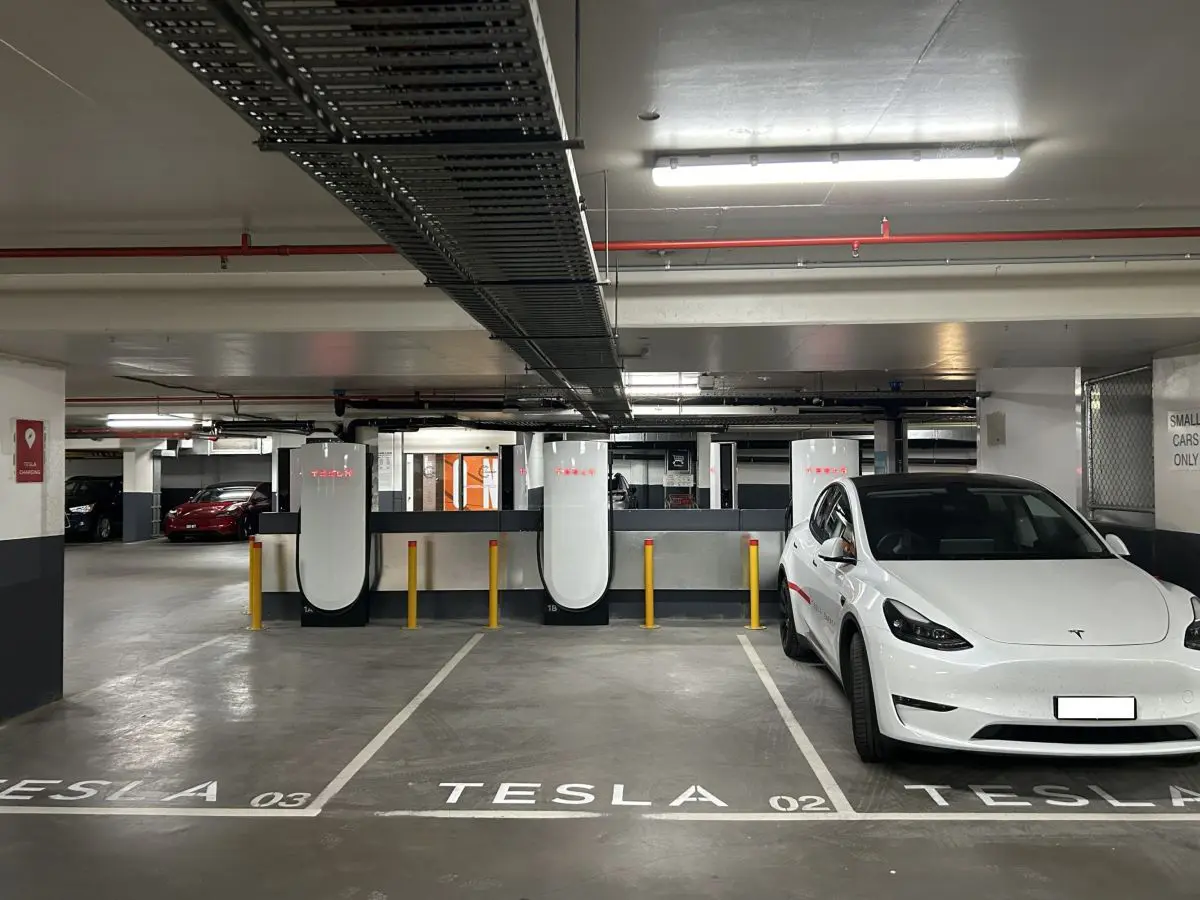
Tesla is significantly intensifying its efforts to build out a more robust and faster electric vehicle charging ecosystem by exclusively focusing on its advanced 500 kW V4 Supercharger cabinets. This strategic shift marks a pivotal moment for the global Tesla Supercharger network, signaling a definitive move towards higher power capabilities and enhanced operational efficiency across its vast charging infrastructure.
The company recently announced the cessation of production for its preceding V3 cabinets, a workhorse that underpinned much of Tesla’s rapid expansion over the past seven years. This transition underscores Tesla’s commitment to pushing the boundaries of EV charging technology, aiming to provide unparalleled charging speeds and a more streamlined deployment process for its rapidly growing fleet of electric vehicles and other compatible models.

A New Era in Electric Vehicle Charging
Earlier this year, Tesla commenced the rollout of its next-generation 500 kW Superchargers, a leap forward that promises to effectively double the charging speed when compared to previous generations. This substantial upgrade is primarily attributed to the innovative V4 Supercharger power cabinet, which forms the core of Tesla’s latest charging technology.
The introduction of the V4 cabinet is not merely an incremental improvement; it represents a fundamental architectural change designed to meet the escalating demands of modern electric vehicles, including those with advanced battery architectures. As the electric vehicle market continues its exponential growth, the need for faster, more efficient, and universally compatible charging solutions becomes paramount, a challenge Tesla aims to address with its new V4 system.
Transition from V3: A Seven-Year Legacy Concludes
In a significant announcement, Tesla confirmed the end of production for its long-standing V3 cabinets, concluding a remarkable seven-year run during which over 15,000 units were manufactured and deployed worldwide. This milestone was publicly shared by the company’s official ‘Tesla Charging’ account on X, formerly Twitter, highlighting the transition.

The social media post stated, “Gigafactory New York built their last V3 Supercharger cabinet, marking the end to 15k+ V3 cabinets over 7 years. V4 cabinet line is ramping up!” This declaration effectively signals a complete organizational pivot towards the newer technology, signifying the end of an era for the V3 system which has been instrumental in establishing Tesla’s dominance in the EV charging space.
The V3 cabinets, initially launched to much acclaim, provided significant improvements over their V2 predecessors, offering higher power output and a more seamless user experience. Their extensive deployment laid the groundwork for the robust Tesla Supercharger network that millions of EV owners rely on today. The decision to cease V3 production reflects a matured technology cycle and the readiness to embrace more advanced infrastructure.
Unpacking the Power of V4 Superchargers
The V4 Supercharger cabinet introduces a host of technological advancements designed to enhance charging performance and operational flexibility. A key feature is its ability to operate within a broad voltage range of 400-1,000 V. This wide operational voltage is crucial for supporting a diverse array of modern electric vehicles, including those built on 800 V architectures.
Vehicles from manufacturers such as Hyundai, Kia, Porsche, and notably Tesla’s own Cybertruck, are designed with 800 V systems, which allow for significantly faster charging times. By supporting these higher voltages, the V4 cabinets ensure that a wider range of high-performance EVs can benefit from optimal charging speeds, thereby democratizing access to rapid replenishment and shortening journey times for drivers.
Tesla first revealed the upgraded capabilities of its V4 Supercharging cabinets in November 2024, emphasizing their potential to deliver charging speeds of up to 500 kW per stall for compatible passenger cars. For larger commercial vehicles, such as the Tesla Semi, the power delivery could potentially reach an impressive 1.2 MW per stall, underscoring the system’s scalability and future-proofing for heavy-duty electric transport.
Beyond raw power, the V4 system also enhances site efficiency. The next-generation system is engineered to support up to eight charging stalls per cabinet, doubling the capacity of the current V4 sites which typically support four stalls. This increased density per cabinet allows for more efficient use of space and resources at each Supercharger location.
Max de Zegher, director of Tesla charging in North America, elaborated on this aspect when the V4 cabinet system was initially announced, stating: “Posts can peak up to 500kW for cars, but we need less than 1MW across 8 posts to deliver maximum power to cars 99% of the time.” This insight highlights the intelligent power management capabilities of the V4 system, ensuring consistent high-speed charging even when multiple vehicles are connected.
Global Deployment Strategy and Network Expansion
While the New York Supercharger Gigafactory has definitively transitioned to producing V4 supercharging cabinets, the status of the Shanghai supercharger factory’s transition remains less clear. However, it is widely anticipated that Tesla will seek to harmonize production of these critical power cabinets across all its manufacturing facilities to streamline its global supply chain and accelerate deployment.
This coordinated manufacturing strategy suggests that the advanced V4 cabinets are likely to become standard issue for new Supercharger installations worldwide. Markets such as Australia are expected to see these new cabinets deployed later this year, enabling high-powered charging for an increasing number of EV drivers across the continent.
Tesla has explicitly stated that the new V4 cabinets and their associated electrical setup are designed to reduce complexity in installation, decrease deployment costs, and, crucially, minimize the physical space required for power cabinets at each site. These efficiencies are vital for accelerating the rollout of new Supercharger locations, particularly as electric vehicle adoption continues to reach unprecedented highs in key markets like the United States and Australia.
Faster and more cost-effective site deployments are critical for keeping pace with the rapid increase in EV sales. By simplifying the infrastructure requirements, Tesla can more readily establish charging stations in diverse locations, including urban centers, rural routes, and along major highways, thereby expanding the accessibility and convenience of EV travel.
Enhanced Efficiency and Cost Implications
The operational efficiencies brought by the V4 cabinets extend beyond mere installation. The reduced complexity and deployment costs are expected to translate into ongoing benefits for consumers. By lowering the overheads associated with building and maintaining its Tesla Supercharger network, the company can potentially sustain competitive pricing for its charging services.
This is particularly relevant in a market where electricity prices for high-powered charging networks can fluctuate significantly, with some competing networks reportedly approaching rates of 90 cents per kilowatt-hour (c/kWh). By leveraging the cost-effectiveness of the V4 system, Tesla aims to maintain its reputation for providing value-driven charging solutions, thereby supporting wider EV adoption by making the total cost of ownership more appealing.
As Tesla approaches 150 Supercharger sites nationally in Australia and continues its aggressive expansion globally, the deployment of this new hardware is expected to play a significant role in reducing overall network operating costs. This strategic advantage helps Tesla differentiate itself in an increasingly crowded EV charging landscape, reinforcing its leadership position and ensuring long-term sustainability for its charging infrastructure.
Driving the Future of EV Adoption
Tesla’s decision to concentrate solely on its 500 kW V4 Supercharger cabinets represents a bold step towards future-proofing its global EV charging infrastructure. This move not only addresses the immediate demand for faster charging but also lays the groundwork for accommodating future advancements in battery technology and the broader expansion of the electric vehicle market.
By streamlining production, enhancing power capabilities, and reducing deployment complexities, Tesla is poised to accelerate the build-out of its Supercharger network, making high-speed, reliable EV charging more accessible than ever before. This continuous innovation in the Tesla Supercharger network is crucial for overcoming charging anxieties, encouraging more consumers to embrace electric mobility, and ultimately contributing to a more sustainable transportation future.