
Key Takeaways: A Strategic Shift in EV Charging
- New research suggests that a higher number of charging plugs, rather than ultra-high power output, is key to boosting utilisation rates and profitability for EV charging networks.
- A white paper by Kempower, an EV charging hardware and software provider, highlights that stations with more charging points see significantly higher revenue and faster return on investment.
- The data indicates that while high-power stations (e.g., 400 kW) show a marginal increase in utilisation over lower-power ones (e.g., 100 kW), expanding the number of plugs from two to eight can multiply utilisation rates by nearly five times.
- The optimal power output for maximising charging station utilisation is approximately 100 kW, as most electric vehicles rarely sustain their advertised peak charging rates.
- Operators are advised to adopt a distributed power approach, similar to Tesla Superchargers, allowing for scalable and flexible EV charging infrastructure development.
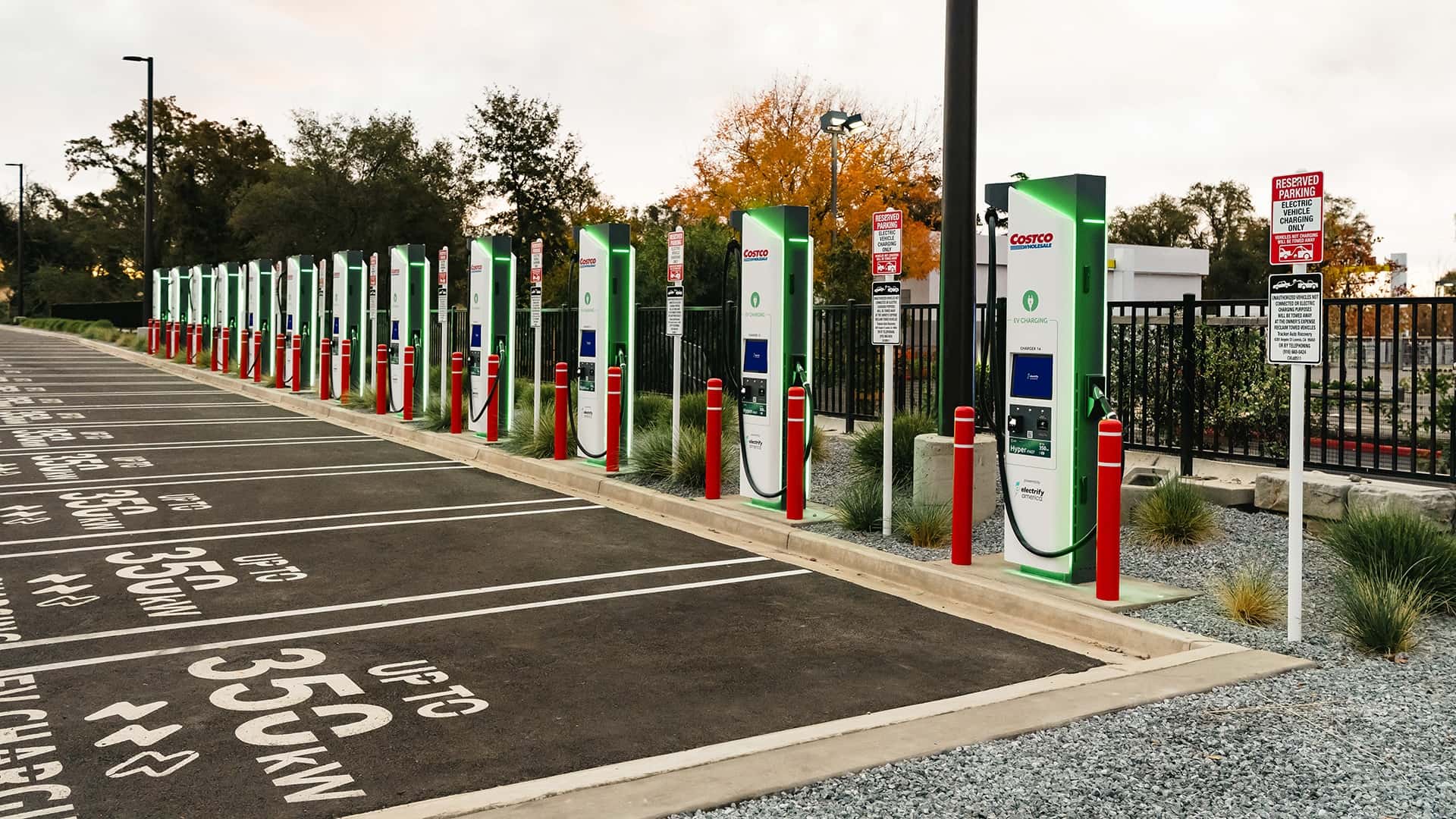
The race to deploy ultra-fast electric vehicle (EV) chargers capable of adding hundreds of miles of range in mere minutes has often dominated headlines. However, a recent analysis challenges this high-power narrative, suggesting that sheer kilowatt output might be less critical for the commercial viability of EV charging infrastructure than previously thought. The focus, according to new research, should shift towards the quantity of charging points rather than just their peak power.
A comprehensive white paper published by Kempower, a Finnish firm specialising in EV charging hardware and management software, argues that for charging networks to achieve profitability and sustainable operations, a strategic pivot towards installing more plugs, even if they offer less power individually, is essential. The findings, derived from extensive North American charging data from the company’s ChargEye analytics platform, illuminate a surprising correlation between the number of available charging points and overall station utilisation.

The Core Argument: Quantity Over Raw Power
Kempower’s study posits a fundamental re-evaluation of EV charging infrastructure development. It asserts that the total installed power at a charging site has a minimal impact on its utilisation rate. Instead, the number of individual charging points emerges as the primary driver of how frequently a station is used by electric vehicles.
According to the company, “Installed power barely moves the needle.” This statement underscores a critical insight: an abundance of high-powered chargers doesn’t automatically translate to higher driver engagement or increased revenue. What truly matters is the accessibility and availability of charging options for a broader user base.
Maximising Utilisation for Sustainable EV Charging Infrastructure
The white paper strongly advocates that charging site utilisation escalates steadily as more charging points are integrated. This directly translates into higher revenue streams and a quicker return on investment for network operators, a crucial factor for the long-term sustainability of the burgeoning EV charging infrastructure sector.
For instance, the data indicates that a charging station equipped with eight plugs can deliver a utilisation rate three times higher than a smaller station that, despite having fewer stalls, boasts higher individual power outputs. This finding provides a compelling financial rationale for operators to prioritise expanding their plug count.
Dissecting the Data: Utilisation and Energy Delivery
The granular data presented in Kempower’s white paper offers compelling evidence. It highlights a relatively modest increase in utilisation rates when comparing stations based solely on power output. Stations operating at 100 kilowatts (kW) showed an approximate 3% utilisation rate, which only marginally increased to just over 5% for more powerful 400 kW stations.
In stark contrast, the impact of increasing the number of charging points was profound. Transitioning from a two-plug station to an eight-plug station saw utilisation rates surge from roughly 2% to nearly 10%. This nearly five-fold increase in utilisation demonstrates the significant advantage of providing more access points for electric vehicle drivers.
Energy Throughput and Financial Implications
Beyond mere utilisation rates, the study also examined the total energy delivered. Sites featuring eight plugs consistently delivered more than double the energy compared to four-plug sites. On average, eight-plug locations dispensed 128,342 kilowatt-hours (kWh) of energy, significantly more than the 61,453 kWh recorded at four-plug sites.
This substantial difference in energy throughput directly impacts profitability. Higher energy delivery means more revenue generated from charging sessions, solidifying the argument that an increased number of plugs is a more effective strategy for enhancing the financial performance of EV charging infrastructure.
Understanding Real-World EV Charging Dynamics
Kempower’s research also delves into the actual charging behaviour of electric vehicles. It suggests that the ideal power output for maximising the utilisation rate of a charging station, particularly when all connectors are actively in use, hovers around 100 kW. This recommendation stems from a crucial observation about how EVs typically charge.
Most electric vehicles rarely take full advantage of their advertised peak charging power for the entire duration of a charging session. Even if a manufacturer touts a peak rate of 300 kW, a typical 10% to 80% charging session often results in an average power input ranging from 100 kW to 150 kW. Factors such as battery temperature, state of charge, and the vehicle’s battery management system cause the charging speed to taper off as the battery fills.
Therefore, investing heavily in ultra-high-power chargers that often operate below their maximum capacity might not yield the expected returns in terms of efficiency and profitability. A more balanced approach, focusing on a robust number of moderately powerful plugs, appears to be the more economically sound strategy for building out comprehensive EV charging infrastructure.
The Strategic Advantage of Distributed Power Management
Kempower, founded in Finland in 2017, specialises in building EV charging stations that incorporate distributed power and dynamic power management systems. This technological approach mirrors that of pioneering networks like Tesla’s Superchargers, which are renowned for their efficiency and user experience.
The company advocates for this distributed power architecture, arguing that it offers significant advantages in the long run. By not centralising all power in a single, massive rectifier, operators can more easily scale their charging stations over time. This means additional stalls can be added later without requiring a complete overhaul or substantial reinvestment after the initial setup.
This flexibility is critical for an evolving market where demand for EV charging infrastructure is rapidly increasing and can fluctuate geographically. Dynamic power management allows the available power to be intelligently distributed among active charging vehicles, optimising charging speeds for each vehicle based on its needs and the station’s total capacity, thus enhancing overall efficiency and customer satisfaction.
Implications for India’s Growing EV Charging Infrastructure
As India continues its ambitious journey towards widespread electric vehicle adoption, the insights from Kempower’s white paper hold significant relevance for the development of the nation’s EV charging infrastructure. The findings suggest that focusing resources on building numerous, accessible charging points, even if they offer moderate power levels, could be a more pragmatic and profitable strategy than solely chasing ultra-high-speed, high-cost solutions.
For a country like India, where infrastructure development needs to be both extensive and economically viable, a strategy emphasising a higher density of charging plugs could lead to greater utilisation, quicker return on investment for operators, and ultimately, a more robust and dependable charging ecosystem for EV users. This approach could significantly accelerate the pace of EV adoption by alleviating range anxiety through increased availability of charging options across diverse urban and highway networks.
Conclusion: Reshaping the Future of EV Charging Infrastructure
The analysis from Kempower presents a pivotal shift in understanding the dynamics of profitable EV charging infrastructure deployment. It underscores that the perceived allure of ultra-fast charging might overshadow the practical, economic benefits of providing a greater number of accessible charging points. For operators aiming to build sustainable and profitable networks, the path forward appears to be paved with more plugs, rather than merely more power.
This research serves as a crucial guide for policymakers, investors, and charging network developers worldwide, including those in India, to refine their strategies. Prioritising the expansion of charging point availability, coupled with smart power management solutions, will likely be the cornerstone of a truly effective, highly utilised, and financially viable EV charging infrastructure in the years to come.
Frequently Asked Questions (FAQ)
What is the main finding of Kempower’s white paper on EV charging?
The primary finding is that increasing the number of charging plugs at a station significantly boosts its utilisation rate and profitability, more so than merely increasing the total power output. This suggests that accessibility and availability are more crucial for commercial success.
Why are more charging plugs better than higher power for EV charging infrastructure?
More plugs lead to higher utilisation because multiple vehicles can charge simultaneously, reducing wait times and increasing overall throughput. This drives higher revenue and a quicker return on investment for charging network operators, even if individual plug power is moderate.
What is the ideal power output for an EV charging station, according to the research?
The research suggests that an ideal power output of approximately 100 kW per charger is optimal for maximising station utilisation. This is because most EVs rarely sustain their advertised peak charging rates due to battery management and tapering, making ultra-high power largely underutilised.
How does distributed power management enhance EV charging infrastructure?
Distributed power management, as seen in Kempower’s systems and Tesla Superchargers, allows for flexible and scalable expansion of charging stations. It enables power to be dynamically allocated among active vehicles, optimising charging speeds and making it easier to add more charging points without significant upfront investment.
What impact do these findings have on the profitability of EV charging networks?
By focusing on increasing the number of plugs and achieving higher utilisation rates, charging networks can generate more revenue and ensure a faster return on their initial investment. This strategic shift moves away from potentially underutilised high-power investments towards a more economically sound model for EV charging infrastructure.
Did the study consider different types of electric vehicles?
While the paper doesn’t detail specific EV models, its conclusion about average charging rates (100-150 kW for 10-80% sessions, even for vehicles with 300 kW peak rates) inherently accounts for the varied charging behaviours and capabilities across the general EV fleet in North America.