
Tesla is embarking on a significant expansion of its renowned Supercharger network, with a strategic focus on supporting its burgeoning Robotaxi fleet. This move signals a pivotal step towards establishing a fully autonomous urban mobility service, necessitating a robust and specialized charging infrastructure.
Currently, the driverless electric cabs rely on the existing public Supercharger stations. During off-peak hours, typically at night, human operators manually plug in these vehicles for their charging needs. This interim solution, while functional, underscores the immediate necessity for a more integrated and automated charging ecosystem.
Key Takeaways
- Tesla is developing specialized Supercharger stations exclusively for its autonomous Robotaxi fleet.
- Presently, human operators manually charge Robotaxis at public Superchargers, primarily during night hours.
- The company envisions a future with fully automated charging, potentially through advanced wireless technology, exemplified by the Cybercab.
- These dedicated charging hubs are strategically planned for high-demand, cost-efficient locations to enhance operational efficiency and scale the Robotaxi service effectively.
The Strategic Imperative for Dedicated Robotaxi Charging Stations
Max de Zegher, who leads Tesla’s North American Charging unit, recently confirmed that the company is actively constructing specialized charging infrastructure tailored for its growing fleet of Robotaxis. This strategic shift is crucial for optimizing the operational efficiency and scalability of Tesla’s ambitious autonomous ride-hailing service.
The current reliance on public Superchargers, although manageable in the initial phase, presents inherent limitations for a large-scale commercial fleet. The need for human intervention to connect charging cables introduces labor costs and potential delays, counteracting the very essence of an autonomous operation. The development of dedicated Tesla Robotaxi Superchargers is designed to address these challenges head-on.
Transitioning from Manual to Automated Charging
Max de Zegher highlighted the temporary nature of the current manual charging process, stating, “They’re plugged in manually, but that’s just for now.” This statement strongly suggests Tesla’s intent to transition towards a fully automated charging system for its Robotaxis, eliminating the need for human operators.
While specific details on the future automation process were not extensively elaborated upon, the company has historically explored concepts such as robotic charging arms. However, the unveiling of the Cybercab provides a more recent and tangible direction for automated charging solutions.
Cybercab: A Glimpse into Wireless Charging for Autonomous Fleets
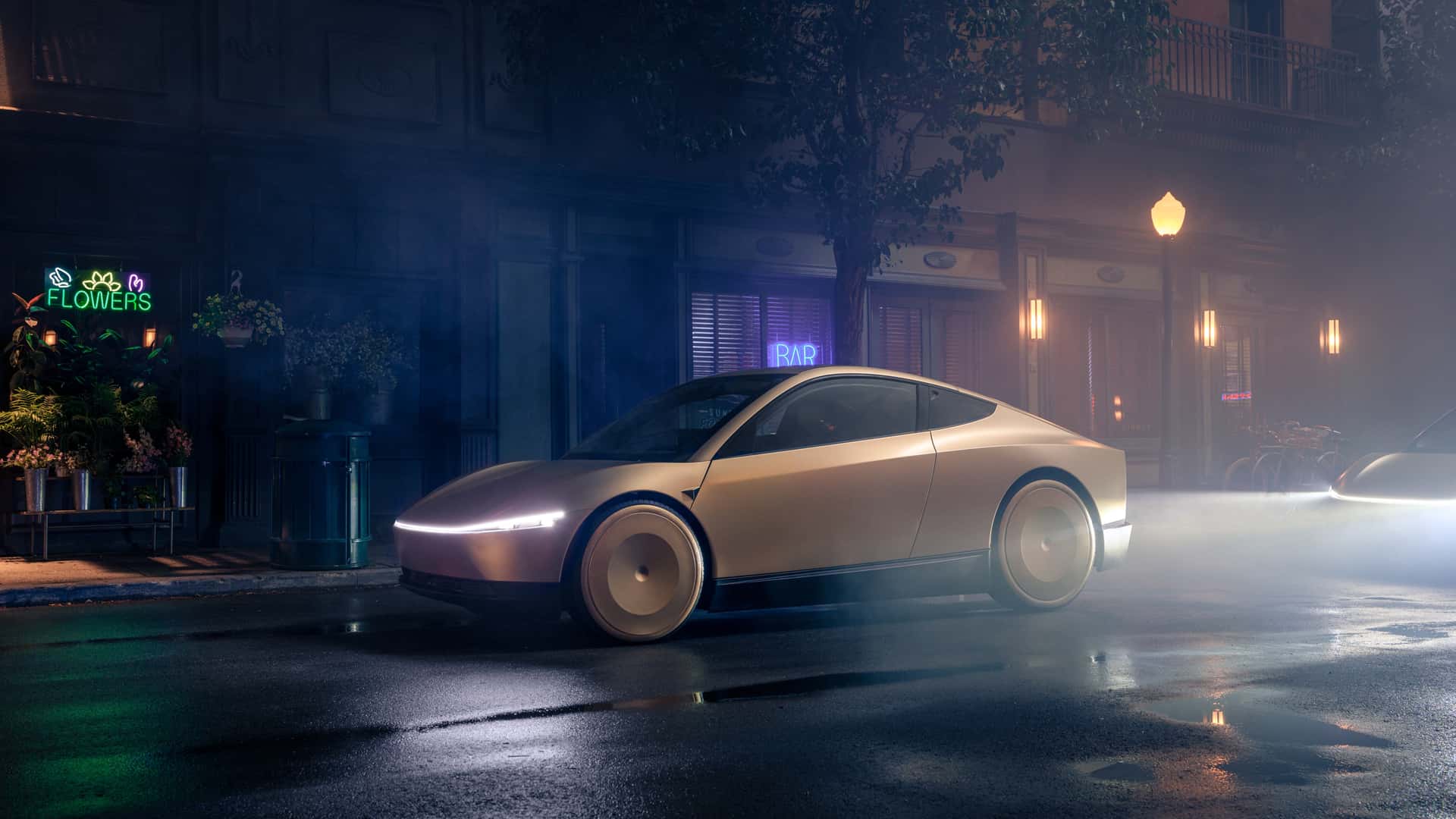
The key to fully autonomous charging for the new Cybercab, which was unveiled in 2024, appears to lie in wireless charging technology. Tesla has indicated that this two-door electric vehicle, notable for its gold hue and steering-wheel-less design, will exclusively support wireless charging.
This approach aligns perfectly with the vision of a future where vehicles operate without human intervention. Wireless charging allows autonomous vehicles to self-position over inductive charging pads, initiating a charge without any physical connection by an operator. This capability is paramount for streamlining fleet management and ensuring continuous service availability in a driverless world.
Performance Metrics of Cybercab Wireless Charging
A video released in October 2024 showcased a Cybercab undergoing wireless charging at a rate of up to 25 kilowatts. While this charging speed may not be considered “fast” by the standards of today’s high-power wired Superchargers, it is important to contextualize this performance within the Cybercab’s specifications.
According to documents filed with the Environmental Protection Agency, the Cybercab is equipped with a battery capacity of just 48 kilowatt-hours. Theoretically, a two-hour charging session at 25 kilowatts would be sufficient to achieve a full charge, making it a viable solution for dedicated operational cycles within a Robotaxi fleet.
Strategic Deployment of Dedicated Charging Infrastructure
The upcoming Tesla Robotaxi Superchargers will be strategically deployed in locations characterized by high demand for ride-hailing services, coupled with readily available and affordable land. Maintaining low capital expenditures (CapEx) is another critical factor in site selection, ensuring the economic viability of the extensive charging network.
The overarching goal behind these dedicated sites is to facilitate back-to-back charging sessions, thereby maximizing the utilization rates of each station. This optimization is fundamental for the profitability and efficiency of a large-scale Robotaxi business, ensuring that vehicles spend more time in service and less time waiting or traveling to distant charging points.
Managing Charging Logistics Across the Fleet
Until the dedicated and fully automated Robotaxi Superchargers become widely operational, the driverless Model Ys and Cybercabs will continue to utilize public Supercharger stations. None of these existing public facilities currently offer wireless charging capabilities, necessitating the ongoing manual intervention.
Max de Zegher confirmed that Tesla employs sophisticated software to manage the charging process. The same Trip Planner fundamentals that guide active navigation systems in all Tesla vehicles are leveraged to dispatch Robotaxis to available chargers. Furthermore, a crucial operational policy ensures that cars transporting passengers are given priority when accessing charging facilities, minimizing disruptions to customer service.
The Future of Autonomous Mobility and Charging
The development of a specialized charging network for Robotaxis underscores Tesla’s long-term commitment to autonomous driving and its vision for urban mobility. This infrastructure is not merely about charging vehicles; it is about creating a seamless, efficient, and scalable ecosystem that can support a future where driverless cars become a ubiquitous part of daily life.
As Tesla continues to refine its autonomous technology and expand its fleet, the evolution of its charging solutions, particularly the move towards automation and wireless technology, will be a critical determinant of its success in the competitive landscape of future mobility services.
FAQ Section
Q1: What are Tesla’s plans for Robotaxi charging?
Tesla plans to construct dedicated Supercharger stations specifically for its autonomous Robotaxi fleet. This initiative aims to streamline operations and enhance efficiency compared to the current reliance on public charging infrastructure.
Q2: How are Tesla Robotaxis charged currently?
Presently, Tesla Robotaxis utilize public Supercharger stations. These vehicles are typically plugged in manually by human operators, often during nighttime hours, as confirmed by Tesla’s head of North American Charging.
Q3: What is wireless charging, and why is it important for Robotaxis?
Wireless charging involves transferring power inductively without physical cables. It is crucial for Robotaxis as it enables fully automated charging, allowing driverless vehicles to position themselves over charging pads independently, thereby eliminating the need for human intervention.
Q4: What is the Cybercab’s battery capacity and charging speed?
The Tesla Cybercab features a 48 kilowatt-hour (kWh) battery capacity. It has been demonstrated wirelessly charging at up to 25 kilowatts (kW), theoretically allowing for a full charge in approximately two hours.
Q5: Where will dedicated Robotaxi Superchargers be located?
These specialized Superchargers will be built in areas identified by high demand for ride-hailing services, coupled with affordable land costs. The selection criteria prioritize locations that enable low capital expenditures and maximize site utilization.
Q6: How will Tesla ensure efficient charging for its Robotaxi fleet?
Tesla aims for dedicated stations that allow for back-to-back charging sessions, maximizing utilization rates. Furthermore, the company leverages its Trip Planner fundamentals to intelligently dispatch Robotaxis to available chargers, prioritizing vehicles with passengers.
Q7: Will public Superchargers still be used by Robotaxis?
Yes, until the dedicated Robotaxi Supercharger network is fully established and scaled, the driverless fleet will continue to utilize public Superchargers. However, these do not currently offer wireless charging capabilities.