
Key Takeaways
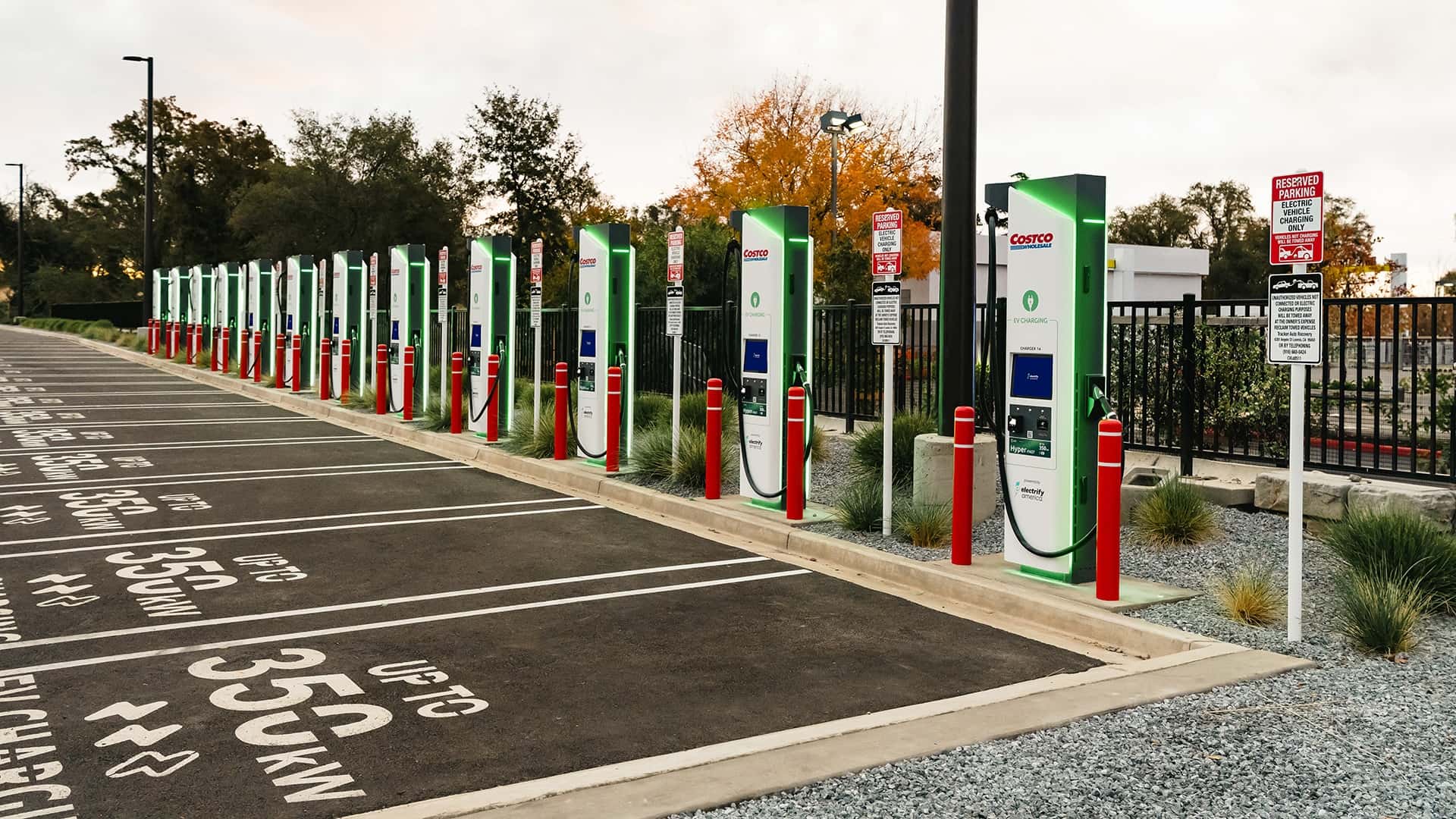
- A recent white paper by Kempower highlights a critical insight for the electric vehicle (EV) charging industry: focusing on the number of charging plugs at a station significantly boosts utilisation rates and revenue, more so than merely installing ultra-high-powered chargers.
- Data from Kempower’s ChargEye analytics platform, based on North American charging trends, indicates that an eight-plug station can achieve a utilisation rate three times higher than a smaller station with fewer, albeit higher-powered, stalls.
- Operators are advised to prioritise offering a greater choice of charging points to drivers, even if individual stalls provide less peak power, to ensure long-term profitability and return on investment for their EV charging infrastructure.
- The study suggests an ideal average power output of around 100 kW per connector for maximising utilisation, aligning with real-world EV charging behaviours where vehicles rarely sustain peak charging rates for extended periods.
In the rapidly evolving landscape of electric vehicles (EVs), the quest for faster charging capabilities often dominates headlines and consumer expectations. Megawatt charging, promising hundreds of miles of range in under ten minutes, represents the pinnacle of this technological pursuit. However, a new analysis from Kempower, a prominent Finnish provider of EV charging hardware and management software, suggests a paradigm shift is necessary for the sustainable growth and profitability of EV charging infrastructure.
According to their recent white paper, drawn from extensive North American charging data via their ChargEye analytics platform, the economic viability of charging networks hinges less on the sheer power of individual chargers and more on the total number of available charging points at a given location. This finding challenges the conventional wisdom that ultra-fast chargers alone will secure the future of public charging.

Rethinking Charging Network Profitability
The core argument presented by Kempower is straightforward: for charging networks to maintain profitability and ensure operational longevity, the strategic focus should pivot towards increasing the density of charging plugs rather than solely chasing higher kilowatt (kW) ratings per stall. This approach, they contend, directly correlates with enhanced station utilisation and, consequently, improved revenue streams.
The company’s detailed analysis found that a higher count of charging points at a site significantly moves the needle on utilisation. In contrast, simply increasing the total installed power across a station, without a proportional increase in plugs, offered only marginal gains in how frequently those chargers were actually used by drivers.
The Data Behind Increased Utilisation and Revenue
Kempower’s data underscores this critical distinction with compelling figures. Their research indicates a direct and substantial relationship between the number of plugs and a station’s utilisation rate, which is a key metric for gauging operational efficiency and financial success. The white paper highlighted that a charging station equipped with eight plugs could achieve a utilisation rate three times higher than a smaller station that offers fewer stalls, irrespective of the latter’s potentially higher power output per stall.
Quantifying this further, the study demonstrated a significant jump in utilisation rates as the number of plugs increased. For instance, moving from a two-plug station to an eight-plug station was shown to escalate the utilisation rate from approximately 2% to nearly 10%. This contrasts sharply with the effect of increasing power, where utilisation only climbed from roughly 3% for 100-kilowatt stations to a little over 5% for 400-kW stations.
Beyond utilisation, the impact on energy dispensed is equally significant for EV charging infrastructure. Sites featuring eight plugs delivered an average of 128,342 kilowatt-hours (kWh) of energy, more than double the 61,453 kWh supplied by four-plug sites. This direct correlation between plug count, utilisation, and energy dispensed translates into higher revenue potential and a faster return on investment for charging network operators.
Understanding Real-World EV Charging Dynamics
A crucial factor informing Kempower’s recommendations is the observed behaviour of electric vehicles during charging sessions. While many modern EVs boast impressive peak charging rates of 200 kW, 300 kW, or even higher, these peak figures are rarely sustained throughout an entire 10-to-80% charging session. Vehicle battery management systems dynamically adjust power input to protect the battery and optimise charging speed, meaning the average power input often settles significantly lower than the advertised peak.
According to Kempower’s analysis, the ideal power output to maximise the utilisation rate of a charging station, particularly when all connectors are in use, hovers around 100 kW. This average rate is often what an EV will effectively draw for the majority of its fast-charging curve, making an abundance of 100-150 kW plugs more effective than fewer, higher-rated but often underutilised, ultra-fast chargers.
The Strategic Advantage of Distributed Power Systems
Kempower, founded in Finland in 2017, specialises in building EV charging stations that employ a distributed power and dynamic power management approach. This design philosophy is akin to the highly successful model implemented by Tesla with its Supercharger network. In a distributed power system, a central power unit distributes available energy dynamically among multiple charging stalls, optimising power delivery based on the needs of connected vehicles.
This architectural choice offers significant advantages for EV charging infrastructure development. It allows operators to scale charging stations more easily over time without requiring substantial additional investment after the initial stalls have been energised. Instead of installing a single, massive power block for each ultra-fast charger, a distributed system shares power resources, ensuring that available energy is efficiently allocated across a larger number of plugs. This flexibility makes it simpler and more cost-effective to expand capacity as EV adoption grows.
Implications for Charging Network Operators and the EV Ecosystem
The findings from Kempower’s white paper carry profound implications for companies investing in and operating EV charging networks, such as Electrify America and countless others globally. The traditional focus on marketing the highest possible peak power might need to be re-evaluated in favour of a more practical and financially sound strategy.
For operators, this means a shift in investment strategy: prioritising sites with a higher number of medium-to-fast charging plugs (e.g., 100-150 kW average output) over fewer, albeit theoretically faster, ultra-high-powered stations. This approach not only boosts profitability through higher utilisation but also improves the overall driver experience by reducing wait times and increasing the likelihood of finding an available charger. A robust EV charging infrastructure strategy, therefore, benefits both the service provider and the end-user.
Ultimately, a strategy centered on an abundance of reliable, moderately powered plugs is likely to accelerate EV adoption by mitigating range anxiety and improving the convenience of public charging. As the global EV fleet expands, ensuring a widespread, accessible, and economically sustainable charging network is paramount. Kempower’s insights offer a data-driven blueprint for achieving this vital balance in the evolving world of electric mobility.
The Road Ahead for EV Charging Infrastructure Strategy
The transition to electric vehicles is a global imperative, and a reliable, extensive EV charging infrastructure is its backbone. While technological advancements in battery and charging speeds are vital, the practical economics of deploying and operating these networks cannot be overlooked. Kempower’s research serves as a timely reminder that innovation must be coupled with sound business models to ensure long-term success.
The message is clear: the future of profitable EV charging lies not just in how quickly an EV can charge, but how readily and reliably a driver can access a charging point. By focusing on maximising the number of available plugs and adopting smart power management systems, operators can build networks that are both financially robust and genuinely serve the needs of a growing EV driving community, solidifying the EV charging infrastructure strategy for years to come.
Frequently Asked Questions About EV Charging Infrastructure
Why is the number of plugs more important than peak power for EV charging networks?
Data indicates that more plugs lead to significantly higher station utilisation rates and increased energy dispensed, which directly translates to greater revenue and a quicker return on investment for operators. EVs rarely sustain peak charging rates, making an abundance of moderately powered plugs more practical.
What is the ideal power output for maximising charging station utilisation?
Kempower’s analysis suggests an ideal average power output of approximately 100 kW per connector. This aligns with how most EVs manage their charge curves, where actual average power input often falls within this range during a typical 10-80% fast-charging session.
How does distributed power management benefit EV charging infrastructure?
Distributed power systems, similar to Tesla’s Superchargers, allow a central power unit to dynamically allocate energy across multiple charging stalls. This approach enables easier, more cost-effective scalability of charging stations and optimises power delivery based on vehicle demand, enhancing efficiency and profitability.
What does this mean for EV drivers?
For EV drivers, this strategy means a higher likelihood of finding an available charging spot, reducing wait times and alleviating range anxiety. A focus on more plugs rather than fewer ultra-fast ones improves accessibility and the overall convenience of public charging experiences.
How can charging network operators improve their profitability based on these findings?
Operators should prioritise investing in sites that can accommodate a greater number of charging plugs, even if individual stalls offer slightly lower peak power. Adopting distributed power solutions can further enhance scalability and operational efficiency, leading to higher utilisation and better financial returns.
Is ultra-fast charging still relevant for EV adoption?
While ultra-fast charging makes for compelling headlines and caters to specific needs, it’s not the sole determinant of network profitability or widespread EV adoption. A balanced approach combining strategic deployment of ultra-fast chargers with a robust network of high-utilisation, multi-plug stations is crucial.