
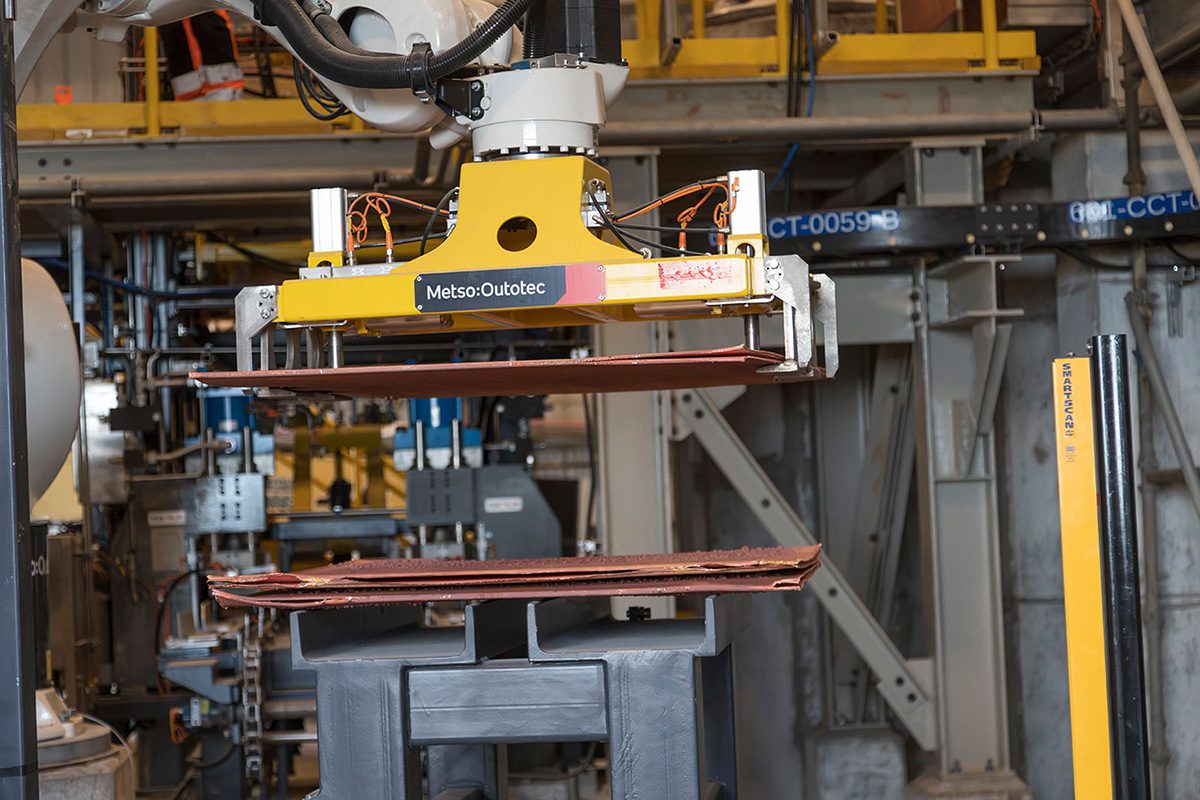
Taseko Mines has announced a significant achievement in domestic copper production, harvesting the inaugural batch of copper cathodes from its newly completed commercial production facility at the Florence Copper operation in Arizona. This development marks what the company states is the first new U.S. greenfield copper production facility to commence operations since 2008.
First Cathodes Harvested, Production Ramp-Up Begins
The company had previously confirmed the startup of Florence Copper’s electrowinning plant in late February. The successful harvest of the first copper cathodes represents an early, crucial milestone in the process of ramping up the site’s output towards its designed nameplate capacity. This capacity is set at 85 million pounds per year of LME Grade A copper.

Over its projected 22-year mine life, the Florence Copper operation is anticipated to yield a substantial volume of at least 1.5 billion pounds of copper, a vital resource for numerous industries.
Innovative Technology and Environmental Advantages
Taseko also highlighted that the Florence Copper facility is the first greenfield site globally to implement its In-Situ Copper Recovery (ISCR) process. The company describes the ISCR method as a cost-effective approach to copper production that offers distinct environmental benefits when compared to conventional mining techniques.
Should the facility reach its planned production levels, Taseko projects that Florence Copper will ascend to become the third-largest producer of copper cathodes within the United States. This positions the operation to play a significant role in the national copper supply chain.

Strengthening US Manufacturing and Supply Chains
Stuart McDonald, President and CEO of Taseko Mines, emphasized the strategic importance of this domestic copper source. “Producing LME Grade A copper cathode for America’s manufacturing sector, including automotive, semiconductor, defense/aerospace and AI data centers, will meaningfully strengthen US manufacturing and supply chain security,” McDonald stated.
He further confirmed that all copper produced at the Florence facility will be destined for the U.S. market, reinforcing the commitment to bolstering domestic industrial capabilities and reducing reliance on foreign sources. The harvested copper is essential for a wide array of modern technologies and manufacturing processes.
The Role of Copper in Modern Industry
Copper is a fundamental element in the global economy, indispensable for electrical wiring, plumbing, and a vast array of industrial machinery. In the context of the U.S., the demand for copper is intrinsically linked to the growth and innovation within key sectors.
The automotive industry relies heavily on copper for electric vehicles (EVs), including motors, batteries, and charging infrastructure. Semiconductors, the brains of modern electronics, require high-purity copper for their intricate circuitry. Defense and aerospace applications demand reliable and robust materials, with copper playing a critical role in avionics and communication systems.
Furthermore, the burgeoning field of Artificial Intelligence (AI) and its associated data centers are increasingly consuming significant amounts of copper for their extensive power and cooling systems. The domestic production from Florence Copper aims to meet these escalating demands.
The Significance of Greenfield Copper Production
The development of new, greenfield copper mines is a complex and lengthy process, often facing regulatory hurdles, environmental assessments, and significant capital investment. Taseko’s achievement at Florence underscores the challenges and rewards associated with bringing new mining capacity online in the United States.
The last time a new greenfield copper production facility commenced operations in the U.S. was in 2008, highlighting the long hiatus in domestic copper mine development. This makes the Florence Copper project particularly noteworthy for its contribution to diversifying and securing the nation’s copper supply.
ISCR Process: A Sustainable Approach
Taseko’s adoption of the ISCR process at Florence Copper represents a modern approach to resource extraction. Unlike traditional open-pit or underground mining, ISCR involves leaching the ore in place, a method that typically results in a smaller surface footprint and reduced waste rock generation.
The process involves injecting a leaching solution into the copper-bearing ore body and then recovering the dissolved copper. This method is generally considered to have lower operational costs and a reduced environmental impact, aligning with growing industry and regulatory pressures for more sustainable mining practices.
The environmental advantages cited by Taseko include potentially lower water usage and reduced land disturbance compared to conventional methods. As the global focus on environmental, social, and governance (ESG) factors intensifies, such innovative processes are becoming increasingly important for the mining sector’s social license to operate.
Economic and Strategic Implications for the U.S.
The Florence Copper project is poised to have a considerable economic impact on Arizona and the wider U.S. economy. The creation of jobs during construction and operation, along with the significant output of a critical mineral, contributes to national economic security.
By keeping the produced copper within the United States, Taseko Mines is directly addressing concerns about supply chain vulnerabilities. This move is particularly relevant in an era where geopolitical tensions and global trade dynamics can disrupt the flow of essential raw materials. The availability of domestically sourced copper reduces dependence on international markets, offering greater stability for U.S. manufacturers.
The successful commissioning and initial copper harvest at Florence Copper represent a tangible step towards enhancing the self-sufficiency of the United States in a mineral critical for its technological advancement and industrial competitiveness.