
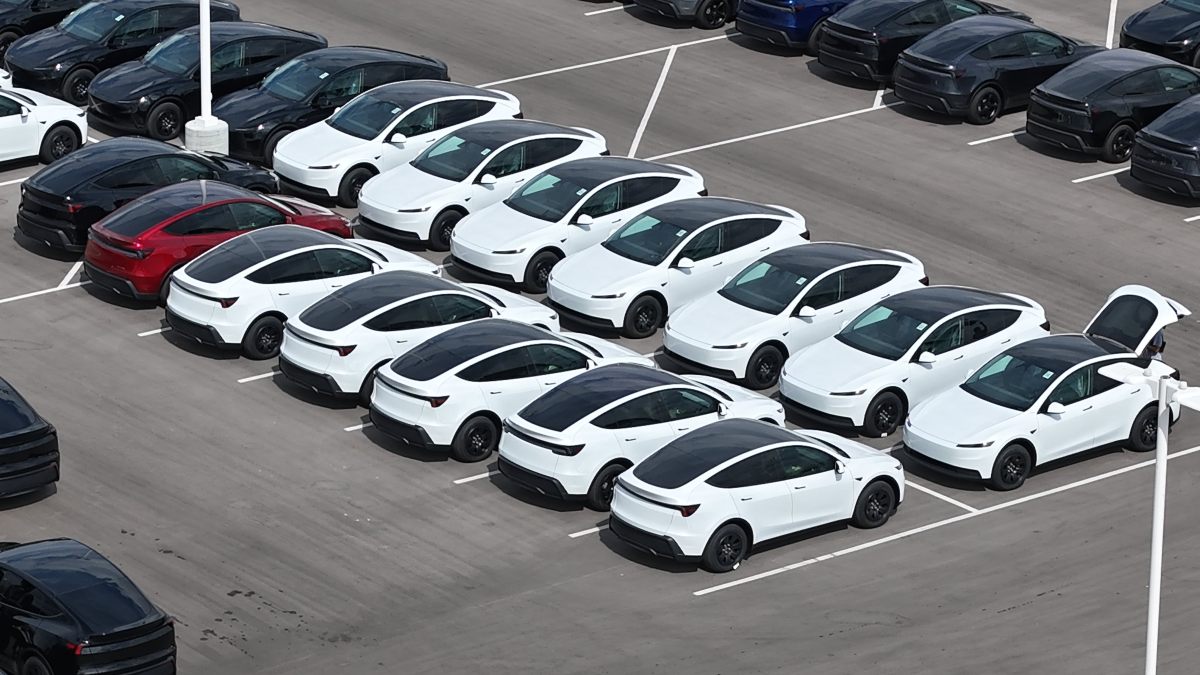
Despite a noticeable dip in monthly figures, Tesla’s electric vehicle (EV) sales in Australia continue to exhibit a trajectory of robust annual expansion, data for October 2026 reveals. While deliveries fell to their lowest point since April, industry analysts often view these monthly fluctuations within the context of the manufacturer’s distinctive global shipping and delivery patterns.
According to comprehensive data compiled by the Electric Vehicle Council, Tesla recorded 4,050 EV deliveries in Australia during October. This figure represents a 28 per cent decline from the 5,654 units sold in September and stands significantly lower than the 7,685 deliveries observed in August. This latest report provides a crucial snapshot of the dynamic Australian EV market, with Tesla maintaining its dominant position despite short-term shifts.

The Model Y, Tesla’s popular SUV, continued to be the primary driver of sales, accounting for 3,105 deliveries in October. While substantial, this number is down from 4,476 in September and 6,414 in August, mirroring the overall trend for the brand during the month. Understanding these figures requires a deeper dive into Tesla’s operational model.
Understanding Tesla’s Unique Delivery Cycle in Australia EV Sales
To accurately interpret Tesla’s monthly Australia EV sales performance, it is essential to consider the company’s characteristic delivery schedule. This schedule is heavily influenced by the timing of shipments originating from its major production facility in Shanghai, China. Unlike many traditional automotive manufacturers who maintain a steady, linear monthly delivery pace, Tesla’s distribution often follows a cyclical pattern.
The beginning of a fiscal quarter typically presents a quieter period for Tesla deliveries in various international markets, including Australia. During these initial months, production and export efforts are strategically directed towards different global regions, and vehicles destined for Australian consumers are in various stages of transit – from manufacturing to shipping and local port processing, culminating in final customer delivery.

The Quarterly Rollercoaster: A Closer Look at Delivery Patterns
This logistical approach inevitably results in what has been termed a ‘quarterly rollercoaster’ for Tesla’s Australia EV sales figures. Relatively subdued delivery months are frequently succeeded by substantial surges as large shipments arrive, clear customs, and are subsequently handed over to customers. This predictable ebb and flow means that a single month’s figures, particularly early in a quarter, rarely provide a complete or conclusive indicator of underlying market demand or overall brand health.
The year 2026 has provided clear evidence of this pattern in Australia. Tesla recorded a comparatively modest 501 sales in January, followed by a sharp increase to 3,274 in February and 3,485 in March. This initial quarter’s trend set the stage for subsequent cycles, illustrating the impact of shipment arrivals and distribution logistics on monthly tallies.
The pattern was distinctly repeated in the second quarter. April saw deliveries fall to 1,225 units, only to rebound dramatically to 6,433 in May and reach an exceptional peak of 8,670 in June. This demonstrates the significant volume swings that are integral to Tesla’s market presence and distribution strategy within the Australian automotive sector.
The third quarter of 2026 also followed suit, with July experiencing another dip to 4,778 deliveries, which then recovered to 7,685 in August. Interestingly, September’s 5,654 deliveries diverged slightly from the typical end-of-quarter surge, with the peak occurring earlier in that specific quarter. This minor deviation highlights that while cyclical, the exact timing of peaks can shift slightly.
Therefore, October’s result, while indeed the lowest since April, is largely consistent with Tesla’s established operational rhythm. On its own, this particular data point offers limited definitive evidence of a weakening consumer appetite for its electric vehicles in the Australian market.
Model Y Dominance: Sustained Growth Trajectory in Australia EV Sales
Despite the monthly variability, Tesla’s long-term performance in Australia remains exceptionally strong. A vital context for October’s figures is the comparison to the same period last year. Tesla’s October 2026 sales, at 4,050 units, were still more than four times higher than the 916 vehicles delivered in October 2025. This remarkable year-on-year growth underscores the brand’s expanding footprint in the Australian automotive landscape.
The Model Y, in particular, has been a standout performer, demonstrating an extraordinary surge when comparing year-on-year data. Last month’s 3,105 Model Y deliveries dwarfed the 735 recorded in October 2025, representing an astounding increase of 322 per cent. This indicates a profound shift in consumer preference towards electric SUVs and Tesla’s ability to capture significant market share.
Year-on-Year Surge: A Deeper Dive into Model Y’s Impact
The cumulative impact of the Model Y’s popularity is evident in its year-to-date performance. Over the first ten months of 2026, the Model Y has accumulated 39,035 sales in Australia. This figure is more than double the 17,972 units sold over the corresponding period in 2025, solidifying its position as a transformative force in Australia EV sales.
This represents an extraordinary turnaround and market penetration for Tesla and its Model Y. The electric SUV has not only established itself as a leading EV but has also emerged as one of Australia’s most popular new cars across all types, gasoline and electric combined, topping the overall sales charts in both July and August 2026. Such performance highlights a significant shift in the broader Australian automotive industry.
For those seeking more granular insights into recent months, The Driven’s month-by-month electric vehicle sales data provides continuously updated information, offering a detailed perspective on the evolving market. This resource helps track the intricacies of the Australian EV market as new data becomes available.
Model 3’s Strategic Rebound and Future Prospects
Alongside the Model Y, the Tesla Model 3 electric sedan also experienced a quieter October, recording 945 deliveries. This was a decrease from 1,178 units in September and 1,271 in August. However, similar to the Model Y, its year-on-year comparison tells a story of significant growth, with October’s figures being more than five times the 181 vehicles delivered in October last year.
The Model 3 has now achieved 6,720 sales for the year 2026, marking a 20 per cent increase over the corresponding period in 2025. This recovery follows a relatively slow start to the year for the sedan, demonstrating its sustained appeal within the electric car segment.
New Offerings Set to Reshape Market Dynamics
Tesla is actively working to build on this recovery and further stimulate Australia EV sales through strategic model enhancements and pricing adjustments. A significant move was the introduction of its new cut-price Model 3 RWD, announced at the end of September 2026. With a starting price just under $46,000 before on-road costs, this more accessible variant is expected to broaden its appeal and capture a larger segment of the market.
Furthermore, Tesla has also implemented changes to its Model Y range. These include a strategic price reduction for the Performance variant, facilitated by a shift in production from Germany to the Shanghai factory. Additionally, some Model Y configurations have received improvements in driving range, enhancing their competitiveness and appeal to Australian consumers.
Broader Market View: Polestar’s Performance and Sector Outlook
The trend of a quieter October was not exclusive to Tesla. Fellow EV specialist Polestar also experienced a reduced delivery month, recording 118 vehicles, down from 200 in September. This contributes to the broader narrative of month-to-month variability within the burgeoning Australian EV market.
Polestar’s October Figures and Year-to-Date Performance
Among Polestar’s offerings, the Polestar 4 electric SUV accounted for the majority of its October sales with 79 units. The Polestar 2 recorded 30 deliveries, while the larger Polestar 3 managed eight. One Polestar 5 unit was also recorded during the month, indicating early entries for this model.
Cumulatively, Polestar has delivered 1,799 vehicles in Australia this year, up to October 2026. This figure represents an 11 per cent decrease compared with the same period in 2025. When combined, Tesla and Polestar recorded 4,168 electric vehicle sales in October, a decline from the 5,854 units sold in September.
Overall Australian EV Market: A Picture of Rapid Expansion
Despite the monthly fluctuations experienced by individual brands, the overall picture for Australia EV sales in 2026 indicates rapid market expansion. Across its entire range, Tesla has delivered 45,755 electric vehicles in Australia so far this year (January to October 2026). This represents a substantial increase of 94 per cent on the 23,569 units recorded over the same period in 2025, as confirmed by data from the Electric Vehicle Council.
This significant growth highlights the accelerating adoption of electric vehicles by Australian consumers and the increasing maturity of the market. While monthly figures can fluctuate due to logistical factors, the overarching trend points towards sustained and vigorous growth in the sector.
Awaiting Comprehensive October Data
The October sales figures for other electric vehicle manufacturers are anticipated to be released shortly. These forthcoming reports will provide a more comprehensive and complete picture of Australia’s electric vehicle market performance during October, allowing for a broader assessment of sector-wide trends and competitive dynamics beyond Tesla and Polestar.
Key Takeaways for Australia EV Sales
- Tesla’s October 2026 Australia EV sales registered 4,050 units, representing the lowest monthly figure since April and a 28% drop from September.
- This monthly decline aligns with Tesla’s characteristic ‘quarterly rollercoaster’ delivery pattern, largely influenced by shipment timings from its Shanghai factory.
- Despite the month-on-month dip, Tesla’s October 2026 sales were more than four times higher than October 2025, showcasing significant annual growth.
- The Model Y remains a strong performer, with 3,105 units sold in October and a total of 39,035 units delivered year-to-date, affirming its status as a top-selling vehicle in Australia.
- Polestar also experienced a quieter October, delivering 118 vehicles, contributing to a combined total of 4,168 EV sales for both brands that month.
- Overall, Tesla has delivered 45,755 EVs in Australia from January to October 2026, marking a substantial 94% increase compared to the same period in the previous year.
Frequently Asked Questions (FAQ)
What was Tesla’s total EV sales volume in Australia for October 2026?
Tesla recorded 4,050 electric vehicle deliveries in Australia during October 2026. This figure marks a decrease of 28 per cent from September’s sales, making it the lowest monthly total since April of the same year. These numbers are part of a larger trend influenced by the company’s unique delivery schedule.
Why do Tesla’s monthly sales figures in Australia fluctuate significantly?
Tesla’s monthly sales often fluctuate due to its unique delivery schedule, which is heavily influenced by shipments from its Shanghai factory. The first month of a quarter is typically quieter as vehicles are in transit, leading to larger surges in subsequent months when shipments arrive and deliveries are completed.
How did the Model Y perform in Australia EV sales during October 2026?
The Tesla Model Y accounted for the majority of the brand’s sales in October 2026, with 3,105 deliveries. While lower than previous months, the Model Y’s year-to-date sales of 39,035 units represent more than double the figures from the same period last year, highlighting its sustained popularity.
Has Tesla’s overall performance in Australia improved year-on-year?
Yes, Tesla’s overall performance in the Australian market has shown significant improvement year-on-year. For the first ten months of 2026, Tesla delivered 45,755 electric vehicles, which is a 94 per cent increase compared to the 23,569 units sold during the same period in 2025.
What new initiatives is Tesla undertaking to boost Australia EV sales?
Tesla is aiming to boost Australia EV sales through new initiatives, including the introduction of a cut-price Model 3 RWD, which was announced at the end of September 2026. Additionally, the Model Y range has seen price reductions for its Performance variant and improved driving ranges for some models, enhancing competitiveness.
How did Polestar perform in the Australian EV market in October 2026?
Polestar experienced a quieter October, recording 118 deliveries in Australia. This is down from 200 units in September. The Polestar 4 electric SUV was its top seller with 79 units. Year-to-date, Polestar has delivered 1,799 vehicles, which is an 11 per cent decrease compared to the same period in 2025.