
In a significant development for autonomous driving technology, Tesla is reportedly just weeks away from securing regulatory approval for its Full Self-Driving (Supervised) system in a crucial European market, with the Netherlands poised to be the first.
This imminent clearance marks a major milestone in the company’s ambitious global rollout of its advanced driver-assistance features, signaling a potential paradigm shift for vehicle autonomy across the continent.

European Expansion of Advanced Driver-Assistance
Tesla has intensified its efforts over the past year to expand the reach of its Full Self-Driving (FSD) technology. While initially focused on North America, the company has successfully introduced the system to new markets, including Australia and New Zealand, broadening its operational footprint.
Late last year, Tesla initiated a strategic move into one of its most challenging regulatory environments by offering passenger test rides of FSD Supervised in select parts of Europe. This proactive approach underscored the company’s commitment to demonstrating the system’s capabilities in diverse and complex driving conditions.
Final Regulatory Hurdles Cleared in the Netherlands
The latest announcement from Tesla indicates that the company has largely navigated the intricate regulatory landscape of Europe. On its official European X account, Tesla confirmed the successful completion of the final vehicle testing phase for FSD (Supervised) in collaboration with the Netherlands Vehicle Authority (RDW).

The statement read: “Together with RDW, we have officially completed the final vehicle testing phase for Full Self-Driving (Supervised) and have submitted all documentation required for the UN R-171 approval + Article 39 exemptions.” This submission is now under review by the RDW team, bringing the system closer to a formal launch.
Rigorous Testing and Compliance Efforts
Tesla detailed an extensive list of activities undertaken over the past 18 months, highlighting the rigorous process involved in reaching this pivotal stage of European regulatory approval. These efforts underscore the depth of testing and documentation required to meet stringent safety and compliance standards.
The comprehensive activities included:
- Over 1,600,000 kilometers of FSD (Supervised) testing conducted on diverse European roads, providing a vast dataset for real-world performance evaluation.
- More than 13,000 customer sales ride-alongs, allowing potential users and the public to experience the technology first-hand and offer feedback.
- Over 4,500 track test scenario executions, focusing on specific, controlled environments to validate system behavior in critical situations.
- The meticulous preparation of thousands of pages of written documentation, addressing over 400 distinct compliance requirements mandated by European regulations.
- Dozens of independent research studies dedicated to analyzing and verifying the safety performance and results of the FSD (Supervised) system.
These exhaustive measures are crucial for demonstrating the system’s reliability and safety to regulatory bodies like the RDW, which plays a vital role in vehicle approval within the European Union.
Positive Public Reception and Anticipation
The news of impending approval has been met with considerable enthusiasm from Tesla owners and autonomous vehicle proponents across Europe. Many have expressed their long-held anticipation for the technology to become available in their region.
One owner, reacting to the announcement, stated: “We have been waiting for so long! Thank you Tesla and RDW team, our road will be safer, and this tech will save thousands of lives.” Such sentiments reflect a strong belief in the safety benefits promised by advanced autonomous systems.
Another individual, who recently participated in the FSD Ride-Along program, commented: “Awesome news! 👏🏻 I just had my FSD Ride-Along this week in the Netherlands, and now I fully understand why everyone in the US is hyping it. Once you experience it, you’ll want it. It really feels like the future.”
The FSD Ride-Along program, which commenced in late 2025, has already facilitated over 13,000 such experiences. Tesla launched this initiative to allow interested owners and supporters to experience the technology directly, promising that participants could “Ride along in the passenger seat to experience how it handles real-world traffic & the most stressful parts of daily driving, making the roads safer for all.”
A History of European Testing and Demonstrations
Europe has historically represented one of the last major markets awaiting the official rollout of Tesla’s FSD software, despite extensive testing efforts within the continent. The company has consistently worked towards demonstrating the system’s adaptability to European roads and traffic conditions.
In April 2025, Tesla released a two-minute video showcasing the FSD Supervised software undergoing tests in Europe, explicitly noting that its availability was “pending regulatory approval.” This public demonstration served to build anticipation and illustrate the progress being made.
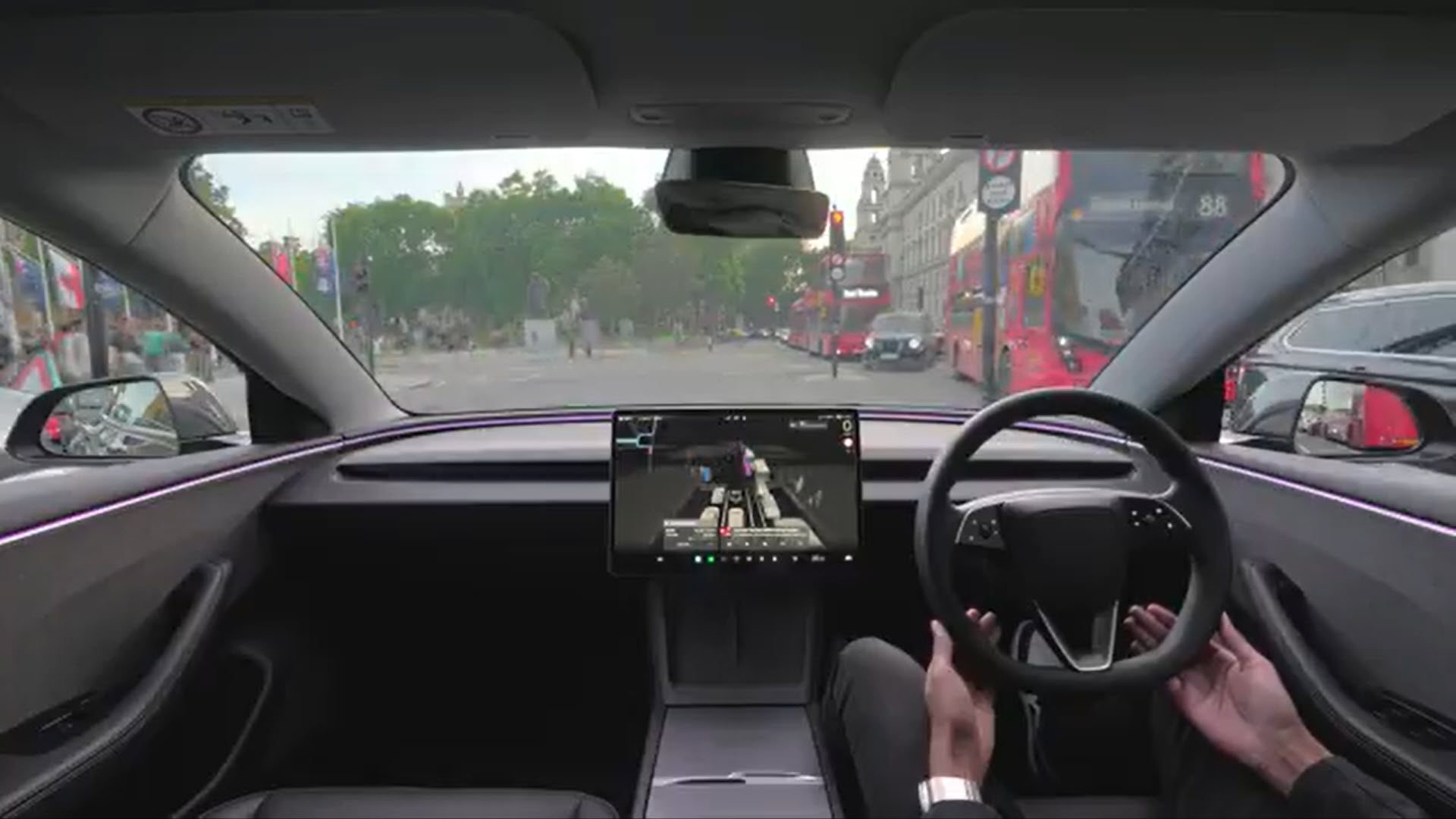
Further reinforcing its commitment, Tesla’s supervised FSD was prominently displayed testing in the United Kingdom in July. A video shared from this drive depicted a Model 3 equipped with the FSD Supervised software autonomously navigating through busy London streets, expertly handling traffic, stopping for pedestrians, and completing a complex journey around various city landmarks.
These public tests and demonstrations have been integral to building confidence in the system’s capabilities and preparing the ground for regulatory acceptance.
Future Implications for the European Automotive Market
The impending approval of Tesla’s Full Self-Driving Supervised system in the Netherlands is expected to pave the way for similar clearances in other European countries in the near future. This phased rollout could significantly impact the continent’s automotive landscape, accelerating the adoption of autonomous driving technologies.
Given the documented excitement and the successful passenger ride-along programs, a strong uptake of the software is anticipated across Europe. This wide adoption would not only further establish Tesla’s leadership in autonomous driving but also generate substantial subscription revenue for the company from the continent, underscoring the commercial viability of advanced driver-assistance systems.
The move signifies a crucial step forward in the evolution of automotive technology, bringing the vision of more autonomous and potentially safer roads closer to reality for millions of European drivers.