
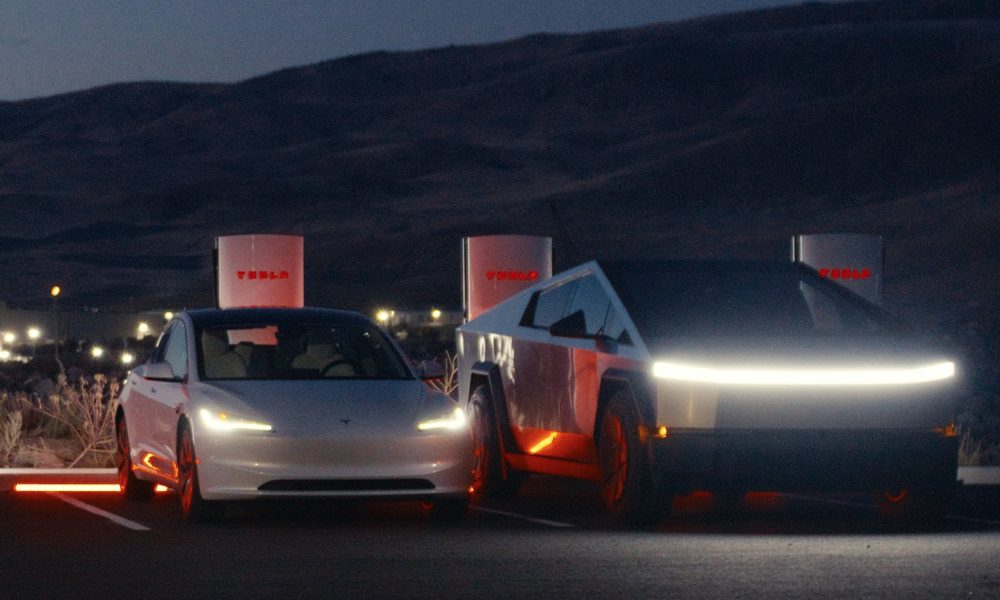
Tesla has officially inaugurated its first ‘true’ V4 Supercharging station on the East Coast, marking a significant advancement in electric vehicle (EV) charging infrastructure. Located in Kissimmee, Florida, just south of Orlando, this new site is poised to redefine expectations for rapid and efficient EV charging, particularly as the automotive industry transitions towards higher-voltage battery architectures.
The eight-stall station, powered by an advanced 1.2 MW V4 power cabinet, boasts an impressive capability of delivering up to 500 kW of charging power per stall. This makes it one of only four such fully operational 500 kW-capable V4 stations currently active across the United States, underscoring its pivotal role in Tesla’s evolving Supercharger network.
Understanding the ‘True’ V4 Supercharger Technology
The term ‘true’ V4 Supercharger distinguishes this installation from numerous other V4 dispensers that have been rolled out since 2023. While many of these existing V4 stalls offered welcome ergonomic and user-experience upgrades, they often lacked the full technological overhaul of their power delivery systems. The Kissimmee site represents the complete integration of next-generation hardware.
Beyond the Physical Dispenser: The Power Cabinet Revolution
Since 2023, Tesla has progressively introduced V4 dispensers across its network. These newer physical units come equipped with a suite of enhancements designed to improve the user experience for all EV drivers. Key among these are longer charging cables, which offer greater flexibility and ease of access for a wider array of vehicle charging port locations, including non-Tesla EVs.
Furthermore, V4 dispensers incorporate built-in touchscreen displays, simplifying the charging process by providing real-time information and interaction. Crucially, they also feature integrated credit-card readers, enabling seamless payment and access for non-Tesla users who benefit from the open North American Charging Standard (NACS) ports. Improved ergonomics, such as redesigned cable management, contribute to a more user-friendly and efficient charging experience.
Technical Leaps: Voltage and Power Output
The fundamental distinction of the Kissimmee installation lies in its integration of next-generation 1.2 MW V4 power cabinets. This advanced architecture stands in stark contrast to the ‘hybrid’ setups, sometimes informally referred to as V3.5, where V4 dispensers were paired with legacy V3 power cabinets. These hybrid configurations, despite their updated dispensers, typically delivered charging curves virtually identical to standard V3 stations, usually capping out at 250-325 kW depending on the vehicle and prevailing site conditions.
The true V4 system in Kissimmee, however, supports battery voltages up to an unprecedented 1,000 V, effectively doubling the 500 V capacity of previous V3 systems. This significant increase in voltage capability is what allows the station to push an impressive 500 kW per stall. The efficient design also means that one compact power cabinet can effectively supply power to all eight stalls, considerably reducing the physical footprint required for the station. This innovative design also reportedly keeps deployment costs under $40,000 per stall, making it significantly more economical than earlier Supercharger designs and potentially accelerating future network expansion.
Strategic Deployment: Kissimmee, Florida’s Pivotal Role
The choice of Kissimmee, Florida, a bustling hub near the major tourist destination of Orlando, for this groundbreaking deployment is strategic. Central Florida experiences high traffic volumes, both from residents and tourists, making it an ideal location to test and showcase the capabilities of this advanced charging technology. The eight-stall configuration ensures sufficient capacity to handle a steady flow of EVs, minimizing wait times and enhancing user convenience.
As one of only four stations nationwide capable of delivering 500 kW, the Kissimmee Supercharger serves as a key benchmark for future high-power charging sites. Its operation provides valuable data and experience for Tesla as it continues to refine and expand its cutting-edge infrastructure across the country and globally. This station is not merely an addition but a template for the next generation of Supercharging facilities.
Understanding the Dynamic Pricing Structure
Tesla has implemented a dynamic and competitive pricing structure at the Kissimmee V4 Supercharger, differentiating rates for Tesla owners and non-Tesla EV drivers. This tiered approach reflects Tesla’s strategy to reward its customer base while simultaneously monetizing access to its industry-leading charging network for a broader audience.
Benefits for Tesla Owners
For Tesla owners, the pricing is set at $0.40 per kWh during peak hours, which span from 8 a.m. to midnight. This rate drops significantly to an attractive $0.20 per kWh during off-peak hours, observed from midnight to 8 a.m. This structure incentivizes charging during times of lower grid demand and provides cost savings for owners who can plan their charging sessions accordingly.
Access for Non-Tesla Electric Vehicles
Non-Tesla EVs, which can now directly utilize the NACS ports thanks to the open standard, are charged a slightly higher premium. They face rates of $0.56 per kWh during peak hours and $0.28 per kWh during off-peak periods. This premium reflects the value of accessing Tesla’s reliable and extensive network, providing a vital charging option for a growing number of non-Tesla EVs as the NACS standard gains widespread adoption across the industry.
Immediate Impact and Future Implications
The true V4 Supercharger brings both immediate and long-term benefits to the electric vehicle landscape, particularly concerning vehicle compatibility and the future trajectory of EV technology.
Cybertruck: The Primary Beneficiary
Currently, the primary beneficiary of the Kissimmee station’s extreme charging speeds is the Tesla Cybertruck. With its high-voltage battery architecture, the Cybertruck can leverage the 500 kW output to achieve dramatically faster charging times, especially at lower states of charge. This capability significantly enhances the practicality and utility of the Cybertruck for long-distance travel and demanding use cases.
For existing, everyday models like the Model 3 and Model Y, which typically feature 400V battery systems, there is little immediate difference in peak charging speeds compared to advanced V3 Superchargers. While they can still charge efficiently, their current battery architectures do not fully capitalize on the V4’s 1,000V and 500 kW potential. However, this infrastructure lays crucial groundwork for Tesla’s future vehicle lineup.
Paving the Way for Next-Generation EVs
The Kissimmee V4 Supercharger represents a significant step in future-proofing Tesla’s charging network. By deploying infrastructure capable of handling higher battery voltages and power outputs, Tesla is actively preparing for forthcoming vehicles that will be designed to fully exploit these capabilities. As battery technology advances and other manufacturers adopt higher-voltage systems, such as 800V platforms, stations like this will become increasingly vital. This foresight ensures that the Supercharger network remains at the forefront of EV charging technology, ready to support the next generation of electric vehicles from Tesla and other brands utilizing the NACS standard.
The Broader Significance for the EV Ecosystem
This milestone signals Tesla’s accelerating push toward a high-power, future-proof Supercharger network, reinforcing its position as a leader in EV infrastructure development. The benefits extend far beyond Tesla owners, impacting the entire electric vehicle ecosystem.
As true V4 sites multiply, several positive ripple effects are anticipated. Charging times for compatible vehicles will undoubtedly shrink, enhancing the convenience of EV ownership and helping to alleviate range anxiety. Furthermore, improvements in grid efficiency are expected as advanced power management systems within these new cabinets optimize energy delivery. For drivers in central Florida, the Kissimmee station is more than just another charging stop; it offers a tangible glimpse into a faster, smarter, and more integrated charging era that is now beginning to arrive across the nation.
Driving Towards a Future-Proof Network
Tesla’s strategic investment in the true V4 Supercharger technology underscores its commitment to robust and scalable EV infrastructure. By continuously innovating its charging solutions, Tesla not only supports its growing fleet of vehicles but also contributes significantly to the broader adoption of electric mobility. This progressive approach ensures that as EV technology evolves, the charging network will be ready to meet the increasing demands for speed, efficiency, and accessibility, solidifying the path toward a sustainable transportation future.