
Tesla has officially initiated the winding down of production for its iconic Model S and Model X vehicles, marking a significant transition for the electric vehicle pioneer. This strategic shift, which saw farewell emails dispatched to U.S. customers on March 27 and the company’s website updated to reflect only limited inventory availability, formalizes a move first announced by CEO Elon Musk earlier this year.
During Tesla’s Q4 2025 earnings call in January, Musk conveyed the company’s intention, stating it was “time to basically bring the Model S and X programs to an end with an honorable discharge.” The announcement signals the conclusion of an era that defined Tesla’s initial foray into the luxury electric vehicle market, paving the way for its next generation of innovations.

Musk Hints at Official Ceremony to Mark the End of an Era
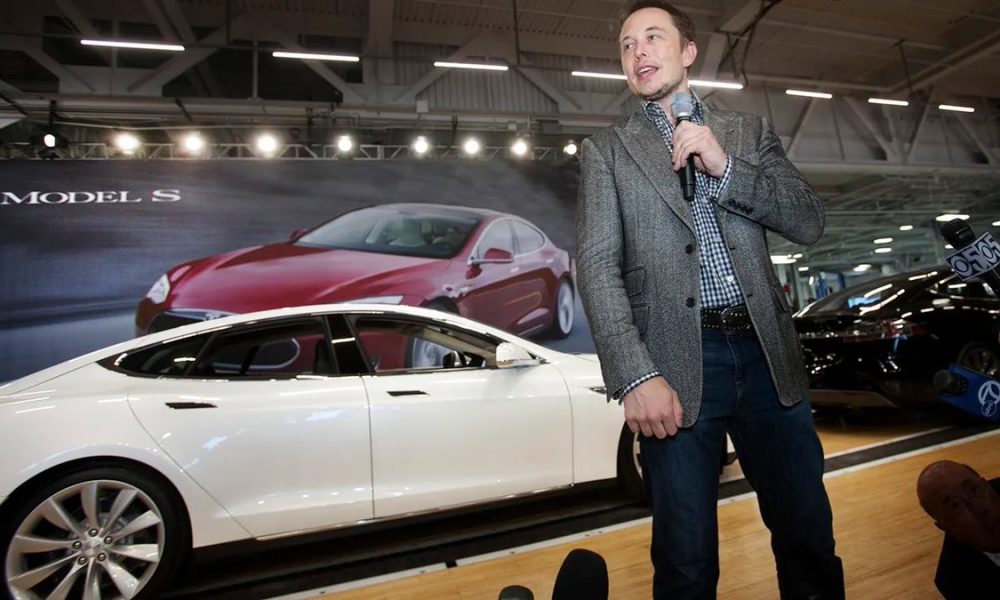
Adding a poignant note to the discontinuation of the Model S and Model X, Elon Musk recently hinted at an “official ceremony” to commemorate the end of their production. In a post on X, Musk shared a throwback photograph of himself speaking at the Model S production launch in 2012, alongside his announcement.
“Custom orders of the Tesla Model S & X have come to an end. All that’s left are some in inventory. We will have an official ceremony to mark the ending of an era. I love those cars,” Musk posted on X on April 1, 2026. He further added, “This was me at production launch 14 years ago: pic.twitter.com/6kvCf9HTHc”
The suggestion of an official ceremony is particularly notable, as Tesla has not previously held formal farewell events for any of its vehicles. Musk’s choice of words indicates a deliberate and perhaps emotional acknowledgement of these models’ historical importance to the company.

Given the context of Musk’s X post, which features him on stage with a microphone before an audience at the Fremont factory, speculation naturally arises that a closing ceremony might take place at the same historic location. Whether this event will be a public spectacle, a private gathering for employees, or a livestreamed moment on X remains to be seen, but it underscores the significant legacy of the Tesla Model S and Model X.
The Pioneering Legacy of Model S and Model X
The Model S, first introduced nearly fifteen years ago, stands as Tesla’s inaugural fully in-house designed vehicle. Its launch was a pivotal moment for the electric vehicle industry, demonstrating unequivocally that an electric car could be fast, highly desirable, and capable of long-distance travel on a single charge.
Before the Model S, the perception of electric vehicles was often limited to smaller, less powerful, or range-constrained options. Tesla’s flagship sedan shattered these preconceptions, proving that luxury, performance, and environmental responsibility could coexist in an automotive package.
Following the success of the Model S, the Model X made its debut in 2015. This vehicle quickly garnered attention for its unique and distinctive falcon-wing doors, a design feature that set it apart in the burgeoning EV market. More importantly, the Model X carved out its niche as one of the first all-electric SUVs, catering to a growing consumer demand for utility vehicles while maintaining Tesla’s commitment to electric propulsion.
Both the Tesla Model S and Model X played an instrumental role in compelling legacy automakers to seriously consider and invest in all-electric transportation. Their market success and technological innovation were critical in funding the development of Tesla’s subsequent, more affordable mass-market vehicles, the Model 3 and Model Y.
A Strategic Pivot: From Luxury EVs to Optimus Robotics
Despite their foundational importance, the sales figures for both the Model S and Model X had, by 2025, been reduced to a “rounding error” within Tesla’s broader sales portfolio. This decline in sales volume, coupled with the company’s ambitious future plans, necessitated a strategic re-evaluation of its production priorities.
CEO Elon Musk was explicit about the company’s next monumental step, articulating a clear vision for the repurposed production facilities. “We are going to convert that production space to an Optimus factory. It’s part of our overall shift to an autonomous future,” he declared, outlining a dramatic reorientation of Tesla’s manufacturing capabilities.
The Dawn of the Optimus Era
This strategic pivot is already well underway. Tesla officially commenced production of the Optimus Gen 3 humanoid robot at its Fremont factory in January 2026. The production line is designed to target an impressive run rate of one million units per year, signifying a massive scaling of robotics manufacturing.
The Optimus Gen 3 robot represents a significant leap in artificial intelligence and robotics. It boasts 22 degrees of freedom per hand, allowing for highly dexterous manipulation, and operates on Tesla’s advanced AI5 chip. Critically, the Optimus platform shares the same neural network architecture as Tesla’s Full Self-Driving (FSD) technology, enabling advanced cognitive and decision-making capabilities.
Further bolstering this expansion, a dedicated Optimus factory is currently under construction at Gigafactory Texas, with a planned annual production capacity of an astounding 10 million units. The very production lines that were once dedicated to crafting the Tesla Model S and Model X are now undergoing conversion to support the rapid ramp-up of Optimus robot manufacturing.
This transformation underscores Tesla’s commitment to an autonomous future, where humanoid robots are expected to play a crucial role across various industries, from manufacturing to service sectors, potentially redefining labor and productivity globally.
For more insights into this ambitious undertaking, readers can explore the deeper context in the article: Elon Musk’s $10 Trillion robot: Inside Tesla’s push to mass produce Optimus.
Ensuring Continued Support for Existing Owners
While new custom orders for the Model S and Model X are no longer being accepted, Tesla has reaffirmed its commitment to existing owners. The company confirmed that it will continue to provide comprehensive support, including service, essential software updates, and replacement parts, for as long as individuals own these vehicles. This assurance aims to maintain the long-term value and functionality of the pioneering electric sedans and SUVs already on the road.
For potential buyers still interested in acquiring a new example of these foundational models, a limited number of remaining U.S. inventory units are available. These units are currently being offered at discounted prices, though the window of opportunity for purchasing a brand-new Model S or Model X is rapidly closing as the company finalizes this significant chapter in its history.