
In a significant development for the autonomous vehicle landscape, electric vehicle pioneer Tesla has outlined its comprehensive strategy for a forthcoming robotaxi service, a concept CEO Elon Musk described as a ‘combination of Airbnb and Uber.’ This revelation emerged during the company’s first-quarter earnings call on April 23, 2024, providing much-anticipated clarity amidst swirling speculation regarding Tesla’s strategic direction.
The announcement underscores Tesla’s intensified focus on developing a sophisticated self-driving mobility solution, intended to revolutionize urban transportation. While specific timelines remain fluid, the detailed insights offered by Musk and the company’s earnings report aim to reassure investors and enthusiasts about the long-term potential of Tesla’s autonomous ambitions.
Key Takeaways
- Tesla CEO Elon Musk unveiled plans for a hybrid robotaxi service, combining company-operated vehicles with an owner-contributed fleet.
- Owners will have flexibility to ‘add or subtract their cars from the fleet’ and control user access (friends/family, five-star users, or public).
- Tesla’s Q1 earnings report confirmed significant investments in ‘hardware and software ecosystems’ for ‘vehicle autonomy and a ride-hailing service.’
- The company is pursuing a ‘vision-only architecture with end-to-end neural networks, trained on billions of miles of real-world data’ for its scalable autonomy business.
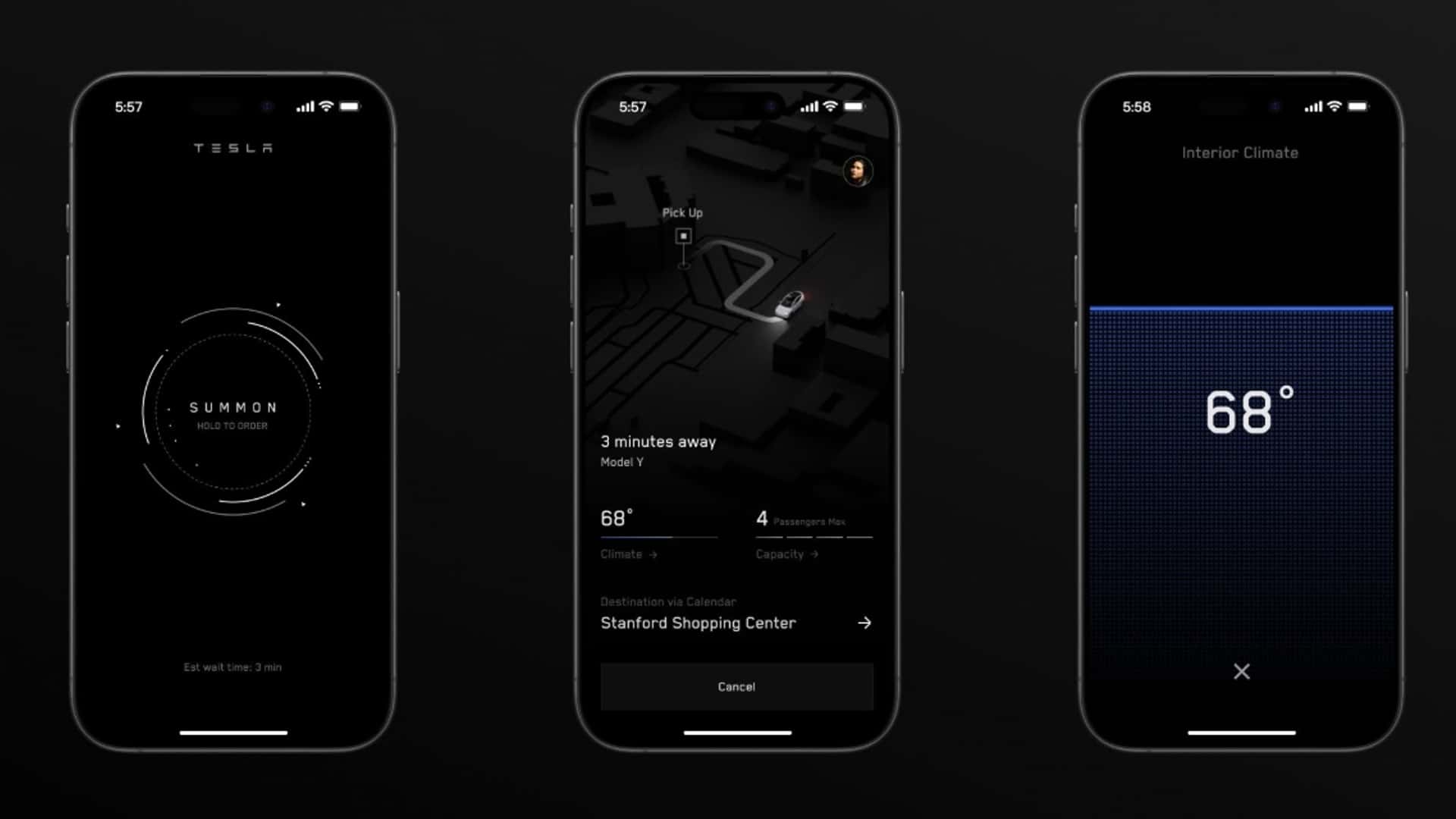
- App renderings suggest future ‘Summon’ functionality and potential in-taxi climate control for customers.
- The robotaxi push comes as Tesla accelerates the launch of ‘new vehicles, including more affordable models,’ aiming to balance market needs with advanced technology.
- Skepticism persists due to the current limitations of Tesla’s Full Self-Driving (FSD) feature and past unfulfilled timelines for autonomous vehicle deployment.
Tesla’s Dual-pronged Robotaxi Strategy Unveiled
Elon Musk, during the recent investor call, elaborated on Tesla’s innovative approach to its planned robotaxi service. The strategy envisions a dynamic fleet comprising vehicles owned and operated directly by Tesla, alongside a substantial contribution from individual Tesla owners. This hybrid model aims to leverage Tesla’s existing customer base, allowing vehicle owners to monetize their autonomous cars.
Musk articulated this flexibility, stating that owners would be able to “add or subtract their cars from the fleet whenever they want.” This provides an unprecedented level of control for private owners participating in a ride-hailing ecosystem. Furthermore, owners would possess granular control over who uses their vehicles.
Musk explained, “they can decide if they want to only let the car be used by friends and family, or only by five-star users or by anyone.” This optionality introduces a personalized layer of trust and security, distinguishing Tesla’s proposition from conventional ride-sharing platforms.
The CEO’s analogy, to “think of it like a combination of Airbnb and Uber,” succinctly captures the essence of this novel business model. It suggests a service that combines the convenience and broad accessibility of a traditional ride-hailing app with the peer-to-peer asset sharing and personalization characteristic of short-term rental platforms.
Technological Pillars for Autonomous Operations
Beyond the operational model of Tesla’s robotaxi fleet, the company’s first-quarter earnings report shed significant light on the technological advancements underpinning its robotaxi aspirations. Tesla affirmed its commitment to investing heavily in the foundational elements required for fully autonomous operations.
“We have been investing in the hardware and software ecosystems necessary to achieve vehicle autonomy and a ride-hailing service,” the report stated. This ongoing investment signifies Tesla’s long-term dedication to developing the complex infrastructure needed for a reliable and safe self-driving fleet capable of operating without human intervention.
A critical component of this strategy is Tesla’s adherence to a ‘vision-only architecture.’ The report emphasized, “We believe a scalable and profitable autonomy business can be realized through a vision-only architecture with end-to-end neural networks, trained on billions of miles of real-world data.” This approach relies exclusively on cameras and advanced artificial intelligence to interpret the environment, eschewing alternative sensors like lidar that are commonly used by competitors.
The immense volume of real-world driving data, amassed from millions of Tesla vehicles globally, serves as the training ground for these neural networks. This data-driven strategy is central to Tesla’s belief in achieving a robust and scalable autonomy solution capable of navigating diverse driving conditions and scenarios inherent in a global Tesla robotaxi service.
Glimpse into the User Experience
Accompanying the financial disclosures regarding the Tesla robotaxi project, the company also provided a preliminary glimpse into the potential user interface for its future ride-hailing functionality. Renderings showcased within the earnings report offered a sneak peek at how users might interact with the service through the existing Tesla application.
One prominent feature depicted was a “Summon” button, which logically points to the mechanism for requesting a robotaxi. While the specifics of the summoning process remain largely undefined, it suggests a seamless integration with the existing Tesla app ecosystem, familiar to millions of owners. This indicates an intuitive user experience for ordering autonomous rides.
Intriguingly, one screen displayed a temperature reading of 68 degrees. While details are scant, this could imply a future functionality allowing customers to pre-set or adjust the climate control settings within their requested robotaxi before it even arrives. Such features would enhance passenger comfort and customize the ride experience, setting a new standard for automated transport.
Navigating Market Dynamics and Investor Confidence
The timing of these robotaxi revelations is particularly pertinent, following a period of considerable uncertainty for the automaker. Recent reports from *Reuters* had suggested that Tesla had pivoted away from plans for a more affordable consumer vehicle, prioritizing its robotaxi project instead. This report had fueled investor anxiety and questions about Tesla’s market strategy and future product roadmap.
Against this backdrop, the detailed discussion on the robotaxi service during the earnings call appears to be a calculated move to “assuage investors that there is indeed a plan coming into view behind the robotaxi.” It serves to articulate a clear strategic direction and highlight a potential long-term revenue stream for the company, thereby bolstering investor confidence.
Interestingly, despite the increased focus on the Tesla robotaxi, the company also indicated during the call that it is “accelerating the launch timing of ‘new vehicles, including more affordable models.’” This suggests a dual-pronged product strategy, where accessible consumer vehicles and advanced autonomous services will both play crucial roles in Tesla’s future portfolio, with the robotaxi slated to arrive at a later stage.
Addressing the Autonomous Challenge and Past Promises
While Tesla’s robotaxi vision is undeniably ambitious, it is important to contextualize it against the backdrop of the enduring challenges in achieving full self-driving capabilities. The company’s grand plan is contingent upon its ability to deliver on the promise of truly autonomous vehicles, a feat that has remained elusive despite years of intense development and significant investment.
The automaker’s existing Full Self-Driving (FSD) feature, a premium offering, currently requires “total driver supervision and regularly makes mistakes.” This necessitates a driver to remain attentive and ready to intervene at all times, underscoring the gap between current driver-assist technologies and the fully autonomous operations required for a robotaxi fleet to function safely and legally without a human occupant.
Moreover, Elon Musk has a history of making optimistic projections for autonomous technology that have not always materialized within stated timelines. Notably, he famously proclaimed that Tesla would have “1 million robotaxis on the road by 2020.” This past projection, which was not fulfilled, serves as a reminder for observers to approach new pronouncements regarding the Tesla robotaxi service with a degree of cautious optimism and a focus on verifiable progress.
The successful deployment of a large-scale Tesla robotaxi fleet would not only transform the company’s business model but also significantly impact the broader urban mobility landscape. It promises reduced congestion, lower transportation costs, and increased accessibility for individuals. However, the path to realizing this vision is fraught with immense technological hurdles, regulatory complexities, and the critical need to build public trust in driverless technology, all of which remain substantial challenges.
FAQ Section
What is Tesla’s robotaxi plan?
Tesla plans a ride-hailing service combining company-operated self-driving vehicles with cars contributed by private Tesla owners. Owners can choose when their cars are part of the fleet and who can use them, likening it to a blend of Airbnb and Uber. This strategy aims to create a scalable, autonomous mobility network.
When is the Tesla robotaxi service expected to launch?
During the Q1 earnings call, Tesla indicated that the robotaxi would arrive later, with the company also accelerating the launch of ‘new vehicles, including more affordable models.’ While a definitive launch date was not provided, the company confirmed active development of the ‘ride-hailing functionality’ for future availability.
How will Tesla owners participate in the robotaxi fleet?
Tesla owners will have the option to ‘add or subtract their cars from the fleet whenever they want.’ They can also set preferences for users, allowing access only to friends and family, highly-rated users, or the general public, offering flexibility and control over their vehicle’s usage and monetization.
What technology is Tesla using for its self-driving cars?
Tesla is investing in extensive ‘hardware and software ecosystems’ for vehicle autonomy. The company’s approach centers on a ‘vision-only architecture,’ utilizing cameras and ‘end-to-end neural networks’ trained on billions of miles of real-world driving data to achieve full self-driving capabilities, without relying on lidar.
What does the ‘combination of Airbnb and Uber’ analogy mean?
Elon Musk used this analogy to describe the hybrid nature of the service. Like Uber, it’s a ride-hailing platform. Like Airbnb, it allows private owners to contribute their assets (their Tesla vehicles) to the network, with controls over availability and user access, creating a peer-to-peer element.
What are the main challenges for Tesla’s robotaxi plans?
The primary challenge remains Tesla’s ability to achieve true full self-driving, as its current FSD feature requires constant driver supervision. Regulatory hurdles, public acceptance of driverless cars, and the complexities of managing a hybrid fleet also represent significant obstacles to overcome before widespread deployment.