
Key Takeaways
- Tesla announced plans for a unique ride-hailing service, blending owned robotaxi fleets with individual owner participation.
- CEO Elon Musk described the model as a “combination of Airbnb and Uber,” allowing owners to rent out their autonomous vehicles.
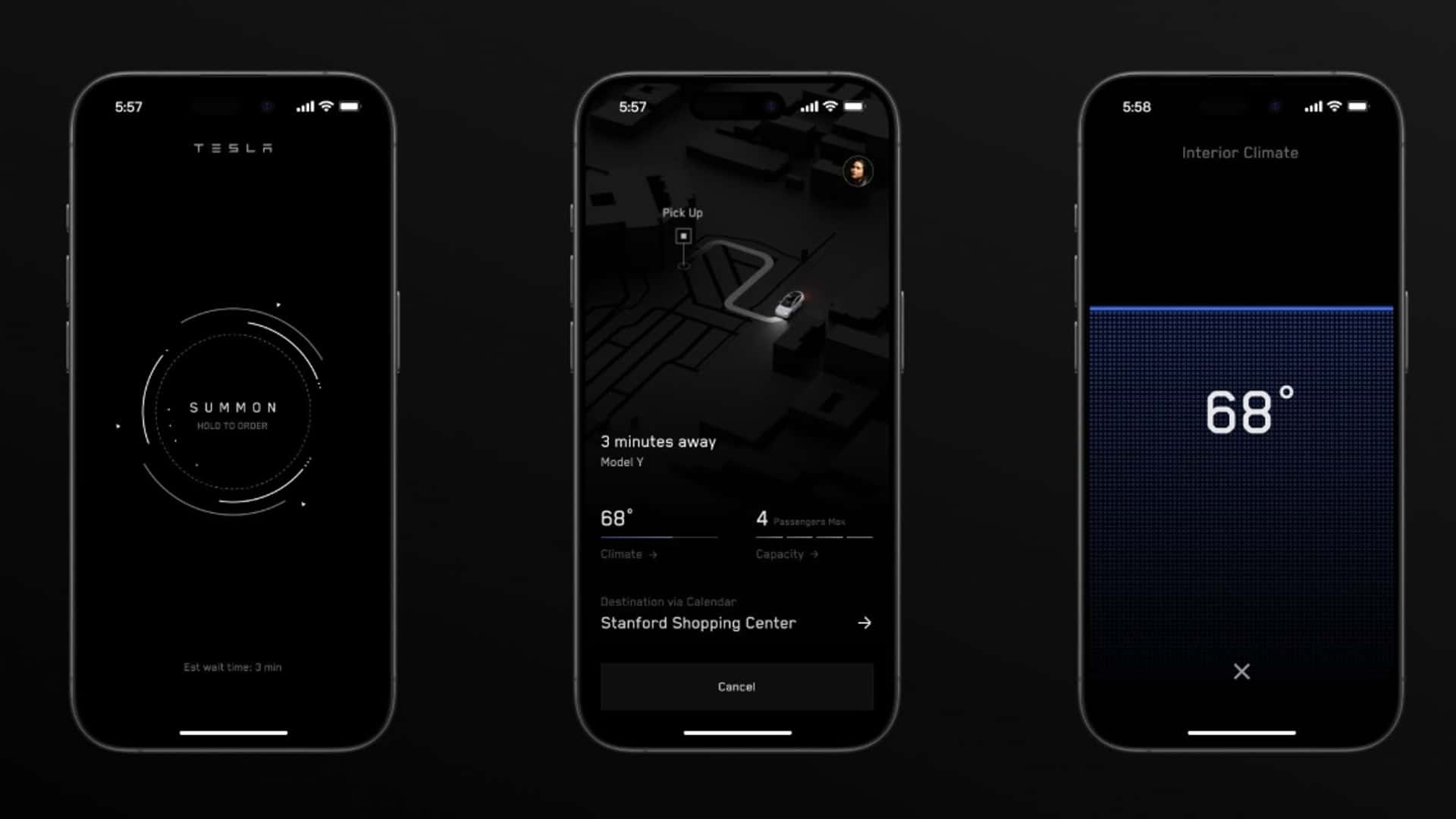
- The service will feature a “Summon” function and potential in-car climate control, as previewed in the Tesla app.
- Tesla’s first-quarter earnings report detailed investments in hardware and software for vehicle autonomy, emphasizing a “vision-only architecture with end-to-end neural networks.”
- The announcement follows reports of Tesla prioritizing robotaxis over a more affordable consumer vehicle, though the company also confirmed accelerating the launch of “new vehicles, including more affordable models.”
- The success of this ambitious Tesla robotaxi service hinges entirely on the company’s ability to deliver fully self-driving technology, a goal that has seen delays and challenges with its existing Full Self-Driving (FSD) feature.
NEW DELHI – Tesla has outlined its ambitious vision for a novel ride-hailing service, intending to integrate a company-operated robotaxi fleet with privately owned autonomous vehicles. The announcement, made during the company’s first-quarter earnings call on April 23, 2024, provides initial insights into how the electric vehicle giant plans to navigate the burgeoning autonomous transportation sector.
This strategic pivot comes at a critical juncture for Tesla, as analysts and investors had sought clarity on the company’s future direction, particularly after reports surfaced suggesting a shift in focus from a cheaper consumer vehicle to a dedicated robotaxi project.
Tesla’s Hybrid Autonomous Ride-Hailing Model Takes Shape
During the recent conference call with investors, Tesla CEO Elon Musk elaborated on the operational framework for the forthcoming Tesla robotaxi service. He indicated that the automaker intends to establish and manage its own fleet of self-driving taxis, forming the backbone of the new service.
Complementing this, individual Tesla owners will be granted the flexibility to participate in the network, effectively transforming their personal vehicles into income-generating assets. Musk articulated this dual approach, stating that Tesla owners would be able to “add or subtract their cars from the fleet whenever they want.”
This model grants owners significant control over their vehicle’s deployment. Owners “can decide if they want to only let the car be used by friends and family, or only by five-star users or by anyone,” Musk explained, drawing a compelling parallel by saying to “think of it like a combination of Airbnb and Uber.”
Technological Foundations and Architectural Vision
Further details regarding the technological underpinnings of the Tesla robotaxi service were disclosed in the company’s first-quarter earnings report. The report confirmed that Tesla is “currently working on ride-hailing functionality that will be available in the future.”
The company underscored its long-term investment in this domain. “We have been investing in the hardware and software ecosystems necessary to achieve vehicle autonomy and a ride-hailing service,” the report highlighted, reinforcing Tesla’s commitment to a fully integrated solution.
Crucially, Tesla reiterated its architectural philosophy for achieving full autonomy. “We believe a scalable and profitable autonomy business can be realized through a vision-only architecture with end-to-end neural networks, trained on billions of miles of real-world data,” the earnings report stated.
This ‘vision-only’ approach relies solely on camera data, differentiating it from competitors who often incorporate LiDAR or radar sensors. The efficacy of this strategy, leveraging vast datasets, remains a central point of discussion within the autonomous driving community.
User Interface and Market Expectations
To provide a tangible glimpse into the future Tesla robotaxi experience, the company also released a preview of what the ride-hailing functionality might look like within the existing Tesla mobile application. These renderings showcased a dedicated “Summon” button, presumably the primary interface for requesting an autonomous taxi.
One particular screen in the preview displayed a temperature reading of 68 degrees, leading to speculation that future customers may have the ability to pre-set climate control settings in their robotaxi before it arrives. While these details are currently sparse, they hint at a focus on user convenience and customisation.
The unveiling of these ride-hailing plans follows a period of considerable speculation surrounding Tesla’s strategic roadmap. A Reuters report earlier this year indicated that the automaker had reportedly paused development on a more affordable consumer vehicle, shifting resources instead to its robotaxi aspirations.
This report generated significant uncertainty among investors and fans regarding the timing and nature of Tesla’s next major product launch. The subsequent earnings call clarification from Tesla aimed to address these concerns.
Addressing Investor Concerns and Production Outlook
In a move designed to assuage investor anxieties, Tesla clarified its vehicle production strategy. The company affirmed its commitment to broadening its product portfolio, stating that it is accelerating the launch timing of “new vehicles, including more affordable models.” This suggests that while the Tesla robotaxi service is a high priority, it will likely be introduced after these more accessible models.
The mention of a comprehensive ride-hailing business within the earnings report serves as a strong signal to investors, indicating a clear, albeit long-term, monetization strategy behind the development of autonomous technology. This comprehensive plan aims to demonstrate a tangible path to profitability beyond traditional vehicle sales.
However, the successful execution of this intricate plan is fundamentally dependent on Tesla’s ability to achieve true self-driving capabilities. This has been a recurring challenge for the automaker, despite years of significant investment and ambitious pronouncements from its leadership.
The Road to Full Autonomy: A Critical Hurdle
Tesla’s existing Full Self-Driving (FSD) feature, a premium software upgrade, currently mandates complete driver supervision and has, on numerous occasions, demonstrated limitations and required driver intervention. This necessitates human oversight, a stark contrast to the fully autonomous operation required for a viable Tesla robotaxi service.
The company’s journey towards fully autonomous vehicles has been marked by a series of bold predictions and extended timelines. Notably, CEO Elon Musk famously declared that Tesla would have one million robotaxis operational on the roads by 2020. This earlier target was not met, and similar promises have faced delays.
While the prospect of a Tesla-run autonomous taxi service is undeniably compelling, stakeholders and the public alike are advised to consider past timelines when evaluating the projected readiness and widespread deployment of this advanced technology. The current announcement provides a clearer strategic direction but reaffirms the substantial engineering and regulatory challenges that remain.
The integration of owned fleets with owner-operated vehicles could offer a unique competitive advantage, potentially expanding the network rapidly and reducing capital expenditure for Tesla compared to a purely company-owned model. This hybrid approach, combining elements of personal vehicle ownership with a broader sharing economy, reflects a strategic effort to maximize utilization rates and profitability for the future Tesla robotaxi service.
Navigating Regulatory and Ethical Landscapes
Beyond the technological complexities, the deployment of a widespread Tesla robotaxi service will also necessitate navigating a complex web of regulatory frameworks and public acceptance challenges. Autonomous vehicles operate under varying legal statutes across different jurisdictions, demanding compliance with diverse safety standards and licensing requirements.
Public trust and ethical considerations, including data privacy and liability in the event of incidents, will also play a pivotal role in the successful scaling of any autonomous ride-hailing service. Tesla’s strategy will need to address these multifaceted dimensions comprehensively to achieve its ambitious goals.
The company’s continued investment in its “hardware and software ecosystems” for autonomy highlights a long-term commitment. However, the practical realization of a “scalable and profitable autonomy business” as described in the earnings report depends heavily on overcoming the formidable technical and societal barriers that define the frontier of self-driving technology.
Frequently Asked Questions (FAQ)
What is Tesla’s new robotaxi plan?
Tesla plans to launch a ride-hailing service combining a company-owned fleet of autonomous vehicles with private Tesla owners who can add or remove their cars from the network. CEO Elon Musk likened it to a blend of Airbnb and Uber, giving owners control over who uses their vehicle.
When will the Tesla robotaxi service be available?
While Tesla has not provided a specific launch date, its first-quarter earnings report mentions that the company is “currently working on ride-hailing functionality that will be available in the future.” CEO Elon Musk also indicated the robotaxi would arrive later than new, more affordable vehicle models.
How will Tesla owners participate in the robotaxi fleet?
Tesla owners will have the option to integrate their personal autonomous vehicles into the ride-hailing network. They can decide when their car is available and specify user preferences, such as limiting access to friends and family or only five-star rated users.
What technology is Tesla using for its autonomous vehicles?
Tesla is investing in a “vision-only architecture with end-to-end neural networks, trained on billions of miles of real-world data.” This approach relies exclusively on cameras and advanced AI processing to achieve full self-driving capabilities for its planned Tesla robotaxi service.
Has Tesla delivered on its self-driving promises in the past?
Tesla’s journey towards full autonomy has seen previous ambitious targets, such as one million robotaxis by 2020, remain unmet. Its current Full Self-Driving (FSD) feature still requires active driver supervision, indicating that the technology for a truly autonomous Tesla robotaxi service is still under development.
What are the main challenges for Tesla’s robotaxi service?
The primary challenge for the Tesla robotaxi service is achieving verifiable, reliable full self-driving capability, which its current FSD system has not yet accomplished. Other significant hurdles include navigating complex regulatory environments, ensuring public safety, and building widespread consumer trust in autonomous transportation.